About CPAWS-BC
The Canadian Parks and Wilderness Society – British Columbia Chapter (CPAWS-BC) protects wilderness in every corner of BC and deep into the ocean. CPAWS-BC supports the creation of large, well-managed, connected protected areas where native plants and animals thrive, now and forever; and where people and communities can live off the land and ocean without impacting the ability of future generations to do the same.
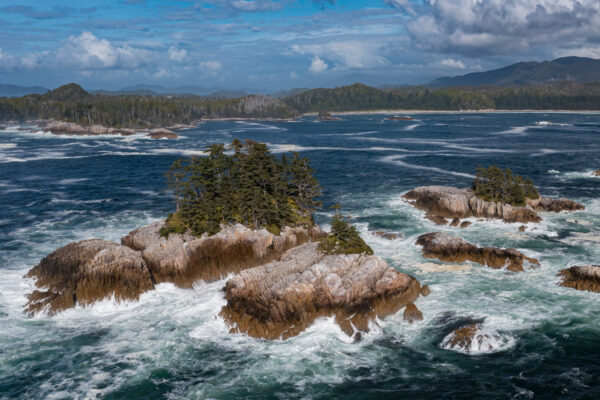
We work to safeguard large parks, protected areas and wildlife corridors – places like Tatshenshini, Muskwa Kechika, South Okanagan-Similkameen, Gwaii Haanas, and the Scott Islands.
In the past 50+ years, CPAWS has played a lead role in protecting over half a million square kilometres – an area bigger than New Brunswick, Newfoundland and Labrador put together!
The History of
CPAWS-BC
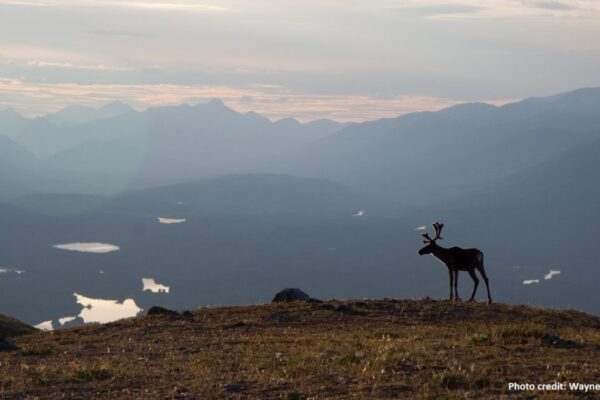
Governments have a choice: To take bold action to defend against the decline of species, or to continue to watch iconic animals like caribou and orca vanish from our ecosystems forever. CPAWS-BC is committed to helping them make the best decision.
CPAWS-BC is part of one of Canada’s oldest non-profit conservation groups. We protect wilderness in every corner of BC and deep into the ocean. We have been defending BC since 1978, and are dedicated to keeping BC’s natural environment thriving forever. Nature is BC’s best hope.
The world is facing a biodiversity crisis. Decades of climate change and unchecked industrial development are putting nature under more pressure than ever. British Columbia is on the frontlines of the fight to protect our last remaining large, intact natural land and seascapes, and the plants and animals that depend on them.
CPAWS-BC has a plan to stem the nature emergency and ensure resilient ecosystems that can weather the storms of a changing climate. When nature thrives, so do we.
We Protect Land and Water
CPAWS-BC defends public lands and the ocean. We work with Indigenous, provincial and federal governments with the goal of creating large protected and interconnected areas: places that can nurse nature through climate change and shelter plants and animals forever.
Most of the land, freshwater and ocean in BC and on the coast is held in public trust. It is our shared responsibility to protect it for future generations.
Our work to safeguard large parks, protected areas and wildlife corridors has been instrumental in protecting precious places across the province. Join us in the fight to safeguard special places across the province including Tatshenshini, Muskwa Kechika, South Okanagan-Similkameen, Gwaii Haanas (the southern tip of Haida Gwaii), and the Scott Islands.
Our Commitment
CPAWS-BC works on the stolen lands and waters of Indigenous Peoples. Indigenous Peoples have stewarded their territories since time immemorial, and continue to today.
The conservation movement in Canada was founded on white supremacy and actively sought to erase Indigenous Peoples. One way was the forcible removal of Indigenous Peoples from their land and water, and the attempted severing from their culture. The whiteness of conservation still remains in both leadership and values, which continues to perpetuate systemic oppression and erasure of Indigenous Peoples. But Indigenous Peoples have resisted and endured. As a conservation organization, we have a responsibility to decolonize our work and to ensure that we are supporting Indigenous stewardship, resilience and resurgence.
We, the staff and Board at CPAWS-BC, recognize that decolonization is an ongoing process that requires all of us to be actively involved and responsible.
CPAWS-BC is committed to justice, equity, diversity, and inclusion within every aspect of our work to protect lands, inland waters, and ocean. We commit to being more inclusive, respectful, and honour Indigenous Peoples in all aspects of our work.
Do you have a justice, equity, diversity and inclusion statement and how does it influence your work?
We, the staff and Board at CPAWS-BC, recognize that upholding the values of justice, equity, diversity, and inclusion of oppressed and repressed voices and perspectives is an ongoing process that requires us all to be actively involved and responsible.
Our commitment to justice, equity, diversity and inclusion
CPAWS-BC is committed to justice, equity, diversity, and inclusion within every aspect of our work to protect lands, inland waters, and ocean. We commit to be more inclusive and respectful to racialized and oppressed people.
- We will intentionally work to create an inclusive organizational culture that supports a diverse staff, Board, volunteers, and partners.
- We will support staff and volunteers who challenge the pervasive dominant culture including, but not limited to, white supremacy and colonial legacy.
- We will purposefully incorporate active principles of justice and equity into campaign and organizational strategies.
- We will push ourselves and the broader conservation movement to challenge traditional power structures and narratives in conservation.
- We will prevent our intrusion on space being claimed and reclaimed by oppressed peoples in the conservation movement.
- We will stand beside historically silenced voices of our partners at stakeholder and government discussions on conservation.
- We will listen to and embrace a diversity of narratives in our work.
- We will take leadership from the diversity of people who call this place home.
We will intentionally work to reduce barriers to:
- Accessing the outdoors; and
- Participating in the processes of creating and managing protected areas.
We do this in order to ensure that:
- Biological diversity, including humans, can survive and thrive in a changing climate; and
- Everyone will have clean air, clean water, and food sovereignty.
What is your commitment to decolonization?
CPAWS-BC works on the stolen lands and waters of Indigenous Peoples. Indigenous Peoples have stewarded their territories since time immemorial, and continue to today.
The conservation movement in Canada was founded on white supremacy and actively sought to erase Indigenous Peoples. One way was the forcible removal of Indigenous Peoples from their land and water, and the attempted severing from their culture. The whiteness of conservation still remains in both leadership and values, which continues to perpetuate systemic oppression and erasure of Indigenous Peoples. But Indigenous Peoples have resisted and endured. As a conservation organization, we have a responsibility to decolonize our work and to ensure that we are supporting Indigenous stewardship, resilience and resurgence.
We, the staff and Board at CPAWS-BC, recognize that decolonization is an ongoing process that requires all of us to be actively involved and responsible.
CPAWS-BC is committed to justice, equity, diversity, and inclusion within every aspect of our work to protect lands, inland waters, and ocean. We commit to be more inclusive, respectful, and honour Indigenous Peoples in all aspects of our work.
Also see our commitment to justice, equity, diversity and inclusion in the FAQs.
What are you doing to facilitate systemic change in the broader conservation movement?
We commit to learning from our mistakes, listening to people who hold us accountable, and charting a future where we do better. We still have a lot to learn.
CPAWS-BC is committed to a path toward a more inclusive, safe and accessible space for Indigenous, black and racialized members, staff and volunteers, to ensure their voices are heard and most importantly to create change in and through our programs and the sector. We recognize that we are on a path, and have and will continue to make mistakes. We commit to learning from our mistakes, listening to people who hold us accountable, and charting a future where we do better. We still have a lot to learn.
Policies and Procedures
Through a collaborative process and with the help of paid Indigenous, black and racialized consultants/facilitators we have developed an acknowledgment and decolonization commitment and a justice, equity, diversity and inclusion statement. We use these commitments to guide our work, to inform our programming, advocacy and administrative processes such as hiring, promotions and pay raises.
Staff training:
Since 2017, we have prioritized regular monthly trainings around decolonization, anti-racism, unconscious bias, allyship (versus performative allyship) and other topics for all staff. These trainings often include connecting with external paid speakers and offering paid time for staff to attend these and other trainings. We believe investing time and money is key to demonstrate the importance that this has across the organization and to stress that we continuously strive to learn, question and improve how we show up, do our work and engage with others inside and outside of the organization. All staff are required to be certified by Indigenous Awareness Canada.
Staff recruitment:
We follow a process designed in partnership with equity advisors to actively reduce barriers to employment at each step of hiring, promotions and compensation. All job call-outs are based on skills and experience and not qualifications (eg. a degree), and the review process is done with names and identifying features removed to support limiting biases. We continue to improve and evolve this process.
If you or someone you know is interested to join CPAWS-BC team, see current job postings here.
Learn more about our commitment to justice, equity, diversity and inclusion, our commitment to decolonization and our Board recruitment processes in the FAQs.
What actions are you taking to diversify your Board of Directors?
CPAWS-BC is committed to a path toward a more inclusive, safe and accessible space for Indigenous, black and racialized members, staff and volunteers, to ensure their voices are heard and most importantly to create change in and through our programs and the sector.
Board of Directors training:
All of the current board members have participated in Indigenous Awareness Training, Decolonizing Practices and most recently a board recruitment training.
Board of Directors recruitment:
Over the past few years, there has been a profound board renewal process that has seen many internal shifts from becoming an intentional governance board, to reviewing board policies and procedures, to reducing the number of directors and pushing for board development specifically in the area of justice, equity, diversity and inclusion.
We have long identified the majority whiteness of the board as a serious issue that needs addressing and in the current recruitment process, we are taking the following concrete steps:
- Frequently reaching out to our Indigenous-led partner organizations with whom we hold existing relationships to recruit indigenous candidates from within and outside of Metro Vancouver.
- Connecting with organizations to recruit often racialized newcomer and immigrant community members.
- Seeking an intentional and proactive recruitment process that prioritizes relationship-building and trust-building with interested candidates of racialized communities.
If you or someone you know is interested to join CPAWS-BC team, see current job postings here.
Is the CPAWS-BC office accessible?
Here is a glance at what accessibility looks like at our office right now. Contact us by phone or email with any questions.
- Ground level access with elevator. Wheelchair and scooter accessible entrance on Cordova Street.
- 312 Main is accessible by several bus lines. TransLink’s Trip Planner will help you to find your way to our building.
- There is no on-site parking, however there are several parking lots in the area.
- Indoor bike parking area on the ground floor.
- Smudging is welcomed.
- Gender-inclusive restrooms that are wheelchair accessible
- At present, our meetings are held in English and do not have sign-language or multilingual interpretation. Closed captioning is available for most virtual meetings and recorded events.
- Pet-friendly space.
Individuals are accepted inclusive of race, colour, ancestry, place of origin, religion, marital status, family status, and physical or cognitive abilities. We are mindful in creating an inclusive space for people experiencing barriers due to mental health, sexual orientation, gender identity or expression, body size or abilities, social condition, addiction, and age. Access to 312 Main can be restricted as a result of individuals perpetrating acts of discrimination or harassment.
Additional COVID-19 Safety Protocols
- Persons who are exhibiting cold or flu-like symptoms or are required to self-isolate are not permitted to enter the building
- Sanitizing materials provided for routine cleaning and surface disinfecting in common areas
- Maintain physical distancing throughout building and offices where possible
- HVAC system with MERV 11 filters and MERV 11 Filters. Hospital grade MERV 13 Filters.
- Elevators – Maximum 2 people
Why do you have your pronouns after your titles?
We understand that we cannot assume to know each others’ pronouns by our names or appearance. For some of us, it is a privilege not to have to worry about which pronoun will be used based on how our gender is perceived. If we fail to respect someone else’s gender identity, it is not only disrespectful and hurtful but also oppressive.
The CPAWS-BC team intends to challenge the belief that all pronouns can be assumed and practices sharing of gender pronouns to create a supportive community for all people. Read more here.
What does “wilderness” mean to CPAWS-BC?
Wilderness is not bound by a perception of remote areas uninhabited by people. All people’s health and well-being, livelihood and survival are dependent on nature. Historical, environmental, and political circumstances have shaped wilderness in BC. When you add your voice to defend the wilderness, your story helps support a more sustainable relationship with nature so wild lands, freshwater and in the ocean can thrive now and forever.
Our commitment to honour the wild means taking action with reciprocity for nature. We do this to shelter biodiversity and ensure resilient ecosystems that can weather the storms of climate change caused by human settlement and industrial development. In doing so, we remember the nature, culture, and history that has brought us to this moment, and choose a bold path forward in conservation.
I’m attending a CPAWS-BC virtual event. What can I expect using Zoom?
Virtual events and online meetings are ideal for informative and interactive connection points.
After you register for an event hosted on Zoom, you will typically receive an email with a link and password to join the virtual meeting.
Download this short guide with tips and tricks to get you started on Zoom.
Where are your Annual Reports and Financial Statements?
See how your support helps to protect against the biodiversity crisis and ensure resilient land and oceanscapes that can weather the storms of climate change.
View our latest Annual Report, Impact Reports and Financial Statements.
What is the difference between CPAWS-BC and CPAWS?
Founded in 1963, CPAWS has helped protect over 400,000 square kilometres of threatened areas across Canada. The British Columbia chapter was founded in 1979 and is one of 13 CPAWS chapters across Canada.
CPAWS is a non-profit, grassroots-based conservation organization. We remain the only national non-profit organization devoted exclusively to protected public lands, freshwater, and ocean.