CPAWS BC Blog
CPAWS-BC PRESENTS BEFORE STANDING COMMITTEE ON ENVIRONMENT AND SUSTAINABLE DEVELOPMENT
CPAWS-BC’s very own Director of Terrestrial Conservation, Chloe O’Loughlin, appeared before the House of Commons Standing Committee on Environment and Sustainable Development at the Delta Vancouver Airport in Vancouver, BC this morning. It was a unique and fantastic opportunity for CPAWS-BC to lend its voice in the ongoing dialogue on conservation in BC!
In January 2012, The Committee passed a motion to undertake a study to provide recommendations to the Minister of the Environment on the development of a National Conservation Plan (original House of Commons press release can be found here).
Several interested groups across Canada have stepped up to take part in these public hearings including CPAWS’ National Director of Conservation in Ottawa, Alison Woodley. Presenting groups in BC included Eco Justice, Pacific Salmon Foundation, and World Wild Life Fund Canada. Chloe’s presentation focused on how a National Conservation Plan in Canada would impact small communities across the province.
Chloe’s full speech on CPAWS-BC’s Recommendations for a National Conservation Plan in Canada can be found here: http://cpawsbc.org/upload/Natl_Conservation_Plan_recommendations_CPAWS-BC.pdf
According to feedback from the Committee, what interested the Committee the most from Chloe's presentation were the economic and community benefits of a National Conservation Plan. Apparently, CPAWS-BC was the only organization the Committee had heard that focused on these particular benefits to the local community and economy.
Let's hope that Standing Committee heard the message loud and clear: CPAWS-BC believes that a National Conservation Plan could provide the leadership and inspiration to provinces, regions, communities and citizens to work together to protect and care for our country’s magnificent natural heritage.
CPAWS at the Pacific Ecology and Evolution Conference in Bamfield!
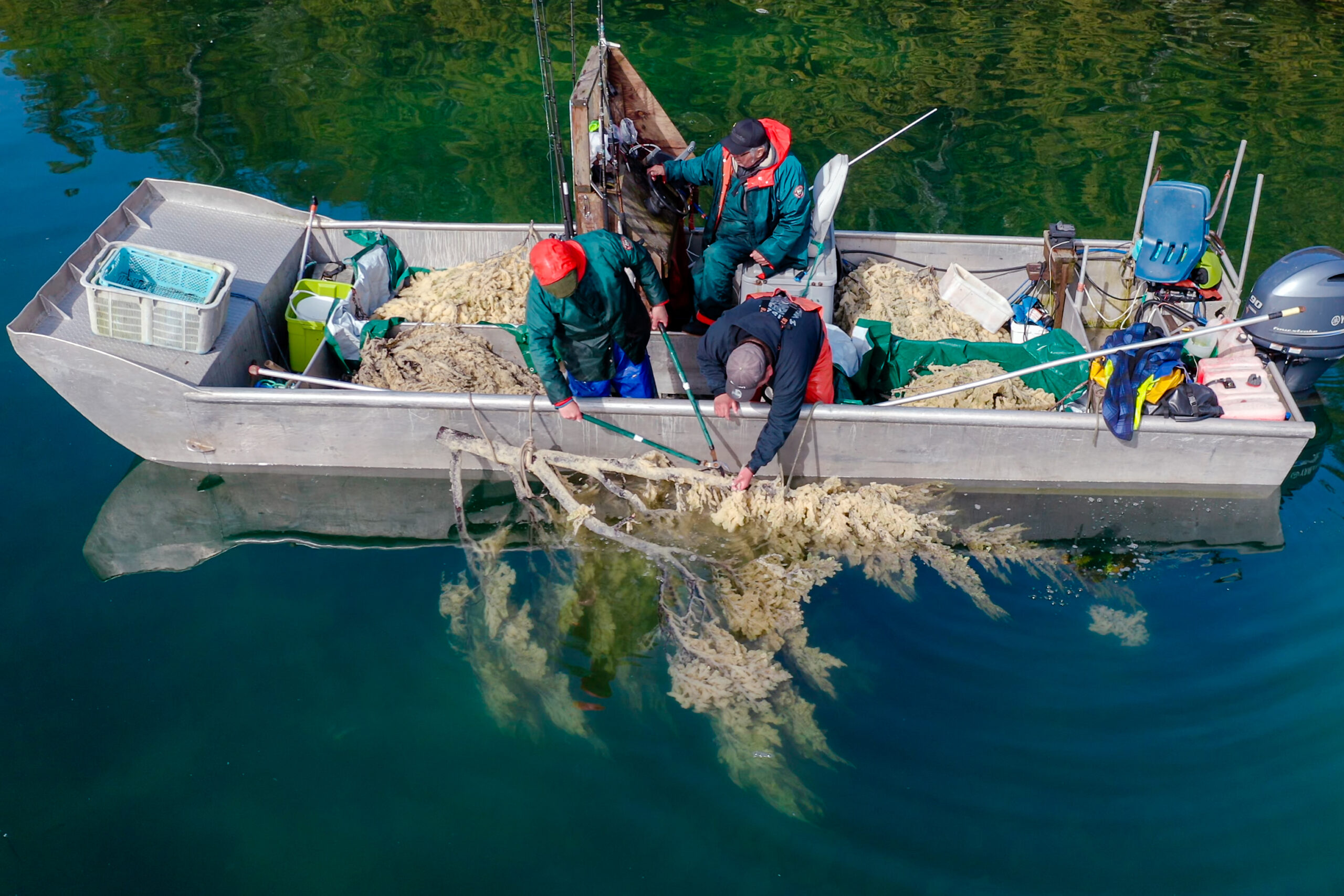
One of my favourite things about working at CPAWS is getting to talk to the public about BC’s amazing wilderness - from the rugged shores and seabird colonies of the Scott Islands, to the rare and threatened grasslands of the South Okanagan, and the unique deep-sea glass sponge reefs found nowhere else in the world but right here in BC.
Last weekend, Elyse Curley, our Terrestrial Conservation Coordinator, and I were fortunate enough to travel to Vancouver Island to represent CPAWS at the Pacific Ecology and Evolution Conference (PEEC). Our adventure started when we climbed aboard the M.V. Frances Barkley which ferried us and about 100 students down the inlet from Port Alberni to Bamfield on the west coast of Vancouver Island.
The remote setting of the conference at Bamfield’s Marine Sciences Centre allowed us to become immersed in a dynamic coastal environment and interact with undergraduate, graduate and post-doc students conducting a wide range of ecological and evolutionary research.
We attended several interesting presentations and brushed up on topics like: the effects of climate change on juvenile salmon, modeling marine ecosystem services, eutrophication in lakes and management of species at risk, and co-management scenarios in First Nations herring fisheries.
We also hosted our own presentation on Integrating Science and Advocacy using BC’s unique glass sponge reefs as a case study of how important it is for scientists to work with groups such as CPAWS to further conservation initiatives and make science more accessible to the general public. The star of the show was definitely Mr. Stinky, our glass sponge mascot (see photo below)!

Finally, the poster session, which focused on our campaign for BC’s Flathead Valley, was a great success. Many students were keen to learn more about the Flathead and what still needs to be done to protect this incredible area. We were overwhelmed with the energy and interest from this wonderful group of young scientists and look forward to collaborating with many of them in the future!
Leah Honka, Marine Conservation Coordinator
Taking action in the South Okanagan Similkameen
Well, what do you do when the Province of BC says that ‘although the 8-year, multi-million dollar feasibility study recommended the establishment of a national park, “there is not enough local support at this time to move forward”?
We called the Minister responsible and inquired what he meant by ‘local support’. He said that he would expect to hear from local mayors and town councils, the Regional District, and business and tourism sectors.
We took what the Minister stated and turned it into action. I have just returned from four very successful town meetings in the South Okanagan-Similkameen focusing on the Business Case for the National Park, which I presented to elected officials and business and tourism professionals.
The meetings were very successful – there were many interested people and good conversations. Most of the meetings ended with a few moments of stunned silence as audience members thought – why would the Province withdraw from a park that would provide so many conservation, economic and job development opportunities to our community?
I have heard that many of these people are starting to get active and vocal in support of the national park. The Province is receiving hundreds of letters urging them to re-engage in the park establishment process.
I’ll be returning to the South Okanagan-Similkameen in early April to meet with more town councils and tourism groups as well as present more public sessions. If the Minister wants to hear more ‘local support’, CPAWS provides the facts so that local people can make decisions and take action themselves. That’s why I love working for CPAWS.
Chloe O'Loughlin, Director of Terrestrial Conservation
CPAWS welcomes completion of the Dease-Liard land use plan
After 10 years of work and partnership with the Kaska First Nation, we are immensely pleased that a new provincial park, ‘Ne’ah’, and special management area, Gu Cha Duga, have been established in northern BC. The Premier announced the news with Dave Porter, Grand Chief of the Kaska Nation. Ne’ah, formerly known as the Horseranch Range, is a north-south range spanning 40 kilometres, where, as the Kaska say, the animals ‘go to get fat’. This protection totals nearly 600,000 hectares.
These areas protect large free ranging populations of woodland caribou, moose, Dall's sheep, Stone sheep, and hundreds of thousands of migrating neo-tropical songbirds and waterfowl in this spectacular area.
Congratulations to the province and the Kaska First Nation for this achievement.
Reflections from a Marine Climate Change Intern
Since the beginning of October, I have had the pleasure of being the Marine Climate Change Intern at CPAWS-BC. Although today is my last day, I have a smile on my face as I reflect upon my time here.
The first day of my internship started with travelling to the community of Masset, in Haida Gwaii. Visiting Haida Gwaii and Prince Rupert during a week of travelling with Sabine Jessen (CPAWS National Manager of Oceans and Great Freshwater Lakes Program) was a highlight of my internship. It was amazing to get to attend the Haida Marine Advisory Committee meetings as well as the PNCIMA meetings in Prince Rupert and observe the process of marine planning at two different spatial scales.
Getting back from the trip, I dove head first into researching how climate change has been incorporated into marine planning initiatives around the world. Through this research and discussions with climate change experts, I was able to compile heaps of interesting information and innovative ideas about how marine planners and managers have and can strategically adapt to our changing climate. Some of the most interesting aspects of this work was the conversations with experts, gathering their insights and getting them to think creatively about innovative ways to adapt to climate change.
I then began working with World Wildlife Fund Canada on putting together some of the pieces of an ecosystem focused Marine Climate Adaptation Report for BC. I produced a case study entitled: Shellfish Harvesting in BC: Responding to a Changing Climate. This project enabled me to learn a great deal about shellfish biology and harvesting in BC and apply what I had learned through my research and conversations on climate change adaptation to a particular situation: shellfish harvesting.
Before I started the internship, I knew climate change has been a tough topic to deal with for both researchers and management. However, through this internship, I gained an even greater appreciation for the difficulty in tackling this very difficult problem of designing strategies to deal with climate change impacts. Yet I also learned that there are some amazingly intelligent people working in the field, and it has been a pleasure to meet and interact with them.
It has also been a pleasure to be a part of CPAWS-BC, and be able to each day come into an office with such friendly, fun, and environmentally passionate people. It has been great learning about the all of the things that CPAWS-BC is involved in and how the organization takes on the mission of constantly working to protect BC’s natural treasures. Thanks everyone at CPAWS-BC for having me as part of the team and I look forward to staying involved!
- Erica Olson