Parks expansion a promising start, but more protection needed for nature in BC
Parks expansion a promising start, but more protection needed for nature in BC
25 March, 2019
Vancouver, BC — The Canadian Parks and Wilderness Society, BC Chapter (CPAWS-BC) is applauding a move by the provincial government to add land to British Columbia’s parks and protected areas.
Amendments expanding several parks will also include restoring Indigenous names to First Nations’ ancestral homelands, in-line with commitments to reconciliation.
“Expanding BC’s parks and protected areas throughout the province is essential for a sustainable future,” says Bruce Passmore, CPAWS-BC Executive Director. “While the amount of land being added to the parks system is less than what’s needed to adequately protect nature, we’re encouraged by today’s announcement from the province.”
The announcement comes just one year before the deadline for meeting international biodiversity targets, in which Canada and other countries agreed to protect 17 percent of land and 10 percent of ocean by 2020.
“BC is still short on meeting the international target of 17 percent, but we can get there,” continued Passmore. “We need to go beyond the targets, however. BC needs to ensure that nature can withstand human development and climate change. Our province has the most biodiversity in Canada, but also the highest number of species at risk. We need to do better to protect habitat and fight the extinction crisis.”
-30-
CPAWS-BC congratulates Saulteau and West Moberly Nations on hard-won caribou agreement
Provincial plan for caribou falls far below example set by First Nations leadership
21 March, 2019
Vancouver, BC— Today, the provincial government opened public consultation on two agreements concerning the recovery of southern mountain caribou.
The Canadian Parks and Wilderness Society, BC Chapter (CPAWS-BC) is extending congratulations to the Saulteau and West Moberly Nations, whose leadership on caribou recovery has been highlighted in a Partnership Agreement between the two Nations, and the provincial and federal governments.
Photo credit: Wayne Sawchuk
Part of the Partnership Agreement between the four governments includes the creation of a large protected area in critical caribou habitat on West Moberly and Saulteau territories, near Chetwynd, BC.
“We fully support the groundbreaking work of the Saulteau and West Moberly Nations to recover caribou herds on their territories, and we applaud them for securing this agreement with both the provincial and federal governments,” said Bruce Passmore, CPAWS-BC Executive Director. “BC needs to learn from their leadership and work diligently to protect habitat for other caribou herds in the province.”
The other agreement announced today is a bilateral agreement between British Columbia and Canada, under Section 11 of the Species at Risk Act (SARA), which will apply to all other mountain caribou herds in the province. Unlike the Indigenous-led efforts proving successful at caribou recovery, this bilateral agreement is unlikely to recover caribou herds in BC, many of which are on the brink of extinction.
“Unlike the four Nation agreement, this bilateral agreement shows that the province is just not taking the wider provincial caribou crisis seriously,” continued Passmore. “West Moberly and Saulteau have shown us what’s possible for caribou recovery. BC needs to step up to the plate and do better in places like the Kootenays.”
Last year, Canada’s Minister of Environment declared an imminent threat to caribou recovery. Under the Species at Risk Ask, the federal minister can then issue an emergency protection order for the species.
“Caribou don’t have time for political grandstanding. If BC will not take bold action, then Canada has a legal responsibility to step in,” said Passmore. “Caribou need a moratorium on development in their habitat until governments can come up with an acceptable plan. We can not continue to discuss their future while their habitat continues to be destroyed.”
CPAWS-BC is encouraging the public to participate in both consultations until they close on April 26th, 2019.
-30-
CPAWS welcomes protection of Howe Sound glass sponge reefs
March 6th, 2019
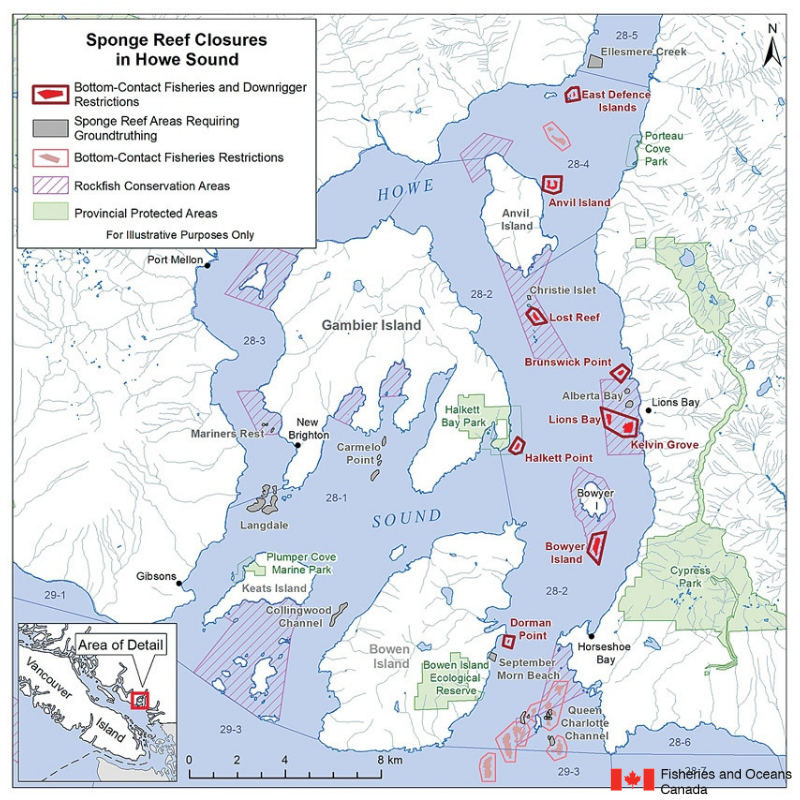
Vancouver, BC – The Canadian Parks and Wilderness Society is very pleased to see the eight new marine refuges announced today, protecting nine of Howe Sounds newly discovered Glass Sponge Reefs from all bottom-contact fishing, by the Minister of Fisheries and Oceans, and the Canadian Coast Guard.
“The Howe Sound glass sponge reefs are an ecological treasure on the door step of one of Canada’s largest cities. They are a very important ecological feature in Howe Sound, that provide both habitat for many species and ecological services including filtering of ocean water,” said Sabine Jessen, National Director of the Ocean Program for CPAWS.
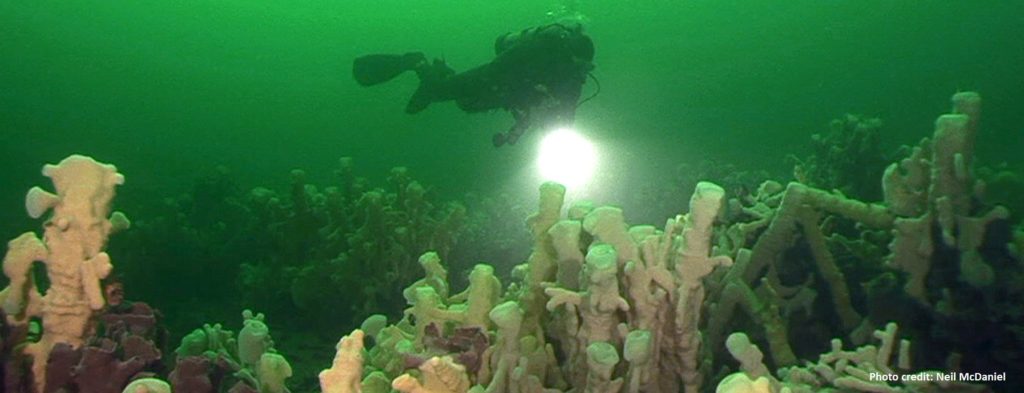
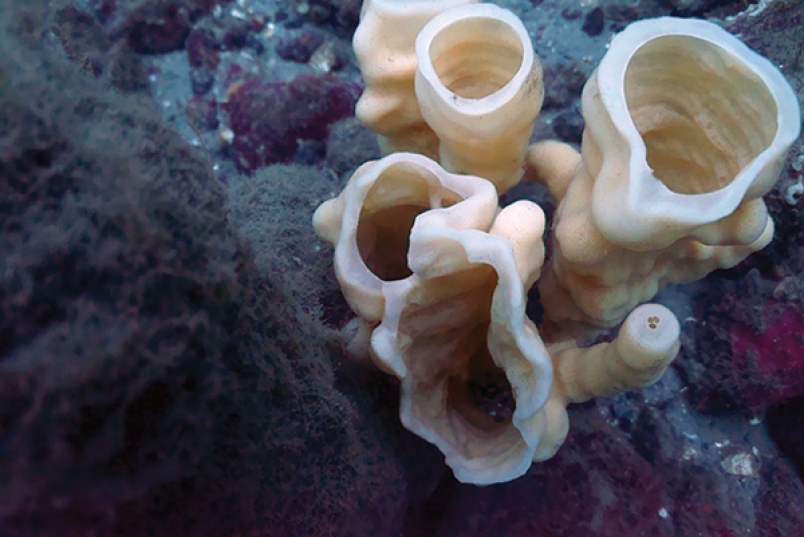
Nine Howe Sound glass sponge reefs are now protected from bottom-contact fishing with eight marine refuges. The reefs are located near Vancouver, BC. Photo credit: Fisheries and Oceans Canada (DFO).
“CPAWS has been involved in the protection of glass sponge reefs on the BC coast for almost two decades, since the first reefs were discovered in Hecate Strait in the late 1980s,” said Jessen. “Living glass sponge reefs date back to the Jurassic era, and are living dinosaurs on our Pacific Coast. We have a global responsibility to ensure their long-term survival.”
“In order to ensure their survival, we are pleased to see that the Minister has announced a number of protection measures, including a 150 metre buffer zone to prevent bottom trawling from both destroying the reefs and from smothering them with sediment, as well as prohibitions on all bottom contact fishing, which can have a severe impact on fragile glass sponges,” noted Ross Jameson, Ocean Conservation Manager, CPAWS-BC.
“We remain concerned that anchoring has still not been addressed in the protection measures for these reefs, and the previous nine glass sponge reefs in the Strait of Georgia that were previously protected,” noted Jessen. “CPAWS will continue to work with DFO and other agencies to ensure that all threats to the reefs are addressed.”
“CPAWS would also like to take this opportunity to recognize the efforts of local groups in Howe Sound who have worked tirelessly to document the Howe Sound glass sponge reefs and to advocate for their long-term protection,” noted Jessen. “We would especially like to recognize Glen Dennison for his many years of work, and to commit to him to assisting with the protection of the additional glass sponge reefs that he has identified in Howe Sound.”
“While we are pleased to see the glass sponge reefs in Howe Sound, like those before them in the Strait of Georgia, being designated as marine refuges, we hope that in future they will form the backbone for a network of MPAs in this region,” added Jameson.
A diver floats above a glass sponge reef in Howe Sound. Photo credit: Neil McDaniel
-30-
NEB report on Trans Mountain highlights lack of action to protect and recover endangered orcas
21 February, 2019
Vancouver, BC — Today, the National Energy Board (NEB) released its report on the marine impacts of the Trans Mountain pipeline and tanker project, recommending once again that the project be approved.
The Canadian Parks and Wilderness Society, BC Chapter (CPAWS-BC) is raising its continued concerns that the federal government has still not implemented an adequate plan to protect and recover southern resident orcas. The NEB conceded that the pipeline was likely to cause “significant adverse environmental effects” to the endangered orca population.
“The NEB’s recommendations to government are not going to save orcas from extinction,” said Bruce Passmore, CPAWS-BC Executive Director. “Endangered southern resident orcas face many threats to their survival, and the risks associated with the pipeline and tanker project are still high.”
Southern resident orcas are listed as endangered in both Canada and the United States, with only 74 individuals remaining as well as one new calf. It has been several years since a calf has been born to the population and survived. Recent reports suggest that by summer, two more orcas are likely to die from causes related to starvation.
Noise from marine traffic is believed to impact the predators’ ability to hunt for their preferred food source, Chinook salmon. The federal government has yet to implement an effective strategy to protect critical orca habitat with new marine protected areas, nor created the National Marine Conservation Area Reserve in the Southern Strait of Georgia.
“We’re in the midst of a global biodiversity crisis. This is life and death. With species like southern resident orcas heading for extinction, Canada has an obligation to act,” continued Passmore. “It is irresponsible for the federal government to approve this project and the associated tanker traffic, if it has not yet taken the concrete steps needed to mitigate against further harm and recover endangered orcas.”
-30-
Budget 2019 highlights climate change, but falls short on conservation
Tuesday, February 19, 2019
Victoria, BC – While the 2019 provincial budget does appear to deliver on funding promises to implement the government’s climate plan (CleanBC), the Canadian Parks and Wilderness Society, BC Chapter (CPAWS-BC) is disappointed that there was no significant increase in funding allocated to expand BC’s protected areas and safeguard biodiversity.
“This budget is missing a golden opportunity by not allocating funding to conservation at a time when there is unprecedented federal funding available to match the province’s investment in protected area expansion,” said Bruce Passmore, CPAWS-BC Executive Director. “Protected areas not only safeguard biodiversity from the effects of climate change, but they can also be a significant job creator in rural communities.”
In the throne speech last week, the BC government pledged to continue investing in BC’s parks and protected areas, while moving forward under a framework of reconciliation and upholding the United Nations Declaration on the Rights of Indigenous Peoples (UNDRIP).
“The BC government made a commitment to expand protected areas and safeguard our natural ecosystems,” said Tori Ball, Terrestrial Campaigner for CPAWS-BC. “We’re disappointed that today’s budget announcement does little to reflect that.”
British Columbia has a key role to play to help Canada meet its international biodiversity targets, which include protecting 17 percent of land and inland water by next year. With wide ranging species like caribou facing severe decline, the province has significant work to do in partnership with First Nations and the federal government to expand and connect protected areas and critical habitat.
“If the BC government is serious about combating climate change and safeguarding a future for our children, then they need to legislate bold action for conservation.” continued Ball. “Establishing large, well-connected parks and protected areas is critical to combating the global extinction crisis and mitigating the impacts of climate change.”
-30-
For interview, contact:
Bruce Passmore
Executive Director, CPAWS-BC
info@cpawsbc.org
CPAWS-BC welcomes BC Throne Speech Support for Conservation, UNDRIP Legislation
Tuesday, February 12, 2019
Victoria, BC – The Canadian Parks and Wilderness Society, BC Chapter (CPAWS-BC) is encouraged to see a commitment to biodiversity conservation through the creation of new Class A parks and the implementation of the UN Declaration on the Rights of Indigenous Peoples (UNDRIP) in today’s BC Government Throne Speech.
“CPAWS-BC has been advocating for a commitment to UNDRIP and creation of new protected areas in BC,” says Bruce Passmore, CPAWS-BC Executive Director. “The biggest conservation gains of this century will only occur with Indigenous and crown governments working together. We look forward to continuing to support these collaborative processes for critical habitat protection in this province.”
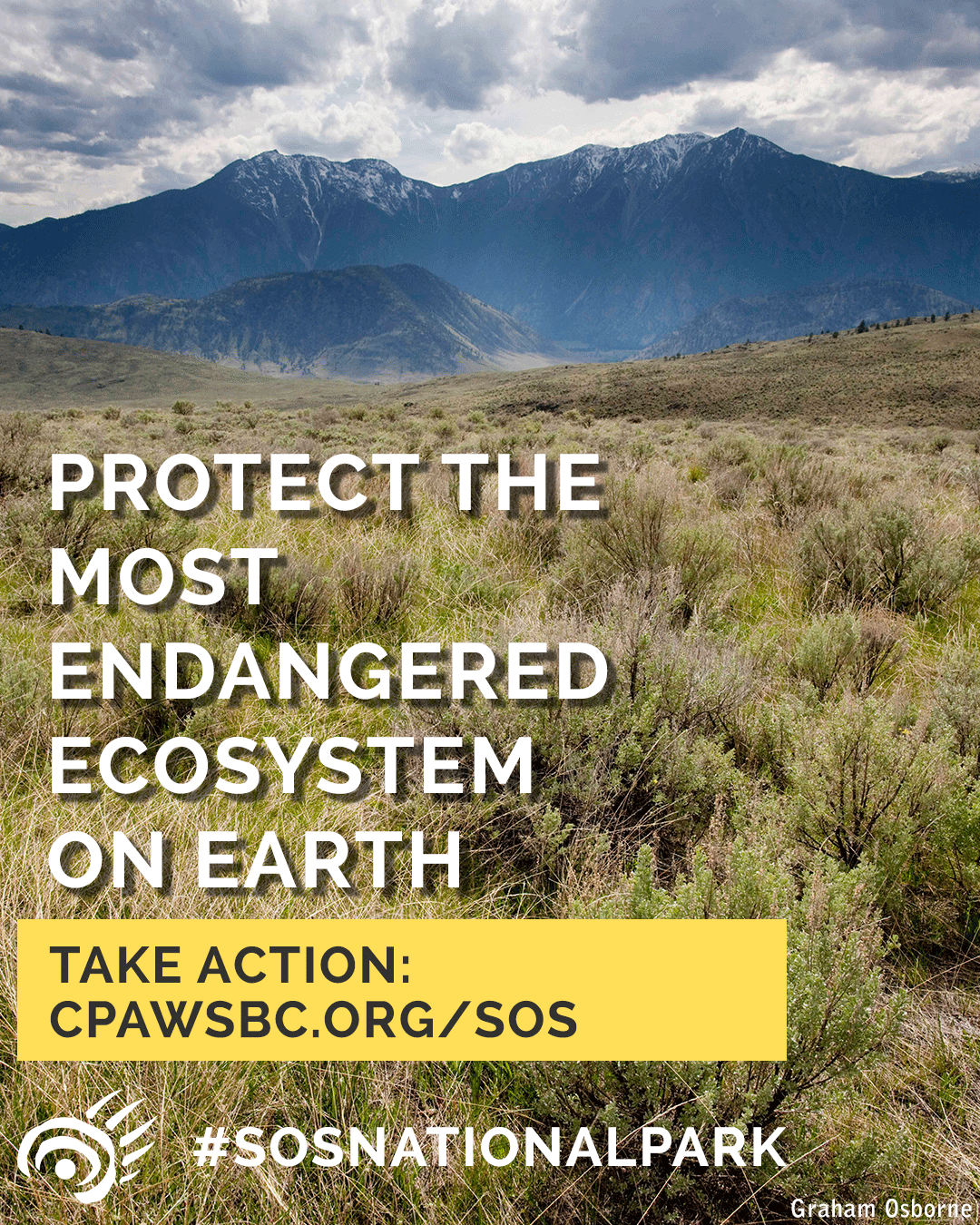
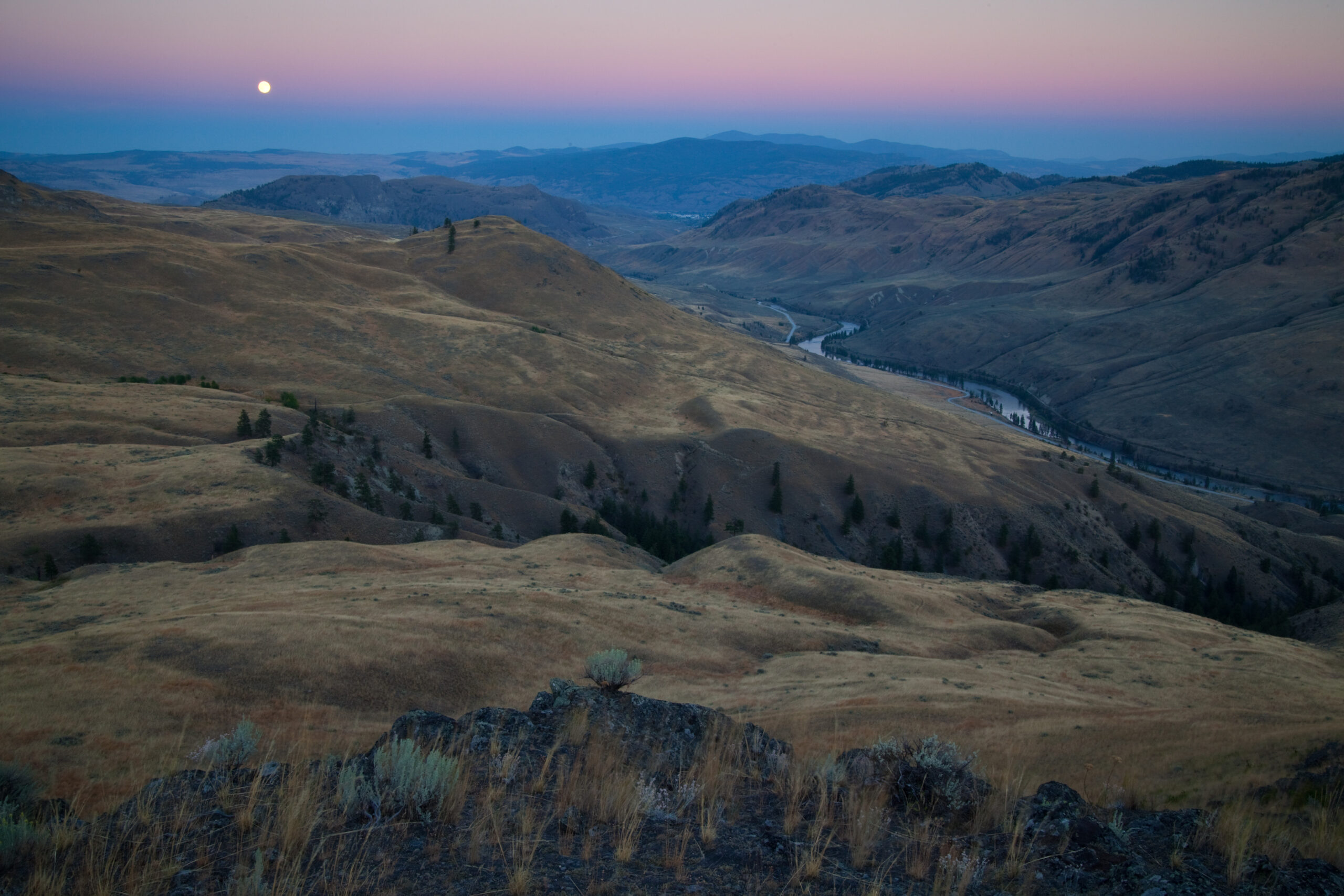
One of the best examples of a new protected area advancing within a framework of reconciliation is in the South Okanagan-Similkameen, where the provincial government is working in partnership with the Syilx/Okanagan Nation and the federal government to establish a new National Park Reserve on unceded Syilx territory. This National Park Reserve will be developed and managed in partnership with the Syilx Nation, protecting an area that is home to 56 federally listed species at risk and the most endangered ecosystem type in the world.
This trilateral government process will lay the foundation for future efforts to expand BC’s network of protected areas, creating wildlife movement corridors and mitigating the impacts of climate change — all while honouring Indigenous relationships to the land and adhering to UNDRIP.
“As biodiversity continues to decline in BC and across the globe, it’s more important than ever that governments take leadership roles in protecting our ecosystems,” continued Passmore. “We commend the BC government on recognizing its responsibility to protect and restore critical habitat in the province.”
-30-
For interview, contact:
Bruce Passmore
Executive Director, CPAWS-BC
info@cpawsbc.org
604 685 7445
A Photo Contest for BC’s Endangered Grasslands
Win one of 3 great prizes and help protect the most endangered ecosystem on earth!
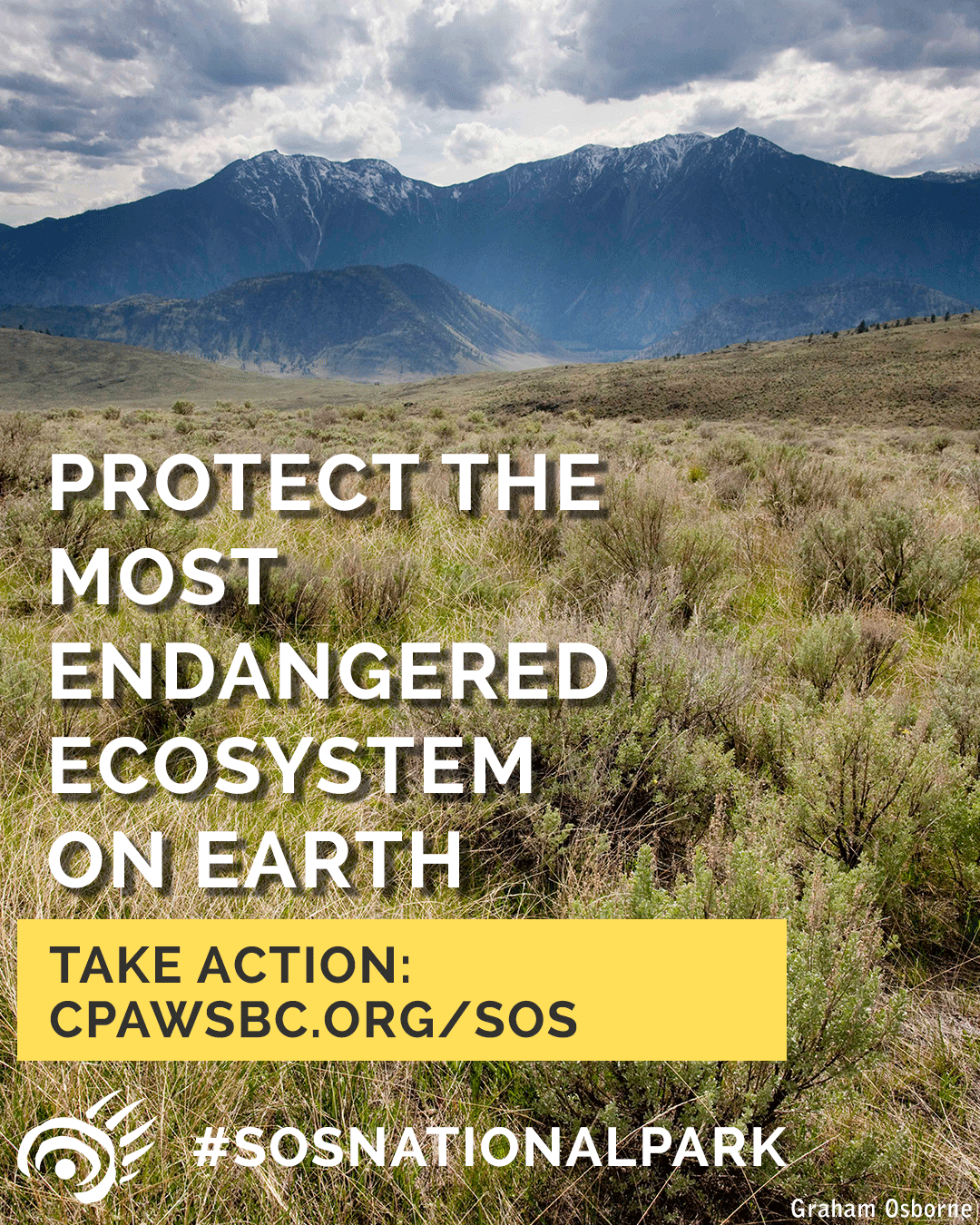
Until March 15, 2019, Parks Canada is asking for feedback on Canada’s newest National Park Reserve — proposed right here in BC! This rare and unique habitat is a hotspot for biodiversity and in dire need of protection. We are asking for your help to spread awareness about this incredible region through the #SOSNationalPark Photo Contest.
You have three chances to win one of three awesome prizes. Random draws will take place on in mid March 2019. You get an extra entry for each platform that you enter on (Facebook, Twitter and Instagram).
Contest Rules:
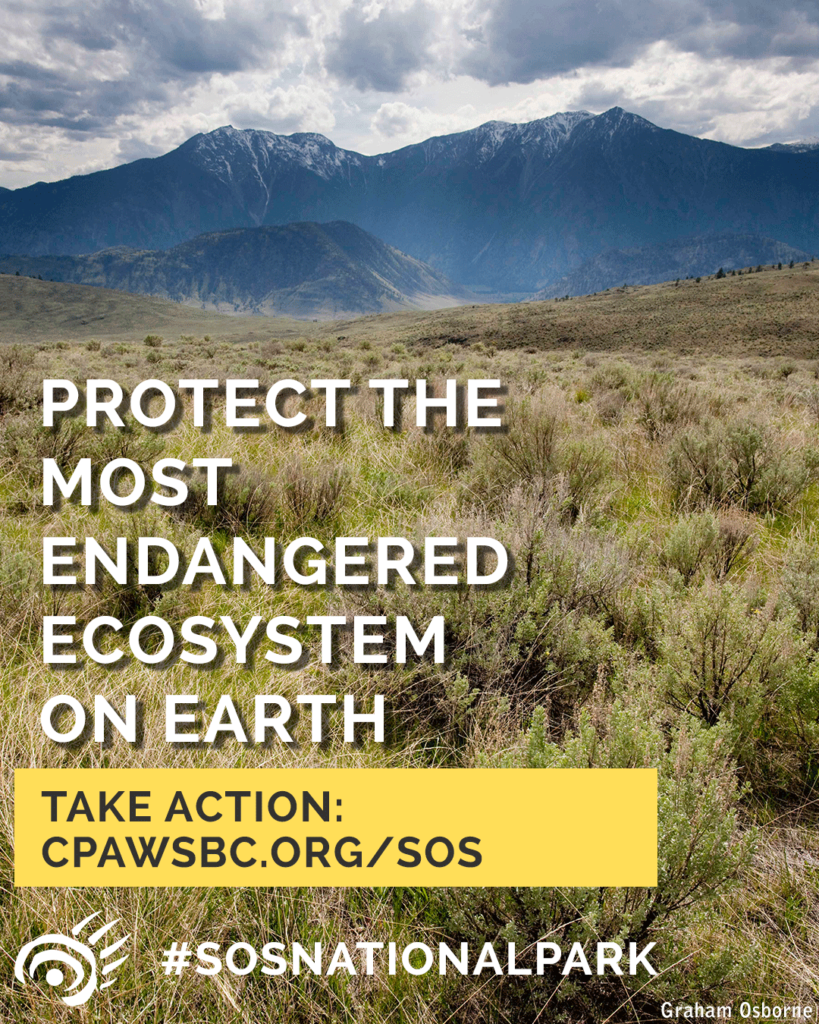
Share this #SOSnationalpark graphic on your social media platforms to enter the contest and raise awareness for BC’s endangered grasslands.
Tell us why you want a new National Park Reserve in the South Okanagan-Similkameen
Use #SOSnationalpark
*Make sure that your account is public. Full contest rules here.
Prize draws:
Enter before Thursday, Feb 14: A roundtrip for two on the Sea to Sky Gondola
Enter between Thursday, Feb 14 and Thursday, Feb 28: $50 to MEC
Enter between Thursday, Feb 28 and Friday, March 15: $50 to MEC
Learn more about the proposed South Okanagan-Similkameen National Park Reserve.
PS. Check out the Social Media Toolkit for inspiration and sample posts that you can use to spread the word about this extraordinary opportunity to create a bright future for BC’s endangered grasslands.
Decision to Safeguard Tetrahedron Provincial Park Celebrated by Conservationists
7 February, 2019
Vancouver, BC— The Canadian Parks and Wilderness Society’s BC Chapter (CPAWS-BC) welcomes today’s news that Minister George Heyman has turned down the request to change the existing protection status and boundaries of Tetrahedron Provincial Park on the Sunshine Coast.
The Sunshine Coast Regional District (SCRD) had requested a change to either the park boundary or its level of protection as part of a proposed water supply infrastructure expansion that would have seen further drawdown of Chapman Lake, a main feature within the protected area.
“We are thrilled that the minister has respected the feedback of British Columbians, who were largely opposed to the reclassification of this important protected area,” said Tori Ball, Terrestrial Campaigner for CPAWS-BC. “It’s reassuring that our government is prioritizing conservation, at this critical time for protecting biodiversity across the province. ”
Stripping away the current Class A Park status from Tetrahedron or adjusting the park boundary would have had lasting effects, weakening the ecological and cultural values of the area. Well-managed protection for natural areas like Tetrahedron are critical to the long-term health of BC’s communities.
CPAWS-BC shared its opposition to this proposal in the BC Parks public consultation process, which included two open houses held on the Sunshine Coast in 2018. Both of these public, in-person consultations were packed with community members, many vocally opposed to stripping protection from Tetrahedron.
“Today’s announcement has left us feeling more optimistic for the future of BC’s parks and protected areas, which are among the most poorly resourced on the continent,” continued Ball. “We’re hopeful that this announcement is signalling a brighter future for our parks.”
How sound are the protections for Howe Sound’s glass sponge reefs?
By Sonia Singh Jind, 25 January 2019
A diver floats above a glass sponge reef in Howe Sound. Photo credit: Neil McDaniel
When scientists stumbled upon an assembly of strange, blanched formations growing overtop of one another and stretching out for hundreds of kilometers across the seafloor, they had no idea they were looking at living glass sponge reefs.
Until then, these reefs were thought to have been extinct since the Jurassic, which ended over 200 million years ago. Scientists are not quite sure why glass sponge reefs seem to have only survived off the west coast of BC, but the answers may give us insight into why these ghostly reef-builders are so rare.
Individual glass sponges – simple animals that use silica (or glass) to build their skeleton – are found in several locations throughout the world, such as the west coast of the United States and Antarctica. However, glass sponge reefs are extremely rare, and seem to only occur in certain environmental conditions. These complex structures form when individual glass sponges grow on top of one another, eventually forming towering structures that can reach up to 20m high.
Glass sponges in Howe Sound. Photo credit: Vancouver Aquarium via squamishchief.com
The most extensive glass sponge reefs have been found in Hecate Strait, where they cover hundreds of kilometers of sea floor. Smaller reefs have since been discovered in the Strait of Georgia, Chatham Sound, and the Broughton Archipelago, with 14 of those in Howe Sound. It appears that the unusually high silica and oxygen in the water, an optimal level of water flow, food supply, and temperature, make the coast of BC and Alaska the only known coastline to support glass sponge reefs in the entire world.
The foundation of ocean ecosystems
Glass sponge reefs aren’t just pretty to look at, they are also ecologically important in a variety of ways. The 3D structures these reefs provide on an otherwise almost barren seafloor create habitat and areas of refuge for seastars, prawns, lobster, and a variety of fish, including halibut, cod, herring, and the threatened rockfish.
Sponges have the amazing ability to filter 95% of bacteria in the water. You can think of a field of glass sponges as the ocean’s natural filtration system, filtering huge amounts of ocean water every second and producing ammonia that other organisms need for life processes, thereby supporting ecosystem health.
Just as their name suggests, these sponges are fragile. Their texture is similar to meringue, so they break easily. Despite their fragility, they can live thousands of years: some reefs on BC’s coast have been aged at 9,000 years old. They likely survived, in part, because they live so far from the surface of the ocean and away from human contact. But recently humans have begun to exploit the ocean at depths which were previously unreachable, and the threats to this fragile species have intensified.
Human activities such as bottom-trawl fishing and down-rigging can easily destroy these ancient 9,000 year old reefs in seconds. Prawn and crab traps hitting the bottom, the laying of submarine cables and damage from anchors can all cause physical damage and stir up sediment in the water, smothering the sponges. Sponges stop feeding when covered in sediment, eventually leading to starvation and death. Glass sponges take over 200 years to grow just 1 metre in height, so when they are damaged, they could take hundreds of years to recover, if ever.
Protecting glass sponge reefs
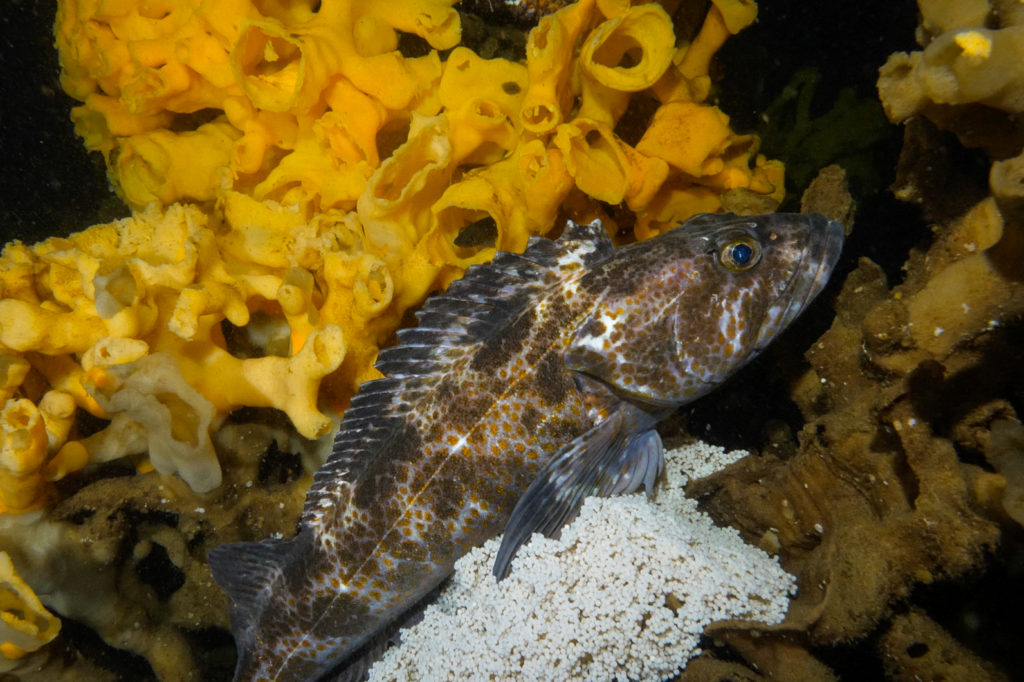
A rockfish on a glass sponge reef in the Broughton Archipelago. Photo credit: Tavish Campbell, Wild First
CPAWS-BC has been working on glass sponge reef protection for over 25 years, drawing global attention, educating the public, and urging the government to protect these sites of international importance. In 2002 Oceans and Fisheries Canada (DFO) created fishing closures prohibiting bottom-trawling over the glass sponge reefs. But this was not enough. The reefs needed permanent protection. It took another 8 years before DFO announced Hecate Strait (the site where the reefs were first discovered in 1987) as an Area of Interest under consideration to become a Marine Protected Area (MPA).
Finally, in 2017, after a strong push for higher protection standards, CPAWS-BC rejoiced as the Hecate Strait & Queen Charlotte Sound Glass Sponge Reefs MPA was established. The reefs in Hecate Strait are currently protected within 150m around them.
While this MPA and the preceding fishing closures over the Strait of Georgia reefs were major wins towards protecting our glass sponge reefs, there are over 20 glass sponge reefs in Howe Sound, Chatham Sound and the Broughton Archipelago that still need protection.
CPAWS-BC is currently leading the charge to ensure the ancient reef-building animals in Howe Sound are protected from bottom-contact fishing and undersea pipelines, both of which pose an immediate threat to their survival.
Vancouver, BC – Earlier today, the federal government quietly released its second report on progress towards protection of boreal caribou critical habitat across Canada, which once again calls out significant gaps in protection and notes an overall lack of progress across Canada. The Canadian Parks and Wilderness Society, BC Chapter (CPAWS-BC) notes that this report, which is two months overdue, contains very little by way of updates on habitat protection.
“If the point of these reports is to note progress on what critical habitat has been protected for boreal caribou, once again the government has missed the mark, especially in BC,” says Jessie Corey, Terrestrial Conservation Manager of CPAWS-BC.
“While it’s encouraging to see some of the progress the province has made towards delivering on their responsibilities, for example in identifying spatial priorities for protection with the Fort Nelson First Nation, all this report really does is divert attention away from the fact that in the last eight months, no new protection has been put in place on the ground where these caribou herds continue to decline,” says Corey.
Worryingly, the report mentions new protections in only a handful of provinces – Alberta, Quebec, Labrador, and NWT – but none in BC.
Additionally, in many places across the country, provinces and territories are setting new deadlines for long overdue targets, because their focus has largely been directed elsewhere. The province of BC, for example, has reported on restoration and monitoring initiatives, which are important tools in the caribou recovery toolbox, but ultimately they have no place in a report about habitat protection.
“We have a collective responsibility to protect and steward important wildlife like boreal caribou, and the federal government’s report proves that we’re not taking this responsibility seriously enough,” says Corey.
The urgency to act is greater than ever for these caribou. CPAWS-BC is calling for stricter adherence to reporting requirements for these SARA Section 63 reports, so that they can become more effective tools for tracking progress towards protecting habitat, and identifying exactly where protection is still needed.
We use cookies and other similar technologies such as pixels and web beacons (“Cookies”) for various purposes, such as to ensure our website functions properly, enhance your browsing experience by remembering your preferences and provide personalized content and advertisements.
Functional
Always active
The technical storage or access is strictly necessary for the legitimate purpose of enabling the use of a specific service explicitly requested by the subscriber or user, or for the sole purpose of carrying out the transmission of a communication over an electronic communications network.
Preferences
The technical storage or access is necessary for the legitimate purpose of storing preferences that are not requested by the subscriber or user.
Statistics
The technical storage or access that is used exclusively for statistical purposes.The technical storage or access that is used exclusively for anonymous statistical purposes. Without a subpoena, voluntary compliance on the part of your Internet Service Provider, or additional records from a third party, information stored or retrieved for this purpose alone cannot usually be used to identify you.
Marketing
The technical storage or access is required to create user profiles to send advertising, or to track the user on a website or across several websites for similar marketing purposes.

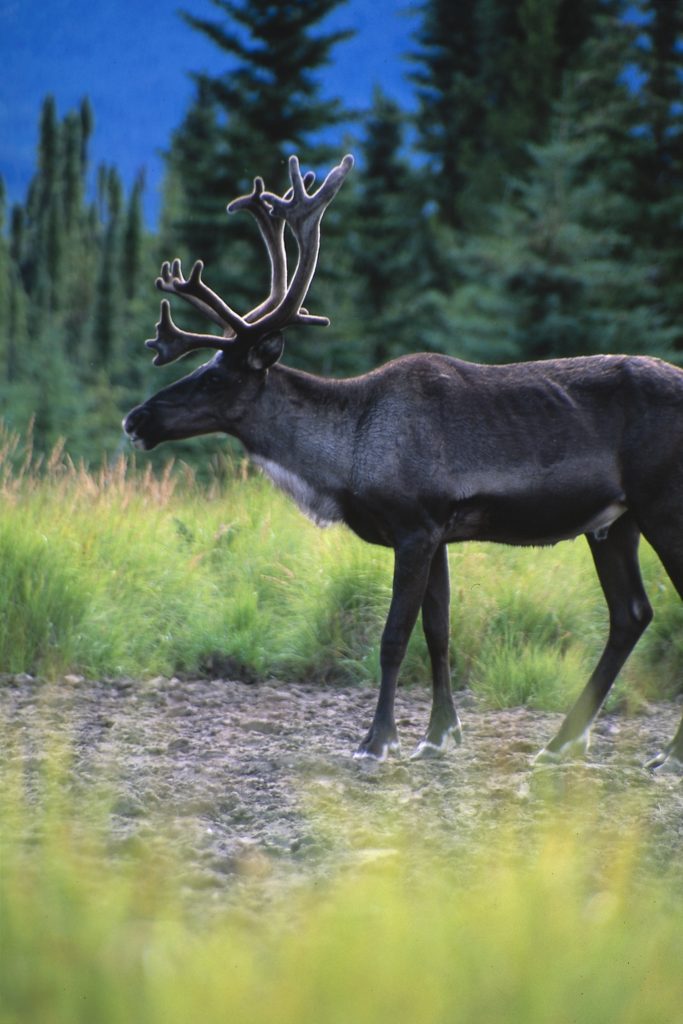
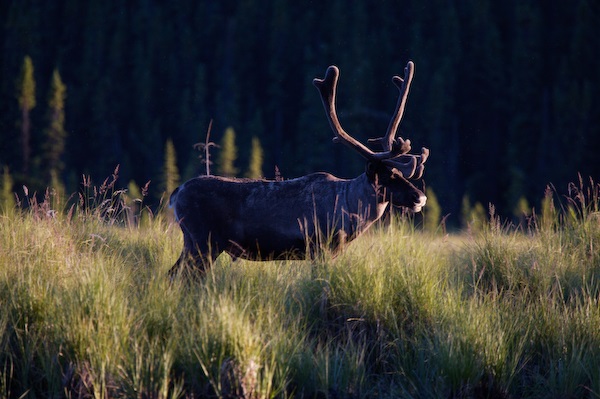 Caribou. Image credit: Wayne Sawchuk.