Public consultation launched for Canada’s newest National Park Reserve
Monday, December 10, 2018
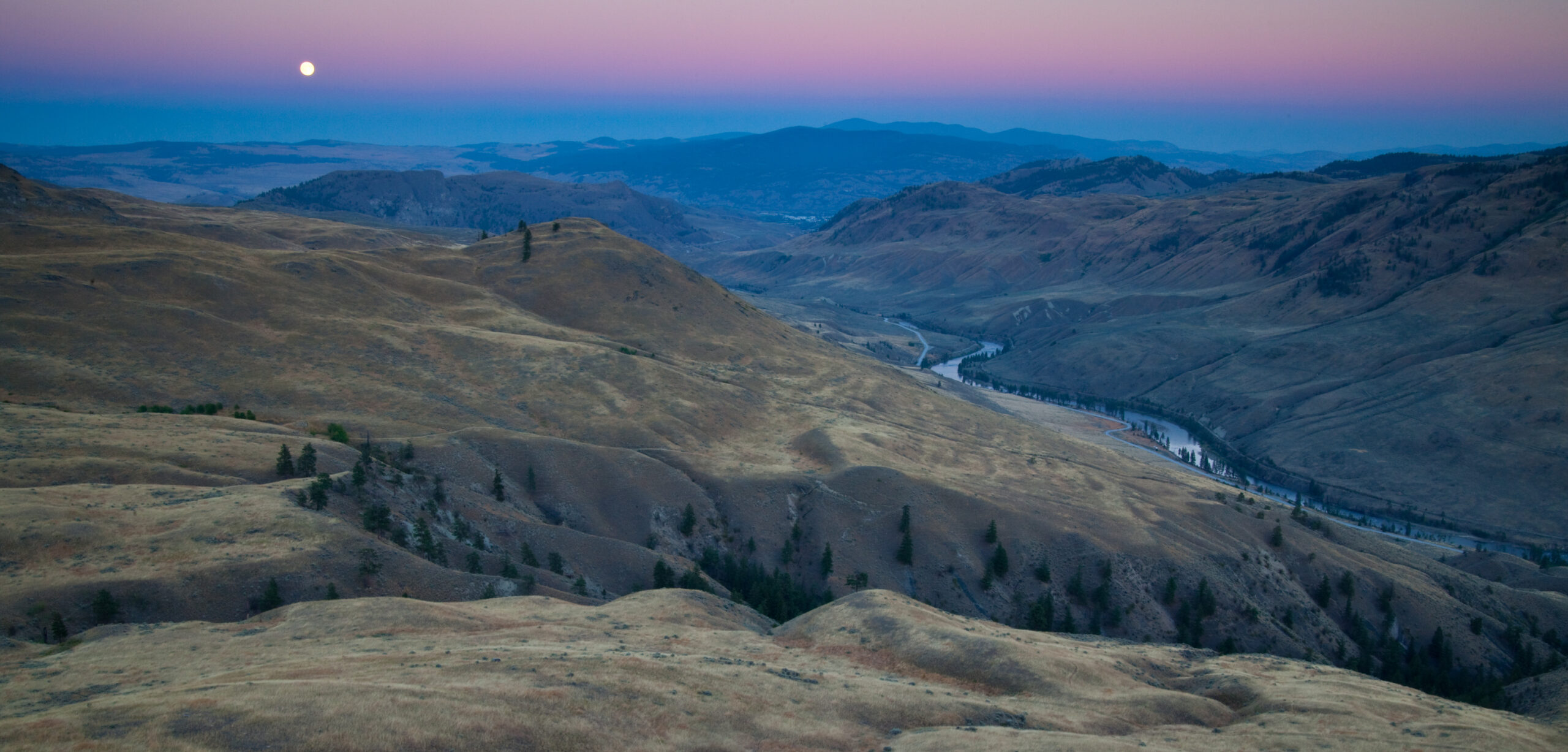
Vancouver, BC – A newly launched public consultation process on Canada’s newest National Park Reserve, in the South Okanagan-Similkameen region of BC, is providing Canadians a long-awaited opportunity to help secure the future for Canada’s most at-risk grassland ecosystem and the wildlife that live there. The Canadian Parks and Wilderness Society’s BC Chapter (CPAWS-BC) welcomes this announcement made by the federal, provincial, and Okanagan Nation governments.
“This is our opportunity to demonstrate leadership on a global scale by supporting strong, meaningful protection for this area, one of the most important conservation opportunities in Canada,” says Jessie Corey, Terrestrial Conservation Manager for CPAWS-BC. “We are quickly approaching the deadline for Canada’s 2020 biodiversity protection targets, and this will move us one step closer to meeting the target.”
Members of the public are invited to provide input on a number of important land management considerations within the proposed park area, as well as helping to identify the range of proposed land use. The working boundary for the proposal differs from past proposals by both the provincial and federal governments, and captures critical areas for habitat connectivity as well as biologically and culturally significant areas around Txasquin (Mt. Kobau) and Nkl’pula?xw (Kilpoola and Chopaka grasslands).
“The creation of this new National Park Reserve has been supported by local communities and people across the province for over a decade, so we’re thrilled to see the process moving on to this critical next step on the path towards park establishment,” adds Corey. “This National Park Reserve will play a key role in connecting endangered grasslands between Canada and the United States, and will support species survival in an ever changing climate.”
CPAWS-BC looks forward to engaging its members and partners across the country during the consultation to contribute expertise and support for this important biodiversity conservation initiative, which is open to public input until February 28, 2019.
The Gina ‘Waadluxan Kilguhlga Land-Sea-People Management Plan is a landmark step towards cooperative management in Canada. This ten-year management plan signed by the Haida Nation, Parks Canada, and Fisheries and Oceans Canada, is jointly managed through the Archipelago Management Board (AMB).
Traditionally, the Canadian government has managed areas of land and ocean separately, and people’s relationships to the land and sea are not always at the forefront of conservation planning. This new plan is different. Central to the Haida worldview that everything is interconnected, the Land-Sea-People Management Plan integrates the protection of land and sea, while acknowledging people’s well-being and need to make a livelihood. This new integrated and adaptive plan is based on principles of respect, responsibility, interconnectedness, and balance, to name a few. It is regarded as a great achievement and partnership by many.
Gwaii Haanas is a globally renowned ecological and cultural treasure. We have worked with the Haida Nation for more than 25 years to protect Gwaii Haanas and share its stories with Canadians and the world. This important step will help preserve some of the most abundant and unique nature in the world, and protect the cultural heritage of this iconic place.
-Catherine McKenna, Minister of Environment and Climate Change and Minister responsible for Parks Canada
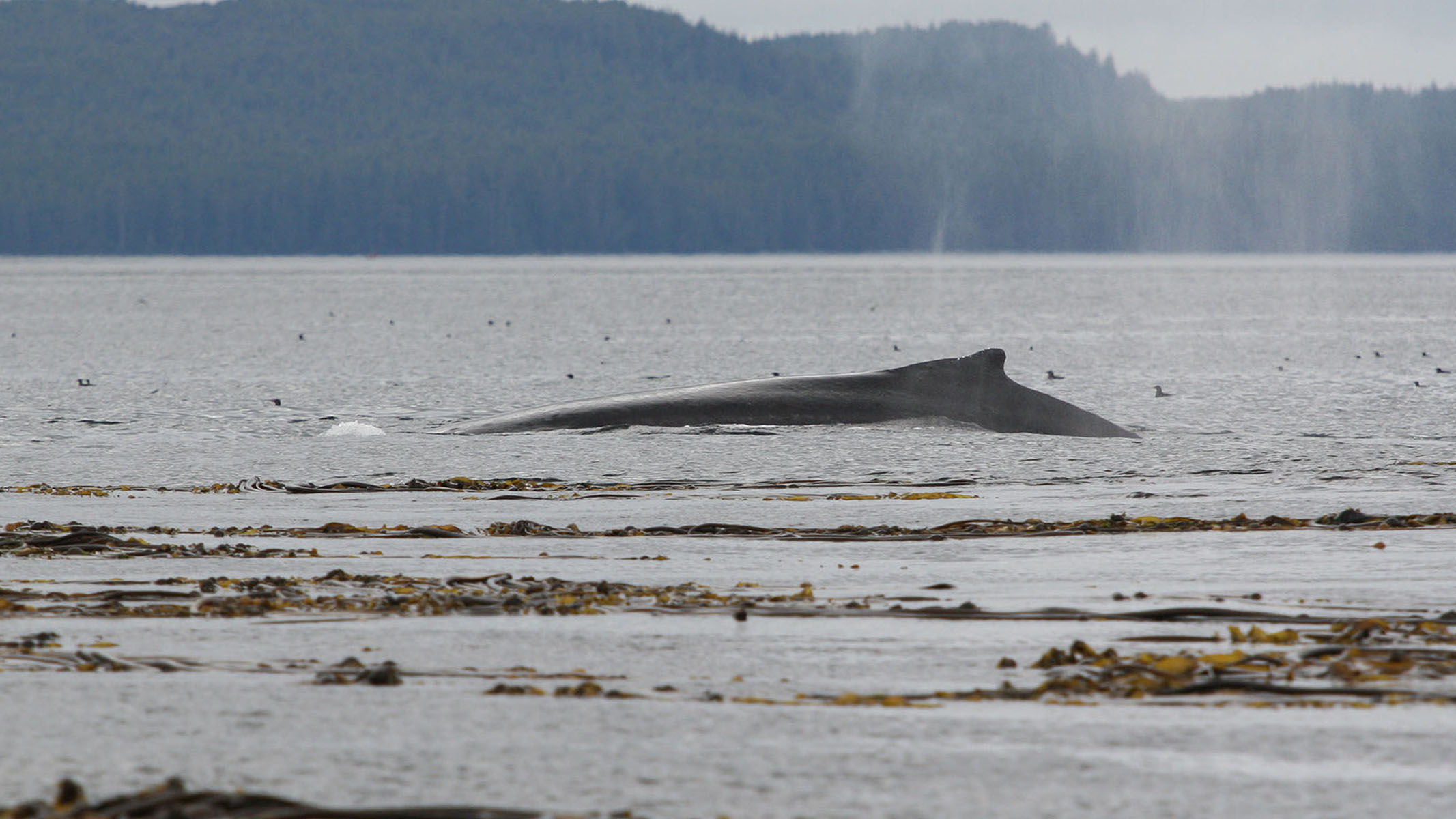
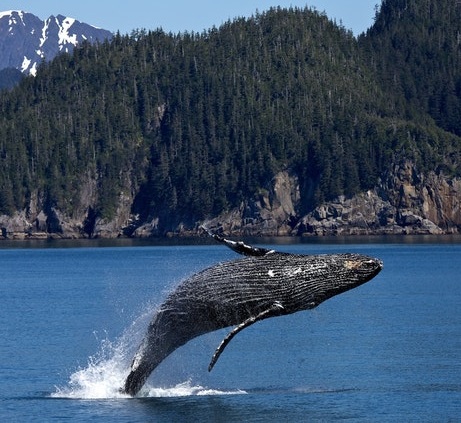
A humpback whale swims along the shoreline in Haida territory. Image credit: Duane Fuerter
The signing of the new management plan is a landmark step in partnership and conservation that has been decades in the making. Archaeological evidence suggests humans have been living on Haida Gwaii at least 12,000 years, and the Haida have an oral history of their ancestors in Gwaii Haanas dating back to the emergence of some of the most culturally significant islands in Haida Gwaii.
The first step towards official protection of this sacred area was the creation of the Haida Gwaii Watchmen Program in 1981, which was created to protect southern Haida Gwaii from the ecological and cultural consequences of harmful whaling, mining, logging, and fishing activities that had begun since Europeans arrived.
The Haida Watchmen program is a touchstone to our past and future. There are few places left on the planet where one can go to feel that sense of being a part of all things. Gwaii Haanas is one of those places.
-Suudihl (Cindy Boyko), Council of the Haida Nation, AMB co-chair
The archipelago was also recognized for its unique cultural and ecological importance with the designation of SGang Gwaay as a UNESCO World Heritage site in 1981.
In 1985, the Haida Nation continued the movement to protect their lands, leading a logging blockade at Tllga Kun Gwaay.yaay (Lyell Island). Another success came when the area was designated a Haida Heritage Site in the same year.
In 1987 the Government of Canada (formed in 1867) and the province of British Columbia (formed in 1871) designated Gwaii Haanas as a national park reserve and marine protected area in the South Moresby Memorandum of Understanding and Agreement (signed in 1988).
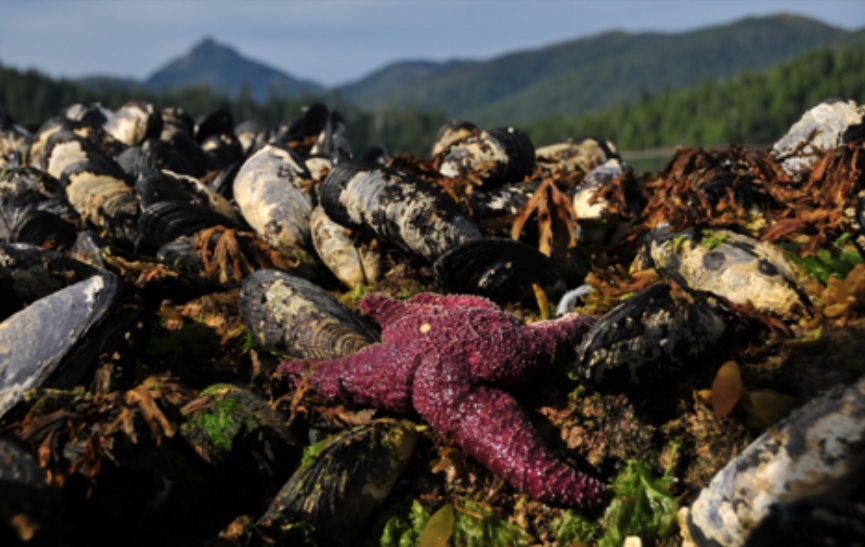
The coastal ecosystem of Gwaii Haanas is abundant in marine life, including these mussels and starfish. Image credit: Parks Canada
While many positive steps were being made towards the protection of the area, cooperative management between the Government of Canada and the Haida Nation was put into writing in 1993, with the signing of the Gwaii Haanas Agreement and the formation of the Archipelago Management Board which has equal representation from the Haida Nation and the Government of Canada.
Then, in 2010 the Gwaii Haanas Marine Agreement was signed, and Gwaii Haanas was designated as a National Marine Conservation Area Reserve.
Gwaii Haanas is a treasure for wildlife and has great ecological, cultural, and spiritual importance. It contains upwelling areas of cold, nutrient-rich waters and is home to 42 species-at-risk and 20 different species of marine mammals! Black bears, bald eagles, salmon, and a wide variety of seabirds are found on the islands and surrounding waters of Gwaii Haanas. It is also an area of great spiritual importance to the Haida Nation, where spiritual connection is practiced through the use of traditional foods and medicinal plants.
It was common to us, just to see…thousands and thousands of tonnes of herring – big spawns, as far as you can see…and then the sea lions and the killer whales…you hear…sea lions roaring all night…
-Gidaansda (Percy Williams)
At approximately 3,466 km2, The National Marine Conservation Area Reserve contributes to about 0.06 percent of Canada’s conservation target to protect 10 percent of coastal and marine waters by 2020. However, it should be noted that only 40 percent or 106.2 km2 of the total marine protected area in Gwaii Haanas is strictly protected from commercial and recreational fishing.
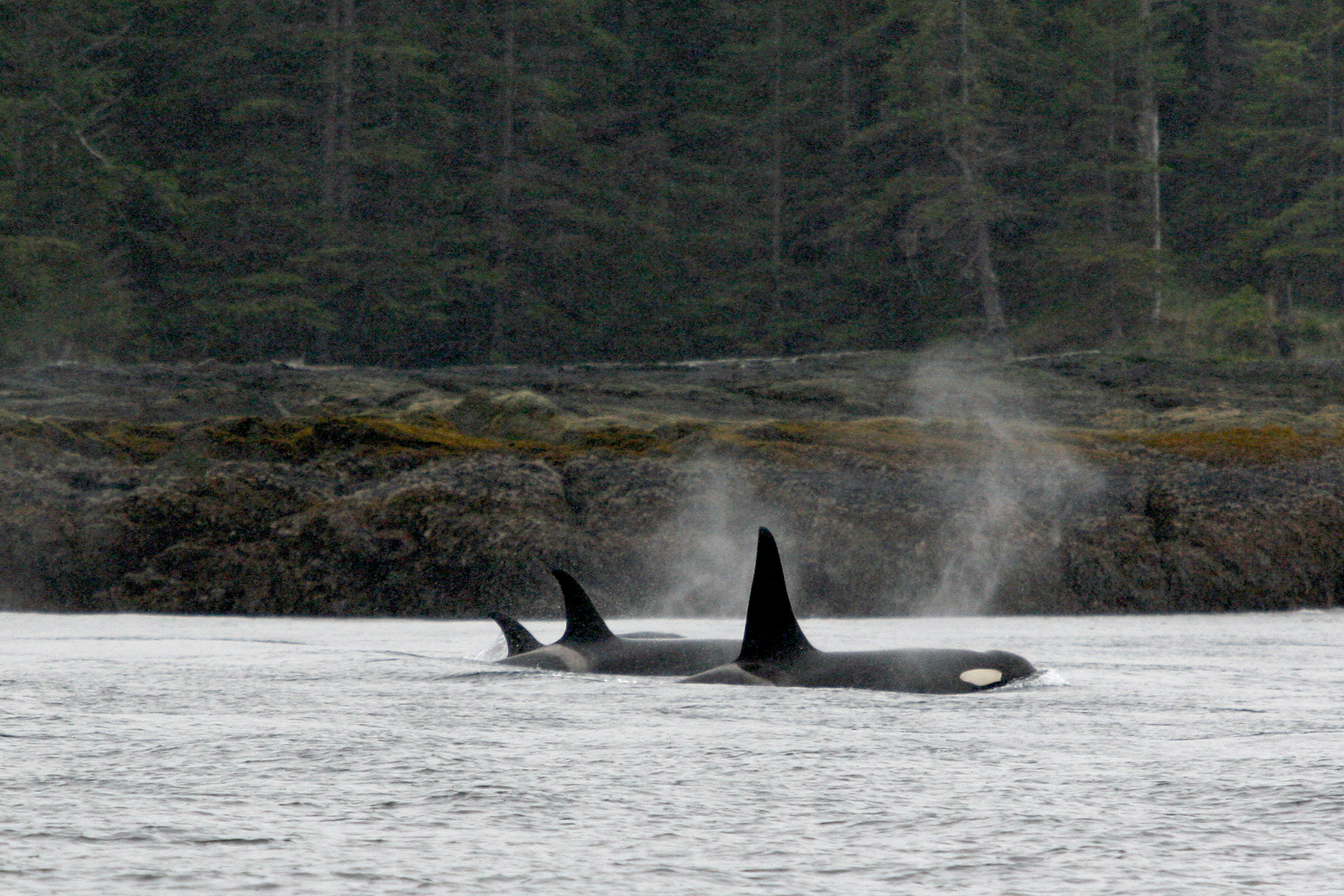
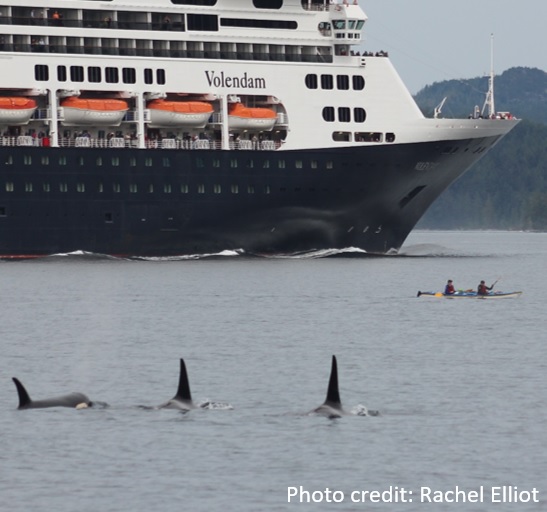
A pod of orcas swims off the coast of Haida Gwaii. Humpback, minke, and killer whales are often sighted in Gwaii Haanas, along with many other marine mammals. Image credit: Duane Fuerter
The Canadian Parks and Wilderness Society – BC Chapter (CPAWS-BC) played an important advisory role on improving the zoning plan for Gwaii Haanas which originally protected just 3 percent of the marine area. CPAWS-BC strongly recommended a substantial percent increase to ensure effective protection. Taking heed of recommendations from the ENGO sector, including CPAWS-BC and other leading environmental organizations, the zoning plan was revised to protect 40 percent of the marine area from impactful human activities. Quite an achievement!
For more information on how CPAWS-BC was involved in protecting Gwaii Haanas, visit theCPAWS-BC website. To view the Gina ‘Waadluxan KilGuhlGa Land-Sea-People Management Plan check out the Haida Nation website and Parks Canada website.
Last month, the Intergovernmental Panel on Climate Change (IPCC) released the Special Report on Global Warming of 1.5°C. This report, justifiably, made news worldwide. The IPCC warns that rapid, far-reaching and unprecedented changes are necessary to limit global warming to 1.5°C.
Parallel to the IPCC is the Intergovernmental Science-Policy Platform on Biodiversity and Ecosystem Services (IPBES).
The full IPBES report will be coming out in May 2019, and the primer was just released. This is the first comprehensive analysis since the 2005 Millennium Ecosystem Assessment – which first popularized the term ecosystem services. The assessment will aim to inform policy and decision-making on key international goals including the Sustainable Development Goals, the Aichi Biodiversity Targets, and the Paris Agreement on climate change.
Here in British Columbia, the fight against extreme energy – namely, tar sands pipelines and the hydraulic fracking of natural gas – has brought home the importance and weight of the Paris Agreement. However, the damage caused to ecosystems and species extinction does not often make headlines. To live in a sustainable and healthy world, we’ll need to be working on both energy and ecosystems in tandem, and this report will be a key source of information to get us there.
To begin, we have to stop permitting logging in critical caribou habitat. We need to manage human access to important foraging and ranging grounds for grizzly bears. And we must designate more land to shelter biodiversity through a changing climate and increasing human and development demands.
We have an incredible opportunity to be world leaders in conservation. To do this, we must work toward meeting and surpassing the Aichi Biodiversity Targets, locally named Canada’s Pathway to Target 1. This goal states that “By 2020, at least 17% of terrestrial areas and inland water, and 10% of marine and coastal areas of Canada are conserved through networks of protected areas and other effective area-based measures.” It is not enough to protect the amount of land: we must increase the resources for our underfunded provincial parks to boost their science, monitoring, and planning capacity.
North American badgers are one of many endangered species that make their home in the South Okanagan-Similkameen.
British Columbians will soon have an opportunity to speak up for ecosystem protection. Parks Canada is expected to open public consultations for the proposed National Park Reserve in the South Okanagan-Similkameen. This future park in Sylix homelands will encompass the most endangered ecosystem type in the world: grasslands. It is also home to dozens of threatened and endangered species. By protecting this vital area, we can move forward on our commitment to protecting biodiversity for generations to come.
Every fall, the BC government launches a budget consultation process. This province-wide online and in-person forum asks for your input on the financial, and therefore fundamental, priorities for the government in the upcoming fiscal year.
Photo credit: Tori Ball
The annual budget consultation offers a key opportunity for BC’s underfunded and overcrowded provincial parks system – it’s a chance for British Columbians to have their say and make a huge impact for our protected areas!
BC’s parks and protected areas are precious habitat for wildlife and plant species, thrilling sites for outdoor adventures, and iconic parts of our natural legacy. But the crowded trails and declining species are dominating the stories coming out of the woods.
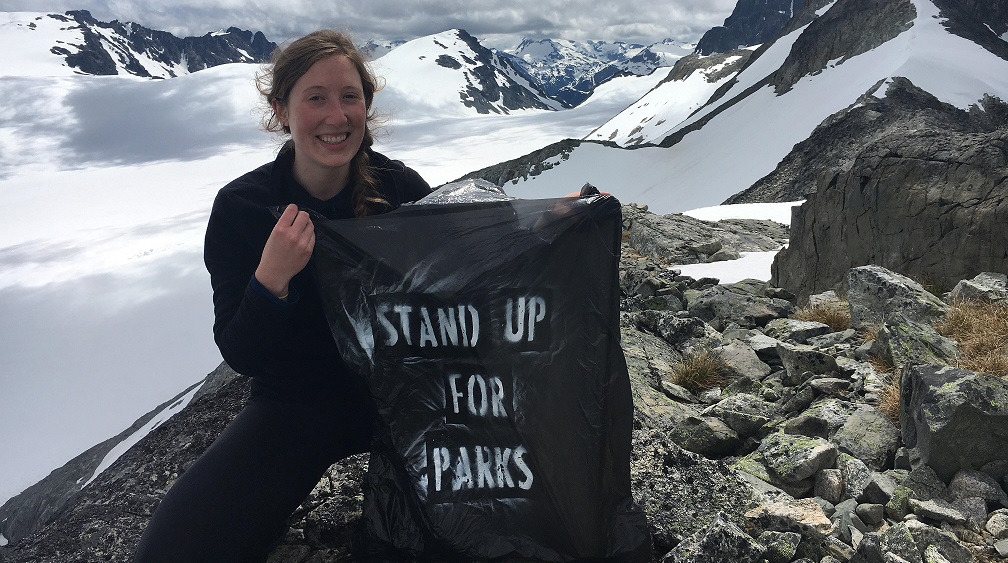
We’re in the last few weeks to g making a difference to the necessary resources our provincial parks in next year’s budget. Will you join us in standing up for BC’s parks?
5 reasons to call on your elected officials to #StandUpForParks in the BC Budget
1.Investing in conservation will help BC meet international biodiversity targets
Time is ticking closer to the 2020 International Biodiversity Targets, in which Canada has committed to protecting 17% of its land and inland waters by 2020. To halt the rapid loss of biodiversity in BC, we must ensure that more land is set aside to shelter species at risk and natural landscapes through a changing climate.
2. Well-protected, safe and accessible parks will result in happier and healthier people
Parks double as places for people to connect with nature and each other. There are immense health costs from inactivity due in part to increasingly urban and screen-based lives. Accessible nature with safe infrastructure means more people can participate in outdoor recreation and is a bonus of increased investment in parks and protected areas.
3. Protected areas drive visitor spending and local livelihoods, bringing benefits to both urban and rural communities
From Hope to Revelstoke, we don’t need to look far to see the direct economic impact that visitors bring to a community. Expanding and improving our provincial protected areas will provide benefits to communities across the province by increasing sustainable tourism. For every $1 invested in the parks system, visitor spending returns over $8 to the economy.
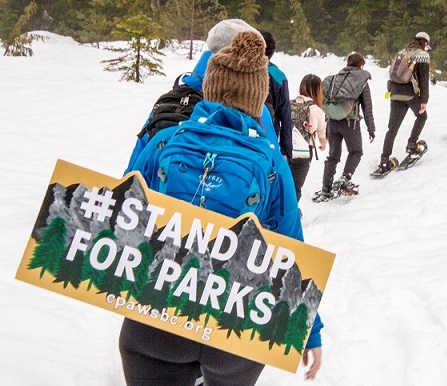
Snowshoers at Cypress Provincial Park near Vancouver. Photo credit: Tori Ball
4. BC Parks must keep up with demand for outdoor recreation as our tourism industry grows
From backcountry skiing to family camping get-aways, residents and visitors to BC have an ever-increasing appetite for outdoor recreation. In 2016, the booming tourism industry contributed over $1 billion in provincial tax revenue alone and contributed more to GDP than mining, forestry & logging, and agriculture & fishing industries. With an investment in staff and infrastructure, we can ensure these areas are ecologically resilient to provide both people and wildlife with safe places to roam.
5. Protected area systems support clean air, water and other ecosystem services necessary for climate change mitigation and adaptation
Last but not least, parks are necessary for watershed-wide ecological health. Protected areas improve air quality and safeguard clean water. These wild areas provide habitat for numerous species and prevent erosion. Protected areas have become increasingly important to shelter many of these natural values through an increasingly disrupted climate.
Read CPAWS-BC’s official comments to the BC Select Standing Committee on Finance and Government Serviceshere. Although the official provincial consultation has come to a close, our elected leader’s door, inboxes and phone lines are still available for you to voice your opinion. It is up to all provincial leaders to speak up for parks, will you take a moment to email key ministers and your MLA?
By Sonia Singh Jind, Ocean Conservation Coordinator
Many industries require minimum standards to ensure quality and consistency. Whether it’s Apple controlling the quality of iPads, health organizations demanding safety standards for medications, or governments ensuring their public schools meet certain basic criteria, minimum standards help ensure our aims are being adequately met and create enforceability of those aims. Why shouldn’t our Marine Protected Areas (MPAs) have minimum standards too?
One proposed marine protected area that really exemplifies the need for minimum standards is the Deepsea Oasis, officially known as the Offshore Pacific MPA. This 140,000 square kilometer area lays hundreds of kilometres off the west coast of Vancouver Island, and is home to unique marine life that lives on seamounts and hydrothermal vents, some of Earth’s most fascinating ocean ecosystems. Over 500 species have been discovered living on hydrothermal vents since their discovery in 1977, and an estimated 80 percent or more of these species have been described as endemic and rare (Fisheries and Oceans Canada, https://bit.ly/2ANfpxq).
The current situation
Hydrothermal vents spew nutrients and heated water in the surrounding ocean, making them biodiversity hotspots. Photo credit: Oceans and Fisheries Canada (DFO).
As it now stands, Canada has no minimum standards for its marine protected areas, including the Deepsea Oasis. This unique ocean area, which desperately needs the federal government’s protection, is currently only earmarked as an Area of Interest and a fisheries area closure for bottom-contact fisheries: all other activities, including industrial fishing and shipping, are still permitted. While there has been a moratorium on oil and gas exploration since the ’70s, it could be lifted in the near future, which poses another potential threat to the protection of this area. Given all the activities that are currently permitted, how can Canada count this fisheries closure towards our target of reaching 10 percent ocean protection by 2020?
Developing minimum standards for all Canada’s MPAs is one way to ensure that now, and in the future, all marine protected areas provide full and effective protection to the incredible ecosystems and marine life they are designed to protect. And guess what? The National Advisory Panel on Marine Protected Area Standards developed a report in August 2018 proposing minimum MPA standards to be adopted nationwide based on guidelines from the International Union for the Conservation of Nature (IUCN). Minimum standards for Canada’s MPAs have been thoughtfully developed, we just need our federal government to adopt and apply them.
With the ongoing stresses that climate change is imposing on the ocean, including worsening hurricanes and storms, rising sea temperatures, and ocean acidification, effectively managed and enforced large marine protected areas are urgently needed. If designed properly, MPAs provide a buffer against climate uncertainty and build resilient ecological communities that will bounce back from damage better and faster.
What you can do
Studies have shown that the most effective protection takes the form of very large, long-standing, and strictly protected areas. The Deepsea Oasis has been identified as an Area of Interest by the Department of Fisheries and Oceans, which is the first step on the way to being designated as a marine protected area. But it doesn’t stop there. We need to ensure that MPAs across Canada adoptminimum standards of protection so that these areas move from being “somewhat” protected, to fully protected from all extractive and destructive activities, including industrial fishing and oil and gas exploration. Only then will we be able to see the amazing potential benefits of a large, strictly protected area such as the Deepsea Oasis.
Vancouver, BC – The Canadian Parks and Wilderness Society (CPAWS) British Columbia Chapter is demanding the federal government issue an Emergency Protection Order to adequately protect and recover endangered southern resident killer whales.
Yesterday morning, the Ministers for Fisheries and Oceans Canada (DFO) and Transport Canada, as well as the Parliamentary Secretary for Environment and Climate Change Canada, announced their government’s intention to implement new recovery measures for southern resident orcas. However, these measures largely focused on monitoring, industry consultation, and expanding existing regulations, rather than taking the bold action necessary to protect the species.
“This is a completely inadequate response to the scale of the crisis facing BC’s endangered orcas,” said Bruce Passmore, CPAWS-BC Executive Director. “Southern resident killer whales are facing extinction. The federal government must implement an emergency order under the Species at Risk Act. If the federal government can’t issue an order for this species, a species that is hanging by a thread, what species would ever qualify?”
In May, the federal government announced findings under the Species at Risk Act that endangered southern resident killer whales face imminent threats to both survival and recovery, and that the government will “take immediate action to support the stabilization and recovery of the Southern Resident Killer Whales.”
Since then, the southern resident population has fallen to just 74 individuals.
“We are in the middle of a biodiversity crisis. We’re losing species at a disastrous rate,” said Passmore. “We expect our governments to take this threat seriously, but yesterday’s announcement indicates that the federal government is unwilling to fulfill their legal obligations to protect endangered species.”
A recent WWF report found that 60 percent of species globally have disappeared since 1970. Southern resident killer whales are not the only BC wildlife in crisis: southern mountain caribou are also endangered, and like orcas, the federal government has so far refused to exercise their legal authority to protect the animals.
CPAWS-BC is currently working to protect endangered orca habitat through a National Marine Conservation Area Reserve in the Southern Strait of Georgia.
-30-
Vancouver, BC – The Canadian Parks and Wilderness Society (CPAWS) welcomes the recommendations released today by the National Advisory Panel on Marine Protected Area Standards, which partially address the lack of consistent protection standards in ensuring the long-term health of ocean ecosystems. We are also pleased to see the Panel provide important recommendations on Indigenous Protected Areas, the need for long-term, stable funding for marine protected areas (MPAs), as well as the need for transparency in both MPA consultation processes and the provision of MPA information.
Over the years, CPAWS has highlighted the problems with MPA protection, and the lack of information about the standards for each site. We welcome the recommendations made in this report as a much needed first step and urge the government to adopt and implement them for both existing and future sites to safeguard Canada’s ocean ecosystems for generations to come.
“We are pleased to see that the panel has recognized the importance of the global IUCN MPA protection standards and categories, and the need for Canada to adopt these standards,” said Sabine Jessen, National Director, CPAWS Ocean Program. “International consistency on protection categories and standards is very important to ensure that areas established meet the primary intent of nature conservation. However, CPAWS encouraged the panel to incorporate the ‘ecological integrity’ standard, which is used in Canada for national parks, to guide protection of MPAs and OECMs in Canada.”
While CPAWS applauds the recommendation to prohibit industrial uses such as oil and gas and bottom trawling in MPAs in an effort to conserve ocean ecosystems, we are concerned that the report did not consider the impacts of other types of fishing on ecosystems and the scientific benefits of no-take areas. While we are pleased that the panel recognized the important role of Other Effective Conservation Measures (OECMs), we are also concerned that action is sufficiently precautionary to maintain the conservation contribution they provide.
“The international consensus has been that OECMs should be protected to the same standard as MPAs,” said Jessen. “However, we are pleased that the Panel identified the need to advance a more comprehensive approach to ocean planning and management, including MPA networks, and marine spatial planning to guide ocean uses and conservation in all of our ocean territory.”
Other positive recommendations from the report include integrating Indigenous knowledge in MPA planning, design and management, and recognizing the role of Indigenous Peoples as full partners in all aspects of MPAs and OECMs. The report also highlighted the need for long-term, permanent and stable funding for MPAs, Indigenous Protected Areas and other ocean protection measures, an initiative CPAWS and the Green Budget Coalition are currently advocating for within their budget recommendations to government.
-30-
For interviews, please contact:
Sabine Jessen, National Director, CPAWS Ocean Program: (cell) 604-657-2813 Ross Jameson, Ocean Conservation Manager, CPAWS-BC: 604-685-7445, ext. 29
Earlier today, the Union of British Columbia Municipalities (UBCM) passed an important resolution for BC’s parks and wilderness. The UBCM voted to support the need for increased investment in BC’s protected areas system, both for the purposes of better managing existing parks as well as for expanding our network of parks and protected areas. CPAWS-BC welcomes this positive news, at a time when the province is preparing to launch a month-long consultation process with British Columbians to determine what the priorities for next year’s provincial budget will be.
The Village of Pemberton, located in the heart of the Sea to Sky Corridor in southwest BC, brought forward the resolution at the UBCM’s annual gathering in Whistler this week. The resolution calls on the province to set aside dedicated funding for its parks system in order to meet Target 1 of the Biodiversity Goals and Targets for Canada. This target is focused on protecting 17% of lands and inland waters by 2020, with provinces and territories playing a significant role in building and expanding their own protected areas systems in order to meet this target.
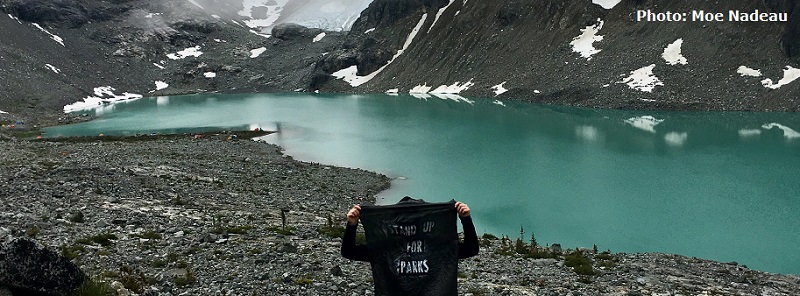
Photo credit: Moe Nadeau #StandUpForParks
By passing this resolution, municipal leaders across the province are collectively recognizing the value of a strong, resilient provincial network of protected areas – for climate change adaptation, for species, and for communities looking to diversify local economies. CPAWS-BC congratulates the UBCM and its members for supporting this resolution, with a special thanks to the Village of Pemberton and the Squamish-Lillooet Regional District for their leadership on bringing this resolution forward.
Interested in learning more? Check out this amazing video on why our parks are important and call for a better protected and connected British Columbia.
Vancouver, BC – The Canadian Parks and Wilderness Society (CPAWS) welcomes today’s announcement regarding the establishment of Scott Islands marine National Wildlife Area (nMWA). This announcement comes after nearly 17 years of consultation with federal, provincial, and First Nations governments, as well as various stakeholder groups, including CPAWS. As Canada’s first marine National Wildlife Area, its aim is to protect and conserve the millions of seabirds and other marine life that breed, forage, and overwinter at the Scott Islands.
“CPAWS first called government attention to the need to protect the Scott Islands marine area in the early 1990s, and we have been working ever since to get to this day,” said Sabine Jessen, CPAWS’ National Director of the Ocean Program. “We are pleased to see that the government has addressed our recommendations including the commitment of significant new funding,” Jessen added. “We look forward to working with all levels of government to ensure that the necessary next steps are taken toward more effective protection of these habitats and their biodiversity.”
At 11,540 km2, the Scott Islands mNWA is designated to protect the foraging and breeding habitats of numerous seabird populations. Based on the final regulations, bottom trawl fishing, a particularly ecologically harmful method, is restricted in only 80% of the area, with additional restrictions placed on forage fish and gill net fisheries, activities that do not currently occur within the boundaries.
“While the establishment of the Scott Islands mNWA is an encouraging step, further efforts are needed to ensure protection for this rich marine ecosystem is enhanced,” said Ross Jameson, Ocean Conservation Manager, CPAWS-BC. “Commitments towards effective conservation measures such as bottom trawl fishing restrictions and no-go shipping buffers need to be completed, expanded and added to in the near future to achieve strong and effective protection for the Scott Islands mNWA and its feathered friends,” cautions Jameson.
Scientific research shows that bycatch and entanglement from fishing activities and disturbance by shipping activity are harmful to birds and other marine species. The Government of Canada is committing to further research and management measures to address some of the outstanding concerns from conservation groups and CPAWS is looking forward to working with them to achieve these outcomes.
“We also want to take this moment to applaud and thank Shell Canada for relinquishing their exploratory permits in the area. This is a very significant step and means that oil and gas activities will not be a future threat to this area,” said Jessen. “We are also very pleased by the
government’s commitment to consider expanding the Scott Islands, as there are important seabird areas that should be included in the mNWA,” said Jessen.
“While we acknowledge the government’s steps to increase ocean conservation, we will continue to emphasize the critical importance of the quality of protection if biodiversity is to be conserved over the long term,” said Jessen. “We will keep working to advance increased protection for the Scott Islands as well as for other vulnerable ecosystems throughout Canada’s ocean estate, and look forward to the recommendations of the National Advisory Panel on MPA standards.”
-30-
For more information contact:
Sabine Jessen, National Director, Ocean Program, CPAWS sabine@cpaws.org | 604-657-2813
Background:
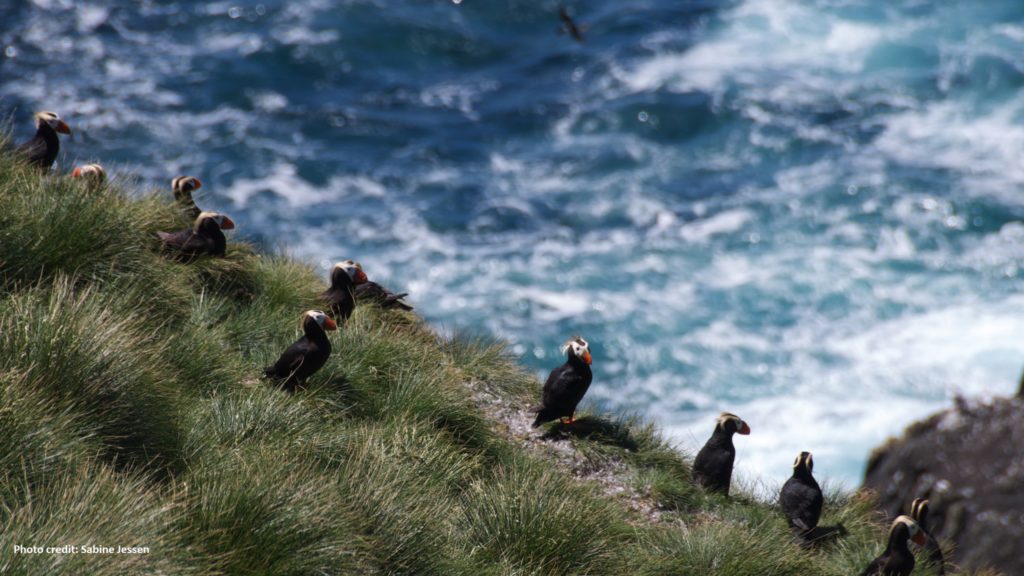
Located off the northern tip of Vancouver Island, the Scott Islands are the most important seabird breeding area in Pacific Canada. They are home to 90% of Canada’s tufted puffins and half of the world’s Cassin’s auklets. The nutrient-rich ocean waters which surround the islands create productive feeding grounds that support a great diversity of marine life, including sea otters, Steller sea lions, and several species of whales. The Scott Islands are an internationally recognized Important Bird Area, while the marine area has been identified as an Ecologically and Biologically Significant Area by Fisheries and Oceans Canada.
Vancouver, BC – Today, the Canadian Parks and Wilderness Society (CPAWS) released its annual parks report, outlining the path forward to deliver on Canada’s commitments to safeguard biodiversity. Provinces and territories recently signed onto a Canada-wide declaration to improve networks of protected areas.
This year’s report, What’s Next: Parks and Protected Areas to 2020 and Beyond, provides a trailmap for governments to meet international conservation targets and prevent extinction of species by protecting key habitat.
“Large, high quality connected areas that limit industrial activity are critical for species to continue to exist – and thrive – in our rapidly changing environment,” said Bruce Passmore, Executive Director of CPAWS-BC.
“Improving our network of protected areas is entirely within our reach, and is something we know British Columbians already support,” said Passmore.
In the past, BC has been a leader in Canada on protected areas. While BC’s park system is currently plagued by underfunding and overcrowding, significant resources are available from the federal government to support protected area expansion work. BC is well-positioned to lead by example and go beyond short-term political commitments to truly meet the needs of nature.
“The BC government has the opportunity to demonstrate true leadership on safeguarding biodiversity,” said Passmore. “They can build on the momentum of current efforts, like the work underway to establish Canada’s newest national park reserve in the South Okanagan.”
“The window of opportunity right now is wide open for the province to work with Indigenous governments and community partners to protect BC’s biodiversity,” said Passmore. “By improving our protected areas system, we can safeguard habitat for endangered species, along with clean air and clean water, while building up rural economies and sustainable livelihoods.”
CPAWS-BC is recommending that the province prioritize landscape-level land use planning, focused on sustaining resilient natural systems and healthy communities in the face of a changing climate. Additional recommendations from the report focus on supporting Indigenous-led conservation, and habitat protections for species at risk.
We use cookies and other similar technologies such as pixels and web beacons (“Cookies”) for various purposes, such as to ensure our website functions properly, enhance your browsing experience by remembering your preferences and provide personalized content and advertisements.
Functional
Always active
The technical storage or access is strictly necessary for the legitimate purpose of enabling the use of a specific service explicitly requested by the subscriber or user, or for the sole purpose of carrying out the transmission of a communication over an electronic communications network.
Preferences
The technical storage or access is necessary for the legitimate purpose of storing preferences that are not requested by the subscriber or user.
Statistics
The technical storage or access that is used exclusively for statistical purposes.The technical storage or access that is used exclusively for anonymous statistical purposes. Without a subpoena, voluntary compliance on the part of your Internet Service Provider, or additional records from a third party, information stored or retrieved for this purpose alone cannot usually be used to identify you.
Marketing
The technical storage or access is required to create user profiles to send advertising, or to track the user on a website or across several websites for similar marketing purposes.