Home » Archives for CPAWS BC » Page 18
CPAWS delighted with announcement that Glass Sponge Reefs added to tentative World Heritage List
Ottawa, ON – The holidays are looking brighter this year with the announcement that British Columbia’s Hecate Strait and Queen Charlotte Sound glass sponge reefs are being added to Canada’s tentative list for World Heritage Sites.
The nomination to the list was made by the Central Coast First Nations, specifically by the Chiefs of the Heiltsuk, Kitasoo/Xai’Xais, Wuikinuxv and Nuxalk Nations, and supported by Fisheries and Oceans Canada and CPAWS.
“The reefs are an international treasure. They are globally unique, incredibly important, and deserving of global recognition as a source of awe and wonder for generations to come,” said Sabine Jessen, CPAWS’ National Ocean Program Director. “The honour of a world heritage site designation would mean international recognition for these extremely rare and delicate reefs.”
The reefs were discovered in 1987 by a team of Canadian scientists surveying the seafloor in Hecate Strait and Queen Charlotte Sound, off BC’s north coast. The reefs are over 9,000 years old, reach the height of an eight-storey building, and cover 1,000 km2 of ocean floor. Since their discovery, a handful of smaller reefs have been found elsewhere in BC and Southern Alaska. However, BC’s Hecate Strait and Queen Charlotte Sound reefs are by far the largest living glass sponge reefs anywhere in the global ocean.
German scientist Dr. Manfred Krautter, was the first person to realize the global significance of the discovery of living glass sponge reefs in Hecate Strait and Queen Charlotte Sound. Dr. Krautter had studied fossilized reefs in Europe for many years and likened the discovery of living glass sponge reefs to finding a herd of dinosaurs on land. “At first I couldn’t believe it, we thought that glass sponge reefs had gone extinct about 40 million years ago, and then all of a sudden here is this ancient ecosystem alive and well off the coast of Canada, it was really amazing and I knew right away that the reefs should be a World Heritage Site” said Dr. Krautter.
Glass sponge reefs provide important deep-sea habitat for a host of species, from prawns to rockfish and sharks. But the reefs are also tremendously fragile, and not long after their discovery scientists noticed large areas of reef destroyed by bottom trawling, traps, and other harmful fishing activities.
After more than a decade of campaigning by CPAWS the glass sponge reefs were designated as a marine protected area (MPA) by Fisheries and Oceans Canada in February 2017. The reefs are also designated as a “Marine Sanctuary” by Central Coast First Nations due to their ecological and cultural importance. In their letter of nomination, the Chiefs state that, “As coastal First Nations, our culture and well-being are inextricably tied to the sea and the resources it provides… Ensuring the protection of this globally unique area is a priority for our nations.”
“We’re hopeful the World Heritage Committee will recognize the unique value of the glass sponge reefs as the international treasure that they are,” says Jessen.
-30-
Vancouver, BC — The Coast to Cascades Grizzly Bear Initiative welcomes momentum to list Grizzly Bears as a Species of Special Concern under the federal Species at Risk Act (SARA). This proposal was posted shortly before today’s B.C. government announcement that hunting of grizzly bears is now banned everywhere in the province.
“The recent B.C. Auditor General’s report rightly pointed to the need to improve habitat management for grizzlies. Now that the debate about the hunt is over, the province’s focus can finally shift to recovering B.C.’s most at-risk populations,” says Johnny Mikes, Field Director for Coast to Cascades.
“Having grizzlies listed under SARA is an important measure that can bring much-needed attention and resources to move forward with meaningful actions supporting the recovery of highly threatened subpopulations, like the ones in southwest BC,” adds Mikes. “We have been urging the province to ensure that our most at risk grizzly populations do not disappear. Similarly, given that there are parts of the province where grizzly bears are doing well, we have asked the federal government to also concentrate their efforts through SARA on populations with the greatest need.”
Several subpopulations of grizzly bears in BC are listed as threatened provincially, and three have been assessed as Critically Endangered by the International Union for the Conservation of Nature (IUCN) – all three of these in southwest BC. These bears continue to face threats from human-related conflicts and habitat loss and fragmentation, bringing them closer and closer to disappearing from landscapes they currently occupy.
“What these particular grizzlies really need right now are quick actions that prioritize recovery and deliver on the commitment made by the province to improve their approach to managing the species,” says Mikes. “We’re eager to engage in the process to identify priority actions, and in the meantime are working to ensure grizzlies get listed under SARA to better safeguard and recover threatened populations in BC.”
The Coast to Cascades Grizzly Bear Initiative was formed in 2013 to help ensure the survival of threatened grizzly bear populations in southwest BC where recovery to self-sustaining numbers is supported by a broad range of local governments, First Nations and non-profit organizations. Coast to Cascades notes that prior to today’s B.C. government announcement banning the hunt, BC’s most at-risk grizzly populations were already off-limits to hunting.
-30-
For interviews, contact:
Johnny Mikes, Coast to Cascades Field Director
(604) 932-3811
johnny@coasttocascades.org
CPAWS-BC is a lead Canadian partner in the Coast to Cascades Grizzly Bear Initiative. For more information, visit www.coasttocascades.org.
Vancouver, BC – The Canadian Parks and Wilderness Society’s British Columbia chapter (CPAWS-BC) is deeply disappointed by today’s announcement from the BC government that construction will proceed on the Site C dam. CPAWS-BC supports the challenges brought forward by the West Moberly and Prophet River First Nations, on whose territories the dam is being built and whose rights are threatened by the project.
The Site C dam will flood important local ecosystems, as well as jeopardize protected areas throughout BC and northern Canada, including Wood Buffalo National Park. The project further endangers key wildlife habitat and migration corridors that stretch from Yellowstone National Park in Wyoming to the Yukon (Y2Y). Large protected areas are vital for people and wildlife, and also play a key role in our ability to mitigate the impacts of climate change.
CPAWS-BC invites members of the public to express their support for the West Moberly and Prophet River Nations, and by calling on their government representatives to respect Indigenous rights and title.
For more on the Site C decision, from groups who are working closely on this issue:
Sage Legal Indigenous Rights Lawyers
Peace Valley Environmental Association
Yellowstone to Yukon Conservation Initiative
Sierra Club BC
Wilderness Committee
On November 17, 2017, CPAWS and the environmental community lost Chloe O’Loughlin, a powerful advocate for wilderness conservation, and former CPAWS-BC staff member, volunteer, advocate and friend. She passed away on the weekend after fighting a battle with an aggressive cancer, which was only diagnosed in September. In a testament to her strength, Chloe was unknowingly battling cancer for many years while never scaling down her fight for the places she loved, like the South Okanagan-Similkameen. She will be very missed by the people she worked with and the places she fought to protect.
Chloe joined CPAWS-BC in 2003. In the words of Bob Peart, the outgoing Executive Director at the time, “She impressed me in the interview process for her sincere interest in working in the conservation world and ‘transferring’ her skills to CPAWS and the NGO world. I remember her saying that she had one good job left in her and that was at CPAWS working in conversation.” She continued to work with CPAWS until 2012, but stayed on as a volunteer, working relentlessly on creating the South Okanagan-Similkameen National Park Reserve. “It was her determination that kept this file active,” remembers Bob. “Chloe was a classic example about the difference that one caring committed individual can make, and that provides me hope. Chloe can go to the grave with a smile on her face.”
In her 9 years with CPAWS, Chloe led the organization through many victories. Some of her legacy includes:
2006: Launching SeaChoice, Canada’s most comprehensive sustainable seafood program, in partnership with four other organizations.
2008: Establishing the SGaan Kinghlas – Bowie Seamount Marine Protected Area which protects the rich and unique biodiversity of offshore submarine volcanoes.
2010: Obtaining a signed a memorandum of understanding by the B.C. government and Montana government to ban mining in the Flathead Valley.
2011: Launching the Get Outside BC program, a project aimed at strengthening youth attachment to British Columbia’s wilderness,
2011: Working with the Taku River Tlingit and the B.C. government to support the signing of a land-use plan that allows for 13 new protected areas totaling over 500,000 hectares (1.3 million acres).
2012: Supporting the Premier and Dave Porter, Grand Chief of the Kaska Nation, to announce the creation of a new provincial conservancy, Ne’ah’, and special management area, ‘Gu Cha Duga Zone’. Gu Cha Duga means “for the grandchildren” in a Kaska Dene dialect. The protected area and special management area total 600,000 hectares.
“Chloe taught us all to never let go of a vision,” said Bruce Passmore, the Executive Director of CPAWS-BC. “She will be missed by many. We will toast to her memory when the South Okanagan Similikameen National Park Reserve becomes a reality. May she rest knowing that her legacy will continue.”
There will be a Celebration of Life on December 8, 2017 at 3 pm at the Canadian Memorial United Church in Vancouver, 1825 W 16th Ave, Vancouver, BC V6J 2M4 (the church entrance is on 15th Ave.). There will be an hour long Celebration followed by a reception in the Great Hall across the alley at the Canadian Memorial Centre.
Photo: Chloe O’Loughlin worked to see the South Okanagan-Similkameen protected as a National Park Reserve. Photo credit to Graham Osborne.
Vancouver, BC – The Canadian Parks and Wilderness Society’s British Columbia Chapter (CPAWS-BC) is proud to celebrate the achievements of Johnny Mikes, who has been recognized as a recipient of this year’s Wilburforce Foundation Conservation Leadership Award.
Mikes entered the world of wilderness protection in at full speed when he helped launch the campaign to create Tatshenshini-Alsek Park in the northwest corner of B.C., which is now also a UNESCO World Heritage Site. Since then, Mikes continues to work with CPAWS-BC on conservation initiatives across the northern part of province, from the northern Rockies west across to the Taku along the Alaska border, and has been involved in the creation of a number of protected areas.
Mikes serves on the Advisory Board for the vast Muskwa-Kechika wilderness and, with the national park system still incomplete, is investigating potential national park candidate areas in the north. His strong knowledge of B.C.’s north from his many years as a wilderness outfitter has helped him identify important areas in need of protection.
“Wilburforce Foundation created its Conservation Leadership Award to recognize individuals who have made significant contributions over many years to the conservation movement. We are delighted to be able to honor Johnny Mikes for his outstanding service,” says Paul Beaudet, Executive Director of the Wilburforce Foundation.
“Johnny has always understood that to create parks and make land use planning successful, you have to do your time working with the people who will be most affected. Johnny has done that time: poring over maps, meeting with First Nations in remote parts of Northwest Canada, and bringing people together. In his well-traveled career of listening and strategizing, he has delivered wildland protections covering millions of acres. Johnny is an individual who sees what needs to be done or what can be accomplished, and patiently and quietly goes about doing it,” adds Beaudet.
Closer to his home in Whistler, Mikes represented environmental interests in the regional land use plan in the Sea to Sky area and today also acts as the Field Director for the Coast to Cascades Grizzly Bear Initiative, which is spearheading efforts to protect and recover threatened grizzly bears and safeguard their habitat in southwest B.C.
“We’re thrilled to see Johnny recognized by the Wilburforce Foundation,” says Bruce Passmore, Executive Director of CPAWS-BC. “His tireless work throughout northern B.C. has ensured that key areas are properly safeguarded for generations to come.”
The Wilburforce Foundation empowers conservation leaders to protect the irreplaceable lands, waters, and wildlife of western North America. The Foundation supports the work of CPAWS-BC to create and safeguard large parks, oceans, protected areas and wilderness corridors.
-30-
Contact:
Johnny Mikes, Field Director, Coast to Cascades Grizzly Bear Initiative
604-905-9630
johnny@coasttocascades.org
Bruce Passmore, Executive Director, CPAWS-BC
604-685-7445 ext. 23
In its latest annual report on the state of protected areas in Canada, the Canadian Parks and Wilderness Society (CPAWS) is calling Canada out for ranking last among G7 countries in the percentage of land and freshwater protected for nature. CPAWS’ 2017 report “From Laggard to Leader? Canada’s renewed focus on protecting nature could deliver results,” encourages federal, provincial, and territorial governments to step up their protection efforts in order to conserve Canada’s natural heritage, and deliver on our international commitment.
Read the full report.
Read the Executive Summary with recommendations.
For interviews, contact: Karen Turner (613) 569-7226 x 232.
Victoria, BC – The Canadian Parks and Wilderness Society (CPAWS) today recognized the significant work on ocean conservation by the Government of Canada and welcomed the announcement of a new fishing closure as the critical first step to protect a large area of seamounts off the west coast of Vancouver Island.
“There is a global push to protect seamounts as they are rare and vulnerable ocean ecosystems that are biodiversity hotspots, so we are pleased to see Canada doings its part,” said Sabine Jessen, CPAWS National Ocean Program Director.
The fishing closure will prohibit all bottom contact fishing on a large number of offshore seamounts and a hydrothermal vent field located off the west coast of Vancouver Island, and is the first step in the process to designate a new marine protected area.
“This fishing closure will address the immediate threats from bottom contact fisheries that can crush and destroy sensitive species like corals and sponges that live on the seamounts and support many other species,” said Jessen.
According to Jessen and her colleagues, the rich ecosystems and nutrient rich upwellings created by seamounts also support a wide array of other species like tuna, whales, and seabirds. “These species gather around seamounts to feed as they migrate from the open ocean to the BC coast, and these species need protection too,” said Alex Barron, Ocean Conservation Manager at CPAWS-BC. “Fisheries and Oceans Canada (DFO) has begun the process to create a very large MPA, almost 140,000km2, that encompasses the proposed fishing closure, and which we hope will provide seabed to surface protections, including full protection for these biodiversity hotspots,” adds Barron.
According to Jessen, the fishing closure is an important first step, “For many years we have been asking the government to provide interim protection for sites while they move through the MPA planning process,” said Jessen. “We have seen other sites take decades to be designated as MPAs while harmful activities like bottom trawling continue as usual, destroying the very species we are trying to protect. We applaud DFO for taking this important first step.”
The fishing closure, and the proposed MPA, follow on the heels of several recent MPA announcements. Canada has committed to protect at least 10% of its ocean by 2020. The Prime Minister and the Ministers of Fisheries and Oceans Canada and Environment and Climate Change Canada have made achieving this target a high priority. Recent MPAs include Hecate Strait glass sponge reefs MPA (BC) and interim protection for the proposed Tallurutiup Imanga/Lancaster Sound National Marine Conservation Area.
“Over the past two years, the government has made significant efforts to advance ocean protection, including some strong MPAs like St Ann’s Bank in Nova Scotia which is completely closed to oil and gas and with 75% closed to all fishing” said Jessen. “However, we’ve also seen some weak MPA proposals, like Laurentian Channel, that would allow oil and gas activities, and Scott Islands marine National Wildlife Area that would allow all current activities to continue, despite risks to the globally significant seabird colonies” she cautions.
“We’re pleased to see the government make ocean conservation a high priority and we recognize the strides that they have made over the past two years. We also need to make sure that we don’t jeopardize the quality of protection in our effort to meet targets” said Jessen.
CPAWS welcomed the recent announcement of a Ministerial Advisory Panel on minimum protection standards for marine protected areas earlier this month, “The science clearly shows that areas that are closed to all fishing and industrial activities like oil and gas, are much more effective at protecting biodiversity, supporting healthy fisheries, and rebuilding damaged ecosystems. We look forward to working with the Minister and the advisory panel to ensure that by 2020, more than 10% of Canada’s ocean is effectively protected from harmful activities.” said Jessen.
Jessen and her colleagues caution that the hard work is far from over as the science has demonstrated, and the international community is recommending ocean conservation targets of at least 30% in strongly protected MPAs by 2030. “We hope that the Government of Canada will demonstrate international leadership by adopting this target, and providing the financial and other resources necessary to ensure that our ocean ecosystems and marine wildlife, from seamounts to shorelines, are safeguarded for generations to come,” said Jessen
-30-
Osoyoos, BC — The South Okanagan-Similkameen National Park Network (SOSNPN) welcomes today’s tri-government announcement to enter discussions to create a National Park Reserve in the South Okanagan–Similkameen. This announcement demonstrates strong leadership from the Okanagan Nation Alliance, the federal government, and the B.C. government, and is a significant milestone in the long history of this proposed national park reserve.
“We’re very encouraged that all three governments are now actively involved in the park establishment process, after nearly two decades of hard work to get everyone at the same table and on the same page,” says Doreen Olson, Coordinator of the South Okanagan-Similkameen National Park Network (SOSNPN). “This commitment to advancing the establishment process really reinforces how important it is to create this park, for people locally as well as for all Canadians. It is our global gift to grasslands conservation.”
Creating this park will forever safeguard a rare and unique ecosystem that is disappearing around the world, and will help North America’s grassland species adapt to a changing climate and an evolving landscape. It will provide permanent jobs in local communities, recreation opportunities and a much-needed boost to local tourism. The National Park Reserve will also help Canada meet its international commitments to protect 17% of our lands and inland waters by 2020, and will fill in a significant gap in the national park system for unrepresented ecosystems.
As park discussions unfold, SOSNPN strongly urges the inclusion of critical areas around Txasqin (Mt. Kobau) in park establishment discussions. SOSNPN also supports the inclusion of biologically and culturally important lands in Akspaqmix (White Lake Basin), and Nkl’pula?xw (Kilpoola and Chopaka grasslands) near the US border as part of the National Park Reserve.
“These areas are incredibly important for biodiversity and habitat connectivity across the broader landscape, particularly in light of anticipated pressures from a changing climate. A National Park Reserve that connects these places will protect a critical piece of this unique ecosystem and will help preserve the values of this area in the long term,” says Jessie Corey, CPAWS-BC’s Terrestrial Conservation Manager.
“We look forward to engaging with governments, local communities, and people across Canada to ensure that we’re leaving a lasting legacy in these grasslands for future generations to experience and enjoy,” says Olson. “A well-managed and properly designed and designated National Park Reserve, with boundaries and a management plan grounded in science and Indigenous knowledge, will help us get there.”
-30-
For interviews, contact:
Doreen Olson, Coordinator, South Okanagan Similkameen National Park Network: threegates@telus.net, 250-490-6663
Jessie Corey, Terrestrial Conservation Manager, CPAWS-BC: jessie@cpawsbc.org, 778-288-6066
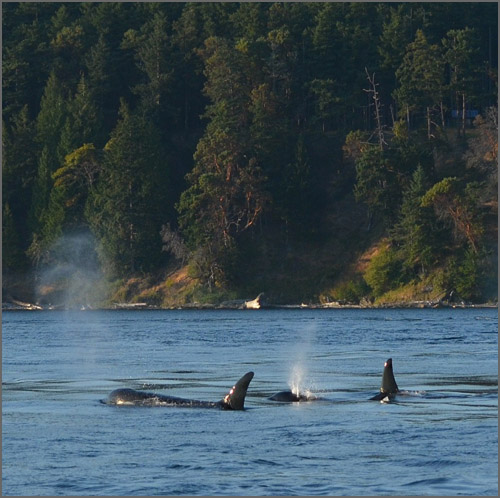
Vancouver, BC — The federal government’s southern resident killer whale Symposium, held as part of the Oceans Protection Plan this week in Vancouver, failed to identify concrete actions to ensure the recovery of the endangered killer whales, according to seven environmental organizations.
“Threats to southern residents are well-documented and to support recovery we need to be implementing tangible measures immediately,” says Christianne Wilhelmson, Executive Director of Georgia Strait Alliance. “We were encouraged that the federal government spoke of having to make difficult decisions; however, we did not hear any specific steps or measures that will be taken in the short term. Now is the time for the federal government to show strong leadership to protect critical habitat because orcas can’t wait.”
The southern resident killer whale population has had two deaths this year, seven in 2016, and calves have not been born since 2015. Today, there are 76 remaining, a very small population that is inherently vulnerable to the risk of extinction. This population of whales relies on B.C.’s southern coastal waters from May to October.
The three main threats to southern resident killer whales are a lack of their preferred prey (Chinook salmon), noise and disturbance from vessels, and toxic contaminants. For recovery to be effective, efforts must focus on enacting measures that reduce these three major threats in their critical habitat.
Chinook salmon are themselves threatened and some of this year’s southern resident whale deaths are linked to starvation. “We were hoping the government would be closing Chinook fisheries and creating whale refuges to avoid further whale starvation. The situation is urgent,” says Jeffery Young, Senior Science and Policy Analyst with the David Suzuki Foundation.
“Analysis on this population shows these whales are unlikely to recover under existing conditions of prey availability, noise and disturbance,” says Misty MacDuffee, Wild Salmon Program Director at Raincoast Conservation Foundation. “Any further reductions in the quality of their critical habitat only hastens their slide to extinction. Our population viability analysis shows that reducing existing vessel noise and increasing Chinook availability increases their likelihood of long term survival.”
“The underwater noise levels in the Salish Sea are alarming and already an impediment to the recovery of southern resident killer whales. We need assurance that new projects that expand shipping will further not increase noise levels,” says Michael Jasny, the Director of Natural Resource Defense Council’s Marine Mammal Protection Project.
Leading scientists have called on the government to adopt a minimum target for the reduction of shipping noise by three decibels (dB) within 10 years and 10 dB within 30 years relative to current levels, recognizing that a greater reduction target may be appropriate for the Salish Sea and in the critical habitat of SRKW.
“The commercial shipping industry is taking steps to improve the situation for southern resident killer whales through the ECHO program of the Vancouver Fraser Port Authority,” says David Miller, President and CEO of World Wildlife Fund Canada. “WWF-Canada urges the federal government to build on these efforts by setting a noise reduction target and supporting the implementation of practical measures by the industry to reduce underwater noise exposure and create conditions for the recovery of southern residents.”
Approaches to the simultaneous management of these threats include the protection of critical habitat and key foraging areas and the strengthening of regulations. “We need to create networks of protected areas that act as refuges in key foraging areas for whales, where they have access to plenty of food, and safe, quiet spaces, free from harmful human activities,” says Sabine Jessen, Canadian Parks and Wilderness Society National Oceans Program Director. Work has already begun on the proposed Southern Strait of Georgia National Marine Conservation Area, which could protect an important part of their critical habitat.
“We can step up protection for endangered whales by strengthening the laws that safeguard marine wildlife and their habitat—including the Oceans Act, which is currently subject to proposed amendments. A stronger, more robust Oceans Act, combined with a network of marine protected areas, will help ensure the survival of the southern residents and other at-risk whales,” says Linda Nowlan, Staff Counsel at West Coast Environmental Law Association.
Another long overdue measure is to implement Habitat Protection Orders and finalize Marine Mammal Regulations that set minimum approach distances (such as 200m) and other regulations that restrict boat numbers and times for viewing endangered killer whales.
We look forward to continued dialogue with domestic and international partners to achieve the following recovery actions.
Urgent actions that require strong government leadership to support recovery for Southern Resident killer whales:
- Increase Salish Sea Chinook abundance by closing (non-terminal) interception Chinook fisheries.
- Create whale refuges that restrict commercial and recreational boat access in key feeding grounds in the Juan de Fuca and Gulf Islands.
- Reduce existing levels of vessel noise by setting underwater noise reduction targets and supporting the shipping industry to implement practical measures to reduce noise emissions.
- Use Habitat Protection Orders to regulate noise and disturbance from private and commercial boats watching whales.
- Create specific targets to reduce the use and discharge of polluting, bioaccumulative and toxic chemicals to the marine environment.
- Advance the establishment of marine protected areas, and complete the proposed National Marine Conservation Area in the Southern Strait of Georgia.
-30-
CONTACTS
Christianne Wilhelmson, Executive Director, Georgia Strait Alliance
E christianne@georgiastrait.org
T 604 -862-7579
Sabine Jessen, National Ocean Program Director, Canadian Parks and Wilderness Society
E sabine@cpawsbc.org
T 604-657-2813
Jeffery Young, Senior Science and Policy Analyst, David Suzuki Foundation
E jyoung@davidsuzuki.org
Michael Jasny, Director of Marine Mammal Protection Project, Natural Resources Defense Council
E mjasny@nrdc.org
T 310-560-5536
Misty MacDuffee, Wild Salmon Program Director, Raincoast Conservation Foundation
E misty@raincoast.org
T 250-818-2136
Linda Nowlan, Staff Counsel, West Coast Environmental Law Association
E lnowlan@wcel.org
T 778-875-5333
Catharine Tunnacliffe, Oceans Communications Specialist, WWF-Canada
E ctunnacliffe@wwfcanada.org
T 647-624-5279
___________________________
Georgia Strait Alliance
Formed in 1990, Georgia Strait Alliance is the only conservation group whose mission is focused on working to protect and restore the marine environment and promote the sustainability of Georgia Strait, its adjoining waters and communities: www.georgiastrait.org
Canadian Parks and Wilderness Society (CPAWS)
The Canadian Parks and Wilderness Society (CPAWS) is Canada’s only nationwide charity dedicated solely to the protection of our public land and water, and ensuring our parks are managed to protect the nature within them. Our vision is to protect at least half of our public land and water so that future generations can experience Canada’s irreplaceable wilderness. For more information visit www.cpaws.org
David Suzuki Foundation
The David Suzuki Foundation is a leading Canadian environmental non-profit organization, collaborating with all people in Canada, including government and business, to conserve the environment and find solutions that will create a sustainable Canada through evidence-based research, public engagement and policy work. The Foundation operates in English and French, with offices in Vancouver, Toronto and Montreal.
Natural Resources Defense Council
NRDC works to safeguard the earth—its people, its plants and animals, and the natural systems on which all life depends. NRDC combines the power of more than three million members and online activists with the expertise of 500 scientists, lawyers, and policy advocates across the globe to ensure the rights of all people to the air, the water, and the wild.
Raincoast Conservation Foundation
Raincoast is a team of conservationists and scientists empowered by our research to protect the lands, waters and wildlife of coastal British Columbia. We use rigorous, peer-reviewed science and community engagement to further our conservation objectives.
West Coast Environmental Law
West Coast Environmental Law harnesses the power of law to solve complex environmental challenges. We are transforming environmental decision-making and strengthening legal protection for the environment through collaborative legal strategies that bridge Indigenous and Canadian law: www.wcel.org
World Wildlife Fund Canada
WWF-Canada creates solutions to the environmental challenges that matter most for Canadians. We work in places that are unique and ecologically important, so that nature, wildlife and people thrive together. Because we are all wildlife. For more information, visit wwf.ca
Ottawa, ON – The Canadian Parks and Wilderness Society (CPAWS) applauds the government for recognizing the need for minimum protection standards for Canada’s marine protected areas (MPAs) and for announcing the establishment of a new advisory panel to the Minister of Fisheries, Oceans and the Canadian Coast Guard on the development of these standards.
“CPAWS has been working on MPAs in Canada for over 20 years. During this time, we have repeatedly called for minimum protection standards, so we are pleased to see Canada’s federal government take this important step,” said Sabine Jessen, CPAWS National Ocean Program Director. “CPAWS is committed to bringing our decades of experience to this process and to work with the Minister, Indigenous leaders, and the scientific community, to ensure a robust set of standards.”
Currently, protection standards in Canada’s MPAs vary considerably. The recently announced Hecate Strait and Queen Charlotte Sound glass sponge reef MPA and St. Anns Bank MPA were welcomed by CPAWS for providing strong protection for sensitive marine ecosystems. However, the government also met heavy criticism for proposing to allow oil and gas activities to continue in much of the soon to be designated Laurentian Channel MPA, and for the lack of any protection measures being proposed for the Scott Islands marine National Wildlife Area.
According to CPAWS, clear minimum protection standards for MPAs should include: no bottom trawling, no oil and gas activities, no deep-sea mining, and mandatory core no-take areas. “The science is crystal clear. We know these activities are harmful, and in many cases lethal, for our ocean ecosystems and marine life. We hope that the advisory panel will provide some certainty that vulnerable species and ecosystems are actually protected in Canada’s MPAs,” said Jessen.
A 2015 analysis of Canada’s MPAs, conducted by CPAWS, found just 0.01 percent of Canada’s ocean estate is fully protected by MPAs that are closed to all extractive activities, including commercial and recreational fishing, oil and gas, and mining. “This number increased with the announcement of St Anns Bank, but we’re still significantly below fully protecting even just one per cent of our ocean. This is troubling because international discussions and current science are now suggesting 30 percent of our ocean needs to be fully protected,” added Jessen.
“We found regulations are weak and confusing when we examined Canada’s MPAs,” said Jessen. “For example, MPAs established by DFO under the Oceans Act, typically have a broad statement prohibiting activities that ‘disturb, damage or destroy,’ but this is followed by a long list of exemptions, including commercial fishing, and even oil and gas activities,” said Jessen.
The announcement of the advisory panel is an important step in Canada’s efforts to meet its international commitments to protect 10 percent of our ocean by 2020. “We have seen a lot of announcements recently about how Canada will protect more of its ocean, but we need to make sure that ecologically important areas actually receive quality protection,” said Jessen.
According to CPAWS there is a significant double standard when comparing protected areas on land and in the ocean. “Canadians wouldn’t accept an intensive cattle farm, oil and gas activities, or forestry clear-cuts in a national park. Yet we often see harmful fishing practises like bottom trawling, as well as seismic testing, and oil and gas activities being permitted in our marine protected areas, despite knowing the risks to wildlife,” said Jessen. “We look forward to working with the Minister, the advisory panel, Indigenous leaders, and scientists to establish minimum protection standards for Canada’s MPAs that are scientifically sound and consistent with international best practices.”
-30-