CPAWS-BC welcomes new land and resources ministry, hopeful for advances on reconciliation, wildlife protection, and nature-based solutions in the face of climate emergency
February, 09 2022
Unceded Coast Salish Territory / Vancouver, BC – The Canadian Parks and Wilderness Society – British Columbia (CPAWS-BC) is pleased to see the BC government’s announcement of a new ministry and commitment to climate action in yesterday’s provincial Throne Speech.
The new ministry has been charged with stewardship and management of BC’s lands and resources. This will include oversight of coasts, lands, rivers and mountains facing cumulative impacts from economic activity.
“We’ve seen floods, fires, and landslides in BC destroy homes and lives over the past year. As we prepare for an uncertain future, we must ensure that nature is central in our planning,” said Kevin Barlow, Executive Director, CPAWS-BC. “We are excited to work with the new lands and resources ministry—charged with developing new ways of working with First Nations and communities— to support nature while tackling the twin climate and biodiversity crises.”
In their Throne Speech, the BC government also acknowledged that the climate crisis is here now, and promised British Columbians to proactively build more climate resilient infrastructure, continue to care for BC’s forests, and implement the Declaration on the Rights of Indigenous Peoples Act.
Dozens of First Nations across the province have already put forward a conservation vision for their traditional territories. As Canada and 60 other countries push towards international conservation targets, BC has an opportunity to restore its status as a global leader in conservation.
Supporting new and existing proposals for protected areas, including Indigenous Protected and Conserved Areas (IPCAs), are the right path forward to mitigating climate change, supporting reconciliation, and protecting BC’s rich wildlife and natural beauty.
“By committing to protect 25% of lands and waters by 2025, the BC government could make strides to tackle climate change, support endangered ecosystems, and advance reconciliation with First Nations,” continued Barlow. “We applaud the BC government for their commitment to a strong, resilient future and look forward to working with them as they develop strategies to ensure BC’s lands, waters and coasts are resilient for future generations.”
-30-
For more information, please contact: Rippon Madtha Communications Manager rippon@cpawsbc.org 604-685-7445 (x23)
The beautiful coast of British Columbia has sustained people for thousands of years. But now fisheries are edging closer to collapse, iconic wildlife is on the brink of extinction, and vital marine ecosystems are disappearing. To keep British Columbia prosperous for our children, grandchildren and future generations, marine protected areas (MPAs) are being created to restore fisheries and fight climate change. Creating marine protected areas in BC today will set the course for coastal communities to thrive and show leadership in ocean conservation for generations to come.
But what’s an MPA? How does it help protect ocean life? And what does CPAWS-BC do to create more MPAs and make them stronger? Dive into our new MPA 101 series to learn the basics.
Subscribe to our newsletter to learn more about our conservation work.
Unceded Coast Salish Territory / Vancouver, BC – After years of campaigning—CPAWS-BC is celebrating the surrender of Imperial Metal’s mineral tenures in the Skagit donut hole, a patch of wilderness between Skagit Valley and E.C. Manning provincial parks. A new agreement between the BC Government, Imperial Metals, and the Skagit Environmental Endowment Commission (SEEC) will see that Imperial Metals rescind its mining rights to the area (also known as Silverdaisy watershed), providing an opportunity for its protection.
This is a significant step towards protecting biodiversity in BC—and creating more large, contiguous, protected landscapes—as Canada pushes towards protecting 25% of its lands and waters by 2025.
“We’re thrilled that the threat of mining has been resolved in the Silverdaisy watershed and Skagit Headwaters,” says Tori Ball, Senior Campaigner with CPAWS-BC. “We’ve worked alongside an international coalition of First Nations, Tribes, and conservation and recreation organizations to halt logging and mining threats to the area. This huge success is thanks to the thousands of people who spoke up for this special area.”
The 5,800 hectare donut hole falls on the Traditional Territory of the S’ólh Téméxw (Stó:lō), Syilx (Okanagan), and Nłeʔkepmx Tmíxw (Nlaka’pamux) Nations, who have depended upon the area’s forests and streams since time immemorial. It also provides habitat for key species like grizzly bears, salmon, spotted owl, and +200 bird species, and includes Skagit River’s sparkling headwaters and lush forests.
“The Skagit headwaters hold a special place in the hearts of many. This agreement is one more step towards meaningful, lasting protection for these waters,” says Kevin Barlow, Executive Director with CPAWS-BC. “The area holds deep cultural meaning for several First Nations, Tribes and British Columbians, with numerous species like salmon depending on the health of these ecosystems.”
This announcement comes off the heels of relentless efforts by an international coalition made up of nearly 300 conservation and recreation organizations, Tribes and First Nations, elected officials and local businesses, as well as over 6,000 individuals, who have opposed Imperial Metals’ application to mine in the Skagit.
The agreement to protect the Silverdaisy watershed and Skagit Headwaters is good news for recreation and wildlife in BC and to our neighbours to the south in Washington. We applaud the BC government and SEEC for their work to bring this area one step closer to protection.
-30-
For more information, please contact: Tori Ball Senior Campaigner tori@cpawsbc.org 604-685-7445 (x24)
For more information, please contact: Rippon Madtha Communications Manager rippon@cpawsbc.org 604-685-7445 (x23)
FOR IMMEDIATE RELEASE
January 19, 2022
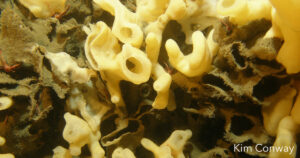
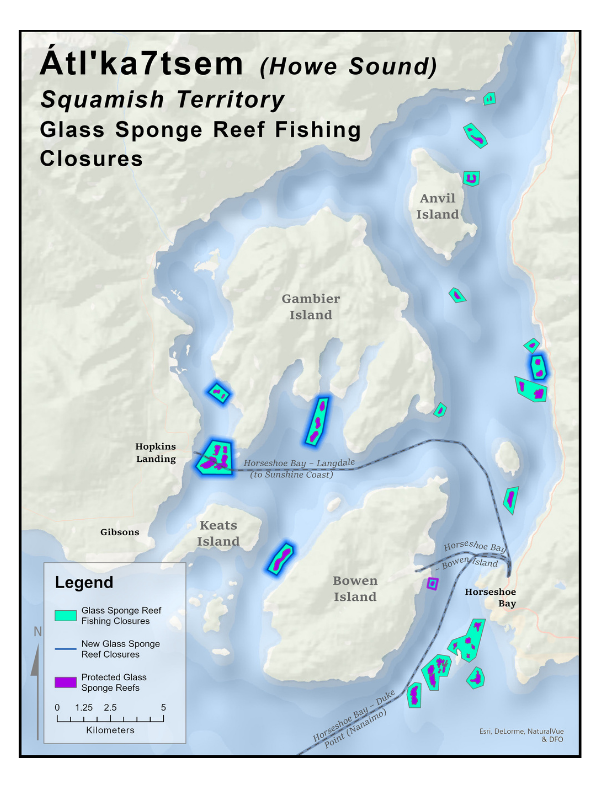
All Átl’ka7tsem/Howe Sound Glass Sponge Reefs Now Protected From Bottom Contact Fishing
Five new fisheries closures have been implemented to protect newly confirmed living glass sponge reefs in Átl’ka7tsem/Howe Sound
Unceded Coast Salish Territory / Vancouver, BC – The Canadian Parks and Wilderness Society – British Columbia (CPAWS-BC) is pleased to see five new protections announced for glass sponge reefs in Átl’ka7tsem/Howe Sound. These new fishing closures prohibit bottom contact fishing such as trawling and prawn trapping from destroying these rare and ancient ecosystems. These protections extend 150 metres around the reefs. This buffer prevents sediment kicked up from trawls and traps from choking the sponges.
“With this new announcement, all of Átl’ka7tsem/Howe Sound’s glass sponge reefs are now protected by 15 fishing closures,” says Carlo Acuña, Ocean Campaigner for CPAWS-BC. In 2019, nine glass sponge reefs in Átl’ka7tsem/Howe Sound were protected from bottom contact fishing. These new fishing closures protect the additional living reefs confirmed by Fisheries and Oceans Canada (DFO) report with the aid of the Marine Life Sanctuaries Society in 2020.
The Sḵwx̱wú7mesh Úxwumixw (Squamish Nation) played a key role in securing these protections. They agreed to prohibit Indigenous bottom contact Food, Social and Ceremonial fishing activities for the closures announced in 2019. Consultations are ongoing regarding Food, Social and Ceremonial bottom contact fishing in the five new closures.
These protections safeguard biodiversity, improve ocean health and support the local economy. “Glass sponge reefs are ocean superheroes,” adds Acuña. “They provide habitat for rockfish and shrimp, store carbon in the ocean floor to fight climate change, filter bacteria out of the water, and fertilize ocean water for plankton and marine plants.”
The work to protect Átl’ka7tsem/Howe Sound’s glass sponge reefs does not end with these fishing closures. Fishing closure designations do not ensure permanent protection like marine protected areas (MPAs) do, as they are more easily removed. The 300 prawn traps found in a glass sponge reef fishing closure near Sechelt last year also indicates the need for stronger enforcement.
These protections show Canada’s intent for strong ocean conservation. With the 5th International Marine Protected Area Congress being held in Vancouver this September, CPAWS-BC looks forward to even bolder announcements to reach the government’s target of protecting 30% of the country’s ocean by 2030.
For more information, please contact: Rippon Madtha Communications Manager rippon@cpawsbc.org 604-685-7445 (x23)
Photo by: Kim Conway
About CPAWS-BC:
The CPAWS British Columbia chapter (CPAWS-BC) works to protect wilderness in every corner of BC and deep into the ocean. We have been defending BC since 1978, and are dedicated to keeping BC’s natural environment thriving forever. Nature is BC’s best hope.
CPAWS-BC’s office is located on the ancestral and unceded territory of the səl̓ílwətaʔɬ (Tsleil-Waututh), Sḵwx̱wú7mesh (Squamish), and xʷməθkʷəy̓əm (Musqueam) Nations.
Xʷməθkʷəy̓əm (Musqueam), Sḵwx̱wú7mesh (Squamish) and səlilwətaɬ (Tsleil-Waututh) Territories / Vancouver, BC – The Canadian Parks and Wilderness Society – British Columbia (CPAWS-BC) congratulates Mamalilikulla First Nation in declaring gwaxdłala (Lull Bay)/‘nalaxdłala (Hoeya Sound) as an Indigenous Protected and Conserved Area (IPCA).
Near Knight Inlet on the central coast of British Columbia, this 10,416 hectare protected area is almost the size of the city of Vancouver, and contains watersheds that support critical species like grizzly bears, eagles, and salmon. It also houses a one-of-a-kind underwater sponge and coral reef. Without protection and sustainable management, this biodiversity risks being lost.
“Indigenous Peoples—like Mamalilikulla First Nation—have stewarded rich and healthy landscapes since time immemorial. This announcement is a re-assertion of the stewardship role they’ve held,” says Kevin Barlow, Executive Director of CPAWS-BC. “I look forward to seeing the crown governments uphold their commitment to the United Nations Declaration on the Rights of Indigenous Peoples (UNDRIP) and the Declaration on the Rights of Indigenous Peoples Act (DRIPA) by formally recognizing this IPCA.”
In addition to protecting biodiversity and cultural values—including settlement sites—this IPCA is an important step forward in protecting 25% of BC’s lands and waters by 2025 in order to stem the climate change and biodiversity crises affecting communities across the province.
The ocean waters of the IPCA are proposed as a strongly protected component of the planned Northern Shelf Bioregion Marine Protected Area Network. This network, led by 17 First Nations including Mamalilikulla First Nation, aims to protect the species and ecosystems underpinning their ocean economy in the north Pacific coast of BC.
With their expertise protecting nature, CPAWS-BC looks forward to more Indigenous-led conservation initiatives.
Kevin Barlow Executive Director, CPAWS-BC
Content warning: Contains mentions of police violence and settler colonial violence
November 23, 2021, Xʷməθkʷəy̓əm (Musqueam), Sḵwx̱wú7mesh (Squamish) and səlilwətaɬ (Tsleil-Waututh) Territories / Vancouver, BC – CPAWS-BC stands in solidarity with Wet’suwet’en clans who have re-occupied and taken control over their Yintah (territory) and condemns the arrests of land defenders and journalists.
Those occupying the land do so under Inuk Nuatden (Wet’suwet’en law) and Canadian law. In 1997, the Supreme Court of Canada issued the Delgamuukw-Gisday’wa decision, which asserted that the Wet’suwet’en people, as represented by their hereditary chiefs, had not given up rights and title to more than 20,000 square kilometres of territory in northern British Columbia. Despite this ruling, the colonial Canadian and British Columbian governments continue to permit resource projects without the free, prior, and informed consent of Wet’suwet’en Hereditary Chiefs.
Like many, CPAWS-BC applauded the BC government’s commitment to uphold the United Nations Declaration on the Rights of Indigenous Peoples (UNDRIP) through the Declaration on the Rights of Indigenous Peoples Act (DRIPA) in 2019. UNDRIP protects against all forms of violence and discrimination for Indigenous Peoples of the world. However, the province continues to deny Wet’suwet’en and other Indigenous Nations across British Columbia these human rights.
CPAWS-BC Executive Director Kevin Barlow said, “The main purpose behind UNDRIP, and by default DRIPA, is to prevent resource extraction from Indigenous territories without their full consent. Throughout the world, over 50 per cent of Indigenous people now live in urban areas due to encroachment, primarily from resource extraction. Government has a great responsibility to handle these situations with integrity and without armed force.”
The increased and on-going RCMP action on Wet’suwet’en lands in recent days is deeply concerning. As the climate crisis intensifies with record floods, fires and heatwaves, so does the violence against land defenders and the journalists sharing their stories. Providing safe access for journalists to cover events falls well within their charter rights. Indigenous voices and stories have historically been, and continue to be suppressed in mainstream media as a measure to uphold colonial systems and capitalist agendas. The RCMP must end these acts of aggression immediately.
BC is currently in the grips of a crisis. Across the province, highways and roads have been completely destroyed, huge swaths of agricultural land are under water, thousands have been evacuated, and many more were stranded far from home without adequate food, water, and shelter. Yet the province deployed emergency resources that could have been directed to relief efforts to instead intimidate, harass, and arrest Indigenous Peoples who are exercising their rights to self-determination and stewardship of their lands—and opposing the very type of fossil fuel extraction project that worsens the catastrophic weather we’ve recently experienced.
CPAWS-BC urges the immediate withdrawal of the RCMP from Wet’suwet’en Territory and the release of those detained. We stand in solidarity with the Wet’suwet’en and all Indigenous Peoples who are reasserting their relationships with land and water in order to strengthen their culture, traditional practices, and stories. We are grateful for their leadership and vision for a just future.
Wet’suwet’en means people of the Wedzin Kwe River (Bulkley River) Yintah means territory. Inuk Nuatden means Wet’suwet’en laws.
The Wet’suwet’en Yintah, is located in the central Interior of B.C. around Smithers, Burns Lake, Broman Lake, and François Lake.
Wet’suwet’en Nation is comprised of five clans: Gilseyhu (Big Frog) Laksilyu (Small Frog), Gitdumten (Wolf/Bear), Laksamshu (Fireweed), and Tsayu (Beaver).
The clans are divided into 13 Houses and each House is represented by a Hereditary Chief.
Recently, Gillian Staveley—a member of the Kaska Dena in northern BC—sat down with CPAWS-BC to talk about protecting a large swath of ancestral and traditional Kaska Territory. Read on to learn more about Dene Kʼéh Kusān and how you can support this Indigenous-led conservation initiative.
Editor’s note: this interview has been transcribed, condensed, and formatted with consent.
Kristina: Hi Gillian! I’d love to start by asking you who are you, and who the Kaska Dena are.
Gillian: My name is Gillian Staveley—I’m the Director of Land Stewardship and Culture with the Dena Kayeh Institute. I am also Kaska.
The Kaska Dena are a nation of people who are connected through our culture, our land, our language, our laws. We are a fairly large nation in terms of geography, with our communities placed throughout our ancestral lands in northern BC, southeast Yukon, and a small sliver of the Northwest Territories. We call this area Dena Kayeh, or “the people’s country”.
Kristina: Tell us more about Dene Kʼéh Kusān. What is this project about? How did it begin?
Gillian: Dene Kʼéh Kusān is the Kaska’s Indigeous Protected and Conserved Area (IPCA) proposal within Dena Kayeh—we’re trying to protect 4 million hectares of land and water through it. To us, the phrase Dene Kʼéh Kusān is a reminder that we will always be here. Dene Kʼéh Kusān: as long as our lands are here, and our languages are here, and our laws are here, and our culture is here, then we will be here as Kaska people. It’s all tied together because we believe in the principles of relationality: we are all one.
Kristina: What’s unique about the landscapes and ecosystems in Dene Kʼéh Kusān? What do you see, smell, and hear?
Gillian: When I close my eyes, I think of the regions that are very sacred to me, personally, within the Kaska traditional territory.
I visualize the very sacred headwaters that we have, and the confluences of large rivers. I can also smell the moist moss that’s in the deep soils of our boreal forest. We have such an intact, beautiful forest in our territory—it brings me joy to feel those smells. There’s also other aspects of our lands, like hearing the wind in some of the highest peaks of the Northern Rockies, and being able to traverse them.
You can also feel the heartbeat of our people in certain regions of Dena Kayeh, too, like the subarctic terrain. That’s where we’ve hunted and gathered since time immemorial. It’s those areas that are so important to us as Kaska Dena. We truly believe that we are our land, and it’s up to us to ensure that it remains healthy, because we will also be healthy as a result of that.
Kristina: With Dene Kʼéh Kusān being so large, it provides one, huge, connected landscape for animals that call that land home. What are the animals and plants in this area like?
Gillian: Many different animal, plant, and fish species and medicines also call Dena Kayeh home. I think we know that keeping these regions intact is of utmost importance to their survival. As soon as we create those linear disturbances and development areas, they are impacted greatly.
Creating habitat corridors for these really biodiverse regions in places like Dene Kʼéh Kusān is a very vital conservation strategy. It’s an Indigenous-led one, too, because we know that we can’t just protect pockets of landscape. We need to protect very large areas to be able to ensure that—for example—some of the last northern mountain caribou in our province are thriving, and not just surviving. That’s part of what our IPCA proposal is intended to do.
Kristina: Often, nature and culture are very intertwined with each other. In your eyes, why is it important to protect Dene Kʼéh Kusān from a cultural perspective?
Gillian: In Dene Kʼéh Kusān, we’d be protecting half of the recorded cultural heritage sites in our ancestral territory, Dena Kayeh. That’s the kind of stuff that gets me all choked up! Yes, it’s a wild place, it’s remote, it’s an incredibly vast beautiful area, but it’s also our homeland. Our ancient trails are still walked on today, and our people still go into those remote areas to this day, and celebrate the fact that our people have lived there for over 8,000 years.
They’ve created such wonderful memories in those places—and for us, it’s about reconnecting to what that means to us today, and knowing that we want it to be wild, yes, but we also want it to be cultured.
Kristina: What does leading the protection of your own traditional territories mean to you and the Kaska Dena?
Gillian: For me, protecting Dene Kʼéh Kusān is everything, truly. There is nothing more important than this in my life, and I know I am going to be spending the rest of my life ensuring that happens. I’m not the only one, either. This is who we are as Dena: it’s intrinsically who we are as stewards of our land, in wanting to see it protected. It’s a natural response we all have, and it’s what ties us together in knowing that we’re a nation of people that want the same things. There’s tremendous power in that.
Kristina: Why should Indigenous-led conservation projects be important to other people in BC?
Gillian: While it’s existed since time immemorial, we’re finally at a time in our country where there’s more recognition for Indigenous-led conservation. As the original people of this country, we have valid knowledge sources to witness and respect to help create a more just and sustainable world. In BC, we can be the ones leading that convo—we have that opportunity! Dene Kʼéh Kusān is just one example of what’s possible, and people are starting to realize that the time is now.
At the end of the day, it’s our collective responsibility to ensure these areas are protected and conserved for future generations. It’s something that all of our future generations can benefit from, whether you call that area home or not.
Kristina: To end us off: what can British Columbians do to support Indigenous-led conservation projects like Dene Kʼéh Kusān?
Gillian: There are four things, I think, that British Columbians can do. Four is a sacred number to us, after all—it connects us to the medicine wheel teachings.
For folks who are interested in what we’re doing: visit our website, Dena Kayeh, and learn about our IPCA proposal, and what the Kaska people are trying to achieve. While you’re there, sign our letter of support as your first step.
I would really recommend that people begin to pay attention to Indigenous-led initiatives in their own backyard—or wherever they call home—and find ways to stand in solidarity with these nations.
I would advise that the BC public look into what IPCAs stand for, and the meaning behind Indigenous-led conservation efforts. IPCAs are rooted and grounded in the Indigenous nations who are putting those proposals forward, and they’re incredible proposals—more attention needs to be given to what we, as Indigenous people, are collectively trying to achieve.
If people believe that their personal health and well-being is connected to proposals like ours, Dene Kʼéh Kusān, then I would really ask people to stand with us. Stand with the Indigenous nations who are trying to put these proposals forward. Call on government and public interest groups so that they see the importance of this initiative, especially in northern BC. There’s a collective duty and responsibility to ensure the success of proposals like this.
CPAWS Calls For Urgent Adoption Of Minimum Standards To Prohibit Bottom Trawling In Marine Protected Areas
Today, the Canadian Parks and Wilderness Society (CPAWS) released The MPA Monitor, to assess the quality of Canada’s marine protected areas (MPAs). British Columbians are proud of the coast’s natural beauty and bounty. However, we are shocked and disappointed to find that the MPAs in BC scored quite poorly: over 60% of BC MPA waters do not have the strong, high-quality protections in place that support thriving ocean life and healthy communities, mainly due to destructive bottom trawling.
Bottom trawling causes large amounts of bycatch as everything that happens to be in the way gets swept up in the net, including unwanted and endangered marine species that should not be caught. Corals and sponges and other habitat forming wildlife are destroyed as the heavy net is dragged on the seafloor. Bottom trawling also causes marine life to choke by kicking up large clouds of sediment as the net moves.
Bottom trawling actively occurs on nearly 15% of the Scott Islands marine National Wildlife Area on the northern tip of Vancouver Island. This harms the food sources of seabirds like tufted puffins the MPA was designed to protect.
At less than 1km wide in most places, the buffer zones in the Hecate Strait/Queen Charlotte Sound Glass Sponge Reefs Marine Protected Area on BC’s north and central coasts are too small. New research has shown that bottom trawling from as far away as 6 kilometres can cause glass sponges to choke.
But Canada already has a solution to these problems! In 2019, Canada committed to implementing minimum protection standards for federal MPAs that would prohibit bottom trawling, oil and gas, mining, and dumping. In fact, SGaan Kinghlas-Bowie Seamount Marine Protected Area off the coast of Haida Gwaii effectively bans all these activities and scored as strongly protected in the CPAWS analysis.
We now need the federal government to implement their 2019 minimum protection standards for MPAs that would prohibit bottom trawling, as well as oil and gas, mining, and dumping. This would provide a critical basic level of protection for all of BC’s MPAs.
For this report, CPAWS used the recently published MPA Guide – a standardized assessment tool that evaluates the protection level of MPAs based on what activities are allowed within the MPA – to evaluate BC’s MPAs.
Bottom trawling causes large amounts of bycatch and habitat destruction as everything that happens to be in the way gets swept up in the net, The Narwhal.
Hundreds of millions of pounds of untargeted and unwanted fish and other marine animals are killed and wasted, including endangered species such as bocaccio rockfish, CBC News.
Sediment clouds caused by bottom trawling from as far away as 6km can cause glass sponge reefs to “choke” and stop filtering ocean water, study.
New research shows partially protected reserves are largely ineffective, Hakai Magazine.
For more information, please contact: Rippon Madtha Communications Manager rippon@cpawsbc.org 604-685-7445 (x23)
FOR IMMEDIATE RELEASE
October 28, 2021
CPAWS Report Finds BC’s Marine Protected Areas Need Urgent Strengthening
More than 60% of BC’s marine protected area waters are not effective at protecting biodiversity. Canada needs to implement its minimum standards to effectively safeguard biodiversity and fight climate change.
Unceded Coast Salish Territory / Vancouver, BC – Today, the Canadian Parks and Wilderness Society (CPAWS) released The MPA Monitor, a first-of-its-kind assessment of the quality of Canada’s marine protected areas (MPAs). Using The MPA Guide, a scientific tool to evaluate MPA protection, CPAWS analysed the five MPAs which make up five per cent of the Pacific Ocean in BC. Over 60% of BC federal MPAS do not have the strong, high-quality protections in place that support thriving ocean life and healthy communities.
According to a 2018 study published in Marine Policy, MPAs are one of the most effective tools to restore habitats, rebuild biodiversity, and help species adapt to climate change, but only when they are strongly protected and effectively managed. In 2019 Canada announced it had protected almost 14% of the ocean, exceeding the international goal of 10% by 2020. It has since committed to build on this to protect 25% of the ocean by 2025 and 30% by 2030, in line with global scientific consensus needed to effectively protect marine biodiversity.
“SG̱aan Ḵinghlas-Bowie Seamount MPA is an excellent example of an effective MPA on the west coast, scoring as strongly protected under The MPA Guide,” says Kate MacMillan, CPAWS-BC’s acting Ocean Conservation Manager. “But not all MPAs are created with high-protection. We need to see protection measures in BC MPAs improved, such as prohibiting bottom trawling in the Scott Islands marine National Wildlife Area.”
First Nations, conservation groups and community members have sounded the alarm of poor quality ocean protection in Canada for years. In 2019, in response to these concerns, Canada committed to establish minimum protection standards for all new federal MPAs that would prohibit bottom trawling, oil and gas, mining, and dumping. Canada also committed to eventually review existing MPAs against those minimum standards. However, two years later, we are still waiting for action.
The MPA Guide was developed by an international team of experts to allow for a global assessment of MPA standards. CPAWS is the first organization to assess Canada’s federal MPAs against both The MPA Guide and the minimum protection standards. CPAWS found that implementing the minimum protection standards would provide a critical basic level of protection and improve Canada’s scores under The MPA Guide framework. With minimum standards in place, two BC MPAs would move from incompatible to weakly protected, and another two BC MPAs from weakly to strongly protected.
“Canada continues to increase marine protection on the BC coast with planning for a large Offshore Pacific MPA west of Vancouver Island and an MPA network for the north and central coasts,” adds MacMillan. “We need to make sure these MPAs implement Canada’s minimum standards to effectively conserve ocean life and prevent them from being no more than ‘paper parks.’”
The MPA Guide: A Framework to Achieve Global Goals for the Ocean provides a novel science-based framework to consistently plan, establish, and track MPAs and their outcomes for both biodiversity and human well-being.
MPAs can produce financial returns of up to 10:1 on every dollar invested and create as many jobs per million dollars as most industrial sectors but only if they are effectively protected and well resourced. Effective MPAs also have more positive well-being outcomes for people than negative ones.
How to enter:
Post your photo in nature’s bubble from the last 12 months on Facebook, Twitter, or Instagram
In your caption, tell us why nature matters to you, and what’s special about your memory
Tag and follow @cpawsbc @guideoutfittersassociationofbc. Multiple entries are encouraged—up to one entry a day!
Your profile must be public for us to see your contest entry post(s). You may submit up to one entry per day. Photos must be posted in the social account feed, stories will not be eligible to win. Contest runs October 1 – November 5, 2021 at 11:59pm PST.
It is the sole responsibility of the entrant to ensure their entry is properly submitted as described above. The Canadian Parks and Wilderness Society British Columbia (CPAWS-BC) and the Guide Outfitters Association of British Columbia (GOABC) will not be responsible for any lost, delayed, misdirected, illegible, incomplete, damaged or undeliverable entries, or any delay or failure to transmit, process, receive or consider entries.
Chances of winning are dependent on the number of entries received, and in some cases, the quality of submissions received. Quebec residents and individuals who are not legal Canadian residents at time of entry are not eligible to win.
The Contest is in no way sponsored, endorsed or administered by, or associated with Facebook, Twitter or Instagram. You understand that you are providing your information to
CPAWS-BC and GOABC and not to Facebook, Twitter or Instagram. The information you provide will only be used for the administration of this Contest and in accordance with CPAWS-BC and the GOABC’s privacy policies. Facebook, Twitter and Instagram are completely released of all liability by each participant (and his/her parent/legal guardian if he/she is a Minor) in this Contest. Any questions, comments or complaints regarding the Contest must be directed to CPAWS-BC or GOABC and not Facebook, Twitter or Instagram.
Questions regarding the contest or campaign can be emailed to parks@cpawsbc.org with “Nature’s Bubble Photo Contest” in the subject line.
General
These Rules and Regulations are final on all matters relating to CPAWS-BC and GOABC’s Photo Contest (the “Competition”). The contest is governed by the rules set out below. By entering the contest, you agree to abide by those rules and the decisions of CPAWS-BC and the GOABC staff.
You also agree to comply with all applicable laws. The contest is void where prohibited or restricted by law.
Eligibility – Entrants
You are not required to make any purchase or pay any fee to enter or win the contest. Entrants may not win more than one prize.
You may only enter the contest if you are an individual and, at the time of entry, you are a legal resident of Canada. If you do not meet the Canadian residency requirement, you may still post a photo but will not be eligible for any prizes. Quebec residents are not eligible to win.
Each eligible entrant aged seventeen (17) years or under must have his/her custodial parents’ or legal guardian’s consent to enter the CPAWS-BC and the GOABC Photo Contest. If a custodial parent or legal guardian does not provide the required consent, then the entry will be disqualified.
Proof of identification and parental consent must be provided upon request. If a custodial parent or legal guardian does not provide consent, or if proof of identification cannot be obtained to the satisfaction of the Sponsor, the entry will be disqualified.
CPAWS-BC and the GOABC employees and their immediate families (i.e., their spouses, siblings, children, spouses’ parents, and the spouses of any of those individuals) and their household members (related or not) are not eligible to enter the contest.
CPAWS-BC and the GOABC may at any time in its sole discretion disqualify any entrant who: does not meet the contest’s eligibility criteria, fails to comply with these rules, attempts to enter the contest in any manner or through any means other than as described in these rules, attempts to disrupt the contest or attempts to circumvent any of these rules.
Photo entries must be at least 1080 x 1080 pixels in size at original resolution. Photo entry captions must be no longer than 250 words.
Photo entries must have been taken in the last 12 months. Photo entries must be original material and must not have been a winner in another national competition or Competition. Entries also must not have been published or accepted for publication by a national magazine or newspaper. Entries posted online on personal websites, blogs or on social media are not considered published for the purpose of this competition, and may be entered for competition consideration. Content alteration of digital files is not acceptable; cropping of photos is permitted, tonal or colour corrections are acceptable, including black and white conversion.
Photos must be of legal activities, taking into consideration safety and any laws governing parks or protected areas where photos are taken. All photos must show respect for the subject and the environment. Photos that disturb or damage the environment, animals, or plants are not permitted.
Prizes
The contest prizes are as follows:
– One $500 MEC gift card, which will be awarded based on the judging criteria set out in “Judging”
– One of two $250 MEC gift cards, which will be awarded through random selection of all entrants at the end of the contest
– One of two survival kits from BMG Industries, which will be awarded through random selection. One will be given away to entrants who submit a photo between October 1 – 15th; the other will be given away to entrants who submit a photo between October 16th – November 5th.
All entries submitted will be eligible to win any of the prizes listed above. Entrants can only win one of the prizes listed above through the contest.
Winners
In order to be declared a contest winner and be eligible for a prize, the prize winner must have complied with, and remain in compliance with, these rules, and must sign and deliver to CPAWS-BC or the GOABC (within 7 calendar days of a request from either party) a standard declaration and release form (which will include a declaration of the finalists’ compliance with these rules, and acceptance of the prize as awarded, a publicity release, a liability release, and the correct answer to a skill-testing question) and any other documentation that CPAWS-BC and the GOABC may require. Prizes will be shipped within Canada only, or delivered digitally.
The winners will be notified through the platform they used to submit their entry (Twitter and/or Facebook and/or Instagram). If the selected winning entrants does not respond within five (5) calendar days of the first notification attempt, if a prize is returned as undeliverable or is rejected, or if a participant is found to be ineligible, an alternate winner may be selected.
In case of dispute as to the identity of any entrant, an entry will be declared made by the authorized account holder of the email address submitted at time of entry. CPAWS-BC and the GOABC may request valid proof of identity, residency, age and other relevant documentation, and they may disqualify a selected winner if they determine (in their sole discretion) that the provided proof is not sufficient.
All prizes must be accepted as awarded (with no substitutions), and may not be sold, transferred, or converted into cash. All prizes will be delivered by way of postal delivery upon the winner accepting the prize as awarded, or delivered digitally to the winner’s email. CPAWS-BC and the GOABC are not responsible for lost or undeliverable mail.
Judging
One of the two contest winners will be selected through a series of judging criteria, with each criterion existing on a scale from 1 to 5. These include, in no particular order:
Quality of photo: resolution of image
Composition of photo: ability of photo to capture its subject in a clear and visually compelling manner
Applicability of entry to contest theme: does the photo capture a subject in nature? Does the caption tell the viewer why nature matters, and what’s special about their memory?
Imaginative and colorful storytelling in caption: ability of caption to tell a vivid story, inspire, and/or evoke emotion in the viewer
License to CPAWS-BC and the GOABC
By submitting your photo to CPAWS-BC and the GOABC’s Photo Contest, you are granting CPAWS-BC and the GOABC the unrestricted, royalty-free, perpetual right to use your photo for future educational, promotional and charitable purposes without any fee or other form of compensation, and without further notification or permission.
You will retain all rights to any photograph you submit—including ownership if applicable.
Publicity
Except where otherwise prohibited by law, participation in the contest constitutes a winner’s consent to CPAWS-BC and the GOABC’s use of the winner’s photo and name for educational, promotional and charitable purposes without further notification, permission, payment or consideration.
Cancellation
If for any reason CPAWS-BC and the GOABC cannot run the contest as planned (including as a result of bugs, tampering, unauthorized intervention, fraud, technical failures, infection by computer virus or any other cause that corrupts, impairs or affects the administration, security, fairness, integrity, or proper conduct of this contest) CPAWS-BC and the GOABC may cancel, modify, extend or suspend the contest. In that event, CPAWS-BC and the GOABC may award prizes at random from among the eligible entries received up to the time of the impairment, or award no prizes. CPAWS-BC and the GOABC may also disqualify any individual who tampers with or in any way corrupts the entry process, or who attempts to undermine the legitimate operation of the contest by cheating, hacking, deception, or other unfair practices, or by attempting to annoy, abuse, threaten or harass any other entrants or CPAWS-BC/GOABC representatives.
Disclaimers, Liability, and Indemnification
CPAWS-BC and the GOABC do not accept liability for any loss or damage resulting directly or indirectly from your participation in the contest.
CPAWS-BC and the GOABC are not responsible for: (1) late, incomplete, or misdirected entries, or entries received through impermissible or illegitimate channels; (2) technical failures of any kind, including without limitation the malfunctioning of any telephone, computer, network, hardware or software; (3) the unavailability or inaccessibility of any service; (4) unauthorized human intervention in any part of the entry process or the contest; (5) electronic or human error which may occur in the administration of the contest or the processing of entries; or (6) any injury or damage to persons or property, including without limitation your computer, which may be caused, directly or indirectly, in whole or in part, from your participation in the contest or from downloading any material from CPAWS-BC or the GOABC websites.
CPAWS-BC and the GOABC will not be liable to you for any indirect, special, consequential, or punitive damages in connection with the contest or these rules.
By participating in this contest, you agree to indemnify and hold harmless CPAWS-BC and the GOABC and their employees, directors, officers, members, affiliates, agents, judges and advertising and promotional agencies from any and all damages, injuries, claims, causes of actions or losses of any kind (including actual legal fees and expenses) arising from or related to: (a) your failure to comply with any of these rules; (b) any misrepresentation you make under these rules or otherwise to CPAWS-BC or the GOABC; or (c) your participation in the contest.
Personal Information
You consent to CPAWS-BC and the GOABC using and disclosing your personal information for the purposes of administering the contest; advertising the contest and any future contests and any of CPAWS-BC or the GOABC’s products and services; and for the other purposes described in these rules.
Law
The Rules will be governed by and construed in accordance with the laws of the Province of British Columbia, Canada and the federal laws of Canada applicable in British Columbia.
Disputes
All disputes, claims and causes of action arising out of or connected with the contest, prizes or these rules will be resolved individually, without resort to any form of class action, and exclusively by the appropriate court of the Province of British Columbia, Canada.
Further Information
CPAWS-BC 241-312 Main Street, Vancouver BC (604) 685-7445 parks@cpawsbc.org
We use cookies and other similar technologies such as pixels and web beacons (“Cookies”) for various purposes, such as to ensure our website functions properly, enhance your browsing experience by remembering your preferences and provide personalized content and advertisements.
Functional
Always active
The technical storage or access is strictly necessary for the legitimate purpose of enabling the use of a specific service explicitly requested by the subscriber or user, or for the sole purpose of carrying out the transmission of a communication over an electronic communications network.
Preferences
The technical storage or access is necessary for the legitimate purpose of storing preferences that are not requested by the subscriber or user.
Statistics
The technical storage or access that is used exclusively for statistical purposes.The technical storage or access that is used exclusively for anonymous statistical purposes. Without a subpoena, voluntary compliance on the part of your Internet Service Provider, or additional records from a third party, information stored or retrieved for this purpose alone cannot usually be used to identify you.
Marketing
The technical storage or access is required to create user profiles to send advertising, or to track the user on a website or across several websites for similar marketing purposes.