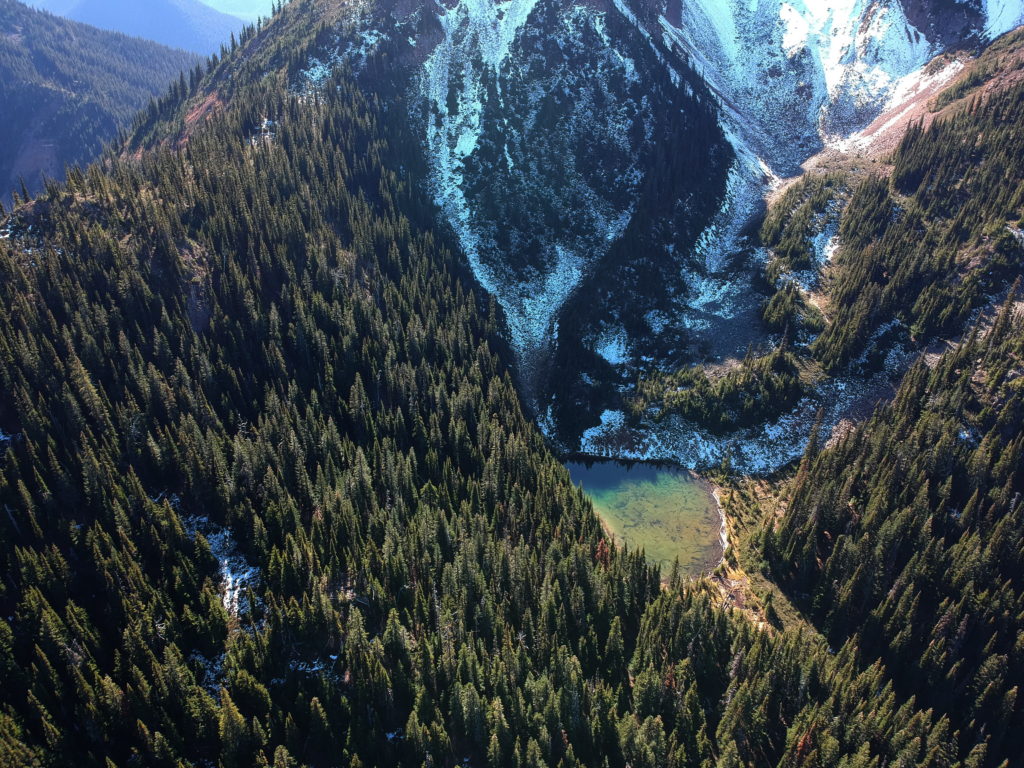
BC’s parks get a boost to support economic recovery
For interview please contact: Skye Vallance Communications and Development Coordinator skye@cpawsbc.org 604-685-7445 ext. 22
BC’s parks get a boost to support economic recovery
Economic recovery package announced Sept. 17 includes support for BC Parks trails, campgrounds and facility upgrades
Sept. 17, 2020
Unceded Coast Salish Territory/Vancouver, BC – The Canadian Parks and Wilderness Society – British Columbia (CPAWS-BC), is welcoming the new injection of money for BC’s provincial parks. Today, the Premier announced a $5 million increase to BC’s provincial parks as part of a $1.5 billion investment to help build BC back better.
“BC Parks are the backbone of outdoor recreation in the province, which has seen a spike in interest over the past few years. This five million dollar bump for BC Parks will go a long way to improve trails, campgrounds and backcountry infrastructure,” said Tori Ball, Terrestrial Campaigner for CPAWS-BC. “Funding for parks has far-reaching benefits for nature and wildlife that are in crisis globally, as well as providing opportunities to relax and adventure close to home.”
Data shows that park usage has been steadily rising throughout the spring and summer of 2020. This is on top of annual increases in visitation to BC Parks, which has risen from 21 million in 2014/15 to over 26 million in 2018/19. A recent survey conducted by CPAWS-BC found that 89% of respondents were more or as likely to travel to provincial parks in the next 12 months, compared to last year.
That same study found that 94% of respondents agree or strongly agree that local businesses near BC’s provincial parks benefit from park visitors. “Our research demonstrates that BC Parks provide economic benefits to communities through visitor spending, in addition to providing jobs in conservation and tourism,” said Ball.
“This injection of extra resources will help the provincial park system to adapt to the continued rise in visitors, and mounting environmental challenges,” continued Ball. “Continued increases to the BC Parks budget are integral to a well managed, resilient parks system. Proper funding will ensure that these areas can support people and wildlife, and adequately protect and prepare for the years to come.”
CPAWS-BC is also encouraged to see funding and resources for watershed restoration to support wildlife recovery and jobs for communities hardest hit by the pandemic.
-30-
For interview please contact: Skye Vallance Communications and Development Coordinator skye@cpawsbc.org 604-685-7445 ext. 22
Key facts:
✔ A boost for BC Parks: $5-million to maintain and expand trails, campgrounds and other necessary park infrastructure.
✔ Money for restoration: Nearly $50-million will fund wetland conservation and species conservation, employing 1,000 people, focused on those hit hardest by the pandemic.
✔ Cleaning our coast: Nearly $15-million towards the removal of marine debris and derelict vessels.
✔ Conservation jobs for youth: The $1.8 million Youth Employment program is creating 25 new youth park positions and 18 positions in the conservation officer service.
For interviews, contact: Tori Ball, Terrestrial Campaigner Canadian Parks and Wilderness Society, BC Chapter tori@cpawsbc.org (604) 685-7445 x24
FOR IMMEDIATE RELEASE
August 5, 2020
Traditional territories of the Coast Salish peoples/Vancouver, BC — The Canadian Parks and Wilderness Society, British Columbia (CPAWS-BC) is applauding a new initiative to hire young people into conservation jobs in BC. These new jobs, announced today by Environment Minister George Heyman, will help to safeguard nature across the province.
“We’re happy to see more conservation jobs being created for young people at a time when our park system needs more support,” says Tori Ball, Terrestrial Campaigner with CPAWS-BC.
“In the short term, these new jobs will help manage the impacts of increasing visitation on the outdoor places we love so much, by addressing long standing capacity issues within BC Parks,” she adds.
BC’s provincial parks were forced to shut down this spring due to concerns with understaffing and overcrowding, following a recent budget cut to operations earlier this year. Decades of underfunding to BC Parks has created a concerning shortage of staff as well as a significant backlog of maintenance issues and major delays in management planning for parks.
“These new temporary positions will help provide much-needed capacity to support overworked park rangers, which will better safeguard nature and improve people’s experiences in the outdoors,” says Ball.
“We hope to see continued investment in nature-based jobs and a commitment to a longer-term capacity increase for BC Parks, as part of the overall strategy to recover the province’s economy,” she adds.
–30–
For interviews, contact:
Tori Ball, Terrestrial Campaigner Canadian Parks and Wilderness Society, BC Chapter tori@cpawsbc.org (604) 685-7445 x24
Canadian Parks and Wilderness Society – British Columbia Chapter (CPAWS-BC) protects wilderness in every corner of BC and deep into the ocean. CPAWS-BC supports the creation of large, well-managed, connected protected areas where native plants and animals thrive, now and forever; and where people and communities can live off the land and ocean without impacting the ability of future generations to do the same.
In the past 50+ years, CPAWS has played a lead role in protecting over half a million square kilometres – an area bigger than New Brunswick, Newfoundland and Labrador put together.
For interviews, contact: Tori Ball, Terrestrial Campaigner tori@cpawsbc.org (604) 685-7445 x24
New report highlights opportunity to put nature protection at the heart of economic recovery in Canada
For Immediate Release
July 15, 2020
Unceded Coast Salish Territory/Vancouver, BC — A new report from the Canadian Parks and Wilderness Society (CPAWS) recommends that nature protection is put at the heart of Canada’s COVID-19 recovery strategies. The report highlights the enormous potential of BC’s provincial parks to provide accessible and affordable outdoor activities, and outlines urgent challenges posed by decades of underfunding.
“It’s become very clear that BC’s parks are essential to our health and well-being. Safe, accessible outdoor recreation in parks is a proven way to boost mental health and reduce stress,” says Tori Ball, Terrestrial Campaigner with CPAWS-BC.
“Unfortunately, decades of funding for BC’s parks has left communities with inequitable access to nature, and continues to put wildlife at risk,” she says.
The BC Parks budget was cut by 4% this year, exacerbating issues such as understaffing across the province. This has restricted or cut core functions such as monitoring and enforcement, research, and education.
The provincial and federal governments are making decisions on spending to restart the economy and recover from the economic downturn caused by COVID-19. CPAWS-BC is advocating for an investment of economic recovery funding into BC’s parks to better support the needs of communities across the province.
“This is our chance to get it right. We know that nature conservation is a driver of economic growth and provides essential community benefits that help build a resilient global economy,” says Ball.
”Now more than ever, we need to invest in these places so that our communities will be more resilient and better supported in the long run,” adds Ball.
CPAWS-BC’s recommendations to the Government of British Columbia:
Invest immediately in BC Parks, increasing staff capacity for visitor management, ecological monitoring, and management planning to better recognize the critical role that parks play in supporting our health, our communities, and our environment.
Support Indigenous-led conservation initiatives that enable reconciliation with Indigenous nations, protection and recovery of species at risk, and build sustainable long-term jobs in rural and remote communities
–30–
For interviews, contact: Tori Ball, Terrestrial Campaigner tori@cpawsbc.org (604) 685-7445 x24
Traditional territories of the Coast Salish peoples, Vancouver BC — A new online survey from the Canadian Parks and Wilderness Society – BC Chapter (CPAWS-BC) confirms that parks are a key priority for British Columbians, and that 73% want the BC government to increase funding. Parks present affordable and accessible opportunities to spend time outdoors, which has consistently been a top recommendation from BC’s Provincial Health Officer Dr. Bonnie Henry.
“As more people turn to parks through this pandemic, concerns for the health of our parks are becoming increasingly connected with concerns for the health of British Columbians,” says Tori Ball, Terrestrial Campaigner with CPAWS-BC.
“This week saw a record-breaking number of camping reservations with BC Parks and widespread challenges in accessing the online reservation system because of the surge in interest,” says Ball. “This, along with the new survey results, underscores the important role parks are playing in supporting communities through the current public health crisis.”
It also highlights an urgent need to address long standing issues with chronic underfunding of the parks system. For decades, the province has struggled with increasing visitation, while trying to protect wildlife and nature in these special places. BC Parks once again had its budget cut by 4% this year, leading to understaffing across the province that has restricted or cut core functions such as monitoring and enforcement, research, and education.
“Decisions are being made right now about how BC will spend $1.5 billion in economic stimulus funding. This is a huge opportunity for the province to recognize the value of parks for the province’s health, and economy,” says Ball.
“Investing some of this funding into the park system to better support what British Columbians are asking for is a no-brainer, and something that will pay off in the long run,” she adds.
Key findings of the survey include:
Access to nature provides mental health benefits. 94% of respondents said access to nature is important to their mental health.
Supporting parks supports communities.75% of respondents ranked the reopening of parks as a priority in BC’s pandemic response plan.
Investing in parks should be part of BC’s Restart Plan. 71% of respondents support an immediate investment of economic stimulus funding into BC Parks for jobs and park infrastructure projects that will improve visitor experience and better support health and safety of park users.
British Columbians support a long-term investment in parks. 73% of respondents support more funding for BC Parks in the long term to protect wildlife and nature, and to support visitor health and safety.
B.C.’s parks critical for recovery, desperate for resources
For Immediate Release
May 6, 2020
Traditional territories of the Coast Salish peoples/Vancouver BC – On Wednesday, the B.C. government announced that they will begin to reopen BC Parks on May 14th as part of a multi-staged plan to reopen B.C. The Canadian Parks and Wilderness Society’s BC Chapter (CPAWS-BC) is encouraged by this news, and recommends immediate action and investment by the province to support our struggling provincial parks system to be able to keep people safe.
“Consistent underfunding of BC Parks over decades has created long-standing issues with failing and unsafe infrastructure,” says Bruce Passmore, Executive Director of CPAWS-BC. “Under-resourced and overworked staff has left parks ill-equipped to handle a surge in visitors at the best of times.”
Provincial parks have been off-limits to the public since April 8th. BC Parks has had limited resources and an overall lack of capacity to support physical distancing measures, and to maintain visitor facilities to a standard that would meet public health guidelines. Numerous surveys over the past month have concluded that most people across the province want to see the reopening of parks prioritized.
“The current public health crisis has put a spotlight on these long-standing issues. It has highlighted the urgent need for the province to invest in BC Parks to carefully plan for improving visitor safety and the conservation of nature in these places we love,” adds Passmore.
“Investment in parks and outdoor recreation should be a priority for the B.C. government to support our health and wellbeing,” says Passmore. “Unfortunately, the BC Parks budget was cut by 4% this year, which has put extra pressure on our parks while demand for outdoor recreation continues to surge.”
CPAWS-BC is urging the government to direct some of the economic recovery funding to BC Parks to hire more people into front-line park jobs, and to improve park infrastructure like trails, campgrounds and other visitor facilities. This will help build a robust park system that will support the health and safety of British Columbians using these spaces during the current pandemic and well into the future.
-30-
For interview, contact:
Tori Ball, Terrestrial Campaigner
604-685-7445 x 24
About CPAWS-BC:
Canadian Parks and Wilderness Society – British Columbia Chapter (CPAWS-BC) protects wilderness in every corner of BC and deep into the ocean. CPAWS-BC supports the creation of large, well-managed, connected protected areas where native plants and animals thrive, now and forever; and where people and communities can live off the land and ocean without impacting the ability of future generations to do the same.
In the past 50+ years, CPAWS has played a lead role in protecting over half a million square kilometres – an area bigger than New Brunswick, Newfoundland and Labrador put together.
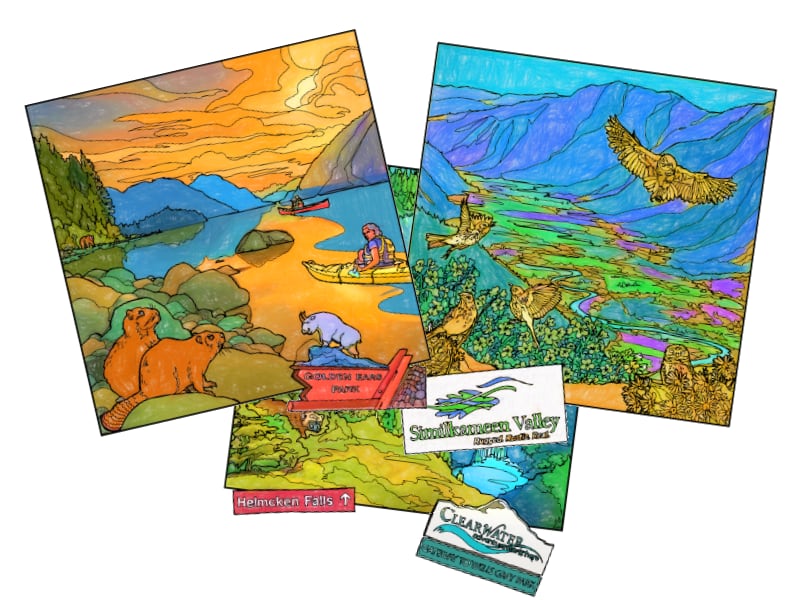
As the weather warms, we’re dreaming of getting back into BC’s parks. It may be a while before our boots hit the trails so we’ve created four stunning colouring pages to remind you of the beauty that awaits.
The pages, with scenes from stunning BC parks, are designed with beginner and expert artists in mind. Enjoy bringing these lively scenes and creatures to life:
Golden Ears Provincial Park – The traditional territories of the Katzie, S’ólh Téméxw (Stó:lō) and Kwantlen peoples, this park is home to black bears, beavers and mountain goats.
Wells Gray Provincial Park – The traditional territory of the Secwepemcúl’ecw (Secwépemc) peoples, this park is home to the elusive wolverines and mighty grizzly bears.
Grasslands of Similkameen Valley – The traditional territory of the Syilx peoples, the grasslands of the Similkameen Valley are home to rare species like burrowing owls and sage thrashers.
Strathcona Provincial Park – The traditional territories of the nuučaan̓uuɫɁatḥ nism̓a (Nuu-chah-nulth), K’ómoks, Kwakwaka’wakw nations, Strathcona Provincial Park is home to Roosevelt elk and endangered Vancouver Island marmots.
Enter your contact details to download and print your colouring pages. Share your creations on Facebook and Instagram with the hashtag #colouringBCParks.
Don’t Go To Parks
Tori Ball, Terrestrial Campaigner
Please excuse the dramatic (read: clickbait) title…
Here at CPAWS-BC, we spend a lot of time and energy trying to help people get outside safely. The science behind the benefits of spending time outdoors is solid. Being outside can boost energy and creativity, improve your mood, and provide free aromatherapy. One study from the American Academy of Ophthalmology found that children with outdoor recesses had a reduced risk of nearsightedness.
Many people in Greater Vancouver base their weekend plans around time outside. A province that boasts the most diverse parks system in the country also has a great enthusiasm for outdoor recreation. Hopeful park visitors have recently been given a different message from multiple park agencies with the closing of parks of all types including provincial and federal parks. In alignment with our health authorities, we the “parks people” are also asking that you and your families don’t go to the parks.
Travelling to towns with terrific tourism options is a great way to spend your weekends and support our neighbours, yet right now it puts them at risk. An influx of visitors threatens not only to spread the novel virus COVID-19, but to overwhelm the capacity of smaller, rural hospitals.
Squamish and Whistler have both issued statements asking visitors to stay away, for now. These sentiments have been echoed from Tofino all the way down to Bishop, California. When these communities are open for business, we encourage you to head out and experience their trails, and stay for a while to enjoy other food and fun they have to offer. But right now, please stay put.
Just because you aren’t travelling to hike up Black Tusk or camp in Golden Ears this weekend doesn’t mean you need to seperate yourself from nature. There are cherry blossoms popping out across many streets in Vancouver and Victoria. My personal favourite springtime tree, the forsythia, is bursting with yellow flowers.
Photo: Forsythia in bloom.
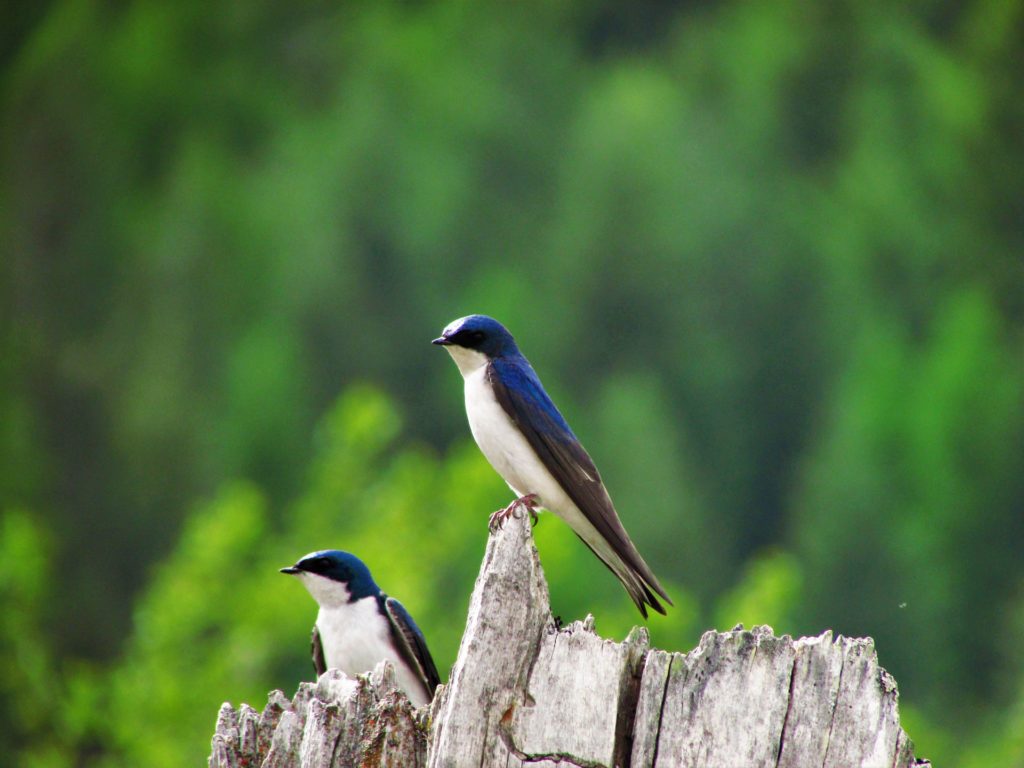
If you’ve got a window, you’ve got the opportunity to become a birder. Spring is one of the best times as migratory birds are coming back to their northern ranges. Check out 18 common birds in BC. Download one of these apps recommended by Bird Watching HQ that can help you identify birds.
Photo: Tree swallows
Your afternoon walk doesn’t need to be in a wooded area to still reep the benefits of getting outside. Natural sunlight (in moderate levels) helps to mitigate pain and provides you with Vitamin D, helping you to absorb calcium, prevents osteoporosis and reduces inflammation.
Our public health officials are saying this physical distancing is “for now.” This isn’t easy, shifting our plans and normal ways of being. It pains me to ask the CPAWS community of nature lovers to stay away from the majestic, awe-inspiring parks system.
Like many of you, I have summer camping reservations that are sitting in limbo. The best chance for all of us to be able to get outside and connect with each other in nature is to forgo this in the short-term.
Note: CPAWS-BC is not a public health organization. This information was developed based on current information from the BC Centre for Disease Control. Please consult your local health authority for advice and updates in your area.
Cover Image by Tori Ball
You can find a list of federal and provincial closures from:
The small unprotected patch of land surrounded by Skagit Valley and E.C. Manning Provincial Parks is under threat from logging and mining. Help protect this cherished area!
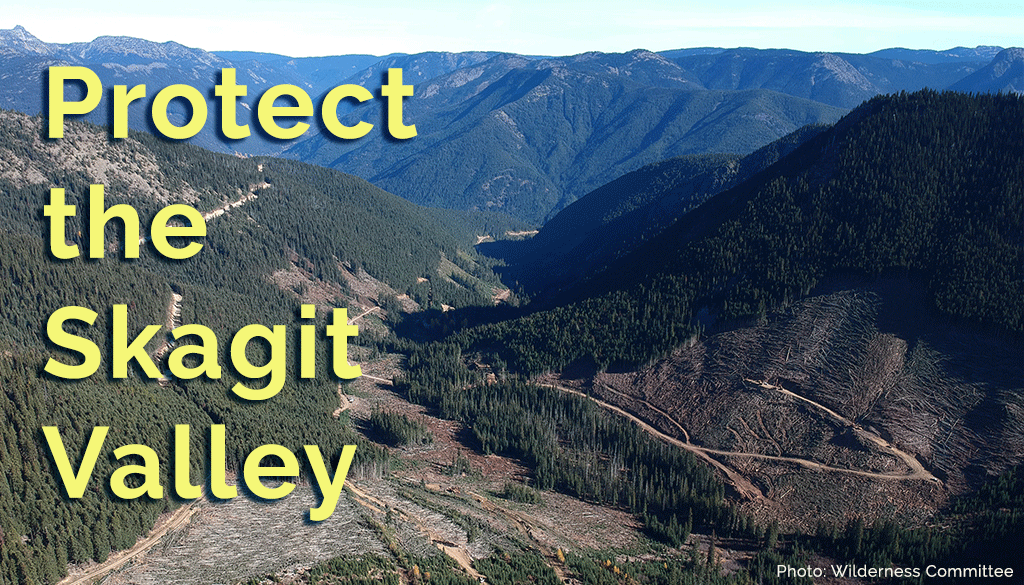
Imperial Metals has applied for a 5-year exploratory mining permit in a little patch of land, nicknamed the Donut Hole, between Skagit Valley and Manning provincial parks. If granted, this would further the impacts created by logging in 2018. These parks are iconic recreation areas and important wildlife habitat that deserve protection, not extraction.
Aerial view of the recent logging in the Skagit Donut Hole taken above Silverdaisy Ridge.
Photo credit: Wilderness Committee
To make matters worse, this mining is being proposed by the company responsible for the Mount Polley mine disaster, Imperial Metals. This disaster saw a four square kilometre sized tailings pond full of toxic copper and gold mining waste breach, spilling an estimated 25 billion litres of contaminated materials into neighbouring lakes, contaminating drinking water sources and major spawning grounds for sockeye salmon. Imperial Metals has not been fined or charged in response to the disaster, leaving landowners and business operators out to dry.
The Skagit Valley parks are headwaters for an internationally significant watershed which leads back to the Salish Sea. Mining would threaten recent efforts to recover salmon and bull trout in the US Skagit River. Metals, especially copper, are toxic to salmon – a necessary food source for the southern resident killer whales, already imperiled from multiple factors including lack of their salmon-dependent diet. Allowing mining to occur here would put these salmon and whales at an increased risk from damaging that Upper Skagit, referred to as the crown jewel of the Salish Sea.
This Skagit Valley parks are the northern tip of a system of connected protected areas which reaches all the way into California. The North Cascades Grizzly Bear population unit is one of the most imperilled in the province. These protected areas are important habitat to maintain wildlife connectivity and provide recreation opportunities for people to connect with nature.
We stand with many partners including 22 US conservation organizations who voiced their opposition to the application. This project would be a disaster for species from spotted owl to the iconic orcas and grizzlies who make their home in BC’s land and waters. By joining the chorus of opposition to this project, you can ensure a safe home for these species and the enduring protection that this area deserves.
We use cookies and other similar technologies such as pixels and web beacons (“Cookies”) for various purposes, such as to ensure our website functions properly, enhance your browsing experience by remembering your preferences and provide personalized content and advertisements.
Functional
Always active
The technical storage or access is strictly necessary for the legitimate purpose of enabling the use of a specific service explicitly requested by the subscriber or user, or for the sole purpose of carrying out the transmission of a communication over an electronic communications network.
Preferences
The technical storage or access is necessary for the legitimate purpose of storing preferences that are not requested by the subscriber or user.
Statistics
The technical storage or access that is used exclusively for statistical purposes.The technical storage or access that is used exclusively for anonymous statistical purposes. Without a subpoena, voluntary compliance on the part of your Internet Service Provider, or additional records from a third party, information stored or retrieved for this purpose alone cannot usually be used to identify you.
Marketing
The technical storage or access is required to create user profiles to send advertising, or to track the user on a website or across several websites for similar marketing purposes.