Home » cpaws » Page 4
BC’s parks get a boost to support economic recovery
For interview please contact:
Skye Vallance
Communications and Development Coordinator
skye@cpawsbc.org
604-685-7445 ext. 22
BC’s parks get a boost to support economic recovery
Economic recovery package announced Sept. 17 includes support for BC Parks trails, campgrounds and facility upgrades
Sept. 17, 2020
Unceded Coast Salish Territory/Vancouver, BC – The Canadian Parks and Wilderness Society – British Columbia (CPAWS-BC), is welcoming the new injection of money for BC’s provincial parks. Today, the Premier announced a $5 million increase to BC’s provincial parks as part of a $1.5 billion investment to help build BC back better.
“BC Parks are the backbone of outdoor recreation in the province, which has seen a spike in interest over the past few years. This five million dollar bump for BC Parks will go a long way to improve trails, campgrounds and backcountry infrastructure,” said Tori Ball, Terrestrial Campaigner for CPAWS-BC. “Funding for parks has far-reaching benefits for nature and wildlife that are in crisis globally, as well as providing opportunities to relax and adventure close to home.”
Data shows that park usage has been steadily rising throughout the spring and summer of 2020. This is on top of annual increases in visitation to BC Parks, which has risen from 21 million in 2014/15 to over 26 million in 2018/19. A recent survey conducted by CPAWS-BC found that 89% of respondents were more or as likely to travel to provincial parks in the next 12 months, compared to last year.
That same study found that 94% of respondents agree or strongly agree that local businesses near BC’s provincial parks benefit from park visitors. “Our research demonstrates that BC Parks provide economic benefits to communities through visitor spending, in addition to providing jobs in conservation and tourism,” said Ball.
“This injection of extra resources will help the provincial park system to adapt to the continued rise in visitors, and mounting environmental challenges,” continued Ball. “Continued increases to the BC Parks budget are integral to a well managed, resilient parks system. Proper funding will ensure that these areas can support people and wildlife, and adequately protect and prepare for the years to come.”
CPAWS-BC is also encouraged to see funding and resources for watershed restoration to support wildlife recovery and jobs for communities hardest hit by the pandemic.
-30-
For interview please contact:
Skye Vallance
Communications and Development Coordinator
skye@cpawsbc.org
604-685-7445 ext. 22
Key facts:
✔ A boost for BC Parks: $5-million to maintain and expand trails, campgrounds and other necessary park infrastructure.
✔ Money for restoration: Nearly $50-million will fund wetland conservation and species conservation, employing 1,000 people, focused on those hit hardest by the pandemic.
✔ Cleaning our coast: Nearly $15-million towards the removal of marine debris and derelict vessels.
✔ Conservation jobs for youth: The $1.8 million Youth Employment program is creating 25 new youth park positions and 18 positions in the conservation officer service.
For interviews, contact:
Bruce Passmore, Executive Director
bruce@cpawsbc.org
(604) 685-7445 x23
Conservation groups welcome federal assessment process for Castle coal mine
For Immediate Release
August 21, 2020
Unceded Coast Salish Territory/Vancouver, BC — This week, Canada’s Federal Environment Minister announced that Teck Resources’ proposed Castle coal mine will undergo a federal environmental assessment. This assessment is a necessary step to ensure the safety of local wildlife, communities and downstream watersheds, including in the USA.
“The Castle coal mine’s potential negative impacts on important grizzly bear and other wildlife populations are particularly concerning,” said Bruce Passmore, Executive Director of the Canadian Parks and Wilderness Society – British Columbia. “This is an important connectivity zone between BC, Alberta and the US. We applaud the federal government for making the correct decision and ordering an environmental assessment.”
Teck Resources coal mines have been under fire for high levels of heavy metals, in particular selenium, being released into waterways in the Elk Valley. Earlier this year, the US Environmental Protection Agency demanded that the BC government hand over selenium data and explain why the company has been allowed to exceed guidelines for toxic heavy metals. Multiple Indigenous nations in Canada and the USA have also expressed concern.
“Given the complexity of values and the history of pollution in the area, combined with the fact that BC still doesn’t have its own endangered species legislation, it’s critical that this project is looked at carefully,” said Passmore. “A federal assessment will consider the mine’s effects on Indigenous rights, local communities, and threatened species like westslope cutthroat trout and white sturgeon.”
–30–
For interviews, contact:
Bruce Passmore, Executive Director
bruce@cpawsbc.org
(604) 685-7445 x23

Download Media Release PDF
Background information:
Minister’s response: The Castle Project
The Castle Project analysis report from the Canadian Impact Assessment Registry
For interviews, contact:
Tori Ball, Terrestrial Campaigner
Canadian Parks and Wilderness Society, BC Chapter
tori@cpawsbc.org
(604) 685-7445 x24
FOR IMMEDIATE RELEASE
August 5, 2020
Traditional territories of the Coast Salish peoples/Vancouver, BC — The Canadian Parks and Wilderness Society, British Columbia (CPAWS-BC) is applauding a new initiative to hire young people into conservation jobs in BC. These new jobs, announced today by Environment Minister George Heyman, will help to safeguard nature across the province.
“We’re happy to see more conservation jobs being created for young people at a time when our park system needs more support,” says Tori Ball, Terrestrial Campaigner with CPAWS-BC.
“In the short term, these new jobs will help manage the impacts of increasing visitation on the outdoor places we love so much, by addressing long standing capacity issues within BC Parks,” she adds.
BC’s provincial parks were forced to shut down this spring due to concerns with understaffing and overcrowding, following a recent budget cut to operations earlier this year. Decades of underfunding to BC Parks has created a concerning shortage of staff as well as a significant backlog of maintenance issues and major delays in management planning for parks.
“These new temporary positions will help provide much-needed capacity to support overworked park rangers, which will better safeguard nature and improve people’s experiences in the outdoors,” says Ball.
“We hope to see continued investment in nature-based jobs and a commitment to a longer-term capacity increase for BC Parks, as part of the overall strategy to recover the province’s economy,” she adds.
–30–
For interviews, contact:
Tori Ball, Terrestrial Campaigner
Canadian Parks and Wilderness Society, BC Chapter
tori@cpawsbc.org
(604) 685-7445 x24
Resources
BC Government Media Release: Program offers young people work experience with BC Parks, COS (August 5, 2020)
About CPAWS-BC:
Canadian Parks and Wilderness Society – British Columbia Chapter (CPAWS-BC) protects wilderness in every corner of BC and deep into the ocean. CPAWS-BC supports the creation of large, well-managed, connected protected areas where native plants and animals thrive, now and forever; and where people and communities can live off the land and ocean without impacting the ability of future generations to do the same.
In the past 50+ years, CPAWS has played a lead role in protecting over half a million square kilometres – an area bigger than New Brunswick, Newfoundland and Labrador put together.
For interviews, contact:
Tori Ball, Terrestrial Campaigner
tori@cpawsbc.org
(604) 685-7445 x24
New report highlights opportunity to put nature protection at the heart of economic recovery in Canada
For Immediate Release
July 15, 2020
Unceded Coast Salish Territory/Vancouver, BC — A new report from the Canadian Parks and Wilderness Society (CPAWS) recommends that nature protection is put at the heart of Canada’s COVID-19 recovery strategies. The report highlights the enormous potential of BC’s provincial parks to provide accessible and affordable outdoor activities, and outlines urgent challenges posed by decades of underfunding.
“It’s become very clear that BC’s parks are essential to our health and well-being. Safe, accessible outdoor recreation in parks is a proven way to boost mental health and reduce stress,” says Tori Ball, Terrestrial Campaigner with CPAWS-BC.
“Unfortunately, decades of funding for BC’s parks has left communities with inequitable access to nature, and continues to put wildlife at risk,” she says.
The BC Parks budget was cut by 4% this year, exacerbating issues such as understaffing across the province. This has restricted or cut core functions such as monitoring and enforcement, research, and education.
The provincial and federal governments are making decisions on spending to restart the economy and recover from the economic downturn caused by COVID-19. CPAWS-BC is advocating for an investment of economic recovery funding into BC’s parks to better support the needs of communities across the province.
“This is our chance to get it right. We know that nature conservation is a driver of economic growth and provides essential community benefits that help build a resilient global economy,” says Ball.
”Now more than ever, we need to invest in these places so that our communities will be more resilient and better supported in the long run,” adds Ball.
CPAWS-BC’s recommendations to the Government of British Columbia:
- Invest immediately in BC Parks, increasing staff capacity for visitor management, ecological monitoring, and management planning to better recognize the critical role that parks play in supporting our health, our communities, and our environment.
- Support Indigenous-led conservation initiatives that enable reconciliation with Indigenous nations, protection and recovery of species at risk, and build sustainable long-term jobs in rural and remote communities
–30–
For interviews, contact:
Tori Ball, Terrestrial Campaigner
tori@cpawsbc.org
(604) 685-7445 x24
Download Media Release PDF
Additional Resource:
Canadian Parks and Wilderness Society. (July 15 2020). Healthy Nature Healthy People. https://cpawsbc.org/wp-content/uploads/2020/07/CPAWS-Parks-Report-2020-ENG.pdf
For Immediate Release
May 29, 2020
Traditional territories of the Coast Salish peoples, Vancouver BC — A new online survey from the Canadian Parks and Wilderness Society – BC Chapter (CPAWS-BC) confirms that parks are a key priority for British Columbians, and that 73% want the BC government to increase funding. Parks present affordable and accessible opportunities to spend time outdoors, which has consistently been a top recommendation from BC’s Provincial Health Officer Dr. Bonnie Henry.
“As more people turn to parks through this pandemic, concerns for the health of our parks are becoming increasingly connected with concerns for the health of British Columbians,” says Tori Ball, Terrestrial Campaigner with CPAWS-BC.
“This week saw a record-breaking number of camping reservations with BC Parks and widespread challenges in accessing the online reservation system because of the surge in interest,” says Ball. “This, along with the new survey results, underscores the important role parks are playing in supporting communities through the current public health crisis.”
It also highlights an urgent need to address long standing issues with chronic underfunding of the parks system. For decades, the province has struggled with increasing visitation, while trying to protect wildlife and nature in these special places. BC Parks once again had its budget cut by 4% this year, leading to understaffing across the province that has restricted or cut core functions such as monitoring and enforcement, research, and education.
“Decisions are being made right now about how BC will spend $1.5 billion in economic stimulus funding. This is a huge opportunity for the province to recognize the value of parks for the province’s health, and economy,” says Ball.
“Investing some of this funding into the park system to better support what British Columbians are asking for is a no-brainer, and something that will pay off in the long run,” she adds.
Key findings of the survey include:
- Access to nature provides mental health benefits. 94% of respondents said access to nature is important to their mental health.
- Supporting parks supports communities. 75% of respondents ranked the reopening of parks as a priority in BC’s pandemic response plan.
- Investing in parks should be part of BC’s Restart Plan. 71% of respondents support an immediate investment of economic stimulus funding into BC Parks for jobs and park infrastructure projects that will improve visitor experience and better support health and safety of park users.
- British Columbians support a long-term investment in parks. 73% of respondents support more funding for BC Parks in the long term to protect wildlife and nature, and to support visitor health and safety.
–30–
For interview, contact:
Tori Ball, Terrestrial Campaigner
604-685-7445 x 24
tori@cpawsbc.org
 Media Release PDF here.
Additional Images here.
For interview, please contact:
Tori Ball, Terrestrial Campaigner
604-685-7445 x 24
tori@cpawsbc.org
B.C.’s parks critical for recovery, desperate for resources
For Immediate Release
May 6, 2020
Traditional territories of the Coast Salish peoples/Vancouver BC – On Wednesday, the B.C. government announced that they will begin to reopen BC Parks on May 14th as part of a multi-staged plan to reopen B.C. The Canadian Parks and Wilderness Society’s BC Chapter (CPAWS-BC) is encouraged by this news, and recommends immediate action and investment by the province to support our struggling provincial parks system to be able to keep people safe.
“Consistent underfunding of BC Parks over decades has created long-standing issues with failing and unsafe infrastructure,” says Bruce Passmore, Executive Director of CPAWS-BC. “Under-resourced and overworked staff has left parks ill-equipped to handle a surge in visitors at the best of times.”
Provincial parks have been off-limits to the public since April 8th. BC Parks has had limited resources and an overall lack of capacity to support physical distancing measures, and to maintain visitor facilities to a standard that would meet public health guidelines. Numerous surveys over the past month have concluded that most people across the province want to see the reopening of parks prioritized.
“The current public health crisis has put a spotlight on these long-standing issues. It has highlighted the urgent need for the province to invest in BC Parks to carefully plan for improving visitor safety and the conservation of nature in these places we love,” adds Passmore.
“Investment in parks and outdoor recreation should be a priority for the B.C. government to support our health and wellbeing,” says Passmore. “Unfortunately, the BC Parks budget was cut by 4% this year, which has put extra pressure on our parks while demand for outdoor recreation continues to surge.”
CPAWS-BC is urging the government to direct some of the economic recovery funding to BC Parks to hire more people into front-line park jobs, and to improve park infrastructure like trails, campgrounds and other visitor facilities. This will help build a robust park system that will support the health and safety of British Columbians using these spaces during the current pandemic and well into the future.
-30-
For interview, contact:
Tori Ball, Terrestrial Campaigner
604-685-7445 x 24
About CPAWS-BC:
Canadian Parks and Wilderness Society – British Columbia Chapter (CPAWS-BC) protects wilderness in every corner of BC and deep into the ocean. CPAWS-BC supports the creation of large, well-managed, connected protected areas where native plants and animals thrive, now and forever; and where people and communities can live off the land and ocean without impacting the ability of future generations to do the same.
In the past 50+ years, CPAWS has played a lead role in protecting over half a million square kilometres – an area bigger than New Brunswick, Newfoundland and Labrador put together.
Ready to Take Action?
Tell Premier Horgan and Finance Minister Carole James to Invest in BC Parks to support green jobs, healthy lifestyles and keep wildlife safe.
Take Action
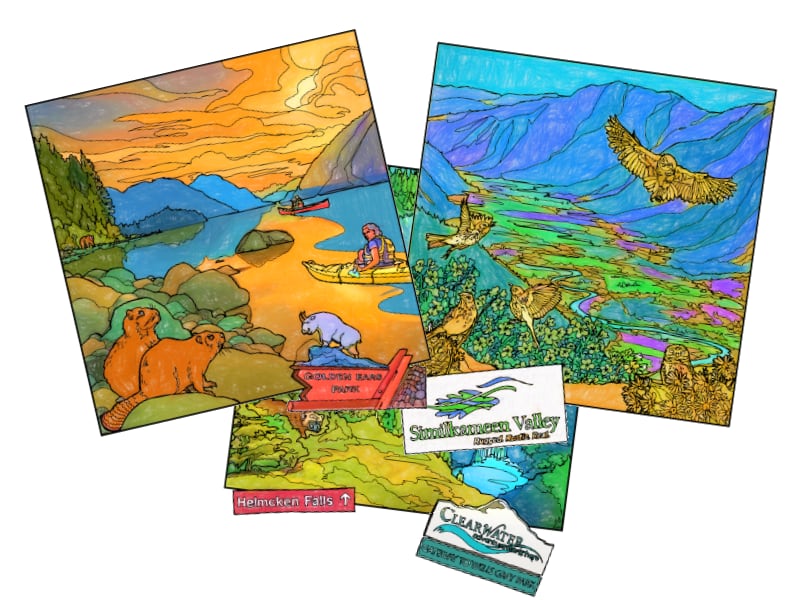
As the weather warms, we’re dreaming of getting back into BC’s parks. It may be a while before our boots hit the trails so we’ve created four stunning colouring pages to remind you of the beauty that awaits.
The pages, with scenes from stunning BC parks, are designed with beginner and expert artists in mind. Enjoy bringing these lively scenes and creatures to life:
Golden Ears Provincial Park – The traditional territories of the Katzie, S’ólh Téméxw (Stó:lō) and Kwantlen peoples, this park is home to black bears, beavers and mountain goats.
Wells Gray Provincial Park – The traditional territory of the Secwepemcúl’ecw (Secwépemc) peoples, this park is home to the elusive wolverines and mighty grizzly bears.
Grasslands of Similkameen Valley – The traditional territory of the Syilx peoples, the grasslands of the Similkameen Valley are home to rare species like burrowing owls and sage thrashers.
Strathcona Provincial Park – The traditional territories of the nuučaan̓uuɫɁatḥ nism̓a (Nuu-chah-nulth), K’ómoks, Kwakwaka’wakw nations, Strathcona Provincial Park is home to Roosevelt elk and endangered Vancouver Island marmots.
Enter your contact details to download and print your colouring pages. Share your creations on Facebook and Instagram with the hashtag #colouringBCParks.
MEC Vancouver Flagship store opening highlights partnership opportunities for community to connect to nature and improve BC’s cherished parks
March 10, 2020
Unceded Coast Salish Territory/Vancouver, BC – The Canadian Parks and Wilderness Society – British Columbia Chapter (CPAWS-BC), is celebrating the launch of Mountain Equipment Co-op’s new store and new opportunities for connecting more people with nature.
“MEC has demonstrated their commitment to protecting nature through a long-standing partnership with CPAWS, helping members to connect outdoor recreation and conservation across the country,” said Tori Ball, CPAWS-BC Terrestrial Campaigner. “Continued support from MEC allows us to reach new communities, empowering them to advocate for a healthy and accessible parks system.”
BC’s parks and protected areas provide affordable and accessible nature experiences for residents and visitors to the province, while also safeguarding wildlife and helping us adapt to climate change. Connecting people to our parks and sharing our love of these natural spaces is more important than ever. MEC has played an important role fostering these community connections.
With the support from MEC, CPAWS-BC has been connecting communities across the province with nature, from the Lower Mainland to the Rocky Mountains, and continues to work on creating new protected areas to forever protect the wild places we know and love. These programs include:
- Connecting new audiences with parks in the Lower Mainland through a hiking program to increase awareness of backcountry safety, Leave No Trace principles and the parks system’s need for community support.
- Protecting/supporting the protection of BC’s endangered grasslands in the South Okanagan-Similkameen in Canada’s newest National Park Reserve.
CPAWS-BC Terrestrial Program staff will greet media onsite at the MEC Vancouver flagship store on March 10th from 10:00 – 11:00 AM to answer questions about the partnership forged to safeguard an accessible and healthy parks system.
– 30 –
Resources
Press Release: MEC Vancouver Flagship Store Opens
About CPAWS-BC
Canadian Parks and Wilderness Society – British Columbia (CPAWS-BC) supports the creation of large, well-managed, connected protected areas where native plants and animals thrive, now and forever; and where people and communities can live off the land and ocean without impacting the ability of future generations to do the same.
For interview, please contact:
Tori Ball
Tori@cpawsbc.org
604-685-7445 ext. 24
For immediate release
February 21, 2020
Unceded Coast Salish Territory/Vancouver, BC – Today, a historic collaboration reached a critical point with the signing of a partnership agreement regarding the recovery of southern mountain caribou.
Saulteau and West Moberly First Nations announced they have negotiated a partnership agreement with B.C. and Canada to protect and recover caribou in the Peace Region. Part of the Partnership Agreement between the four governments includes the creation of an important new protected area in critical caribou habitat on West Moberly and Saulteau territories, near Chetwynd, BC.
“We are encouraged by this significant agreement to recover one of Canada’s most iconic species,” said Bruce Passmore, Executive Director of CPAWS-BC, “we applaud West Moberly and Saulteau First Nations, who have demonstrated incredible leadership, working with the provincial and federal governments towards protection of wildlife and species at risk in their traditional territories.”
This agreement includes new protected areas, that will expand the Klinse-za Provincial Park as well as restoration measures, access management, habitat recovery and restoration, and an Indigenous Guardian Program. A full, collaborative suite of measures sets the best chance at success for recovery while furthering Indigenous-led conservation models. Such models are critical to upholding the culture, stewardship and traditional knowledge of the original caretakers of the land.
“Support for Indigenous-led land and wildlife conservation efforts is crucial if we are to stem the global biodiversity and climate crisis,” said Passmore. “This historic collaboration between four governments demonstrates a new way forward for conservation in BC to preserve important species before it is too late.”
-30-
For interview, please contact:
Skye Vallance, Communications and Development Coordinator
Canadian Parks and Wilderness Society, BC Chapter
604-685-7445 x 22
skye@cpawsbc.org
February 6, 2020
Unceded Coast Salish Territory/Vancouver, B.C. – The Canadian Parks and Wilderness Society – British Columbia (CPAWS-BC) welcomes the conviction of illegal fishing in the Hecate Strait and Queen Charlotte Sound Glass Sponge Reefs Marine Protected Area (Hecate MPA).
Illegal commercial groundfish harvesting was found to have occurred in the marine protected areas. A fine of $20,000 for illegal activity prohibited under the Hecate MPA Regulations, the first conviction under the Oceans Act nationwide. An additional fine, under the Fisheries Act, of $25,000 for possessing illegally caught fish was ordered to be paid.
“We would like to thank Fisheries and Oceans Canada for enforcing MPA regulations under the Oceans Act and protecting B.C.’s glass sponge reefs,” says Ross Jameson, Ocean Conservation Manager for CPAWS-BC.
Located in the Hecate Strait and Queen Charlotte Sound off B.C.’s north and central coasts, the Hecate MPA glass sponge reefs are a world treasure. Once thought extinct for millions of years, glass sponge reefs are now known only to live in the northeast Pacific Ocean, mainly off B.C.’s coast.
CPAWS-BC has been working since the early 2000s to protect B.C.’s glass sponge reefs. After years of pushing for protection, we celebrated when the Hecate MPA was created by Fisheries and Oceans Canada in 2017. CPAWS-BC continues to work with First Nations and the Government of Canada to protect other vulnerable glass sponge reefs in B.C. Enforcement of these Oceans Act MPA regulations will help ensure these rare ecosystems are not destroyed due to human activities.
Glass sponges are filter feeders. They do this so efficiently that 95% of bacteria are filtered out, cleaning the water. In fact, a single small reef can filter enough water to fill an Olympic-sized swimming pool in less than 60 seconds! Glass sponge reefs provide shelter for bottom-dwelling creatures such as rockfish and prawns.
Fishing activity can cause severe harm to these fragile habitats. Prawn and crab traps drop down and crush glass sponge reefs. Bottom trawling of heavy nets dragged along the seafloor destroy everything in their path while kicking up clouds of disturbed sediment, that prevent the sponges from feeding.
While this conviction means that the Hecate MPA is being enforced, more work needs to be done. Jameson says, “Now we need a management plan for this MPA with effective education, outreach, and additional protections to prevent these offences from occurring in the future.”
-30-
For interview, please contact:
Ross Jameson, Ocean Conservation Manager
Canadian Parks and Wilderness Society, BC Chapter
604-685-7445 x 29
ross@cpawsbc.org
Resources
Fisheries and Oceans Canada. (2020, January 20). Safeguarding our future through the Oceans Act [News Release]. Retrieved https://www.canada.ca/en/fisheries-oceans/news/2020/01/safeguarding-our-future-through-the-oceans-act.html