
Thursday, July 2, 2026,
Unceded territories of the Coast Salish Peoples/Vancouver, BC – The Canadian Parks and Wilderness Society – British Columbia (CPAWS-BC) welcomes the province’s release of the draft Kaska-BC Land Use Plan. This step reflects the collaborative leadership of the Kaska Nation and the Government of British Columbia to forward a plan grounded in the three key pillars of conservation, reconciliation, and responsible resource development.
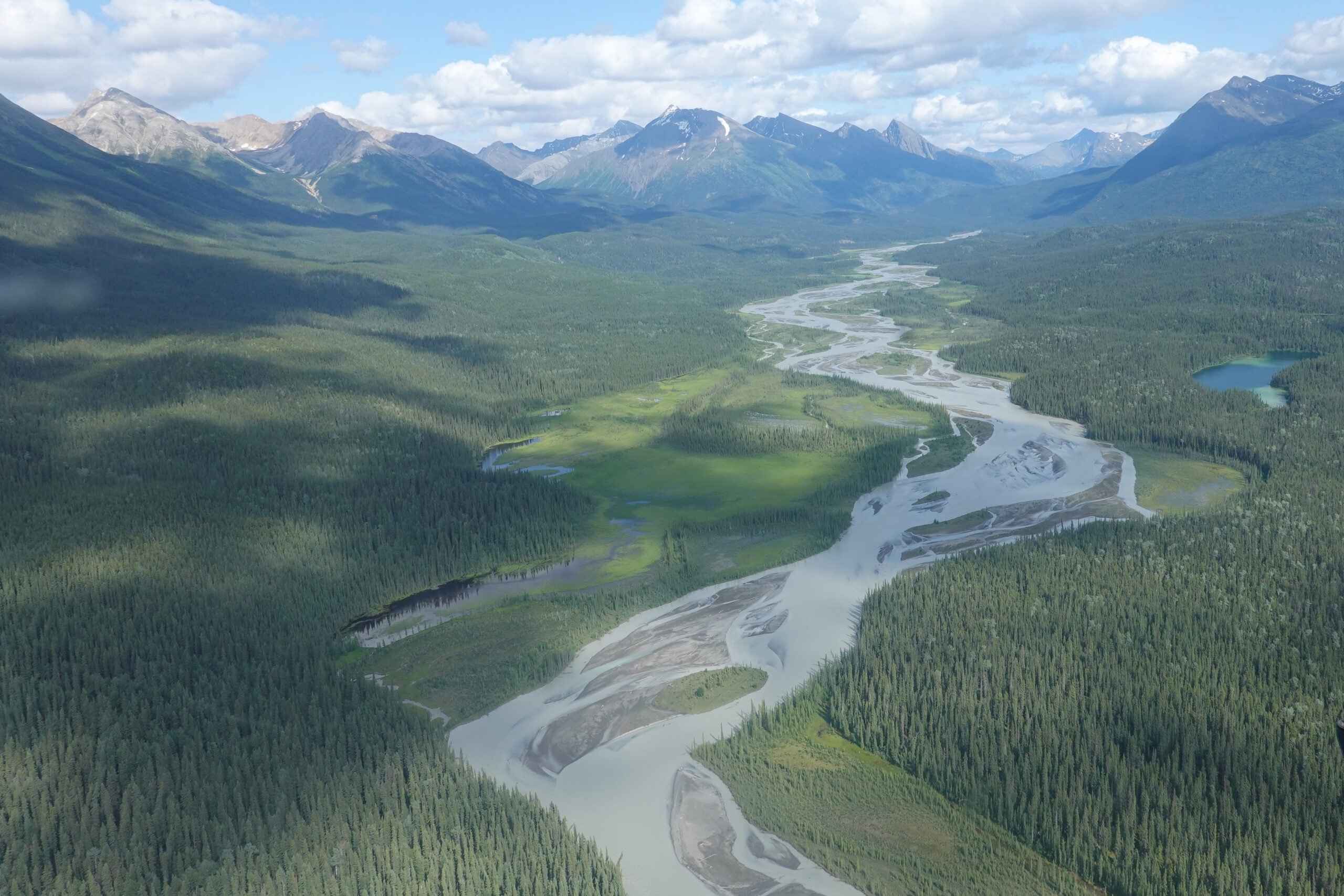
Located in northernmost BC, the Kaska-BC Land Use planning area covers much of the largest, wildest, roadless region left in the province. The plan area contains Dene K’éh Kusān, a protected area proposal of global significance which encompasses approximately three million hectares of pristine Kaska Dena ancestral lands and waters that support rich biodiversity, intact ecosystems, and important cultural connections.
CPAWS-BC is very pleased to see that the vast majority of the virtually roadless Kechika River watershed – effectively the wildest core of the Dene K’éh Kusān protected area – is protected in the plan. This watershed, alongside a connecting corridor for wildlife to Spatsizi Park in the neighbouring Tahltan-BC Land Use Plan Area, remain two paramount conservation outcomes.
Both the provincial and federal governments are currently involved in a significant resource development push in northern BC, and central to that is their interest in supporting the development of new or expanded mines and energy infrastructure. Earlier today, a new commitment to develop a joint BC-Canada strategy for public investment in nature conservation in the northwest was announced, in line with a previous statement from the Major Projects Office on a Northwest Critical Conservation Corridor (NCCC) strategy. Despite repeated references to protecting an area the size of Greece, previous announcements related to the NCCC have thus far focused only on economic outcomes, so this shared commitment to provide conservation funding is welcome. CPAWS-BC looks forward to helping advance the nature protection component and to seeing concrete details about this funding to support conservation outcomes of national and global significance.
“Creating a Northwest Critical Conservation Corridor will require thoughtful planning to secure large core anchors of nature protection, as well as provide connections between core anchors via protected corridors. We believe Dene K’éh Kusān is one of these core anchors that makes the NCCC vision a reality,” said Aleesha Switzer, Acting Conservation Director for CPAWS-BC’s Land & Freshwater Program. “From the start, the Kaska have carefully and prudently drawn the boundary line for Dene K’éh Kusān in order to lessen or eliminate overlap with mineral exploration hot spots and mines. That care makes it possible to achieve a win for world class conservation of nature while also delivering a number of potential new critical mineral and precious metal mine projects. We applaud the vision of the Kaska and are grateful for their leadership to protect this incredible landscape.”
The progress of the Kaska-BC Land Use Planning Project demonstrates that collaborative planning can work. “The draft map released today shows that the proposed size of Dene K’éh Kusān has been reduced by approximately 20% since the start of the planning process,” said Sarah McNeil, CPAWS-BC Executive Director. “While that reduction is not what those of us in the conservation sector wished for, it does prove that the process is responsive to input from a wide range of stakeholders. The success of this and other key planning processes will require continued collaboration and more challenging conversations. Despite our disappointment with the diminished protected area, we will continue to advocate for the best possible outcomes for nature as this process progresses.”
If the proposed Dene K’éh Kusān protected area moves ahead as currently drafted, it would contribute another 3% toward BC’s goal of protecting 30% of land and water by 2030. As the impacts of climate change continue to worsen, protecting intact watersheds becomes increasingly critical. “Finding a major copper or gold deposit is a rare event, but large, intact, roadless wilderness is now also a dwindling and precious commodity. Dene K’éh Kusān will be a wilderness recreation legacy for all British Columbians to enjoy,” said Johnny Mikes, Conservation Specialist with CPAWS-BC. “But only by stepping up to protect it now will future generations have the opportunity to experience its big and beautiful landscapes, free-flowing rivers, and abundant wildlife that exist today.”
CPAWS-BC also notes today’s release of documents regarding two separate, smaller planning areas in northwest BC. CPAWS-BC supports the Gitanyow First Nation’s interest in expanding the Hanna Tintina Conservancy and other salmon conservation measures in the Meziadin watershed. CPAWS-BC also encourages the long-delayed implementation of the 2017 Klappan Plan which would include important protection of the Sacred Headwaters zone immediately adjacent to Spatisizi Provincial Park.
–30–
For interviews, contact:
Aleesha Switzer
Acting Conservation Director – Lands & Freshwater Program
604-685-7445 x 7
Additional background information:
- In 2025, the BC government launched land use planning in across northern BC as part of the Northwest Strategy (see CPAWS-BC reponse) with an ambitious 1-year timeline. The release of the Kaska-BC draft land use plan and the draft Meziadin River Watershed Salmon Habitat Conservation Planning Summary mark the first major milestones in this process.
- For more information on land use planning in British Columbia, visit the BC government planning partnerships website: https://planninginpartnership.ca/
— See the Full BC Release (web version here) —


