Reflections from our Youth Advocacy Summit in Victoria
May 5, 2025 – Eden Luymes, Youth Engagement Coordinator
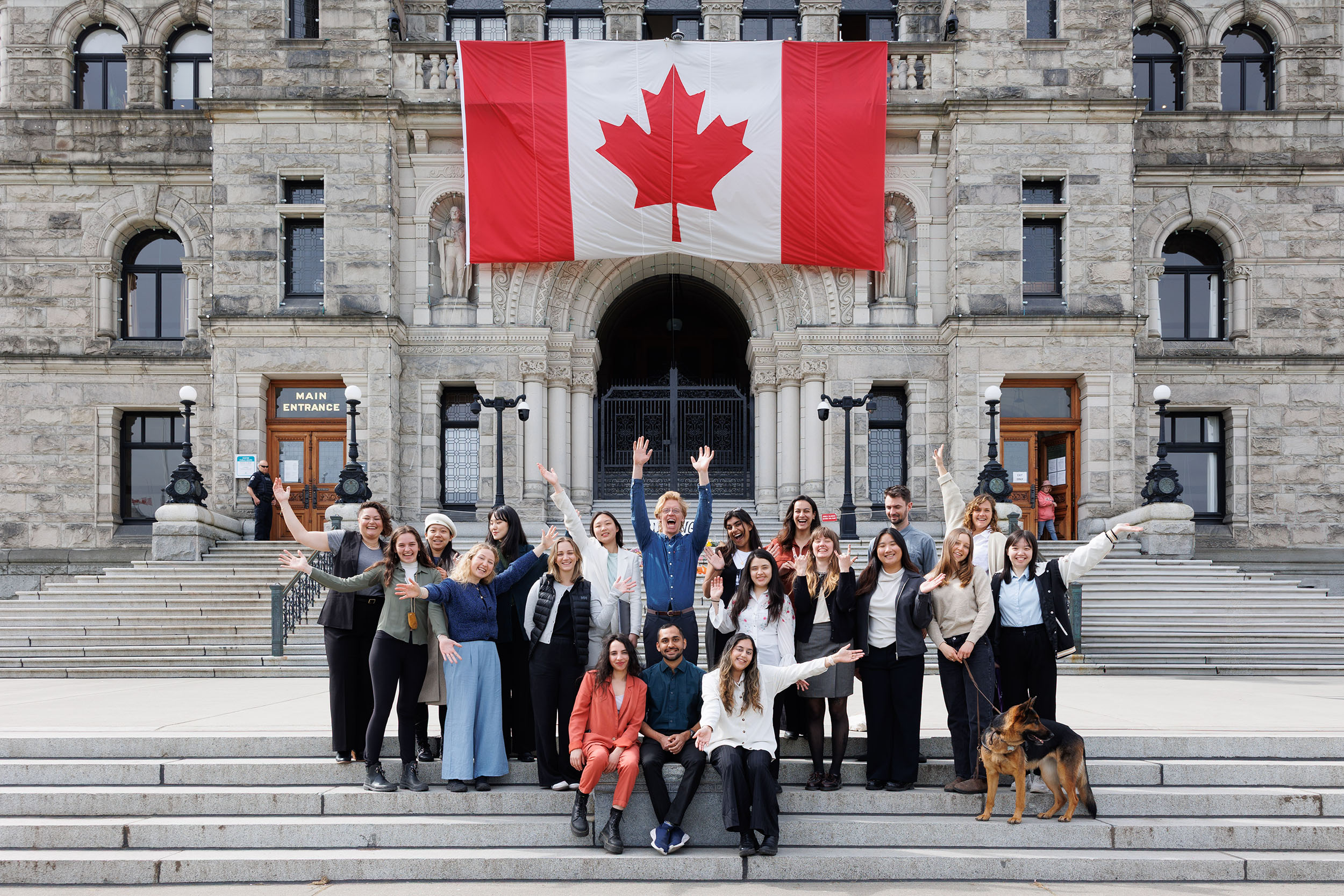
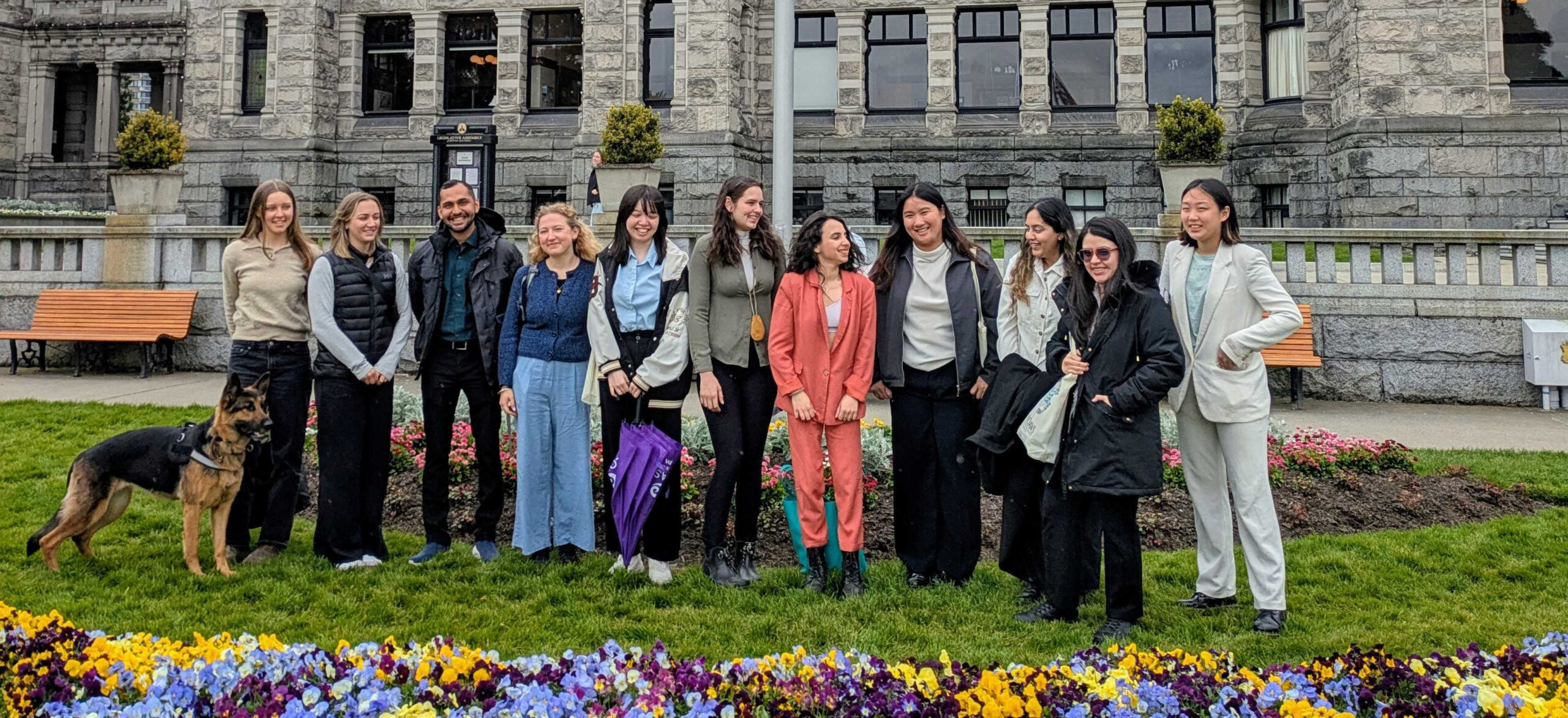
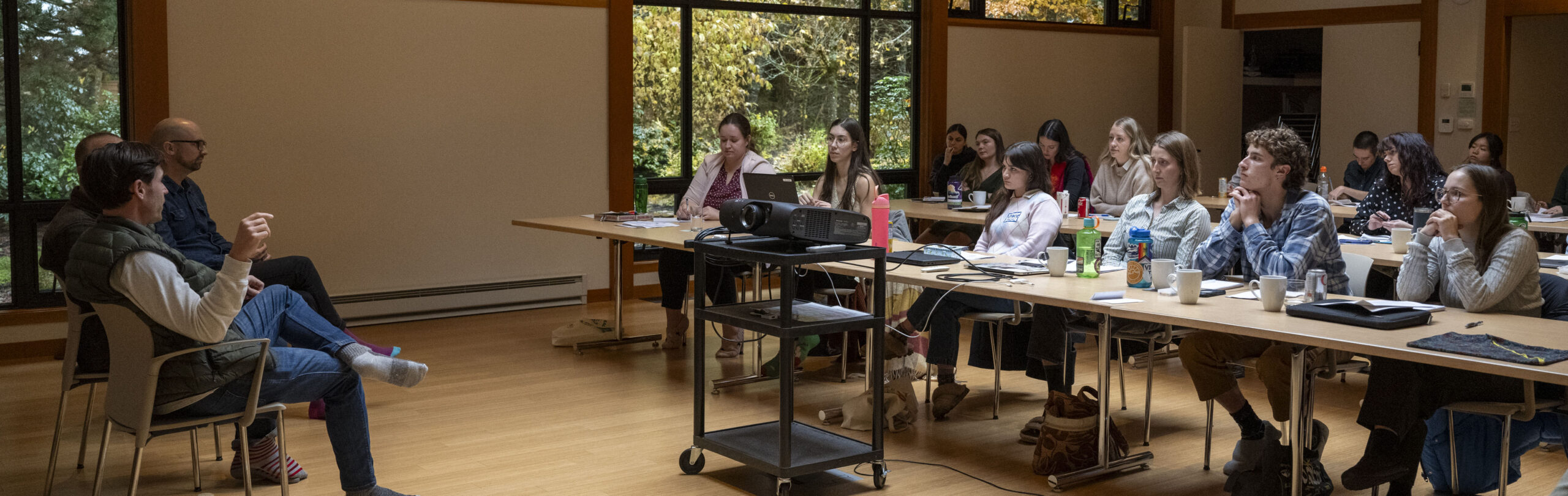
Last week, youth from our Young Leaders in Conservation Program travelled to Victoria to meet with government officials and share their perspectives and visions for BC’s environmental future with decision-makers. This advocacy summit helps youth further develop their government relations and lobbying skills as a part of the Young Leaders in Conservation Program. Participants have been attending workshops on government relations, media relations, conservation policy and more over the past 3 months, all culminating in this summit.
They specifically asked elected leaders to prioritize protecting nature and biodiversity through effective conservation, and for the NDP to follow through with their commitment to protect 30% of BC’s lands and waters by 2030.
Over 3 days in Victoria the youth attended many very fruitful meetings and exciting discussions with decision-makers, including:
Minister of Forests Ravi Parmar
Minister of Infrastructure Bowinn Ma
Attorney General Niki Sharma
Minister of Emergency Management and Climate Readiness Kelly Greene
Minister of Environment and Parks Tamara Davidson
Minister of Water, Land and Resource Stewardship Randene Neill
Minister of State for Local Governments and Rural Communities Brittny Anderson
Trevor Halfrod, MLA for Surrey-White Rock
Hon Chan, MLA for Richmond Centre
Claire Rattée, MLA for Skeena
Scott McInnis, MLA for Columbia River-Revelstoke
Á’a:líya Warbus, MLA for Chilliwack-Cultus Lake
Donegal Wilson, MLA for Boundary-Similkameen
Youth participants also had the opportunity to attend Question Period, where Minister Neill gave the group a warm welcome in her opening comments, and had lunch in the Parliamentary Dining Room with Minister Davidson and Minister Neill.
Participants have been preparing for this opportunity throughout the Young Leaders in Conservation Program by meeting online and attending workshops aimed at building policy literacy, and government and media relations skills to aid them in pursuing their passion to help advocate for environmental issues.
This summit was also a beautiful opportunity for the young leaders to forge strong interpersonal relationships with each other. Participants enjoyed sharing meals, watching the results of the federal election come in together, explored the halls of the Legislature, co-developed and practiced their statements together, and revelled in the spring sunshine & cherry blossoms of Victoria.
It is critical that youth voices are heard by decision-makers. Provincial leaders shared that it was impactful and encouraging to hear from these young leaders.
It was fantastic to witness the youth share their personal connections to nature and speak from the heart with decision-makers. We hope that youth will feel empowered and inspired to keep advocating for nature at all tables and levels of government. We are so proud of and grateful to these incredible youth for their dedication and work on conservation advocacy! Following the summit, participants now have the opportunity to apply for seed funding to start a conservation advocacy or educational project in their community and further hone their community organizing and advocacy skills.
YLICPers outside the Legislature after a successful day lobbying!
May 2, 2025 – by Brynna Kagawa-Visentin
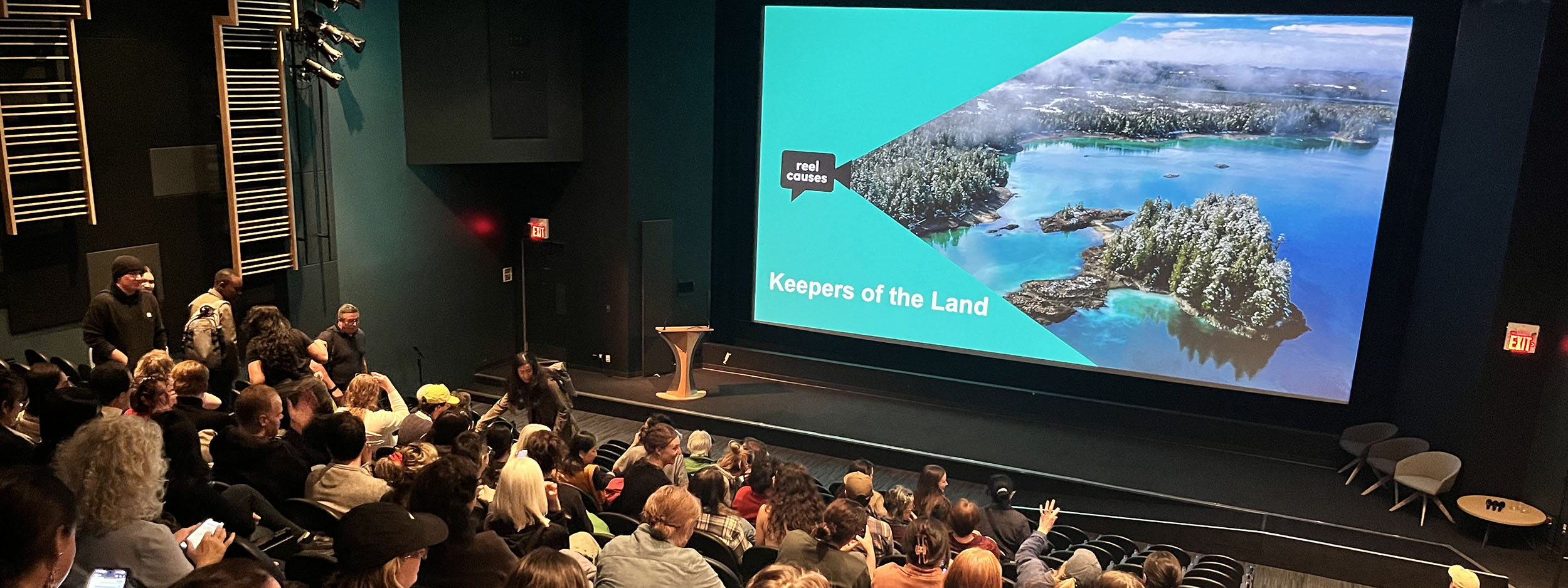
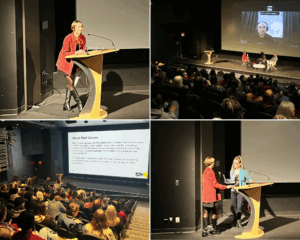
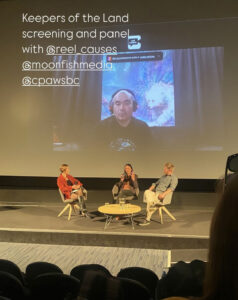
On a sunny, crisp Wednesday evening, over 140 people from across the Lower Mainland, including conservation advocates, students, teachers, nonprofit leaders, and nature enthusiasts, gathered at SFU’s Goldcorp Centre for the Arts for a special screening of Keepers of the Land. This award-winning documentary highlights the Kitasoo Xai’xais First Nation’s inspiring stewardship efforts to safeguard their homelands, including vital marine ecosystems, for generations to come.
We are deeply grateful to everyone who joined us, and to our partners at Reel Causes for helping bring this event to life. We were honoured to be joined by Keepers of the Land co-producers and directors Chief Doug Neasloss and Deirdre Leowinata (Moonfish Media), alongside SFU Assistant Professor Kyle Wilson, who shared thoughtful reflections during the post-film panel discussion. Your presence and contributions made the evening truly memorable.
Created in partnership between the Nation and Moonfish Media, the film captures the Kitasoo Xai’xais’ decades-long efforts to protect vital ecosystems while asserting their inherent rights and connection to their territory. The breathtaking marine footage offered a powerful reminder: for the Kitasoo Xai’xais, stewardship isn’t an abstract concept—it’s daily practice rooted in responsibility and reciprocity. The film highlighted the Nation’s wide-ranging conservation efforts, from banning grizzly bear trophy hunting and managing crab harvests, to investing in the next generation through the SEAS (Supporting Emerging Aboriginal Stewards) program.
At a time when Canada and BC have pledged to protect 30% of lands and waters by 2030, stories like Keepers of the Land are more important than ever. They show that Indigenous leadership is not only vital to achieving these goals, but also offers a deeper vision for how we must live in relationship with nature.
The evening was full of powerful moments, including a lively audience Q&A. Attendees asked thoughtful questions about how momentum can be leveraged from broader social movements to achieve conservation goals, and about the barriers Indigenous-led conservation faces today. A key theme emerged from the film and discussion: the Nation is not waiting for government action; they are leading the way, setting a gold standard for marine conservation in BC and beyond. Their drive to protect the breathtaking biodiversity of their territory, from vibrant marine life to the iconic Spirit Bear, left a lasting impression on everyone in the room.
Many attendees shared how deeply moved they were by witnessing the Kitasoo Xai’xais Nation’s leadership, resilience, and unwavering commitment to protecting their lands and waters. Personally and organizationally, we were reminded that true conservation must be rooted in Indigenous leadership, cultural knowledge, and the lived realities of those most connected to the land.
Events like this are vital for deepening public understanding of Indigenous-led conservation and strengthening the collective momentum needed to hold governments accountable to their 30×30 and conservation commitments. As we move toward this critical goal, it is essential that First Nations remain at the heart of these efforts.
If you weren’t able to join us in person, you can still watch the film on CBC Gem! As Chief Doug Neasloss shared during the panel, just as you’d ask a local for directions in the Bronx, we must turn to First Nations when it comes to protecting lands and waters across BC. They must be supported to make decisions on what happens on their territories.
If you feel inspired to support the Kitasoo Xai’xais Nation’s incredible stewardship work, you can donate directly to their Stewardship Authority here.
A heartfelt thank you once again to everyone who attended, to our partners at Reel Causes, to our incredible panelists Chief Doug Neasloss, Deirdre Leowinata, and Kyle Wilson, and to everyone who helped make this evening possible. Events like this remind us that by working together, we can build a future where people and nature thrive.
Thank you to Reel Causes, our panelists, and all attendees for making this night possible! Photos courtesy of CPAWS-BC community members.
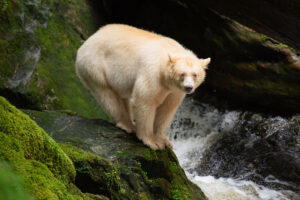
Spirit Bear. Still from Keepers of the Land. Photo courtesy of Reel Causes.
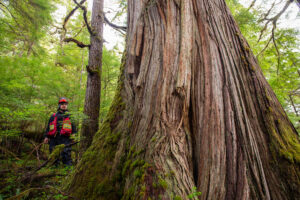
Vernon with Cedar Tree. Still from Keepers of the Land. Photo courtesy of Reel Causes.
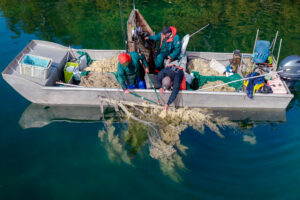
Kelp Harvesting. Still from Keepers of the Land. Photo courtesy of Reel Causes.
Panel discussion post-film. Photo courtesy of event attendee, @nicolevan.zutphen.
April 28, 2025 – by Sarah McNeil, Executive Director
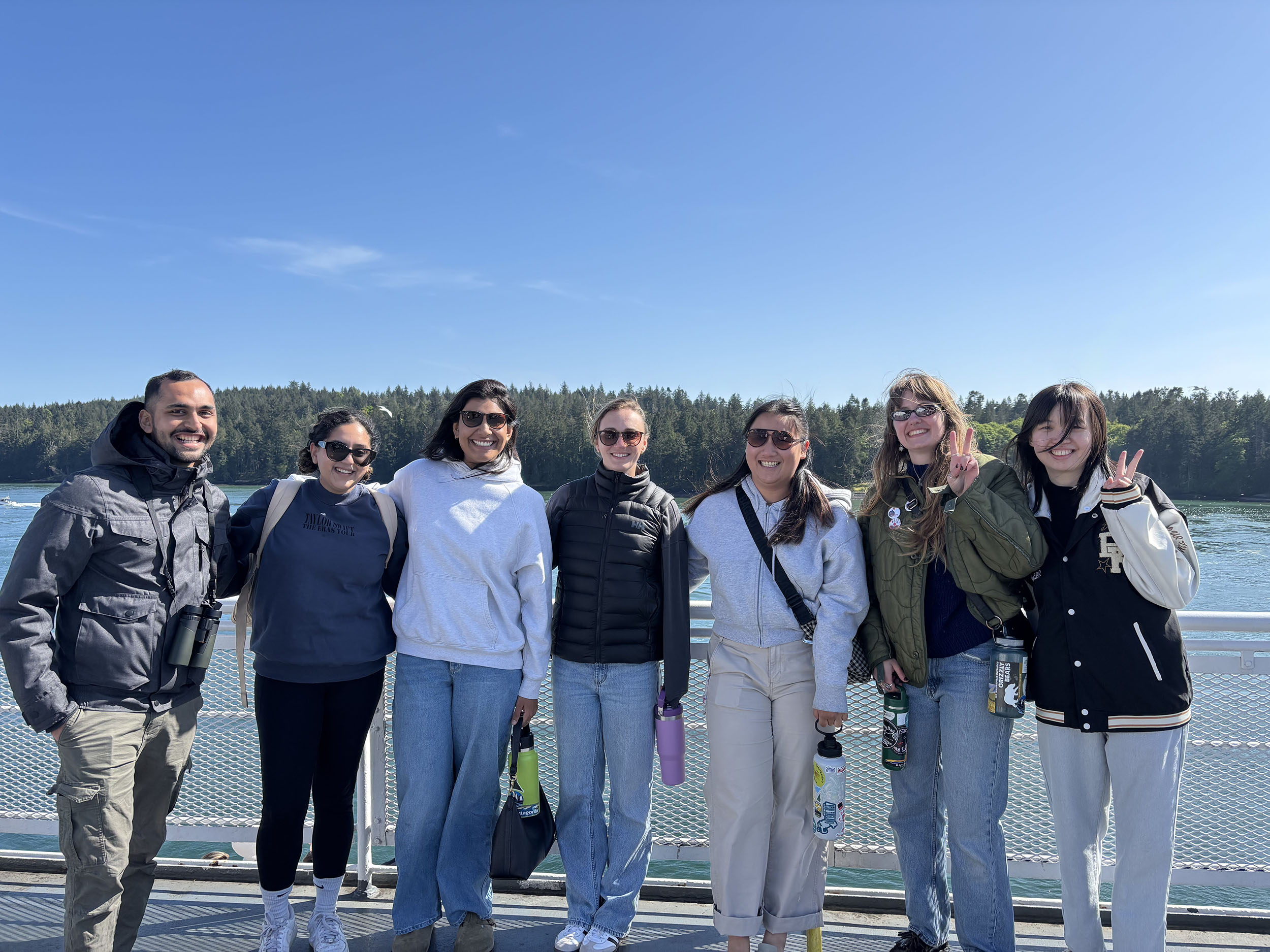
I’m writing this from a hotel in Victoria, where I’m watching the federal election results roll in alongside a few colleagues and 17 youth from CPAWS-BC’s Young Leaders in Conservation Program. We spent the day in meetings with a number of Ministers, with whom the youth spoke beautifully about their personal connections to nature, and why they’re asking the government to protect it.
Watching these brilliant, passionate young people advocate for lands and waters has been a reminder of why I took the Executive Director position at CPAWS-BC permanently at the end of last year: because I believe so deeply in the work CPAWS does to protect nature, and the people doing it.
As an organisation, CPAWS-BC has been through an exceptional amount of change over the last five years. Through it all, we’ve remained effective and impactful, continuing to advocate for the permanent protection of nature and Indigenous-led stewardship in order to safeguard biodiversity, mitigate the impacts of climate change, and support the well-being of people and communities.
And of course, CPAWS-BC continues to change, shift and adapt.
In April, we permanently adopted a 4-day, 32-hour work week after a year-long pilot project. I’m really proud of the work we’ve done as an organisation to make this possible, from the staff members who have found new ways of working together, to the Board who supported this transition, and the funders and donors who continued to believe in our work. The impacts on staff well-being have been significant and enduring: over the last year, our team has consistently reported feeling less stress about work and significantly improved personal physical, mental and emotional well-being and balance. This is deeply important to me because I know that strong, successful organisations are built on dedicated, well-supported staff.
Even more changes are coming this spring and summer. We were delighted to welcome Aleesha Switzer as the new Campaign Manager, Land &Freshwater Program, in March. She’ll be stepping into the Director role in June as a fill for Conservation Director (Land & Freshwater Program) Tori Ball, who is going on leave until fall of 2026. Later in June, Natalie Groulx will join CPAWS-BC from the National office, as a fill for Conservation Director (Ocean Program) Kate MacMillan, who will be on leave until early 2027.
Kate and Tori have played instrumental roles within CPAWS-BC for years, and we’ll miss them both during their time away. Still, I’m excited to begin working more closely with Aleesha and Natalie, to see how they build and shape their teams and the campaigns they lead, how they rise to the challenges we know are coming, and the new opportunities they find for CPAWS-BC. And I have the utmost confidence in our team’s ability to continue driving the protection of lands and waters across this province.
I know there’s a lot at stake right now. I know that, in their desire to strengthen and grow the economy, governments will be focussed on unlocking resources and getting them to market. But I also know that safeguarding nature supports healthy people, healthy communities and a healthy economy. BC is blessed with a diversity of life, with vibrant coasts and towering peaks, with rolling grasslands and expansive forests. Protecting these places gives us an opportunity now to create a safer future for generations to come in the face of climate change, trade wars, and whatever else the coming years will bring.
So as we await the outcome of this federal election, I can’t think of a better place to be than surrounded by these bright, determined young people who so deeply believe in creating a better future, and who have stepped up now to begin shaping it. Let them remind you, as they do me, why this work is so important.
Today marks the first day of spring, and it’s a cool, crisp day where I live on Secwépemc territory in the interior of BC. I made sure to spend some time outside this morning, as I do on each equinox, to ground myself in the changing seasons. It’s one of the ways I can connect with nature even when I’m spending most of my day at a desk.
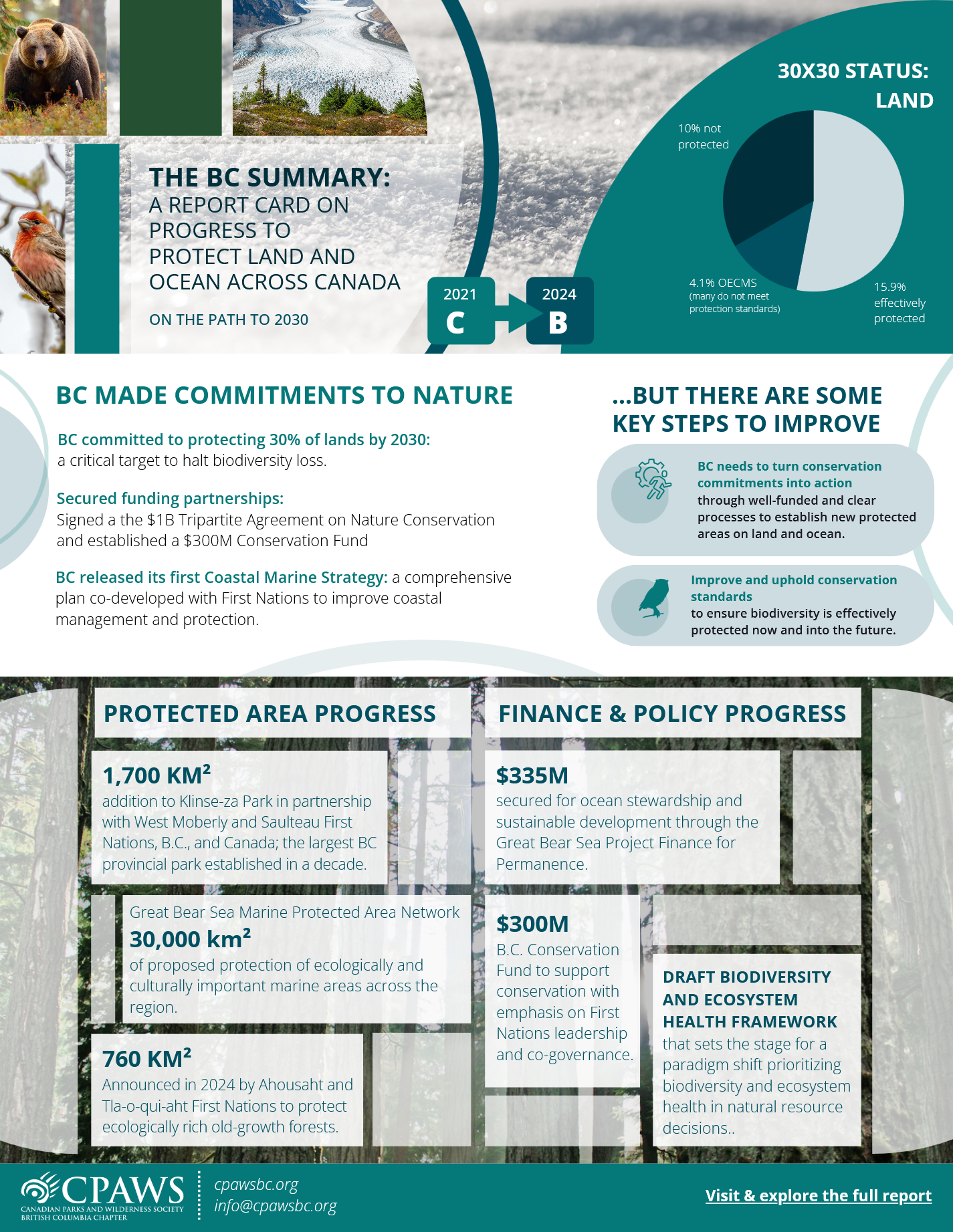
I know that connection to nature is important to you as well, and to so many people here and in BC and right across the country. And it’s one of the reasons CPAWS has released a new report, Path to 2030: a report card on progress to protect land and ocean across Canada. The report outlines the progress made to protect land and ocean from coast to coast to coast since 2022, and it probably won’t surprise you to hear that the results are mixed.
While conservation commitments and funding announcements have been positive over the last few years, the reality on the ground (and under the water) is that progress has been glacially slow, earning BC an overall letter grade of ‘B’.
When I joined CPAWS-BC back in 2017, about 15.4% of BC’s lands and freshwater were protected, and we were advocating for 25% by 2025 as a stepping stone to reaching 30% by 2030. Now, eight years later, that’s only increased by 0.5% (to 15.9%*)—unless you agree with the province’s own accounting of 20% protected, which we don’t (see the Other Effective area-based Conservation Measures explainer below for details).
That means BC needs a huge acceleration in the pace of protection between now and 2030 to stand a chance of meeting that goal. It’s not impossible, but it’s going to take a serious effort to make it happen.
It will require key improvements, such as funding for land-use planning and making sure all of the protected areas in BC are truly protected, meeting international and Canadian standards.
It’s not all bad news, of course.
BC made bold commitments to protect nature:
Formally committed to protecting 30% of lands by 2030
Signed a Tripartite Framework Agreement on Nature Conservation
Committed significant funding, particularly through the Great Bear Sea
Project Finance for Permanence and the BC Conservation Fund.
Established the largest provincial park in a decade with the Klinse-za Park expansion
Released a draft Biodiversity and Ecosystem Health Framework in 2023.
And released its first-ever Coastal Marine Strategy in 2024.
This new report also highlights some key Indigenous-led conservation initiatives that can support the province’s push to protect biodiversity on both land and ocean.
Working in partnership with, and following the leadership of, First Nations will be critical if BC is to meet its targets. There’s a lot of work to be done and 2030 feels like it’s just around the corner now.
* The report numbers are based on the latest CPCAD reporting, but this includes recent announcements made in 2024.
Wednesday, March 5, 2025, unceded territories of the Coast Salish Peoples/Vancouver, BC – With the release of a very tight 2025 BC Budget, the Canadian Parks and Wilderness Society, British Columbia (CPAWS-BC) is urging the BC government to continue to advance commitments they have made to nature conservation because healthy ecosystems are the base of thriving communities and a sustainable BC economy.
“We knew this budget was going to be tight, but we’re in a critical period right now to address the climate and biodiversity crises. We’re concerned that the lack of new resources could slow progress at a time when we need government to continue moving forward,” says Sarah McNeil, Executive Director with CPAWS-BC. “BC has committed to protecting 30% of lands and waters in BC by 2030, and while this is absolutely achievable, there is a lot of work to do to bring us from the current 15.9% to 30% in just five years.”
The Ministry of Water Land Resource Stewardship, which is responsible for delivering key conservation initiatives, saw a tiny increase to their overall budget from $214 million last year to $221 million in this budget. However, the portion noted for the department in charge of land use planning and cumulative effects saw a reduction. That could impact capacity for collaborative land use planning necessary to advance nature conservation goals and bring clarity to the landbase for all. The budget for the Ministry of Environment & Parks is largely holding steady., This ministry delivers much needed services to support sustainable outdoor recreation and the health of the over 14 million hectares of provincial protected areas in BC.
“Amidst an affordability crisis and an increased need to support local businesses, many British Columbians will turn to local protected areas for getaways and to reap the proven mental and physical benefits of being in nature,” added Tori Ball, Conservation Director for the Lands & Freshwater Program with CPAWS-BC. “BC must ensure that the long underfunded and chronically understaffed provincial parks system is able to support safe and sustainable outdoor recreation, its stewardship responsibilities and plan for future system expansion.”
Data shows that protecting lands, waters and wildlife not only safeguards ecosystems but also provides a steady economic return through sustainable industries like tourism and recreation that support jobs in rural areas. A report from Protect Our Winters found that the outdoor recreation economy in Canada is valued at over $101B annually and directly supports over 1 million jobs. With the current drive in BC to ensure a stable economy, it’s important to remember that healthy ecosystems are the backbone of healthy communities and a healthy economy.
“We know that people in BC want to see nature thrive, and the provincial government must prioritize work in partnership with First Nations, conservation experts and communities to deliver on goals to protect and restore the wildlife, lands and waters that are the foundation of a healthy society and economy,” said McNeil.
For interviews contact: Max Winkelman
Communications Manager max@cpawsbc.org 604-685-7445 x3
Unceded territories of the Coast Salish Peoples/Vancouver, BC – The Canadian Parks and Wilderness Society, British Columbia (CPAWS-BC) is urging the BC government to keep up momentum on conservation priorities following the release of mandate letters that provide direction to ministers on the priorities of Premier Eby’s new government.
“While we were glad to see this government will be tasked with working collaboratively with First Nations to protect critical ecosystems, we’re also concerned and disappointed by some key omissions in these mandate letters,” says Executive Director Sarah McNeil.
“For example, governments, communities, industry and other interest holders came together to develop key conservation priorities like the Coastal Marine Strategy, Together for Wildlife strategy, and the Biodiversity and Ecosystem Health Framework — and the Old Growth Strategy Review which spawned it. The health of ecosystems from inland forests all the way to the coast and beyond depend on the continued development and implementation of these priorities, yet none were mentioned at all.”
There was also no explicit reference to biodiversity or species-at-risk legislation in the mandate letters, despite over 1,600 species being listed as at-risk in BC.
“We were glad to see the inclusion of land use planning, and we’re hoping to see adequate resources, clear processes and conservation objectives as part of that process,” says McNeil, “We’ll be looking to the government to take concrete steps to halt biodiversity loss and ensure the long-term health of the nature our communities and economy depend on.”
The only reference to the Province’s previous commitment to protect 30% of lands and waters by 2030 comes alongside a mandate to enable mining exploration and development in partnership with First Nations.
“While we understand that critical minerals are a necessary input in the energy transition, biodiversity impacts must be considered as part of any project approval process. We cannot simply trade one crisis for another, or pretend that they are not interlinked; we must address the biodiversity, climate and affordability crises together,” says McNeil.
For interviews contact: Max Winkelman Communications Manager max@cpawsbc.org 604-685-7445 x3
SAANICH & LANGFORD, BC / Unceded territories of the lək̓ʷəŋən and W̱SÁNEĆ Peoples
Tonight, the District of Saanich and City of Langford Councils voted unanimously in favour of BC municipalities pushing the BC government to enshrine its recently-released Coastal Marine Strategy into law. The resolutions were brought by Saanich Councillor Teale Phelps Bondaroff and Langford Councillor Mary Wagner.
BC coastal and marine areas face a myriad of threats, from marine plastics to derelict vessels, shoreline development, ship traffic and climate change. Local governments are often on the front lines of these challenges.
The Coastal Marine Strategy was co-developed with coastal First Nations to address these important issues, and it includes both existing and new policies and projects. It aims to protect and restore coastal ecosystems; assess and manage cumulative impacts; promote sustainable blue economies; and support the implementation of marine plans to ensure the most sustainable use of coastal regions.
“Healthy coastal ecosystems are essential to the prosperity of our communities and the sustainability of our industries,” said Councillor Phelps Bondaroff. “Coastal communities, like Saanich, understand better than anyone the need for long-term solutions. By supporting this call to enshrine the Coastal Marine Strategy into law, we are ensuring their voices, livelihoods, and environments are protected for future generations.”
Erin Gray, Saanich resident and Staff Lawyer with West Coast Environmental Law, said: “Enshrining the Coastal Marine Strategy into law is the critical next step to ensure that it is resistant to the winds of political change and is able to fulfil its 20-year vision. Strong laws are critical to long-lasting environmental protection.”
“Having lived most of my life on Vancouver Island, I have seen first-hand the impact of degraded shorelines, salmon declines and contaminated shellfish. We all have a responsibility to be good stewards of our oceans and ensure the health of coastal communities now and into the future,” said Councillor Wagner. “By taking the next step with a legislative framework to implement the Coastal Marine Strategy, we can make the investment already made by the Province really count.”
With the passing of these resolutions in Saanich and Langford, the municipalities are now seeking to raise the issue with other local governments across the province, bringing resolutions in support of a strong BC coastal law to the Association of Vancouver Island and Coastal Communities in April, and following that, to the Union of BC Municipalities in September.
—–
For more information, please contact:
Erin Gray (she/her), Staff Lawyer, West Coast Environmental Law egray@wcel.org, 604-684-7378 ext. 234
Teale Phelps Bondaroff (he/him), Ph.D., Councillor, District of Saanich teale.phelps.bondaroff@saanich.ca, 250-882-6261 *Teale est disponible pour des interviews en français
Mary Wagner (she/her), Ph.D., Councillor, City of Langford mwagner@langford.ca, 250-634-2398
Unceded territories of the Coast Salish Peoples/Vancouver, BC – The Canadian Parks and Wilderness Society, British Columbia (CPAWS-BC) is urging the BC government to keep up momentum on conservation priorities following the release of mandate letters that provide direction to ministers on the priorities of Premier Eby’s new government.
“While we were glad to see this government will be tasked with working collaboratively with First Nations to protect critical ecosystems, we’re also concerned and disappointed by some key omissions in these mandate letters,” says Executive Director Sarah McNeil.
“For example, governments, communities, industry and other interest holders came together to develop key conservation priorities like the Coastal Marine Strategy, Together for Wildlife strategy, and the Biodiversity and Ecosystem Health Framework — and the Old Growth Strategy Review which spawned it. The health of ecosystems from inland forests all the way to the coast and beyond depend on the continued development and implementation of these priorities, yet none were mentioned at all.”
There was also no explicit reference to biodiversity or species-at-risk legislation in the mandate letters, despite over 1,600 species being listed as at-risk in BC.
“We were glad to see the inclusion of land use planning, and we’re hoping to see adequate resources, clear processes and conservation objectives as part of that process,” says McNeil, “We’ll be looking to the government to take concrete steps to halt biodiversity loss and ensure the long-term health of the nature our communities and economy depend on.”
The only reference to the Province’s previous commitment to protect 30% of lands and waters by 2030 comes alongside a mandate to enable mining exploration and development in partnership with First Nations.
“While we understand that critical minerals are a necessary input in the energy transition, biodiversity impacts must be considered as part of any project approval process. We cannot simply trade one crisis for another, or pretend that they are not interlinked; we must address the biodiversity, climate and affordability crises together,” says McNeil.
For interviews contact: Max Winkelman Communications Manager max@cpawsbc.org 604-685-7445 x3
Nov. 18, 2024 – by Eden Luymes, Youth Engagement Coordinator
On a rainy November weekend, 19 youth from our Young Leaders in Conservation Program gathered at the Brew Creek Centre for our 2024 Summit. Under cedar fronds dripping with fresh rain, we gathered to learn about policy pathways to protect nature in BC, brainstorm and scheme creative campaign ideas, sip cozy beverages in the lodge, meet with and learn from local government representatives, and build community with like-minded, environmentally-conscious youth from across the province.
Take a walk through some of the many workshops, highlights, and learnings from this beautiful weekend with our Young Leaders.
Learning from Squamish and Lil’wat Culture
Our Summit took place on the unceded shared territory of the Sk̲wx̲u7mesh (Squamish) Nation and L̓il̓wat7úl (Lil’wat) Nation. We opened our weekend with a traditional welcome, beautiful songs, and a dance led by Shelby, a Cultural Ambassador from the Squamish Lil’wat Cultural Centre (SLCC). This was a wonderful way to ground ourselves in place and reflect on how we can work towards meaningful decolonization and support Indigenous leadership on the land.
We also had the incredible opportunity to visit the Squamish Lil’wat Cultural Centre in Whistler and learn more about Squamish and Lil’wat cultures and relationships to the land. I was particularly struck by the artistry and deep symbolism in the carving work, and the process for collecting, processing, and weaving wild mountain goat hair in Squamish tradition.
Organizing to ‘Win’ for Nature
One of the goals of this Summit was to familiarize ourselves with local conservation policy issues, and identify ways we can lobby for more and better protected areas in BC. CPAWS-BC’s Research and Policy Coordinator Meg Bjordal and Marine Research Coordinator Debra Sintra presented on their policy research and campaign work. They identified what areas of terrestrial and marine conservation need additional effort so the young leaders can advocate for action.
This presentation was complemented by a campaign strategy session on “Organizing to Win” with AK Saini from Organizing for Change. We fleshed-out our campaigns by identifying decision-makers, power-holders, and potential points of intervention for our activism, lobbying, or policy recommendations. This exercise will help the young leaders develop their policy asks for MLAs by identifying where we can exert pressure, mobilize our efforts effectively, and actually “win” for nature.
Story-telling in Activism
This weekend, the Young Leaders learned that humans are a species of storytellers. As much as we love a good statistic, it’s important to build a narrative in our activism. We covered how to do this in a session with Sarah Doty from Capulet. We shared our conservation “encounter” – our origin story for our work on environmental issues. Our “encounters” included moments in childhood, learning about a species at risk, or a cultural connection to the land. We discussed the importance of not only conveying an “ask” in our messages to the government, but also a vision. We ended the session by brainstorming increasingly wild and hair-brained ideas to visually convey the importance of protecting 30% of lands and waters by 2030. Ideas ranged from murals of endangered species in the locations where they should be thriving, to a cake presented to the Premier…
Eating & Growing Sustainably
Our Summit took place at the beautiful Brew Creek Centre, where the food – catered by LC Catering – was particularly outstanding. LC Catering provided seasonal and local meals, and we had the opportunity to see where much of the food we were enjoying was grown – right on site at the property farm! Eli took us on a fascinating tour of fields, greenhouses, geodesic domes full of flowers, and an incredible aquaponics facility where koi fertilize the greenest lettuce I’ve ever seen. It was delicious and exciting to see how much gorgeous food can be locally and sustainably grown here, even in bleak November!
Mutual Inspiration with Elected Representatives
We had the incredible honour of welcoming Mayor of Whistler Jack Crompton, Mayor of Squamish Armand Hurford, and MP Patrick Weiler, Liberal Member of Parliament for West Vancouver—Sunshine Coast—Sea to Sky Country to our Summit. They spoke on a panel about how to effectively influence government, and provided detailed advice for young leaders and activists looking to effect change at the municipal, provincial, and federal level. It was encouraging to hear that governments are listening to young voices, and though more work needs to be done, we were mutually inspired by this session. After the panel, the Young Leaders were able to chat and informally connect with the panelists, sharing their thoughts and perspectives over coffee and snacks.
Connecting Like-minded youth
Above all, we were all deeply inspired by one another. At times in this work, especially when you are starting out, it can feel like the work you are doing is isolated. The problems we face – biodiversity loss, climate crisis, extractive relationships to the land and colonial culture – are enormous; petrifying and daunting. The odds seem stacked against us. However, gathering together this weekend was a reminder that we are not alone in this work and this fight! I can work alongside and deeply trust the other young people who are making a difference. There is a lot of progress to be made, but I have greater peace of mind and encouragement knowing that these incredible young leaders are out there, with energy, clarity, and brilliance, working on these challenges too. When I think about how incredible they are, the once stacked odds seem to flip in our favour, and I begin to wonder how we wouldn’t succeed with such brilliant young leaders advocating for our planet.
Learn More about the Young Leaders in Conservation Program
This program is an opportunity for youth to connect with like-minded, passionate people who care for nature and wish to make meaningful connections, network with youth leaders and conservation experts across BC, get coaching for skills relating to conservation advocacy in BC, and co-create ways of catalyzing change. We know that by bridging a network of like-minded peers, we’ll have a stronger impact, together.
CPAWS-BC is delighted to announce Sarah McNeil as Acting Executive Director, effective September 09, 2024.
Sarah joined CPAWS-BC in May of 2017, and has previously held the roles of Development Manager and Operations Director within the organization. To her new role of Acting Executive Director, she brings a wealth of experience in donor relations and nonprofit management, a passion for building strong teams, and an unwavering commitment to the CPAWS-BC mission.
“It’s an honour to be stepping into the role of Executive Director right now,” Sarah says. “I’m incredibly proud of the work that the CPAWS-BC team has done over recent years to build momentum for Indigenous-led conservation, advocate for the permanent protection of lands and waters, and hold the government to account to safeguard Nature right across BC. We’ve seen important gains in a number of places, including the signing of the Trilateral Nature Agreement and the release of a Coastal Marine Strategy to protect biodiversity and the well-being of coastal communities.
“At the same time, we recognize the continued threats to lands and waters right across the province. There’s so much work to be done to ensure that Nature is protected in a way that supports habitats, wildlife, and humans now and into the future. I’m excited to be leading such a strong team at this important moment.”
Prior to joining CPAWS-BC, Sarah worked for numerous environmental nonprofits, and holds a Bachelor of Science and a Bachelor of Education. She credits her nuanced perspective on conservation to growing up in a small town in BC’s interior, where outdoor recreation, nature appreciation, and resource extraction exist side-by-side. She also has the greenest thumb on the team, and will bring tomatoes and zucchinis to meetings in August.
Sarah looks forward to sharing more about her vision for CPAWS-BC in the weeks and months to come. In the meantime, the CPAWS-BC team remains focused on their core work of advocating for Nature.
We use cookies and other similar technologies such as pixels and web beacons (“Cookies”) for various purposes, such as to ensure our website functions properly, enhance your browsing experience by remembering your preferences and provide personalized content and advertisements.
Functional
Always active
The technical storage or access is strictly necessary for the legitimate purpose of enabling the use of a specific service explicitly requested by the subscriber or user, or for the sole purpose of carrying out the transmission of a communication over an electronic communications network.
Preferences
The technical storage or access is necessary for the legitimate purpose of storing preferences that are not requested by the subscriber or user.
Statistics
The technical storage or access that is used exclusively for statistical purposes.The technical storage or access that is used exclusively for anonymous statistical purposes. Without a subpoena, voluntary compliance on the part of your Internet Service Provider, or additional records from a third party, information stored or retrieved for this purpose alone cannot usually be used to identify you.
Marketing
The technical storage or access is required to create user profiles to send advertising, or to track the user on a website or across several websites for similar marketing purposes.