Did you find any interesting species while exploring this summer?
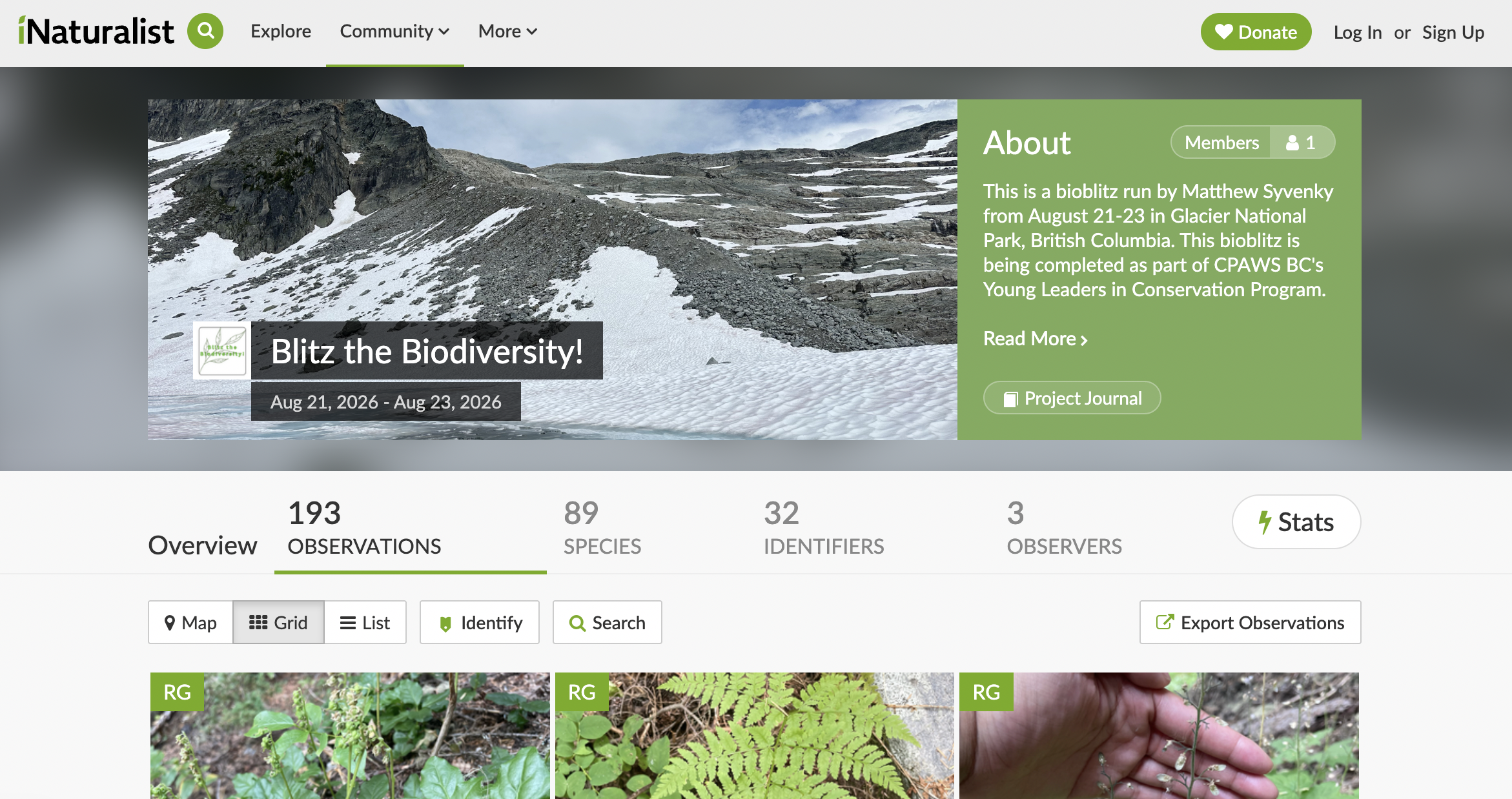
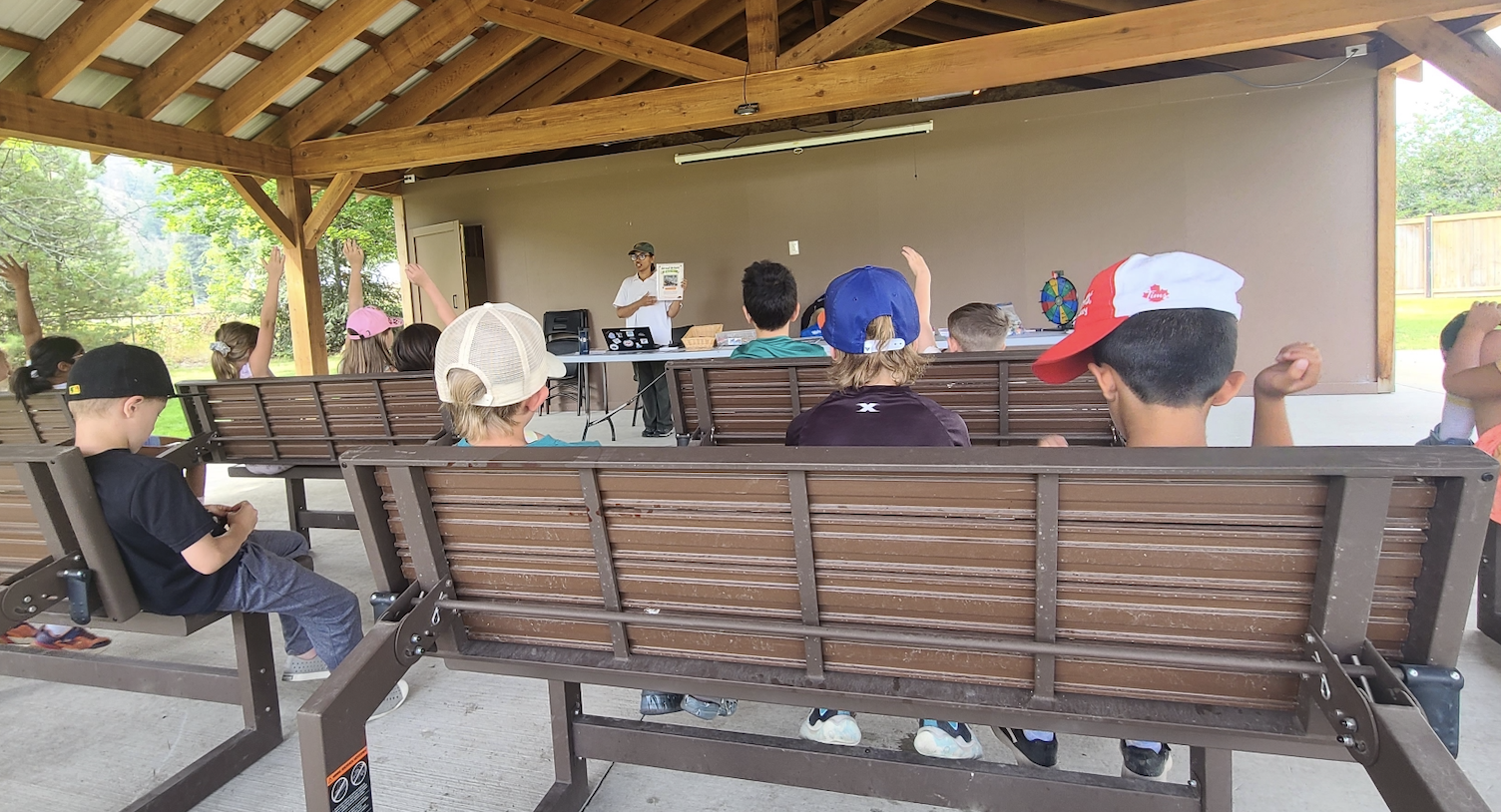
Matthew, part of our Young Leaders in Conservation Program, sure did!
For his summer project, Matthew and his friends headed into Glacier National Park for an iNaturalist Bioblitz, getting outside, photographing the plants and animals they found, and uploading their observations to iNaturalist.
So, what’s the big deal?
Each observation adds to a growing database that helps scientists and conservationists understand where species are found and how abundant they are. iNaturalist observations are a useful tool in research and management, as they can tell us where new species are appearing, where threatened populations are, and how the seasonality of plants are changing with human-intensified climate change.
This project helped with efforts to conserve and steward nature by increasing our understanding of what species occur on the trails surveyed in Glacier National Park, and where these species occur. This type of data is especially helpful in a closely managed place like Glacier National Park. Parks staff use iNaturalist data to locate threatened or invasive species.
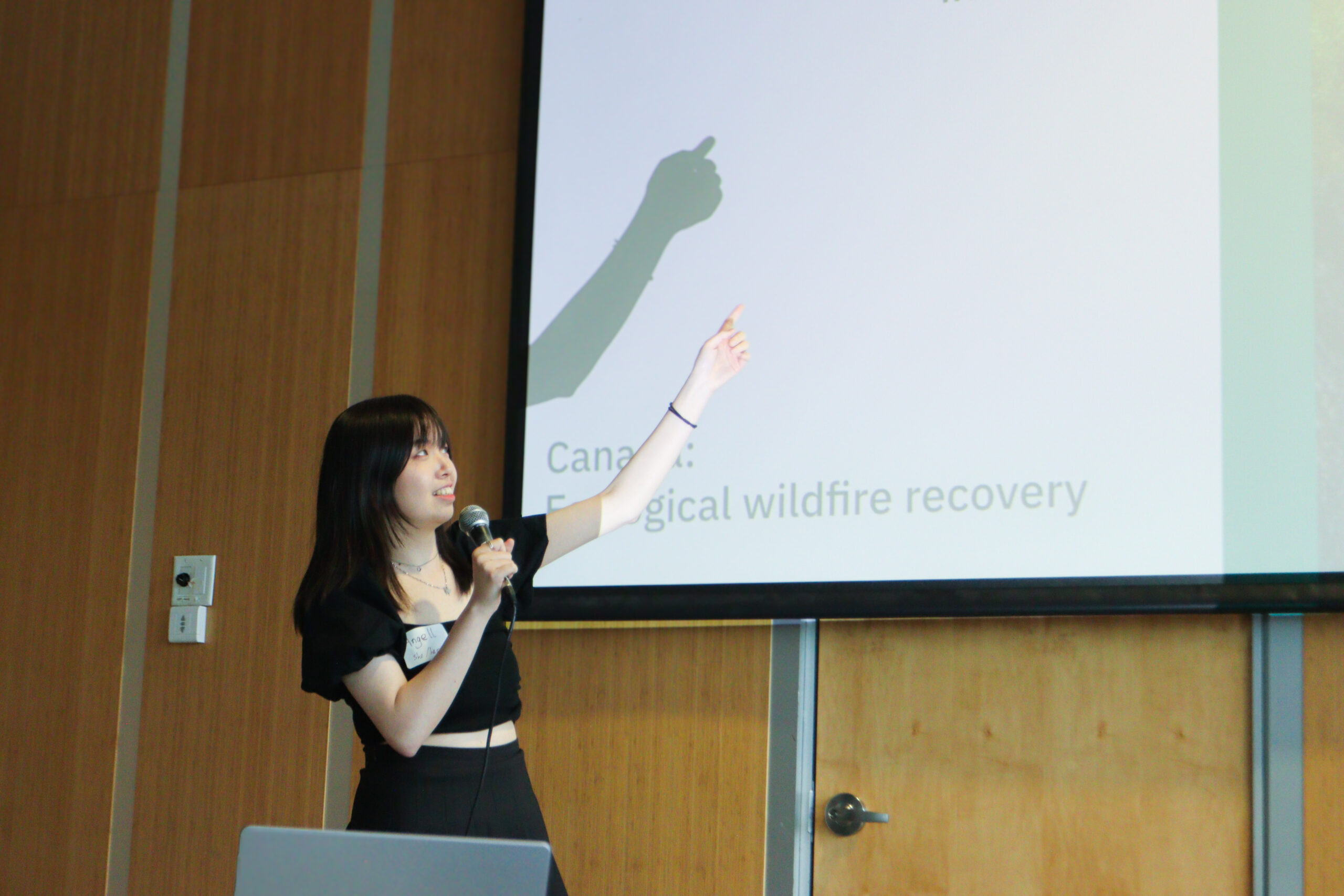
Hello, I’m Angell from cohort 2 of the Young Leaders in Conservation Program. When I moved to Vancouver, I was excited to join the local climate and conservation community. I quickly realized, however, that understanding English wasn’t the same as feeling included. I still remember my confusion when I first heard about controlled fire burns and Indigenous-led conservation. Environmental conversations are full of technical terms, cultural references, and assumptions that can make participation difficult for newcomers.
That experience inspired me and my friend Hailin to create North-South Climate Dialogue (NSCD). Our goal is simple: to make climate conversations more accessible through multilingual and intercultural dialogue.
Rather than treating translation as a one-way process, we bring people together to explore how climate language is understood across different cultures and lived experiences. Through interactive workshops, participants learn climate vocabulary in both English and Mandarin, challenge media headlines, co-create translations, and connect with language-exchange partners. Language can be important for inspiring people to see diverse interpretations and perspectives.
The Young Leaders in Conservation Program at CPAWS-BC reinforced my belief that conservation depends on community, curiosity, and meaningful conversations. I still remember the night our cohort at Victoria was preparing the lobby to meet with a cabinet minister. I had the chance to have deeper conversations with my team, where I got to share my conservation story and listen to theirs. NSCD is how I want to continue these amazing conversations, putting those values into practice by helping build a more inclusive environmental movement.
Check out the website and explore our Web game at www.nsclimatedialogue.org! Together, we can make environmental conversations more welcoming, more connected, and more impactful.
Rabeya Shikdar Orpa, a Young Leaders in Conservation Program participant, has taken an exciting step toward making nature more accessible through the launch of her new environmental education platform, “Land and Learning.”
Land and Learning has been created to connect people of all ages with the natural world through engaging and hands-on learning experiences. Through her platform, Rabeya aims to provide environmental education for K-12 students, youth, community groups, newcomers, and learners through interactive sessions. Topics will include local ecosystems, native plants/ wildlife, species-at-risk, Indigenous perspectives, climate change, habitat restoration, biodiversity, and conservation etc. Rabeya also looks forward to collaborating with conservation organizations, restoration initiatives, and community campaigns across British Columbia.
Land and Learning has already hosted events in partnership with Kamloops Immigrant Services, Naturally Taught, and BC Wildlife Parks as part of their children’s summer camp program. All these workshops introduced children to the beauty of British Columbia’s native plants through creative, artistic, visual, and hands-on activities. Participants explored linocut printmaking by carving and printing designs inspired by arrowleaf balsamroot, burrowing owls, and animal tracks. They also created their own plant presses using local species, including bigleaf maple, sagebrush, and grasses. Rabeya is looking forward to creating more connections and making environmental education fun and accessible for everyone.
We are proud to see our Young Leaders in Conservation turning their ideas into action and creating opportunities that inspire the next generation of environmental stewards. Congratulations to Rabeya on these events, and we look forward to seeing Land and Learning continue to grow and bring nature-based education to communities across British Columbia. If you want to learn more, please visit landandlearning.ca or follow her instagram page @land_and_learning!
I can’t say I was the kid who was never afraid of insects or big animals. I was the one who would cry and scream until a spider was escorted out of my bedroom, bolted at a snake moving through the grass next to the pool, or froze up in terror at the sight of a bear. Like many people, my responses to unfamiliar wildlife was fear, which took a long time for me to unlearn. But the more I learned about each of these species, the more I understood their behaviour, the more predictable they became. And the more I was able to appreciate them. The spiders began to get rides outside on my open palm, the snakes were cooed at like a puppy or kitten, and I knew that the bears didn’t want to see me as much as I didn’t want to see them. This is the power of education, something that can bring understanding, respect, and appreciation to some of society’s most feared species.
The Young Leaders in Conservation Program hosted by the Canadian Parks and Wilderness Society of BC (CPAWS-BC) gave me an opportunity to further develop the advocacy skills that have become central to my career. Fresh out of university, the program offered a chance to engage with the people making conservation decisions in our province and advocate for the protection of some of British Columbia’s most imperiled ecosystems. At the same time, it provided an opportunity to bring conservation closer to home and make a difference within my own community. When I was considering what I wanted to do for my summer project which the program supports, I fairly quickly landed on what is now Weird and Wonderful BC.
Many of British Columbia’s native species are misunderstood. How often have you seen a social media post about a snake being killed in someone’s yard, a bear getting into someone’s garbage, or a spider being swiftly squished after a photo was taken? Wildlife such as rattlesnakes, bats, coyotes, vultures, and spiders are often viewed negatively because of myths, misconceptions, or a simple lack of familiarity. Yet each of these species plays an important role in maintaining healthy ecosystems. Predators help regulate prey populations, scavengers reduce the spread of disease, and insect-eating species contribute to natural pest control.
The goal of Weird and Wonderful BC was simple; highlight species that are often feared or considered pests and tell a different story about them. Through a nine-week public education campaign in the Merritt Herald and social media, each week features a different species found in the BC Interior. By combining science-based information with fun facts, the campaign hopes to reduce fear and encourage coexistence. At its core, Weird and Wonderful BC is about sharing a lesson that took me years to learn myself, that the species that initially make us uncomfortable are often some of the most fascinating. Sometimes all it takes is a little knowledge to transform fear into curiosity, and curiosity into stewardship. For conservation to succeed, people must note only protect wildlife but also understand and value it.
If you’re interested, you can follow along online on Facebook, at Weird and Wonderful BC. Learn more, fear less, and coexist better.
– Siya Markel
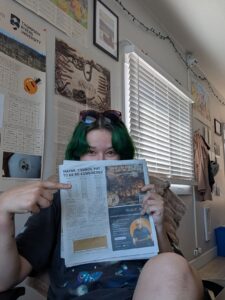
Siya holding up the first ad instalment of the Weird and Wonderful BC in the Merritt Herald
Working to protect nature can sometimes feel isolating in the digital age. While technology enables us to do incredible things, improve efficiency, and connect people across the world, it can never fully replace the inspiration, connection, and sense of community that comes from gathering in person.
This past weekend, 30 youth from the last three cohorts of the CPAWS-BC Young Leaders in Conservation program came together at the Cheakamus Centre on the territory of the Skwxwú7mesh Nation to build community, share knowledge, and reconnect with nature.
The weekend was filled with laughter, conversation, reflection, and learning. Youth heard heartfelt stories from Talaysay Tours, discussed conservation challenges with Jeremy Valeriote (local MLA and member of the BC Greens), presented their community projects, and connected with nature through hikes and creative activities.
What impressed me most was the curiosity that buzzed in the room. Youth were constantly asking questions, eager to learn from one another, and excited to share their own experiences and knowledge. Participants taught each other skills ranging from beading and lino printing to community organizing to conservation of grizzly bears and glass sponge reefs.
Perhaps most importantly, the weekend provided an opportunity to unplug from technology and connect with other knowledgeable and inspiring young leaders. The energy was contagious. Through thoughtful discussions, knowledge sharing, and time spent together outdoors, everyone left with new ideas, stronger connections, and renewed motivation to protect nature.
There is so much we can learn from one another, and weekends like this remind me that community remains one of our most powerful tools for conservation.
We use cookies and other similar technologies such as pixels and web beacons (“Cookies”) for various purposes, such as to ensure our website functions properly, enhance your browsing experience by remembering your preferences and provide personalized content and advertisements.
Functional
Always active
The technical storage or access is strictly necessary for the legitimate purpose of enabling the use of a specific service explicitly requested by the subscriber or user, or for the sole purpose of carrying out the transmission of a communication over an electronic communications network.
Preferences
The technical storage or access is necessary for the legitimate purpose of storing preferences that are not requested by the subscriber or user.
Statistics
The technical storage or access that is used exclusively for statistical purposes.The technical storage or access that is used exclusively for anonymous statistical purposes. Without a subpoena, voluntary compliance on the part of your Internet Service Provider, or additional records from a third party, information stored or retrieved for this purpose alone cannot usually be used to identify you.
Marketing
The technical storage or access is required to create user profiles to send advertising, or to track the user on a website or across several websites for similar marketing purposes.