Friday, May 22, 2026— Unceded territories of the Coast Salish Peoples/Vancouver, BC – The Canadian Parks and Wilderness Society – British Columbia (CPAWS-BC) is celebrating the establishment of the Mia-yaltwa Ha’lidzogm hoon (Me-ah-yall-twa Ha-lee-joh-gom hOH-own), the “Realm of the Salmon, Home of the Salmon,” a major milestone for marine conservation on British Columbia’s Central Coast.
The area is jointly designated by Parks Canada as a National Marine Conservation Area Reserve and by Heiltsuk, Kitasoo/Xai’Xais, Nuxlak, Wuikinuxv, Gitxaała and Gitga’at Nations as an Indigenous Protected and Conserved Area. Through the Establishment Agreement, the six First Nations, Parks Canada and British Columbia will continue working with local communities, commercial and recreational fishers, scientists, tourism operators, and other stakeholders, like CPAWS-BC, to develop a stewardship plan for the area.
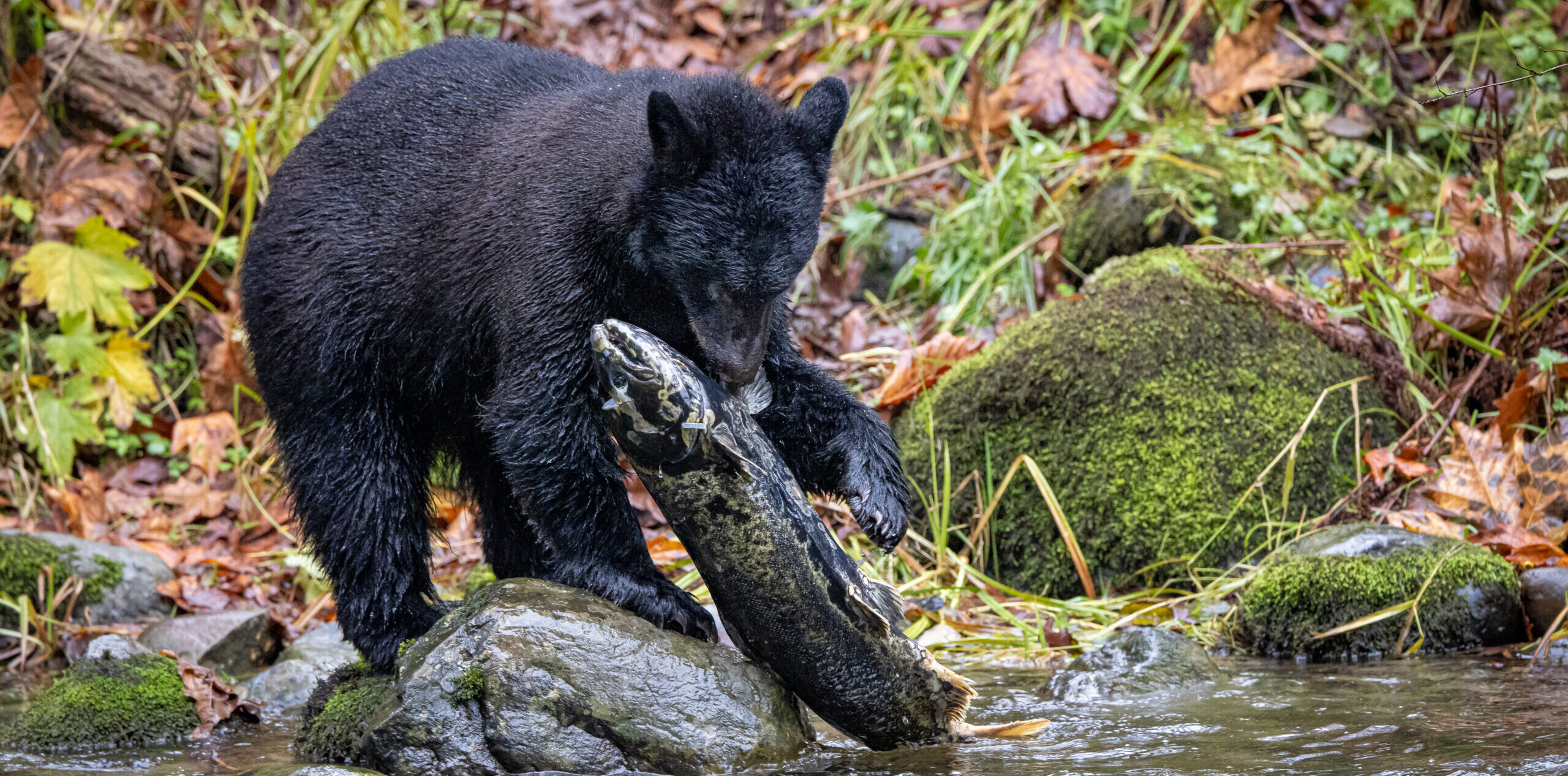
“The collaborative vision behind the Mia-yaltwa Ha’lidzogm hoon reflects a deep commitment to both nature and community wellbeing,” says Natalie Groulx, Conservation Director with the Ocean Program at CPAWS-BC. “These waters have carried salmon, stories and livelihoods for generations. Today’s announcement protects important habitats, including fish breeding and feeding grounds, and will help strengthen local fisheries, boost tourism, and support good jobs and a good living on the water now and well into the future.”
The area spans 6,700 square kilometres of coastal and offshore waters of the Central Coast of BC, which is home to extraordinary marine ecosystems. These waters flow through countless islands, fjords, and deep channels that support diverse marine life including salmon, herring, eulachon, whales, kelp forests, and ancient sponges.
The Mia-yaltwa Ha’lidzogm hoon National Marine Conservation Area Reserve and Indigenous Protected and Conserved Area is guided by a shared vision to:
- Protect long-term ecosystem health by stewarding vital marine habitats, including breeding and feeding grounds, as well as nurseries, to support fisheries and food webs against further loss and safeguarding culturally significant species and places
- Rebuild ocean abundance by stopping the declines in fish populations and working towards healthy, productive community-based fisheries
- Support strong coastal communities and economies by strengthening sustainable fisheries, boosting opportunities for tourism and recreation, creating job opportunities on the water, and supporting long-term livelihoods of coastal communities
“Protecting our coast is also about creating opportunities,” says Groulx, “ People and communities are central to the story. Marine protected areas manage waters with care so everyone can continue to fish, work, travel, and build their lives alongside a healthy ocean.”
For interviews, contact:
Natalie Groulx, Conservation Director, Ocean Program, CPAWS-BC
natalie@cpawsbc.org
604-685-7445 x 6
Additional background information:
- Mia-yaltwa Ha’lidzogm hoon: A collaborative approach to marine protection announced for the Central Coast of British Columbia
- This designation builds on generations of stewardship by the Heiltsuk, Kitasoo/Xai’Xais, Nuxlak, Wuikinuxv, Gitxaała and Gitga’at Nations whose deep cultural, spiritual, and economic wellbeing remains deeply connected to the health of these waters.
- This protected area is also the cornerstone of the broader proposed Great Bear Sea Marine Protected Area Network, an initiative led by 17 First Nations, in partnership with Canada and British Columbia, to steward marine ecosystems across the Great Bear Sea.
- The feasibility study for this site, evaluating the socio-cultural, economic, and ecological impacts of designation, was completed in 2024, and highlighted that the creation of this protected area is both desirable and achievable, with strong support from partner governments and local communities.
- In the 2023–24 fiscal year, protected and conserved areas contributed $10.9 billion to Canada’s GDP and supported 150,000 jobs.


