
The Canadian Parks and Wilderness Society – British Columbia stands with First Nations leaders, scientists, and the provincial government against a tanker ban exemption for a northwest coast pipeline.
November 26, 2025, Lands and waters of the Coast Salish Peoples/Vancouver, BC – The Canadian Parks and Wilderness Society – British Columbia (CPAWS-BC) supports Coastal First Nations in their denouncement of a reported Memorandum of Understanding between the federal government and Alberta to build a new pipeline and provide exemptions from the project from the Oil Tanker Moratorium Act.
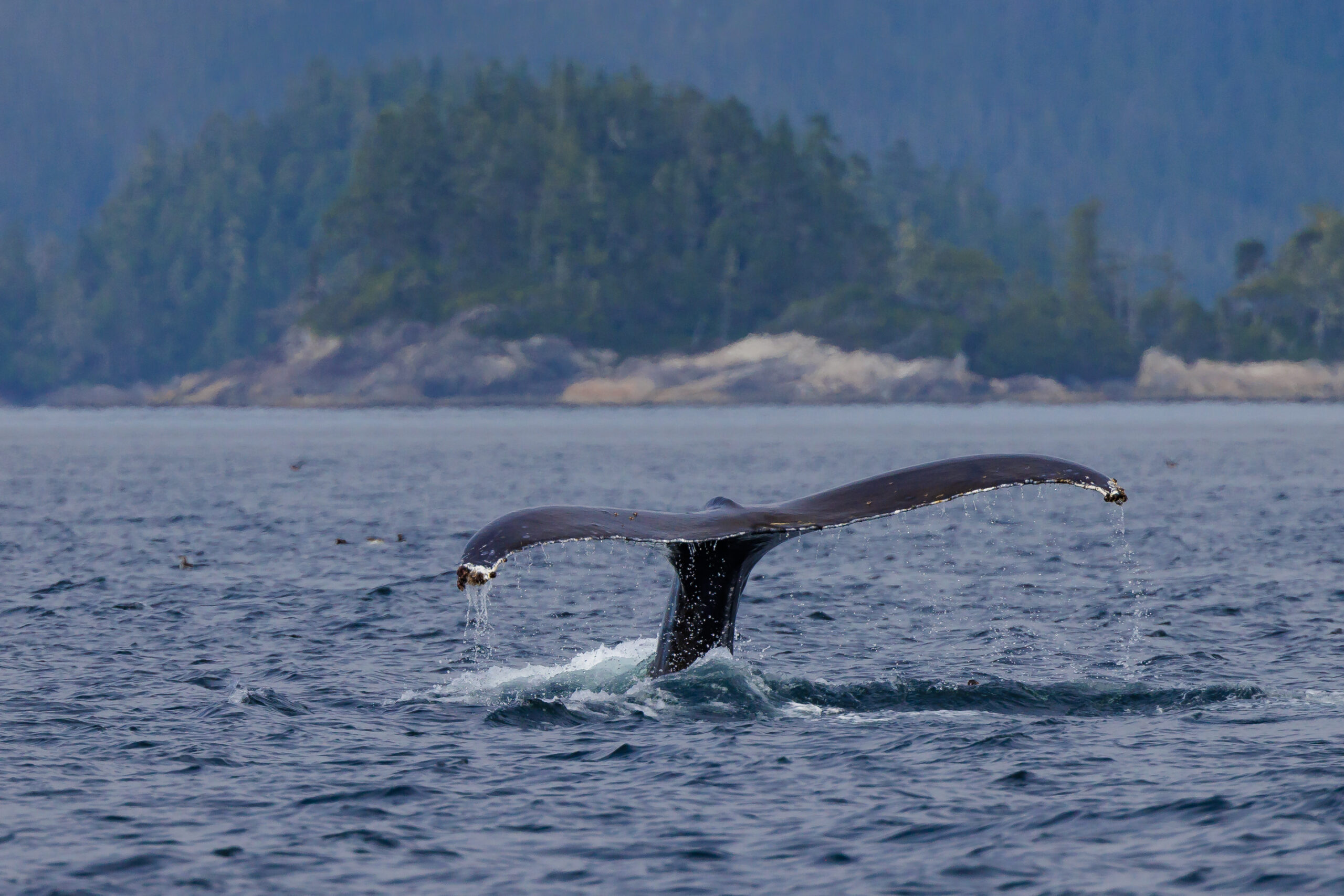
The Pacific north coast is a vital marine ecosystem, rich in biodiversity and of deep cultural and economic significance. Indigenous Nations have stewarded these waters since time immemorial, helping to safeguard an ocean that teems with life and sustains the livelihoods and well-being of coastal communities.
“This move is another signal that the federal government is no longer committed to protecting nature, which is a core value not just in British Columbia but across the country,” says Sarah McNeil, CPAWS-BC Executive Director. “The Oil Tanker Moratorium Act was introduced as part of Canada’s Ocean Protection Plan, and is absolutely necessary to safeguard the north Pacific from potential disaster. Poking holes in the tanker ban would recklessly expose coastal communities, food systems and fisheries, and ecosystems to catastrophic risk. An oil spill, even once, would cause harm no cleanup plan, financial guarantee or regulatory oversight could repair.”
Earlier this month, Coastal First Nations and the Province of British Columbia reaffirmed their shared vision through the North Coast Protection Declaration, committing to safeguard the coast. This declaration recognizes what the Great Bear Rainforest and Great Bear Sea agreements have already proven: conservation doesn’t hinder the economy, it builds economies. British Columbians expect the same principled leadership from Ottawa.
While CPAWS-BC recognizes the need for economic stability during these uncertain times, expanding fossil fuel infrastructure while risking the coast is not the path forward — it takes the country backward when we must be looking ahead.
“Coastal waters are not industrial highways,” says Natalie Groulx, Conservation Director with the Ocean Program at CPAWS-BC, “they are home, heritage, and the lifeblood for communities and wildlife. The tanker ban isn’t about stifling opportunity; it’s about refusing to place an irreversible, all-or-nothing bet with stakes Coastal First Nations and BC never agreed to gamble.”
CPAWS-BC urges the federal government to prioritize projects that are truly nation-building: those that can provide jobs and prosperity through clean energy and clean growth, increase the supply of housing, and improve food security and affordability for millions of Canadians.
“Even during these challenging times, Canadians overwhelmingly believe in climate action and nature protection,” says Groulx. “Smart teams play strong defense when the stakes are so high and when it comes to risking the coast, this is a line that simply cannot be crossed.”
-30-
For interviews, contact:
Natalie Groulx, Conservation Director, Ocean Program, CPAWS-BC
natalie@cpawsbc.org
604-685-7445 x 6


