CPAWS-BC supports park plan that advances reconciliation and visitor experience
April 25, 2024
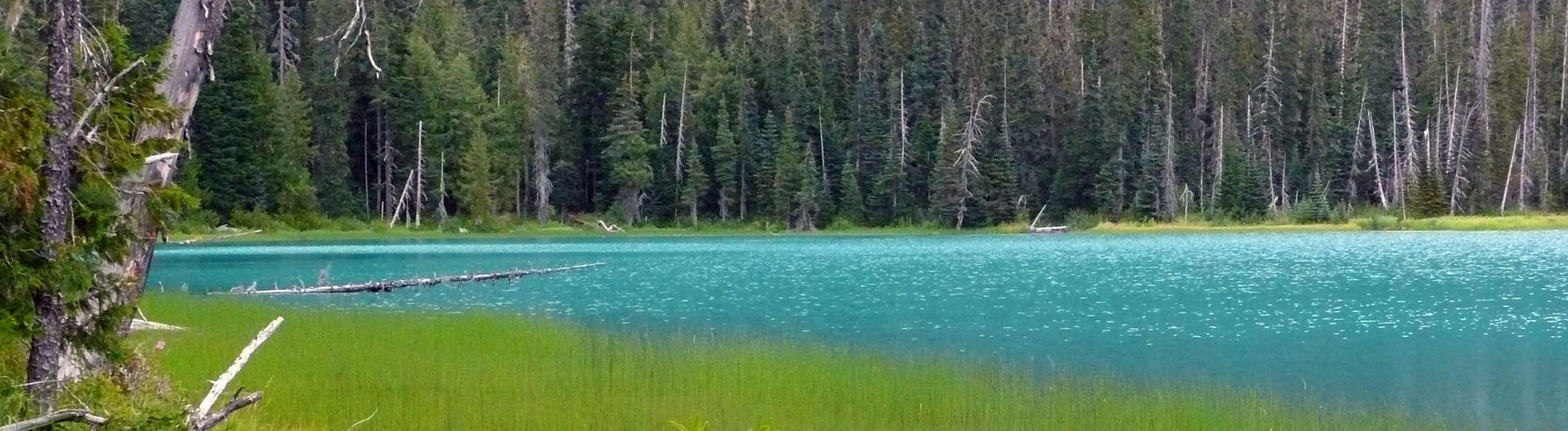
Today, BC Parks, Líl̓wat and N’Quatqua announced a partnership to balance access to the Pipi7íyekw / Joffre Lakes Park for visitors and First Nations this summer. This agreement will support visitor experience, healthy ecosystems and preserve the cultural connections of Líl̓wat and N’Quatqua to this spiritual place.
“We know that supporting First Nations cultures is critical to maintaining and rebuilding ecological integrity. We are excited to see this agreement centre reconciliation and the values of Lil’wat Nation and N’Quatqua, aa well as outline a positive visitor management strategy to support people and the area’s ecosystems,” says Tori Ball, Conservation Director – Land and Fresh Water, Canadian Parks And Wilderness Society, British Columbia.
The agreement announced today comes after years of work by the province, Líl̓wat Nation and N’Quatqua, to improve visitor management in the region, which has seen a surge in outdoor recreation demand and visitor numbers. The abrupt closure of the area last fall resulted in public confusion and tensions for park visitors.
“We are happy to see this proactive planning between BC Parks, Líl̓wat Nation and N’Quatqua for Pipi7íyekw that supports First Nation connections to land and cultural practices and clear public communication to support appropriate public access to the area,” Ball continued. “This collaborative planning and decision-making is critical to reconciliation and the future of conservation and protected areas management.”
The joint park operational plan for 2024 includes three Pipi7íyekw Reconnection Celebration time periods:
April 30 to May 15, to support Indigenous-led cultural celebrations, including Stl’atl’imx Days – a celebration of the Declaration of the Lillooet Tribe on May 10, 1911.
June 14 to 23, to support summer solstice and Indigenous Peoples’ Day celebrations.
September 3 to October 6, to support Indigenous fall harvesting practices and the National Day for Truth and Reconciliation.
These closures will enable Líl̓wat Nation and N’Quatqua to reconnect with the land and carry out traditional, sustenance, cultural and spiritual practices. In addition to the multi-day closures, there will be a limit on the number of daily visitors through the free day-use pass system to support public safety and the natural values of the park.
Overcrowding can negatively affect both the local ecosystem and visitor experience, for example, through people going off-trail. Managing the daily visits is an important tool to support the area’s plants and wildlife, as well as visitor safety.
“Healthy and thriving ecosystems are critical to a healthy future for all. Respectful relationships and sustainable outdoor recreation is important for building up a culture of nature enthusiasts who continue to enjoy and care for nature for generations to come,” says Ball.
– 30 –
Media Contact: Max Winkelman Communications Manager max@cpawsbc.org 604-685-7445 x3
More details:
500 free day-use passes, as well as camping opportunities at 26 tent pads will be available each day Pipi7íyekw / Joffre Lakes Park is open for recreational use.
The free day-use passes will be available for reservation starting at 7:00 am, two days before a planned visit, and are available online at https://reserve.bcparks.ca/dayuse/.
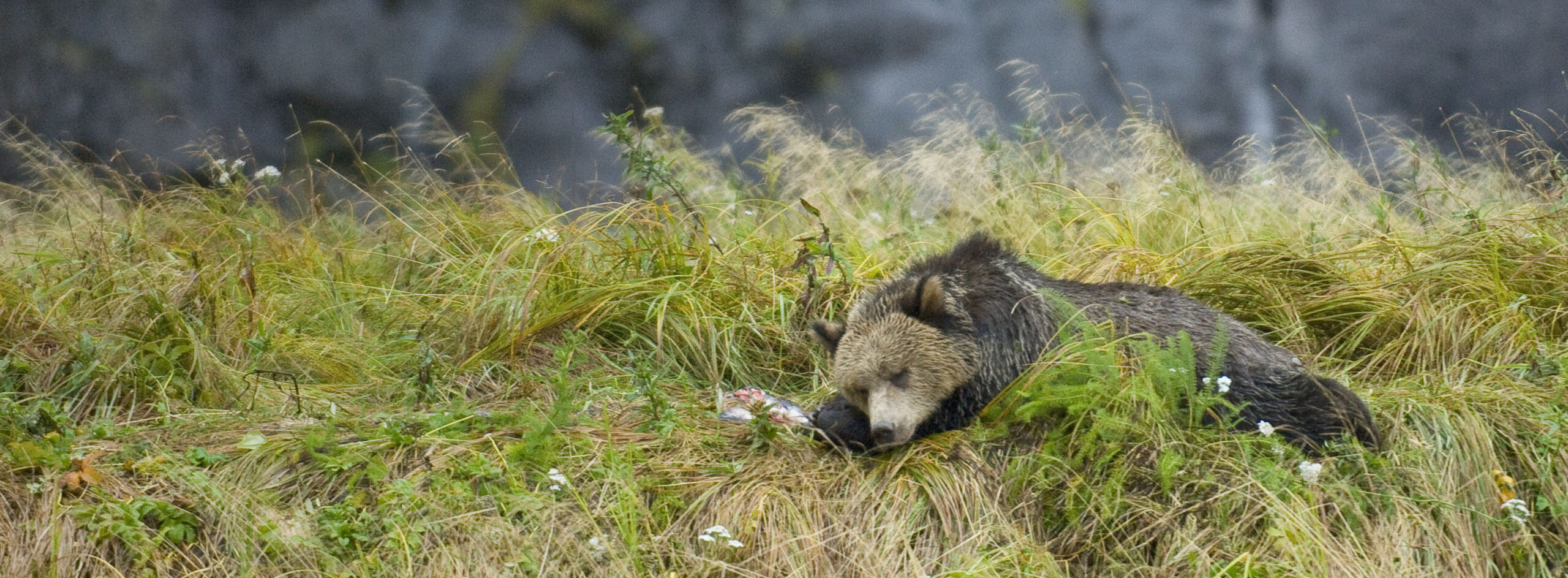
You have probably heard about hibernation, but what is hyperphagia? This term means intense eating, and is a phase that bears go through in the fall to increase their body weight and prepare for winter denning. Bears need to increase their body weight by approximately 30% in order to have enough energy stores to survive winter denning.
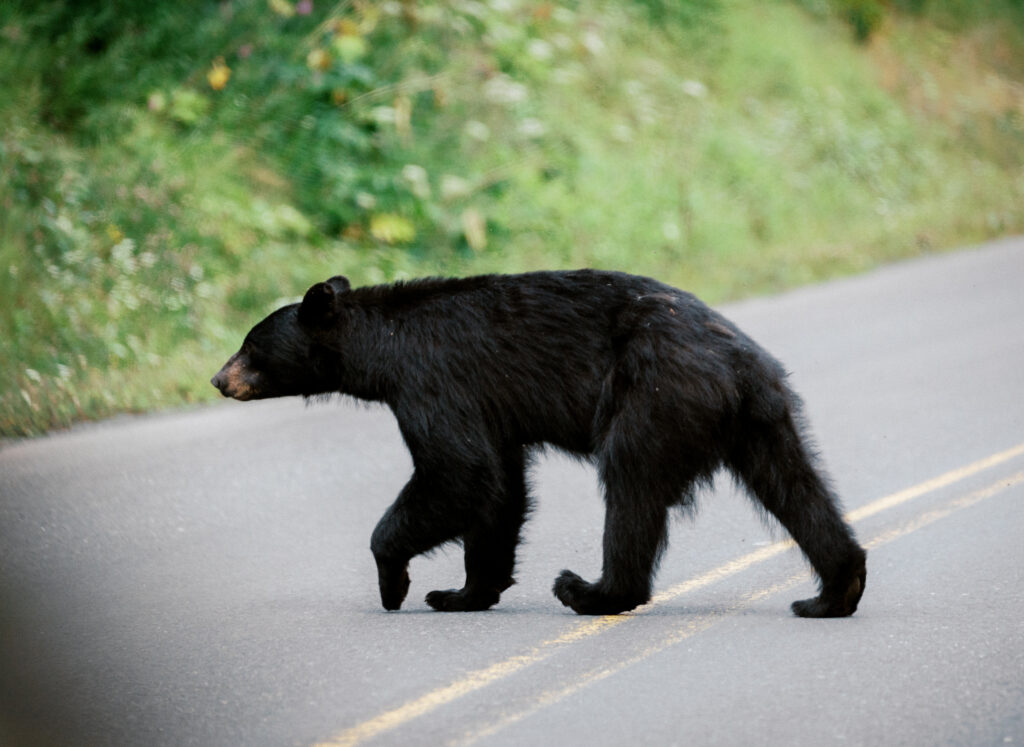
As the fall progresses bears may move to lower elevations where there is still lush greenery to snack on. These lower elevations are where many of our communities in BC lay, which means an increased chance of conflicts with bears this time of year.
Bears have an excellent sense of smell which they use to guide them to food sources. This can also lead them straight into towns if attractants are present. Access to unnatural food sources like garbage, domestic fruit trees and even bird seed can lead to bears becoming food conditioned and/or habituated to humans. This can result in unsafe situations for both bears and people.
People have an important role to play as wildlife stewards. You can help keep bears safe and your neighbourhood free from bear conflicts by practising attractant management. Our friends from WildSafeBC have a Top 10 List you can use to keep bears wild and your community safe!
Keep your garbage secure – store it indoors, in a secure shed, or in a bear-resistant enclosure.
Only put your garbage/yard waste/recyclables out on collection day – never the night before.
Manage your fruit trees so that fruit is picked as it ripens, and no windfall accumulates.
Bring bird feeders in from April through November – and when they are out, ensure that the ground underneath is kept free of seeds.
Feed pets indoors.
Maintain your compost so that it doesn’t smell. Add fruit slowly. Never add meat or dairy.
Protect fruit trees, beehives and small livestock with properly installed & maintained electric fence.
Respect wild animals by not feeding them. Food-conditioned wildlife are more likely to come into conflict.
Keep barbecues clean and odour free.
Report any wildlife in conflict or bear, cougar, coyote or wolf sightings in the community to the Conservation Officer Service 24/7 at 1-877-952-7277.
Most encounters can be prevented by:
making noise
travelling in groups
keeping pets on a leash, and;
avoiding areas where there are signs of recent wildlife activity such as scat.
If you do encounter a bear, stop, try to stay calm and do not run!
Back away slowly from the bear and talk to it in a calm, firm voice to signal that you are not a threat, nor a typical animal they would prey on.
Be sure to have bear spray accessible, like carried on a hip holster, and know how to use it. Bear spray is a low-cost and lightweight option to stop a bear attack.
In the unlikely event a bear charges or is exhibiting stalking behaviour, stand your ground and use your bear spray.
Wildlife in BC’s Parks
Wildlife stewardship starts with managing attractants around your home, and extends into responsible recreation when you visit parks and natural areas. Always be prepared for wildlife encounters, carry bear spray, and be sure to give wildlife plenty of space.
One of the best ways we can support bear conservation is by protecting their habitat. Bears require large and connected habitats to thrive.
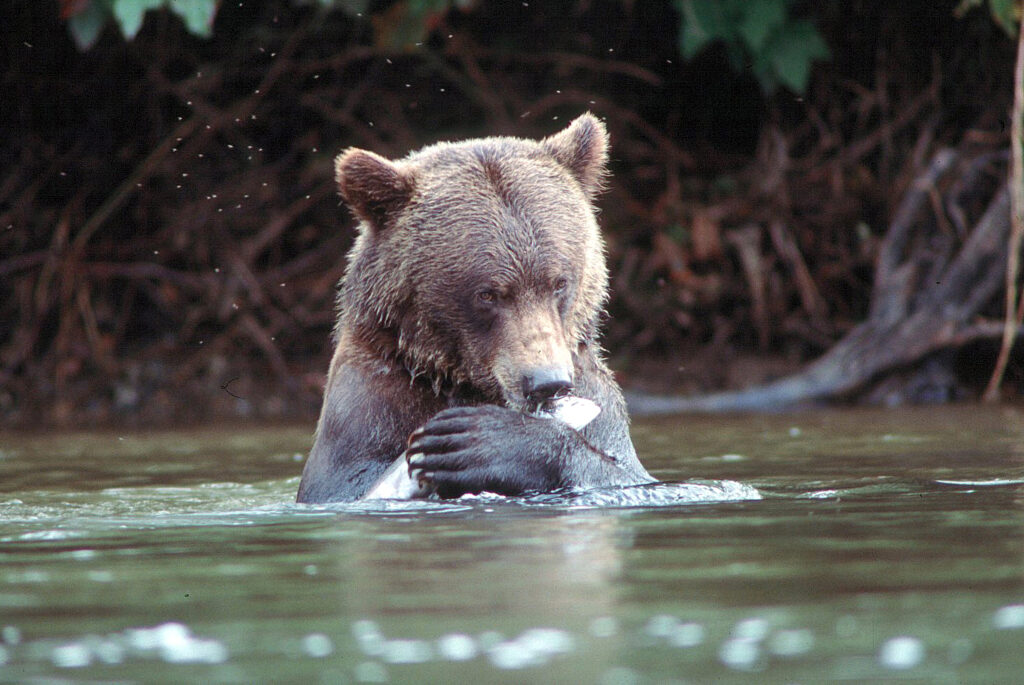
Large natural areas allow bears to meet all their seasonal food requirements. In the spring they need protein rich green shoots that first appear at lower elevations, to help build back muscle after winter denning. In the summer, they need berry rich slopes and meadows. And in the fall, salmon bearing streams offer a critical food source so bears can build up their winter fat stores.
Bears bring the salmon into the forest to eat, where the remains decompose and provide essential soil nutrients that help the trees grow. This helps make bears a keystone species, as they have a major role in healthy BC ecosystems.
Protecting habitat for bears is important to ensure they have enough sources of nutritious food, and reduces their risk of conflict in urban spaces. The goal to protect 30% of land in BC by 2030, will be important for bear conservation and ensuring healthy, functioning ecosystems in BC.
The Day-Use Pass Program is returning to some of BC’s provincial parks including Golden Ears, Joffre Lakes, and Garibaldi Provincial Parks this season to reduce vehicle lineups, parking pressures, and overcrowded trails.
BC’s provincial parks are a haven for wildlife and millions of outdoor enthusiasts across the province. They provide opportunities for us to explore, spend time with family outdoors, and connect with Nature.The growing use and enjoyment of BC’s Parks is incredible. An increase in demand for park services comes with increased pressures on wildlife, natural areas, park staff, and recreation infrastructure.
The Day-Use Pass Program is one tool in a suite of solutions that can help manage and plan for high levels of visitation as parks struggle to keep up with visitor demand.
This article aims to shed light on the growing pressures BC’s provincial parks are facing and the need to manage visitation and support sustainable levels of recreation so parks can continue to support Nature and people for generations to come.
Why is a Day-Use Pass Required?
Their close proximity to Metro Vancouver and stunning vistas have made Golden Ears, Joffre Lakes, and Garibaldi Provincial Parks three of the most popular provincial parks in BC. These parks are seeing visitation skyrocket as more and more people get outside for adventure and to connect with the lands and waters that make BC unique. Between 2012 and 2018, park visitation to these three parks grew by 75%.
From overcrowded trails to packed parking lots and cars lined up along the highway, the evidence of the rising interest and limited management capacity in provincial parks is difficult to miss.
Limited parking availability at Joffre Lakes Provincial Park leads to illegal parking along Highway 99, putting pedestrians, drivers and BC Parks staff at risk. Photo: Steve Jones via CBC
The surge in visitation is challenging BC Parks’ mission to balance safe outdoor recreation with the protection of natural environments. Rising visitation is overwhelming park infrastructure and natural areas in many popular parks, leading to diminished visitor experiences, visitor safety concerns, and impacts on Nature that parks were created to protect. BC Parks staff are seeing impacts such as improper disposal of human waste and garbage, and damage to sensitive areas like alpine environments.
Overcrowding can lead to people wandering off trails, which can cause trail braiding (when multiple paths split off and rejoin the main trail), erosion, and trampled vegetation. This impacts the long-term health of the forests and wildlife in parks.
Trail braiding. Photo: BC Parks
Underlying Issues
BC Parks has been starved of funds for decades. Years of chronic underfunding have:
Created a backlog in the upkeep of recreation infrastructure like boardwalks and trails;
Stalled the development of management plans, limiting the development of recreation opportunities in parks; and
Restricted the establishment of new parks, trails, and infrastructure such as toilets and campsites to meet the rising demand of park visitors who love to get outside.
Recent injections of funds into the BC Parks system are welcomed, and BC Parks is now in a state of playing catch-up while facing sustained demand.
Park agencies worldwide are looking to visitor-use management as park visitation soars. The US National Park Service implemented a day-use management tool in 2020 to reduce overcrowding and protect Nature in several popular parks, including Arches and Glacier National Parks.
The planning, expansion, and construction of new facilities and trails take time, consultation, and careful consideration. As BC Parks continues to play catch-up and work to improve trails, upgrade infrastructure, and build more campsites, the Day-Use Pass Program helps reduce the impacts of recreation on Nature while also improving visitor safety and the park experience by reducing overcrowded trails, roads and parking lots.
The Day-Use Pass Program should be complemented with other tools to support the growing demand for parks and recreation. This includes increasing transit access to parks to alleviate parking pressure and investing in recreation planning and park expansion near city centres.
Expand parks, both in size and recreation infrastructure, to keep up with visitor demand, relieve pressure off of existing trails and infrastructure, and protect habitat for endangered wildlife;
Increase park ranger staff to maintain infrastructure and enforce rules that keep visitors and wildlife safe;
Modify trail infrastructure and design to protect vegetation (e.g. installing boardwalks);
Improve visitor education to mitigate impacts on wildlife and sensitive natural areas; and
Support BC Parks’ dual mandate to provide high-quality outdoor recreation opportunities and protect diverse natural environments for world-class conservation.
Increased funding for trail maintenance and upgrades would help protect sensitive plant and animal habitats like this sub-alpine meadow in Manning Provincial Park.
Heather Trail in Manning Provincial Park. Photo: Andy Gibb via Federation of Mountain Clubs of BC
Parks and protected areas are a fundamental part of our health care system, they provide many opportunities to get outside and connect with Nature, from canoeing to horseback riding to multi-day hiking adventures. They are also a critical ally in our fight against climate change and biodiversity loss. Increased, sustained funding will not only support people getting outside to connect with Nature, it will also support BC’s commitment to safeguard biodiversity by protecting 30% of lands by 2030.
Take action to increase funding for BC’s provincial parks
Let your elected leaders know that you want to see increased funding for BC Parks by clicking the button below.
For interviews, please contact: Skye Vallance – A/Communications Manager, CPAWS-BC skye@cpawsbc.org 604-685-7445 x 22
CPAWS-BC welcomes BC Budget conservation vision, BC Parks and coastal boost
Xʷməθkʷəy̓əm (Musqueam), Sḵwx̱wú7mesh (Squamish) and səlilwətaɬ (Tsleil-Waututh) Territories / Vancouver, BC – The Canadian Parks and Wilderness Society – British Columbia (CPAWS-BC) welcomes today’s crucial budget increase for BC Parks alongside continued investment in the Marine Coastal Strategy and land use planning. The BC Budget emphasizes a positive vision for the collaborative conservation of lands, waters and coastal communities.
“BC has committed to important conservation goals – such as protecting 30% of lands by 2030 – and this budget comes as a signal of hope for the path ahead. Continued investment and resources will be needed to reach these commitments, and work towards effectively protecting lands and waters in partnership with Indigenous Peoples,” said Tori Ball, Terrestrial Conservation Manager with CPAWS-BC.
Today’s budget announcement includes further investments for BC marine conservation. This funding maintains BC’s commitment to co-develop a Coastal Marine Strategy with Indigenous Nations by 2025 and realize Canada’s first marine protected area network for the Great Bear Sea along the Central and North Coasts.
“We’re happy with the progress to co-develop the Coastal Marine Strategy, and the announcement today signals that the province remains committed to continuing this important work, ” said Kate MacMillan, Ocean Conservation Manager with CPAWS-BC. “We hope that once the strategy is completed, there will be a continued investment to ensure its delivery. We need to care for marine waters, to support thriving, healthy marine ecosystems and coastal communities for future generations.”
This budget outlines a continued commitment to safeguard vital ecosystems and prioritize meaningful engagement with Indigenous Peoples, but it falls short of the sizable increase that many conservation groups were hoping for to accelerate climate and biodiversity action. Additional funding to support the protection and stewardship of lands is expected from an upcoming Nature Agreement with the federal government.
“A significant increase to the BC Parks and recreation budget will support beloved trails and campsites, and increase accessibility for people to connect with the lands and waters that make BC unique,” continued Ball. “Safe access to nature is integral to our well-being, as highlighted throughout the pandemic, and it’s encouraging to see this investment prioritized.”
Investing in nature is a direct investment in the well-being of communities and wildlife across BC. The 2023 BC Budget builds on recent policy and funding commitments to prioritize ecosystem health across the province, advance Indigenous-led conservation, and safeguard biodiversity for generations to come.
-30-
For interviews, please contact: Skye Vallance – A/Communications Manager, CPAWS-BC skye@cpawsbc.org 604-685-7445 x 22
About CPAWS-BC The Canadian Parks and Wilderness Society – British Columbia (CPAWS-BC) is part of one of Canada’s oldest non-profit conservation groups. We protect wilderness in every corner of BC and deep into the ocean. We have been defending BC since 1978, and are dedicated to keeping BC’s natural environment thriving forever. Our work to safeguard large parks, protected areas and wildlife corridors has been instrumental in protecting precious places across the province.
January 26, 2023
Unceded Coast Salish Territory / Vancouver, BC – The Canadian Parks and Wilderness Society – British Columbia (CPAWS-BC) joins Taku River Tlingit First Nation in celebrating the Declaration of an important new protected area in their traditional Territory.
Located in the far northwestern corner of BC is the sprawling Taku watershed, a biodiverse ecosystem that sustains five species of Pacific salmon and a vibrant network of life. The T’akú Tlatsini Indigenous Protected and Conserved Area (T’akú IPCA) will encompass 60 percent of the Taku River system to preserve critical landscapes, and the remaining 40 percent will be in specially managed landscapes.
“This Declaration is an example of how Indigenous-led conservation is at the forefront of work to halt and reverse biodiversity loss,” says Meaghen McCord, Executive Director CPAWS-BC. “Support for IPCAs are an important opportunity for BC to honour Indigenous rights, further reconciliation efforts and are central to the province’s commitments to protect 30% of land by 2030.”
The Taku is the largest fundamentally intact watershed on the Pacific Coast of North America and CPAWS has long recognized its significance and supported additional measures to protect it. The inclusion of diverse and critical habitats within the T’akú IPCA, including lush valley bottom wetlands, important salmon streams, and high elevation caribou range, is a testament to their ongoing and longstanding stewardship.
CPAWS-BC Terrestrial Conservation Manager Tori Ball adds: “We fully support the Taku River Tlingit and urge the Government of BC to recognize that the T’akú IPCA hits the mark in safeguarding a range of species and ecosystems and, very importantly, protection of Lingit Kusteeyí (Tlingit way of living).”
Congratulations to Taku River Tlingit First Nation on the Declaration of the T’akú IPCA.
Main photo: View north on Inklin River, just below Sutlahine confluence in Northern British Columbia
June 13, 2022
Xʷməθkʷəy̓əm (Musqueam), Sḵwx̱wú7mesh (Squamish) and səlilwətaɬ (Tsleil-Waututh) Territories / Vancouver, BC – As hot and sunny weekends arrive across the province, Canadian Parks and Wilderness Society, British Columbia Chapter (CPAWS-BC) surveyed British Columbians about what their expectations are as they visit BC provincial parks this summer. The results illustrated an enthusiasm to get out into nature this summer, as well as concerns about overcrowding and not enough staff in provincial parks.
“We share the concerns of park users. A long-term lack of resources for BC Parks has created problems with accessibility, wildlife conflicts, and failing infrastructure inside our parks,” said Kristina Charania, Conservation Coordinator at CPAWS-BC. “Nature supports our health in every way, and it should be made a priority in every corner of the province.”
Despite the immense popularity of parks during the COVID pandemic, 82.8% of respondents said they still expected provincial parks to be busier this summer than the previous two summers. When asked about what concerns them about their visits to provincial parks, their top concerns were:
– Inadequate parking (62.8% of respondents were at least somewhat concerned) – Limited enforcement of park rules (59.4% of respondents were at least somewhat concerned) – Not enough staff or park rangers (54.5% of respondents were at least somewhat concerned – The top improvement respondents recommended for BC’s provincial parks was more staff in parks (42.9%)
The jury was still out on the day-pass program that limits the daily number of people that can enter three of BC’s busiest parks: Garibaldi, Golden Ears, and Joffre Lakes. When asked whether the program effectively addresses park impacts like crowded trails, packed parking lots, and impacts on wildlife during peak periods, many respondents (44.0%) said they weren’t sure. However, a majority of British Columbians (52.1%) said they supported the program and only 16.9% opposed it.
The survey results also reiterated how much British Columbians value nature. 93.9% of respondents agreed that provincial parks were important or very important to protecting nature in the province. 84.4% said they’d like to see more provincial parks created in the future.
“Our parks have been short-changed for decades, and park users are feeling the effects of that more and more every year,” said Kristina Charania, Conservation Coordinator at CPAWS-BC. “It is time to address the cracks in the system. We need to increase staff presence, park maintenance, and ecosystem monitoring to improve recreation experiences and protect the diverse nature in parks.”
Half of those who answered the survey said they planned to visit a provincial park at least once a month, with 8.0% of respondents saying they planned on multiple trips to parks each week. The most popular provincial parks amongst respondents were Golden Ears, Strathcona, Manning, and Goldstream.
The survey was completed by 905 British Columbians, with a margin of error of 3.26% and confidence level of 95%.
The Canadian Parks and Wilderness Society (CPAWS) is Canada’s only nationwide charity dedicated solely to the protection of our public land, ocean, and freshwater, and ensuring our parks and protected areas are managed to protect nature. Since 1963, CPAWS has played a leading role in protecting over half a million square kilometers. Our vision is to protect at least half of Canada’s public land and water in a framework of reconciliation – for the benefit of wildlife and people.
The CPAWS British Columbia chapter (CPAWS-BC) works to protect wilderness in every corner of BC and deep into the ocean. We have been defending BC since 1978, and are dedicated to keeping BC’s natural environment thriving forever. Nature is BC’s best hope.
Golden Ears Provincial Park, 2022. Photo by staff photographer Adam Combs.
It’s been quite a year and a half! Despite many restrictions and challenges, nature has been there for us when we needed it most. Nature was ready to welcome us, enveloping us in its safe bubble where we found recreation, rest, and rejuvenation. Whether you enjoyed the greenery from your balcony or ventured into local parks and the untamed wilderness, join us in celebrating the great outdoors by sharing a photo of how you found solace in nature’s bubble!
Prizes
– One $500 MEC gift card (based on judging criteria)
– One of two $250 MEC gift cards (randomly selected at end of contest)
– One of two survival kits from BMG Industries, awarded randomly and biweekly
How to Enter
Post your photo in nature’s bubble from the last 12 months on Facebook, Twitter, or Instagram. Photos must be public so we can see them!
In your caption, tell us why nature matters to you, and what’s special about your memory.
Tag and follow CPAWS-BC and the Guide Outfitters Association of BC. Multiple entries are encouraged—up to one entry a day! CPAWS-BC: Facebook, Twitter, Instagram Guide Outfitters Association of BC: Facebook, Twitter, Instagram
Make sure that your profile is public so that we can see it. Posts must be put in a feed, unfortunately Instagram stories will not be eligible to win.
Don’t have a social media account? No problem! You can also email parks@cpawsbc.org with subject line “Nature’s Bubble Photo Contest”.
UPDATE: Contest closes on Friday, November 5, 2021. Find the full contest rules here.
For interviews, please contact: Tori Ball, Senior Campaigner Canadian Parks and Wilderness Society, BC Chapter tori@cpawsbc.org (604) 685-7445 x24
FOR IMMEDIATE RELEASE
April 16, 2021
$80M Boost for BC Parks Upgrades, CPAWS-BC Ecstatic
Historic budget lift sets bright path for parks and recreation in BC
Unceded Coast Salish Territory / Vancouver, BC – The Canadian Parks and Wilderness Society – British Columbia (CPAWS-BC) is applauding the BC government’s announcement today of a new $80 million investment into BC’s provincial parks over the next three years. This represents a historic budget increase that’s been overdue for decades.
“After 20 years of fighting for this, we’re thrilled to finally see an investment of this magnitude for our provincial parks,” says Tori Ball, Senior Campaigner with CPAWS-BC. “This leap in budget funding will go a long way in helping BC Parks to refocus on protecting important landscapes and ecosystems, and supporting them to better meet the needs of British Columbians wanting to spend more time in these special places.”
Today’s budget announcement is the most recent and sizable upgrade to the BC Parks system. It comes on the heels of an announcement earlier this week creating hundreds of new conservation and park jobs for youth. BC Parks has received necessary increases for staffing, infrastructure, and park upkeep over the last year to manage pandemic-related demand. The BC government plans to inject additional funding over the next three years:
$36 million planned for operations
$47 million in capital investments
“Investing in BC’s parks is also a welcome boost to tourism – the sector hardest hit by the pandemic,” adds Ball. “More money for BC Parks means more jobs in remote and rural communities, and in the long term will serve to support natural climate solutions that will help stem the global biodiversity crisis.”
CPAWS-BC and its partners have been campaigning for bold budget upgrades for BC Parks for many years. As parks and other outdoor spaces continue to experience record high visitation through the pandemic, this announcement signals a turning point for BC Parks and can be widely celebrated as a long-overdue boost to upgrade visitor infrastructure, increase staffing in parks, and expand protected areas.
-30-
For interviews, please contact: Tori Ball, Senior Campaigner Canadian Parks and Wilderness Society, BC Chapter tori@cpawsbc.org (604) 685-7445 x24
Key Facts:
BC’s provincial parks welcome over 23 million visitors each year. However, decades of underfunding have created significant gaps in the system. A surge in outdoor recreation through the pandemic put further pressure on staffing, park expansion, trail building, and visitor facility upgrades.
Canadian public health officials strongly recommend outdoor recreation to alleviate lockdown blues. However, lack of funding and staffing resulted in complete park closures in Spring 2020 during the pandemic’s early days.
In October 2020, Premier Horgan announced a strong parks-focused mandate letter to Environment Minister George Heyman and Parliamentary Secretary of Environment Kelly Greene. This budget provides necessary resources to deliver on this mandate of expanding campgrounds, trails and protected areas.
CPAWS-BC, alongside partner organizations, including tourism associations, recreation organizations, and labor unions, has been campaigning for bold budget upgrades for BC Parks for many years to increase staffing and improve park infrastructure and visitor facilities.
Canadian Parks and Wilderness Society – British Columbia (CPAWS-BC) is part of one of Canada’s oldest non-profit conservation groups. We protect wilderness in every corner of BC and deep into the ocean. We have been defending BC since 1978 and are dedicated to keeping BC’s natural environment thriving forever. Nature is BC’s best hope.
BC Parks just released a new Visitor Use Management Strategy that was jointly created with Lílwat Nation and N’Quatqua and other key provincial ministries. Help us make sure BC Parks gets it right.
A surge in visitation to Joffre Lakes Provincial Park over the past decade is often blamed on only one force: social media. While social media offers easy access to information on stunning places to hike, camp and snowshoe, it does not deserve the entire burden of the public’s blame.
Joffre Lakes has seen a 222 percent increase in visitation since 2010, with close to 200,000 visitors in 2019 – the last year it was open to the public. This coincides with upgrades of the park’s 5km long trail which altered the route from being a challenging boulder-field to a steep but fairly smooth, and easy-to-navigate trail. It is not surprising that a trail that is perceived to be relatively safe, boasting stunning vistas, and just a few hours up the highway from Metro Vancouver, would attract massive crowds.
A sharp rise in demand for outdoor recreation in BC and across the globe has also contributed to the challenges which plague Joffre Lakes. The park was closed to the public throughout the pandemic to protect local communities from increased COVID risks. According to a 2014 Destination BC report, commercial outdoor adventures grew by 24 percent between 2001 and 2005. Within a decade, BC Parks saw nearly an additional 5 million, or 23 percent, rise in annual visitors between 2014 and 2019.
All this is underscored by a critical fact: BC Parks has been dramatically underfunded for two decades. This lack of funding has generated numerous challenges for parks managers and visitors alike. A lack of resources stalls the creating and updating of management plans to and cuts out environmental monitoring within the parks. Staff shortages remain rampant, leaving rangers and planners overworked. Low budgets mean that infrastructure upgrades and expansion plans are nowhere in sight
What’s in the strategy?
Increase presence of Lílwat Nation and N’Quatqua within the park through a Stewards program, interpretive signage that includes local Indigenous culture and history, and exploration for joint monitoring, economic opportunities, and collaborative management.
Support Lílwat Nation and N’Quatqua traditional uses by protecting harvest areas, installing restoration barriers, and supporting community access.
Mitigate impacts on vegetation and wildlife through visitor education and enforcement of restrictions, trail rehabilitation, creating viewing platforms at lookouts, gathering baseline data and monitoring changes, and exploring recreation monitoring and environmental projects through partnerships.
Address illegal parking with the Ministry of Transportation and enforcement by the RCMP, encouraging carpooling, sharing shuttle information when/if arranged by third parties ,such as Parkbus, increasing the parking lot from 250 to 350 spaces and improving the parking lot layout “as needed.”
Limit the number of people who can access the park during peak months by implementing a day-use permit, encouraging people to visit in less busy times, limiting commercial groups, and enforcing backcountry reservations.
Educate visitors and the general public as to proper park etiquette, trip planning and preparedness, while monitoring activities through trail counters, visitor surveys and external partner data.
Overall, what do we think about the draft strategy?
We are extremely happy with two aspects. First, we applaud the overdue inclusion of the original stewards of this area, Lílwat Nation and N’Quatqua, as critical planning partners. Secondly, we are pleased that BC Parks is undertaking this intensity of planning to improve park safety, visitor experience and meet conservation goals.
We are disappointed in the lack of detail that the strategy offers. The plan has been in development for two years and we had hoped . However, we have spent some time unpacking the strategy to offer recommendations. We hope our insights help BC Parks make the necessary strategy improvements.
Here are our detailed recommendations to further improve this strategy to create more equitable access, conserve the local natural and cultural values, and increase safety for visitors and staff alike.
CPAWS-BC Recommendations:
Full CPAWS-BC Consultation Feedback: Joffre Lakes Visitor Use Management Strategy here.
For interviews, contact: Tori Ball 604-685-7445 x24 tori@cpawsbc.org
BC voters prioritize nature and environment in upcoming election
FOR IMMEDIATE RELEASE
October 15, 2020
Traditional territories of the Coast Salish peoples/Vancouver, BC — In the midst of a global health crisis and the rush of a snap election, safeguarding nature remains a high priority for British Columbians. A new online survey from the Canadian Parks and Wilderness Society’s BC Chapter (CPAWS-BC) found that 67% of British Columbians say conservation and environment issues are very important or extremely important to them as voters, and want the government to protect more of our lands and ocean.
“The message is clear – British Columbians want the province to focus on safeguarding nature, and to prioritize wildlife and habitat protection. Any party wishing to form the next government will need to have a strong, credible plan for conservation and be ready to back it up with real action,” says Bruce Passmore, Executive Director with CPAWS-BC.
Additional key findings of the survey include:
Widespread support for increasing protection of BC’s lands and ocean: 87% think the province should commit to protecting 25% of BC’s lands and ocean by 2025
Strong demand for increasing investment in provincial parks: 86% think the province should invest more funding into BC Parks
Healthy oceans matter: 94% say it is very important or extremely important that ocean and coastal ecosystems are healthy
Current approach to coastal management needs a renovation: 81% think the province should create a new plan and law for BC’s coast
“British Columbians recognize the urgent need to find solutions to climate change and to stem biodiversity loss. The question now isn’t whether or not we need to take action, it’s what will the next government actually do to drive conservation forward in BC,” says Passmore.
CPAWS-BC is calling on all parties to prioritize wildlife conservation and habitat protection, commit to fixing our neglected provincial parks, and work on building a cohesive plan for a healthy coast. All of this work must be undertaken with a clear and meaningful commitment to reconciliation, working with original and ongoing stewards of BC’s lands and waters.
“The voters of BC are demanding real action to protect the lands, waters and wildlife that we all depend on. BC has a reputation for being bold, and we hope to see politicians stepping up to the plate with bold commitments during the election period and beyond,” says Passmore.
This survey was conducted online between October 3 and 8. Responses were collected from 1041 British Columbians, with a 95% confidence level and a margin of error of plus or minus (±) 3%.
-30-
For interviews, contact: Tori Ball 604-685-7445 x24 tori@cpawsbc.org
We use cookies and other similar technologies such as pixels and web beacons (“Cookies”) for various purposes, such as to ensure our website functions properly, enhance your browsing experience by remembering your preferences and provide personalized content and advertisements.
Functional
Always active
The technical storage or access is strictly necessary for the legitimate purpose of enabling the use of a specific service explicitly requested by the subscriber or user, or for the sole purpose of carrying out the transmission of a communication over an electronic communications network.
Preferences
The technical storage or access is necessary for the legitimate purpose of storing preferences that are not requested by the subscriber or user.
Statistics
The technical storage or access that is used exclusively for statistical purposes.The technical storage or access that is used exclusively for anonymous statistical purposes. Without a subpoena, voluntary compliance on the part of your Internet Service Provider, or additional records from a third party, information stored or retrieved for this purpose alone cannot usually be used to identify you.
Marketing
The technical storage or access is required to create user profiles to send advertising, or to track the user on a website or across several websites for similar marketing purposes.