Home » biodiversity
CPAWS-BC urges the BC Government to keep up conservation momentum following Mandate Letters
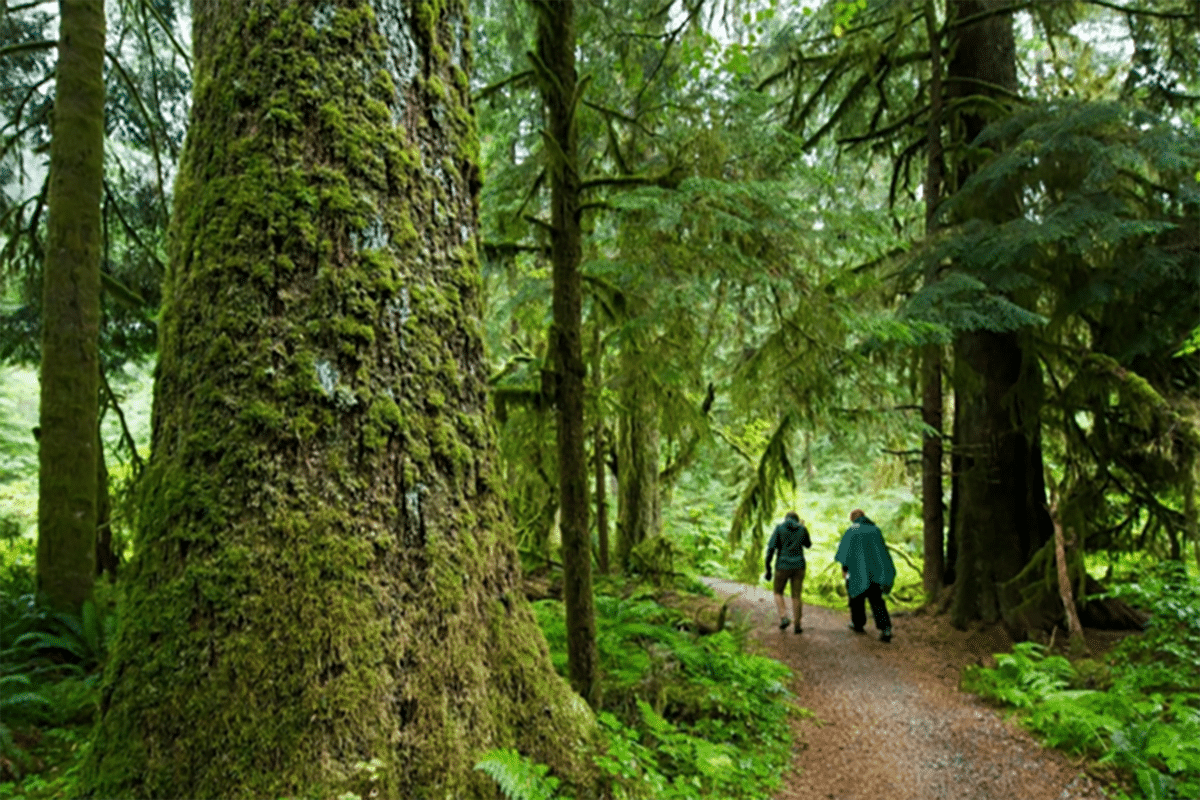
Unceded territories of the Coast Salish Peoples/Vancouver, BC – The Canadian Parks and Wilderness Society, British Columbia (CPAWS-BC) is urging the BC government to keep up momentum on conservation priorities following the release of mandate letters that provide direction to ministers on the priorities of Premier Eby’s new government.
“While we were glad to see this government will be tasked with working collaboratively with First Nations to protect critical ecosystems, we’re also concerned and disappointed by some key omissions in these mandate letters,” says Executive Director Sarah McNeil.
“For example, governments, communities, industry and other interest holders came together to develop key conservation priorities like the Coastal Marine Strategy, Together for Wildlife strategy, and the Biodiversity and Ecosystem Health Framework — and the Old Growth Strategy Review which spawned it. The health of ecosystems from inland forests all the way to the coast and beyond depend on the continued development and implementation of these priorities, yet none were mentioned at all.”
There was also no explicit reference to biodiversity or species-at-risk legislation in the mandate letters, despite over 1,600 species being listed as at-risk in BC.
“We were glad to see the inclusion of land use planning, and we’re hoping to see adequate resources, clear processes and conservation objectives as part of that process,” says McNeil, “We’ll be looking to the government to take concrete steps to halt biodiversity loss and ensure the long-term health of the nature our communities and economy depend on.”
The only reference to the Province’s previous commitment to protect 30% of lands and waters by 2030 comes alongside a mandate to enable mining exploration and development in partnership with First Nations.
“While we understand that critical minerals are a necessary input in the energy transition, biodiversity impacts must be considered as part of any project approval process. We cannot simply trade one crisis for another, or pretend that they are not interlinked; we must address the biodiversity, climate and affordability crises together,” says McNeil.
For interviews contact:
Max Winkelman
Communications Manager
max@cpawsbc.org
604-685-7445 x3
Background:
Mandate Letter to Randene Neill, Minister of Water, Land and Resource Stewardship
Mandate Letter to Tamara Davidson, Minister of Environment and Parks
Mandate Letter to Adrian Dix, Minister of Energy and Climate Solutions
Mandate Letter to Kelly Greene, Minister of Emergency Management and Climate Readiness
Mandate Letter to Ravi Parmar, Minister of Forests
Mandate Letter to Christine Boyle, Minister of Indigenous Relations
Mandate Letter to Jagrup Brar, Minister of Mining and Critical Minerals
Sept. 18, 2024 – by Meg Bjordal, Research and Policy Coordinator
Protecting Biodiversity and Habitat for Species at Risk is the Key to our Shared Futures
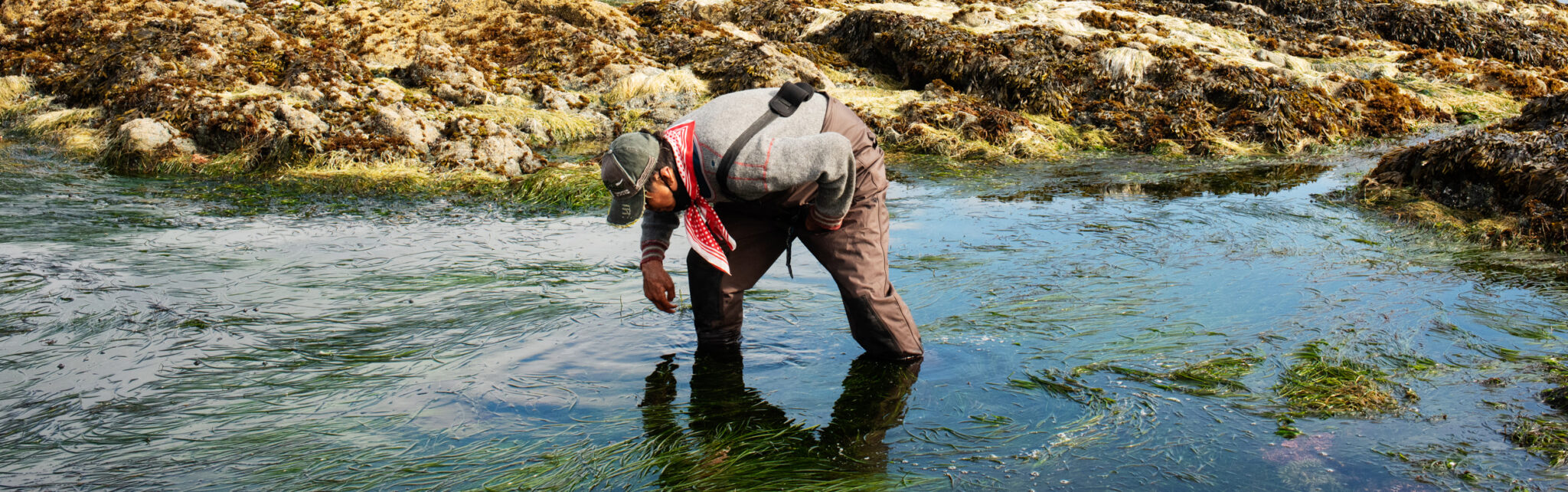
BC needs a Biodiversity law, complete with protections for habitat for species-at-risk to ensure a future where wildlife and people can thrive.
British Columbia lists over 1,700 species at risk and counting, yet there is no effective provincial law to protect them or their habitat. Some of BC’s most iconic animals are on this list including southern mountain caribou, grizzly bears and southern resident killer whales. The biggest threat most endangered species face is from habitat loss and degradation.
For example, southern mountain caribou and spotted owls – two of the most threatened wildlife populations in BC, depend on old-growth forests for their homes. Old growth forests are an ecosystem that has long been identified of high conservation importance, but most of it (82%) remains unprotected and clearcutting is continuing.
Pathway to a Biodiversity Law
Out of rising concern for how old-growth forests are managed in the province, an independent review was conducted and released in 2020. The Old Growth Strategic Review put forward 14 recommendations on how to better manage forests based on wide consultation and expert opinions.
All recommendations from this report were adopted, though none have yet been fully implemented. Some of the recommendations outline conditions required for change, and include the need for legislation that establishes “conservation of ecosystem health and biodiversity of British Columbia’s forests as an overarching priority”.
Out of this recommendation came the draft Biodiversity and Ecosystem Health Framework. This framework sets the stage for a needed paradigm shift that prioritizes biodiversity and the health of ecosystems above resource extraction. With continued momentum this could lead to a biodiversity law, and even include protections for species at risk and their habitat.
Protecting Biodiversity Benefits Wildlife and People
Protecting habitat for species-at-risk not only provides a future for BC’s favourite wildlife, but also for the people who live and recreate in these important places. Healthy, functioning and connected ecosystems facilitate natural processes and animal movements. Meaning that critical planet support systems like nutrient cycling can occur, and that animals can move as needed to find food, shelter and mates. This also allows for mitigation of climate change effects and better ability to adapt. Protecting and restoring habitat, especially large and interconnected landscapes, makes it possible for biodiversity to thrive and ensures functioning ecosystems.
July 18, 2024
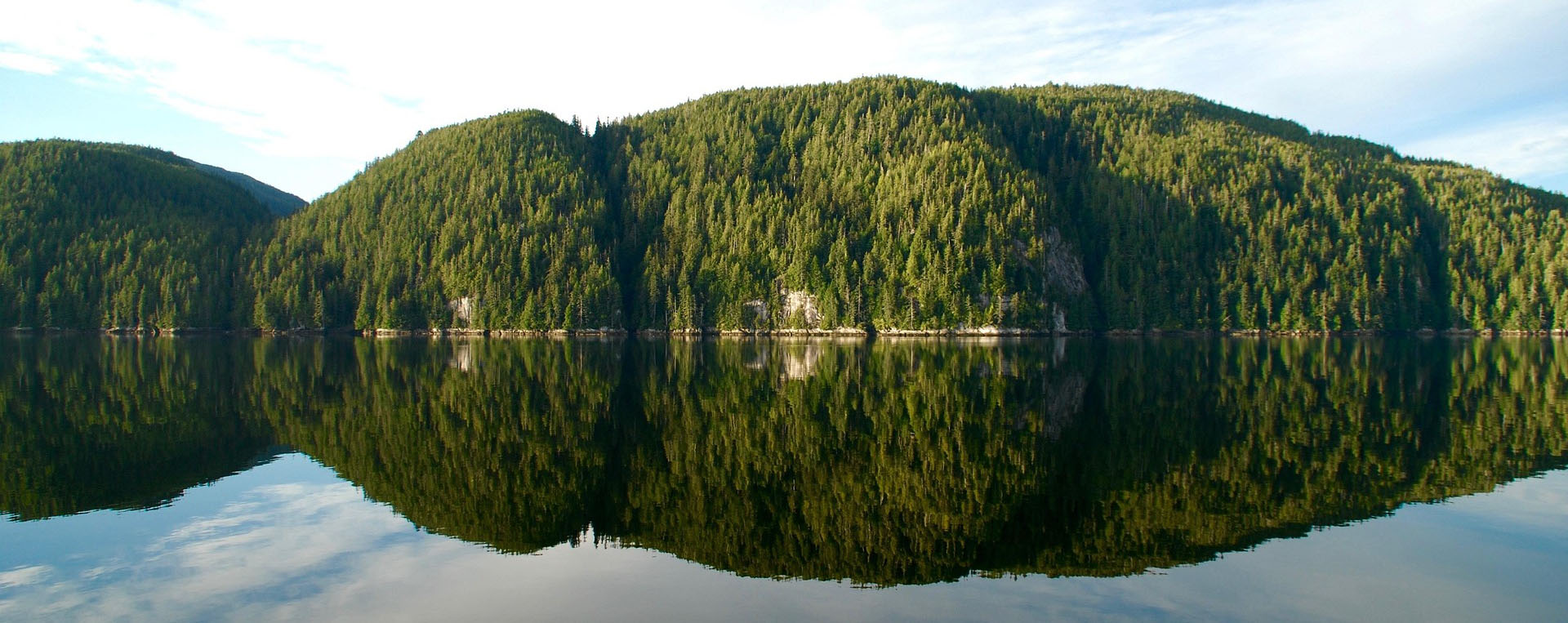
Unceded territories of the Coast Salish Peoples/Vancouver, BC – The Canadian Parks and Wilderness Society, British Columbia is celebrating a $49 million federal investment to address climate change through nature conservation in BC. This funding is focused on thousands of hectares of carbon-rich ecosystems such as grasslands, wetlands, mature forests and overlapping with habitat for species at risk such as grizzly bears and Marbled Murrelets.
“We are thrilled to see this massive investment into the protection of nature in BC,” says Tori Ball, Conservation Director for the Land & Freshwater Program with CPAWS-BC. “This funding has the potential to make a massive impact by protecting ecologically and culturally important ecosystems that hold and sequester carbon while benefitting clean water, air and wildlife.”
The funds were announced on July 18 by Steven Guilbeault, Minister of Environment and Climate Change Canada and are part of the federal Nature Smart Climate Solutions Fund. The three successful BC recipients are:
- $37 million will go to the BC Parks Foundation to protect 4,000 hectares of private land
- $8 million will go to the Nature Trust of British Columbia to create 11 new protected areas
- $4 million will go to Nuxálk Nation to protect private land in the Great Bear Rainforest
The announcement follows a heat wave which saw 37 heat records broken in BC, with multiple places clocking highs over 40C. Natural climate solutions such as protecting areas from land use changes, namely development or resource extraction, are a proven and lower-cost way to capture or reduce greenhouse gas emissions. These actions must also be paired with the reduction of fossil fuel emissions to avoid the worst effects of climate change.
“We know that protecting carbon-rich and intact ecosystems such as grasslands and mature forests is a proven way to protect species at risk while increasing the resiliency to wildfires, floods and drought which is increasingly important in a warming world,” continued Ball. “We also know that these solutions are most effective when put in place with the leadership of First Nations knowledge and direction on land use within their territories.”
This comes just a few weeks after the release of a new survey which found overwhelming support for nature protection amongst British Columbians with 85% supporting the provincial commitment to protect 30% by 2030.
“It is clear that people across BC want to see the government use available resources and tools to protect and connect landscapes that nurture people, wildlife and the essential services that ecosystems provide. This must be done in partnership with First Nations who are already putting forward bold plans to protect their traditional territories,” said Ball.
For interviews contact:
Max Winkelman
Communications Manager
max@cpawsbc.org
604-685-7445 x3
Additional resources:
REPORT: Protected Areas as a Nature-Based Climate Solution
Klinse-za/Twin Sisters Park expansion adds over 170,000 hectares, a welcome step for caribou and collaborative conservation
June 14, 2024
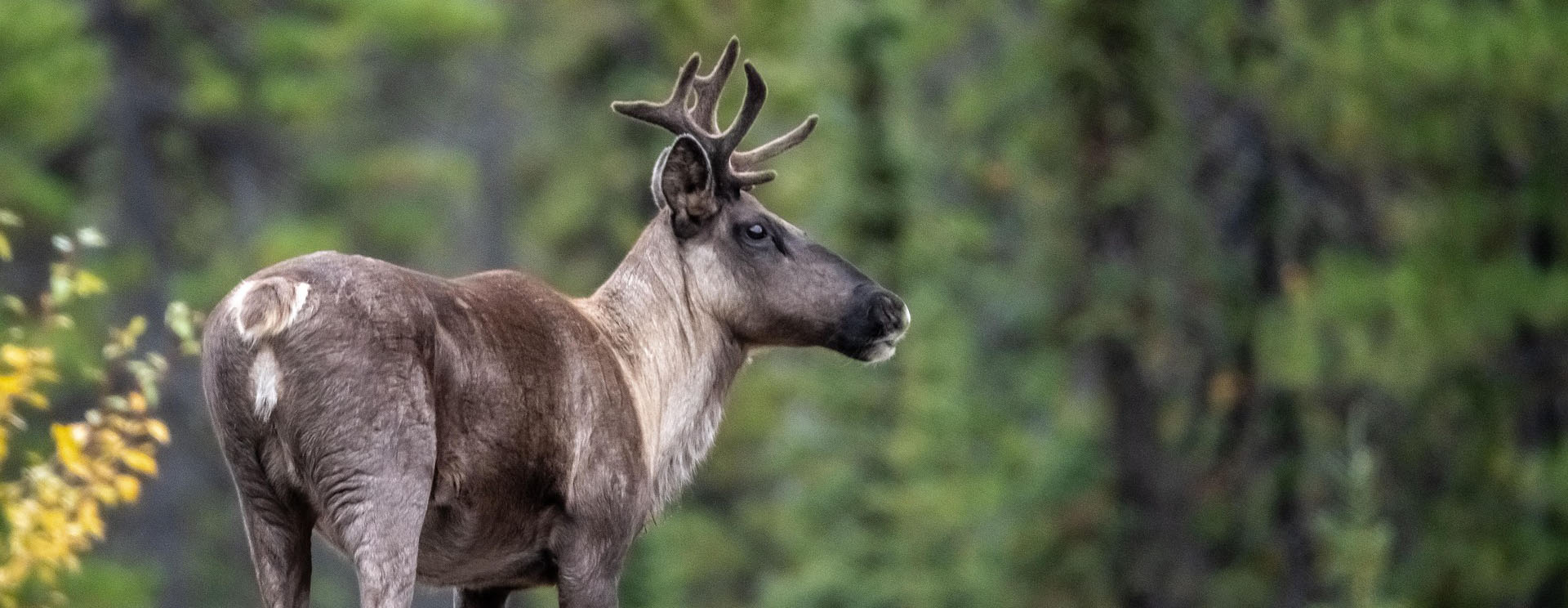
Unceded territories of the Coast Salish Peoples/Vancouver, BC – A significant park expansion added in critical Peace Region caribou habitat is welcomed by the Canadian Parks and Wilderness Society – British Columbia. The 170,000 hectare Klinse-za Park expansion will result in the largest provincial park established in B.C. in a decade.
The expansion of the Klinse-za/Twin Sisters Provincial Park is for about five times the Park’s current size, and over twice the size of Manning Park. The expansion stems from a 2020 Partnership Agreement between the federal and provincial governments and West Moberly and Saulteau First Nations which established conservation commitments for endangered Southern Mountain Caribou.
“Protecting the habitat and foods that caribou depend on is key to long-term both caribou and community health, this park expansion is much awaited and welcomed for this iconic species,” says Tori Ball, Conservation Director – Lands & Freshwater Program at CPAWS-BC. “West Moberly and Saulteau First Nations are leaders in caribou conservation efforts and the formal protection of this important caribou habitat is a testament to their perseverance and leadership to secure a future for these important species.”
The area is home to the central group of Southern Mountain Caribou, consisting of five remaining herds. Recovery efforts, led by the West Moberly and Saulteau First Nations, have seen the Klinse-za herd rebound from just 16 animals in 2013 to over 100.
Caribou are in trouble, with many herds in BC at risk of disappearing due to an onslaught of resource development. Securing long-term protection of their habitat is key to their survival. Protecting caribou habitat will also benefit other wildlife species, and help ensure healthy ecosystems for all residents of BC.
Caribou require large intact and connected areas to thrive and function as an indicator species, letting us know the health of the forests and ecosystems they inhabit. Protecting caribou habitat in turn benefits many other species as well as the ecosystems that we all depend on.
“This park expansion will have positive impacts for the health of the surrounding ecosystems and iconic caribou herds. Working towards the global goal of protecting 30% of lands and waters by 2030 needs to benefit and include everybody, and it is important that we protect another over 14% of BC by moving forward together,” added Ball.
Media Contact:
Max Winkelman
Communications Manager
max@cpawsbc.org
604-685-7445 x3
Background Info:
- Southern Mountain Caribou are divided into 3 population groups:
- Northern with 9 herds – BC blue list, imperilled-special concern
- Central with 5 herds – BC red list, imperilled-critically imperilled
- Southern with 18 herds – BC red list, critically imperilled
- The central group are the caribou in the Klinse-za park region, though the northern edge of the protected area is the border to the northern group of Southern Mountain Caribou
- Woodland caribou are old-growth dependent and the main threats to their survival are from direct and indirect habitat loss and disturbance
- West Moberly and Saulteau First Nations initiated a maternity penning project as part of their caribou conservation efforts as an urgent action to stop the rapid decline of the Klinse-Za herd.
- The Intergovernmental Partnership Agreement for the Conservation of the Central Group of the Southern Mountain Caribou is an agreement between West Moberly First Nations, Saulteau First Nations, the government of Canada, and the government of BC. The agreement was signed in February 2020 and includes commitments for land protection in northeast BC and an Indigenous guardians program
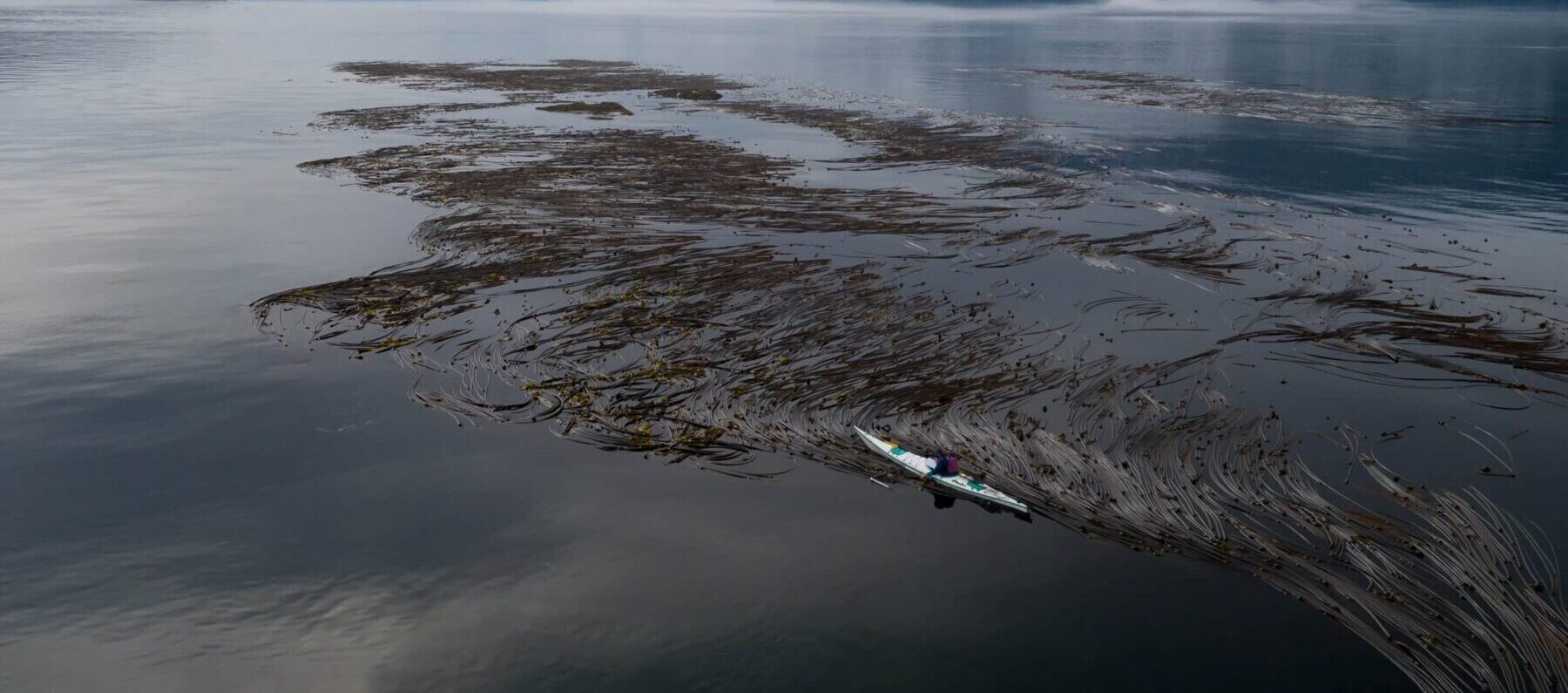
Earlier this year, we celebrated that 15 Indigenous Nations, BC, and Canada endorsed the Great Bear Sea Marine Protected Area Network Action Plan. What did this mean exactly?
Here are 5 things you should know about the Great Bear Sea Marine Protected Area Network:
1) Many years, many voices
The Great Bear Sea Marine Protected Area Network was created collaboratively by Indigenous and coastal communities from North Vancouver Island, along the Central Coast to the North Coast and across to Haida Gwaii.
For over 10 years, there have been many meetings and conversations with people who live and work on the coast, including the fishing, tourism, and environmental sectors.
Together, governance partners—First Nations, federal and provincial governments—and stakeholders have developed a plan that will protect the vibrant network of life in the Great Bear Sea for generations to come.
2) More fish in the ocean
Right now, we see fish populations in Pacific Canada at a fraction of their historical levels [1]. The Great Bear Sea Marine Protected Area Network is a tool to help rebuild fisheries and recover ecosystems, limiting catches of certain species should be coupled with protecting habitats where marine life feed, breed, and grow up.
We can look at long-term studies from other areas to see the real and powerful benefits of marine protected areas for helping fisheries and improving food security. One example is the marine protected area network established in California a decade ago which has already shown encouraging results, including more and larger fish beyond the boundaries of the protected areas, including species targeted by fisheries [2][3]. Over the first 10 years, local fisheries either improved or stayed the same in terms of catch, effort and dollar value [4].
3) Defence from many different threats
Marine protected areas limit activities that threaten marine life. Whether it’s the loss of critical ecosystems like cold water corals and sponges, seagrass and kelp or impacts on marine animals from ship dumping, we can reduce threats to ocean health by managing destructive human activities. Canada has committed to ban the most harmful activities in all marine protected areas, these include oil and gas, mining, bottom-trawling, and dumping. When the damage and destruction from these industrial activities is removed, these areas are refuges that better support marine life and whole ecosystems to adapt to other threats, such as warming waters and ocean acidification [5][6].
4) Benefits far beyond the boundaries
Marine protected areas provide both direct and indirect benefits to local economies and beyond. Marine protected areas help rebuild and sustain fisheries. They’re a proven tool to help enhance community involvement and support marine tourism. Local economies also benefit from creating conservation-related jobs such as monitoring, management, and research [7][8].
Marine protected areas also protect the ecosystem services these areas provide, such as protecting key coastal habitats that reduce the vulnerability of communities to climate change threats such as storm damage, flooding and coastal erosion [9], and protecting and restoring kelp forest and seagrass meadows that help the sequestration of carbon [10]. Moreover, a healthy, safe, and thriving ocean uplifts cultural and spiritual values across generations.
5) Supercharge conservation effectiveness!
Establishing a connected network of marine protected areas in the Great Bear Sea will defend and support a diversity of habitats. By establishing a network of marine protected areas rather than creating individual protected areas without considering the connections across the ocean, will supercharge their effectiveness. This is the opportunity to work together across communities and sectors to amplify the benefits of individual protected areas and ensure the large-scale processes that keep ecosystems and wildlife populations healthy will remain.
What’s next?
A healthy ocean full of fish, kelp, and whales, and is part of the legacy we want to leave for our children and grandchildren.
After years of work to develop the draft action plan for the Great Bear Sea Marine Protected Area Network, the announcement in February 2023 meant that everyone can continue working on the details to make the plan a reality. Equipped with the long-standing process between Indigenous Nations and governments, input advisory tables with stakeholders, and feedback during the public consultations, we can build on these collaborations.
Debra Sinarta, Marine Research Coordinator
Kate MacMillan, Ocean Conservation Manager
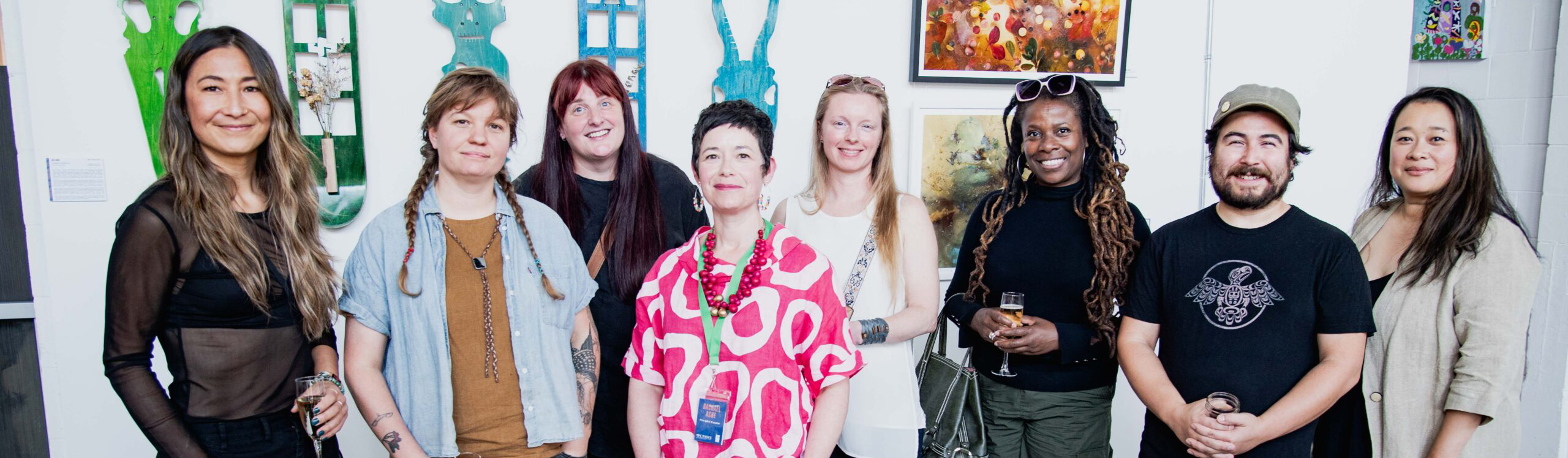
A year ago we hatched a plan to create a real-world art exhibit and community space where we could mourn biodiversity loss in BC, honour animals and plants trying to survive in an extinction crisis and recognize the possibility for hope at a moment where we can glimpse positive shifts ahead.
At Precipice: Changing the Course of the Extinction Crisis in BC we looked forward to what can be in BC – more Indigenous-led conservation; 30% of the province protected by 2030 and a resilient future. At Precipice we celebrated these opportunities, embraced hope and were filled with inspiration for the next leg of the journey to ensure decision-makers turn those promises into action.
We’ve shared some of the artists’ experiences here and we hope you’ll find hope and inspiration from them and their exquisite artwork as well as in some of the joyful moments of Precipice.
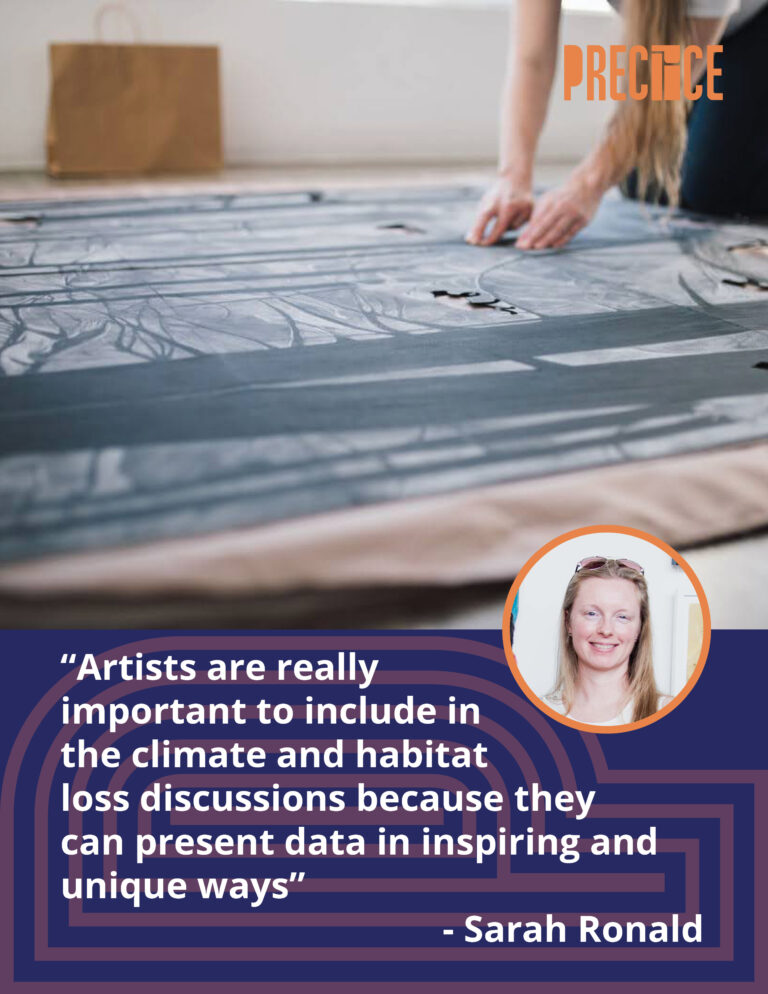
Sarah Ronald
As an artist I was really happy to be invited to participate in Precipice because it aligned perfectly with my interest in connecting with the world beyond the gallery. It was an opportunity to present my work where it had the potential to have a positive impact in the broader community. Precipice was also a great opportunity to connect with fellow wildlife concerned artists and art collectors, as well as a variety of individuals working in the fields of conservation, science and private sectors.
Along with talking about my piece (and our problematic concept of wildlife relocation to address habitat loss and poor human behaviour around coexistence with wildlife), I spoke about the importance of art and storytelling in this current time on the planet. Artists are really important to include in the climate and habitat loss discussions because they can present data in inspiring and unique ways, and those pieces can further engage and create massive ripple effects in generating solutions.
Through this exhibition I was also able to listen and learn. For instance after hearing CPAWS staff in media interviews, I was inspired to take a closer look at the UN report about biodiversity loss and excellerating extinction rates – which will no doubt become influence for future artwork, which will bring further awareness and acknowledgment to the broader community.
For my particular piece in this exhibition, The Transference of Landsharks, the message is for each of us to personally and continually check how our behaviours impact the natural world in daily life. Even where our current culture sets us up for complacency, we need to choose not to be complacent – we need to choose to stay engaged and to make positive changes for the rest of our lives.
If one loses sight of things, just consider that we are all living on clear cuts that were once massive healthy ecosystems: for this reason alone we have a responsibility to provide meaningful compassionate action towards all that is more-than-human.
You can check out Sarah’s work at sarahronald.com or on Instagram @sarahronaldartist.
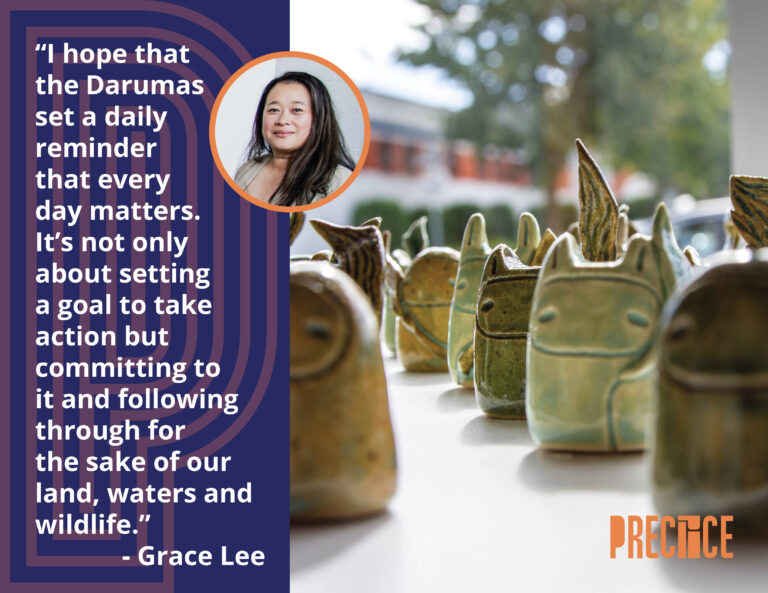
Grace Lee
Being part of this group exhibit at Precipice was such a meaningful experience as it showed the passion and dedication to environmental preservation that many of us are fiercely protective of.
Many conversations revolved around setting an intention with the Daruma dolls to make change and taking that first step and promise to further the work needed to protect our environment & wildlife.
I hope that the Darumas set a daily reminder that every day matters.
It’s not only about setting a goal to take action but committing to it and following through for the sake of our land, waters and wildlife.
You can check out Grace’s work at eikcamceramics.com
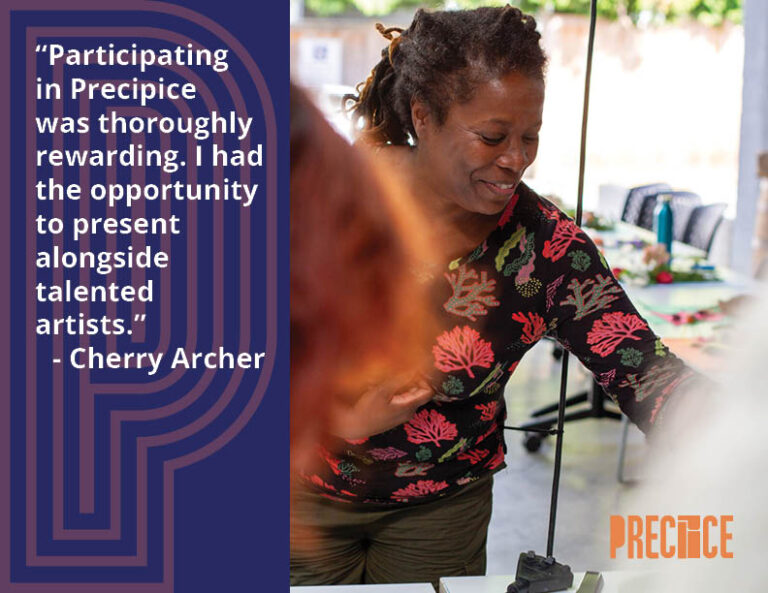
Cherry Archer
Participating in Precipice was thoroughly rewarding. The curator had a clear vision. She assembled an engaging and informative group of speakers and workshops. I had the opportunity to present alongside talented artists. Each body of work complimented the next. I felt supported and had an excellent time presenting my workshop.-
The best way to keep informed on her work is to follow ger Instagram @cherry.archer
My work can also be found at:
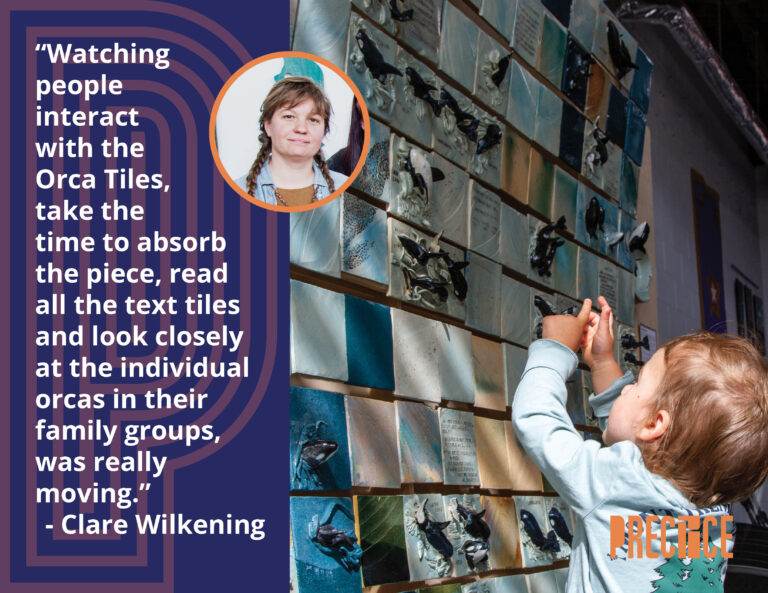
Clare Wilkening
It was great to meet and make a connection with the other artists and the team that put together the show. During the opening, watching people interact with the Orca Tiles, take the time to absorb the piece, read all the text tiles and look closely at the individual orcas in their family groups, was really moving. I could tell from watching and speaking to people that they came away from the work with an emotional resonance and deeper knowledge of the way the Southern Residents live and what can be done to help prevent their extinction. With the Fraser River Sturgeon, people had a big reaction to how striking the work is, and that draws them in to learn more about this mysterious species who is our neighbour. Sturgeon in the Fraser have fairly robust population numbers, but most of the population is old; there are not enough juveniles to sustain the future numbers of this long-lived species. It’s unknown why there are so few juveniles, but part of the reason may be the stress of the catch-and-release fishery- stress can disrupt spawning biological processes and behaviours. Fishers have already voluntarily stopped fishing in certain areas during spawning season, but maybe more needs to be done. I had a sturgeon facts card next to the sculpture, and I equally enjoyed watching people read that as I did watching people absorb the Orca Tiles.
Some great conversations I had included talking with MP Jenny Kwan about ceramics and about these species, as well as being interviewed by Sheryl McKay for CBC: North by Northwest.
A major issue that the Southern Resident Orca currently face is the proposed expansion of the Deltaport/Roberts Bank terminal. This construction would greatly increase freighter traffic through the Salish Sea, which brings with it noise pollution (making it harder for the orca to locate prey), risk of ship strikes, and additional pollution from the vessels themselves and risk of oil spills. Construction would also destroy large areas of eelgrass in the underwater shore along the bank and the estuary- this is crucial habitat for migrating juvenile salmon, the orca’s primary food source. You can write to your MP, to Ministers Guilbeault (Environment), Alghabra (Transport), Lebouthillier (Fisheries & Oceans), Freeland (Deputy Prime Minister), and Trudeau (PM), and let them you do not support this port expansion and why. You can also visit
https://georgiastrait.org/work/species-at-risk/proposed-terminal-2-deltaport-expansion-2/ and
https://www.againstportexpansion.org to learn more.
You can find Clare’s work at her open studio Oct. 19-21 in Roberts Creek for the Sunshine Coast Art Crawl. She will be vending her ocean-themed pottery at Make It Vancouver at the PNE December 7-10th, and on
clarewilkening.com or on Instagram
@clarewilkening.ceramics.

Adea Chung
It was an honour to be part of Precipice and among such inspiring and passionate artists. I generally make small jewellery and home wares, having the opportunity to do something on a larger scale for the show was such a treat.
Adea’s work can be found at: The Billy Would store 2168 E. Hastings St. Vancouver, BC or visit
billywould.com.

September 17, 2023
Unceded Coast Salish Territory/Vancouver, BC— Chief Rebecca David of Pauquachin Nation will join a special panel on marine pollution alongside leading coastal environmental groups on Tuesday, September 19 in Vancouver. Turning the Tide on BC’s Marine Pollution Crisis is presented as part of an art exhibition showing in Vancouver this fall, Precipice: Changing the Course of the Extinction Crisis in BC.
Turning the Tide on BC’s Marine Pollution Crisis
- When: September 19, 2023 from 6-8PM
- Where: Alternatives Gallery, 1659 Venables Street, Vancouver, BC.
- Tickets: Tickets are available by donation. Please save your spot on Eventbrite.
Guest Speakers:
- Chief Rebecca David of Pauquachin Nation
- Octavio Cruz, Marine Scientific Manager, Pauquachin Nation
- Calvin Sandborn KC, Retiring Senior Counsel, UVic Environmental Law Centre
- Lucero González Ruiz, Biodiversity Campaigner, Georgia Strait Alliance
- Lucas Harris, Executive Director, Surfrider Canada
Turning the Tide on BC’s Marine Pollution Crisis is hosted by Alicia Elgert, Ocean Conservation Campaigner, Canadian Parks and Wilderness Society – British Coulmbia (CPAWS-BC).
The coast faces many threats–from pollution to loss of salmon habitat to overharvesting. That’s why it’s so hard to believe BC is one of the only coastal regions in North America without a cohesive plan and laws to protect it.
British Columbians are drawing a new blueprint for the coast. A blueprint, co-designed with Indigenous nations, that ensures marine life and coastal communities get the future they deserve. Learn more: Blueprintforthecoast.ca
Event information:
Kate MacMillan
Ocean Conservation Manager
kate@cpawsbc.org
About Precipice: Changing the Course of the Extinction Crisis in BC
Precipice is a new art exhibition that tells stories of biodiversity loss and hope in British Columbia. Working in mixed mediums, seven BC-based artists will compel you to mourn, understand and ultimately protect the lands and waters of Canada’s most biodiverse province.
From September 15-23, 2023 Precipice is an exhibit and gathering place where artists, biologists and activists will teach, play and host conversations about biodiversity with the community.
Precipice features work by Cherry Archer, Nell Burns, Adea Chung, Grace Lee, Jessie Recalma, Sarah Ronald, and Clare Wilkening and is curated by Rachael Ashe.
Precipice is presented by Canadian Parks and Wilderness Society – British Columbia. Find more information about the Precipice art exhibition: ontheprecipice.ca
September 14, 2023
Unceded Coast Salish Territory/Vancouver, BC — Precipice: Changing the Course of the Extinction Crisis in BC welcomes the public for Opening Night on Friday, September 15 from 6-9 PM. Celebrate opening night with a very first look at this special show. Enjoy wine, beer or kombucha and music from Hussein DJ A-SLAM all night.
- When: September 15, 2023 from 6-9PM
- Where: Alternatives Gallery, 1659 Venables Street, Vancouver, BC.
- Tickets: Free to attend. Please RSVP to save your spot.
*The official opening is open to media. Media wishing to attend are encouraged to RSVP online or email media@cpawsbc.org
About Precipice: Changing the course of the Extinction Crisis in BC
Precipice is a new art exhibition that tells stories of biodiversity loss and hope in British Columbia. Working in mixed mediums, seven BC-based artists will compel you to mourn, understand and ultimately protect the lands and waters of Canada’s most biodiverse province.
From September 15-23, 2023 Precipice is an exhibit and gathering place where artists, biologists and activists will teach, play and host conversations about biodiversity with the community.
Precipice features work by Cherry Archer, Nell Burns, Adea Chung, Grace Lee, Jessie Recalma, Sarah Ronald, and Clare Wilkening and is curated by Rachael Ashe.
We open on Friday, September 15, 2023 from 6-9 PM and would love to have you as our guest.
Regular Gallery hours are free and open to the public Tuesday-Thursday from 3-6PM, in addition to special evening and weekend programs.
Programming highlights:
Precipice is presented by Canadian Parks and Wilderness Society – British Columbia. Find more information about the Precipice art exhibition: ontheprecipice.ca
Media information:
Tori Ball
media@cpawsbc.org
For interviews, please contact
Tori Ball, Terrestrial Conservation Manager, CPAWS-BC
tori@cpawsbc.org
604-685-7445 x24
Tuesday, August 29, 2023
Works by seven BC artists renew hope amidst an extinction crisis
Take a sensory journey from loss to hope at Precipice, an art exhibit and gathering space where conversations about solutions to biodiversity loss will thrive. Precipice: Changing the Course of the Extinction Crisis in BC runs at the Alternatives Gallery in Vancouver from September 15-23, 2003.
Precipice: Changing the Course of the Extinction Crisis in BC is an art exhibition that tells stories of loss and hope for lands, animals, waters and people in British Columbia, Canada’s most biodiverse province. At Alternatives Gallery in Vancouver, seven BC-based artists will express how deeply biodiversity in nature affects the human experience.
Presented by Canadian Parks and Wilderness Society – British Columbia, Precipice is more than an art exhibit. It’s a gathering place where artists, biologists and activists will teach, play and host community conversations about biodiversity.
“Precipice is a convening space for critical conversations about what people living in BC can do to protect our children’s futures,” says Tori Ball, Terrestrial Conservation Manager at CPAWS-BC. “We’re living through an extinction crisis – forest fires, floods and droughts. But we can’t lose hope.”
Right now, Indigenous Nations are working to protect their traditional territories and the province has an unparalleled opportunity to support their vision and ensure that lands and waters are healthy and protected, says Ball. “This is how we can mitigate the effects of climate change and support communities in BC. Precipice is an open, community space for people to gather, learn and take action.”
Works featured at Precipice show that when we do better for Nature, people thrive too: a textile sculpture embodies the life experience of a tree; a ceramic tile installation depicts the family history of our Southern Resident killer whales; and textural cut-outs explore wildlife relocation caused by habitat loss.
Precipice’s community programs welcome guest speakers including Chief Rebecca David of Pauquachin Nation, Councillor Archie Little, Nuchatlaht First Nation, Nuu-Chah-Nulth Tribal Council artists workshops and storytelling events. Tickets are free or by donation and the schedule of events is listed below.
Precipice is curated by Rachael Ashe and features work by Cherry Archer, Nell Burns, Adea Chung, Grace Lee, Jessie Recalma, Sarah Ronald and Clare Wilkening. The gallery is always free to enter and is open Monday to Thursday from 4 PM to 6 PM for public viewing. All are welcome to join workshops and guest speaker nights during extended weekend and evening hours.
Precipice art exhibition is presented by Canadian Parks and Wilderness Society – British Columbia (CPAWS-BC). A portion of the proceeds will support the non-profit’s work to advocate for the protection of lands, waters and wildlife in BC.
When: September 15-23, 2023
Time: 4 PM to 6 PM, plus special evening and weekend events.
Where: Alternatives Gallery and Studio, 1659 Venables Street, Vancouver, BC.
Tickets: Always free to visit the gallery Monday to Friday from 4-6 PM. Donations welcomed for special evening speakers night, weekend workshops and more online
Special events include:
–30–
Download Press release and press kit.
For interview, please contact
Tori Ball, Terrestrial Conservation Manager, CPAWS-BC
tori@cpawsbc.org
604-685-7445 x24
Resources:
Website: www.ontheprecipice.ca
For photos and press kit: www.ontheprecipice.ca/toolkit
About CPAWS-BC
The Canadian Parks and Wilderness Society – British Columbia (CPAWS-BC) is part of one of Canada’s oldest non-profit conservation groups. We protect wilderness in every corner of BC and deep into the ocean. We have been defending BC since 1978, and are dedicated to keeping BC’s natural environment thriving forever. Our work to safeguard large parks, protected areas and wildlife corridors has been instrumental in protecting precious places across the province. Join our community on Facebook, Twitter, Instagram and LinkedIn. Donate today. Take action.
Visit cpaws.org to learn more.
Precipice: Changing the course of the extinction crisis in BC
September 15-23, 2023
Alternatives Gallery, 1659 Venables Street Vancouver, BC.
Precipice is an art exhibition that tells stories of biodiversity loss and hope in British Columbia.
Working in mixed mediums, seven BC-based artists will compel you to mourn, understand and ultimately protect the lands and waters of Canada’s most biodiverse province.
Precipice is an exhibit and gathering place where artists, biologists and activists will teach, play and host conversations about biodiversity with the community.
The gallery is always free to visit during public hours. Tuesday to Thursday from 3-6 PM.
Precipice features work by Cherry Archer, Nell Burns, Adea Chung, Grace Lee, Jesse Recalma, Sarah Ronald, and Clare Wilkening and is curated by Rachael Ashe.
To learn more, visit: ontheprecipice.ca
Precipice is presented by Canadian Parks and Wilderness Society – British Columbia.