Indigenous Marine Protected Area in BC wins prestigious international award
May 2, 2024
It’s a big win for Indigenous-led conservation on the world stage! Kitasoo Xai’xais Nation’s Gitdisdzu Lugyeks (Kitasu Bay) Marine Protected Area (MPA) has won Marine Conservation Institute’s prestigious Blue Parks Award — the first award in Canada and the first Indigenous-led blue park in the world.
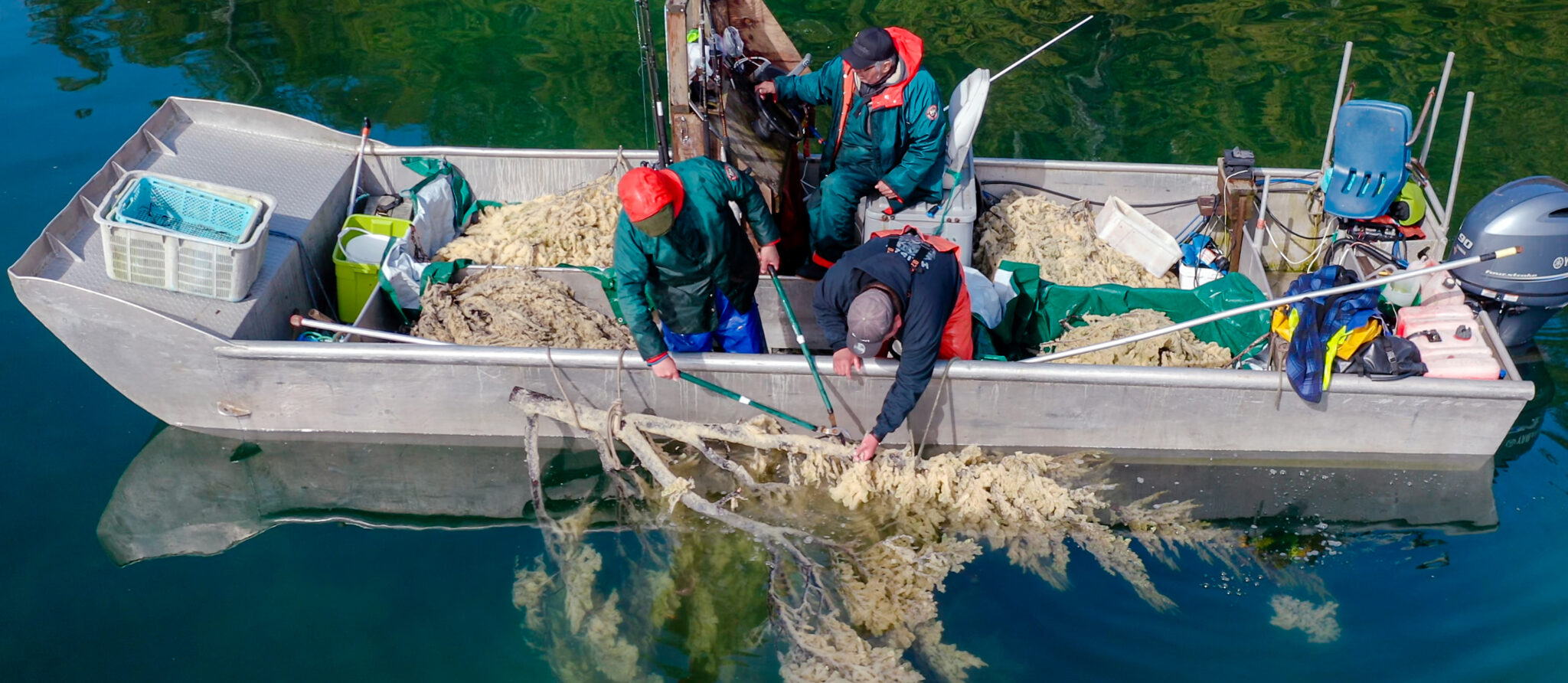
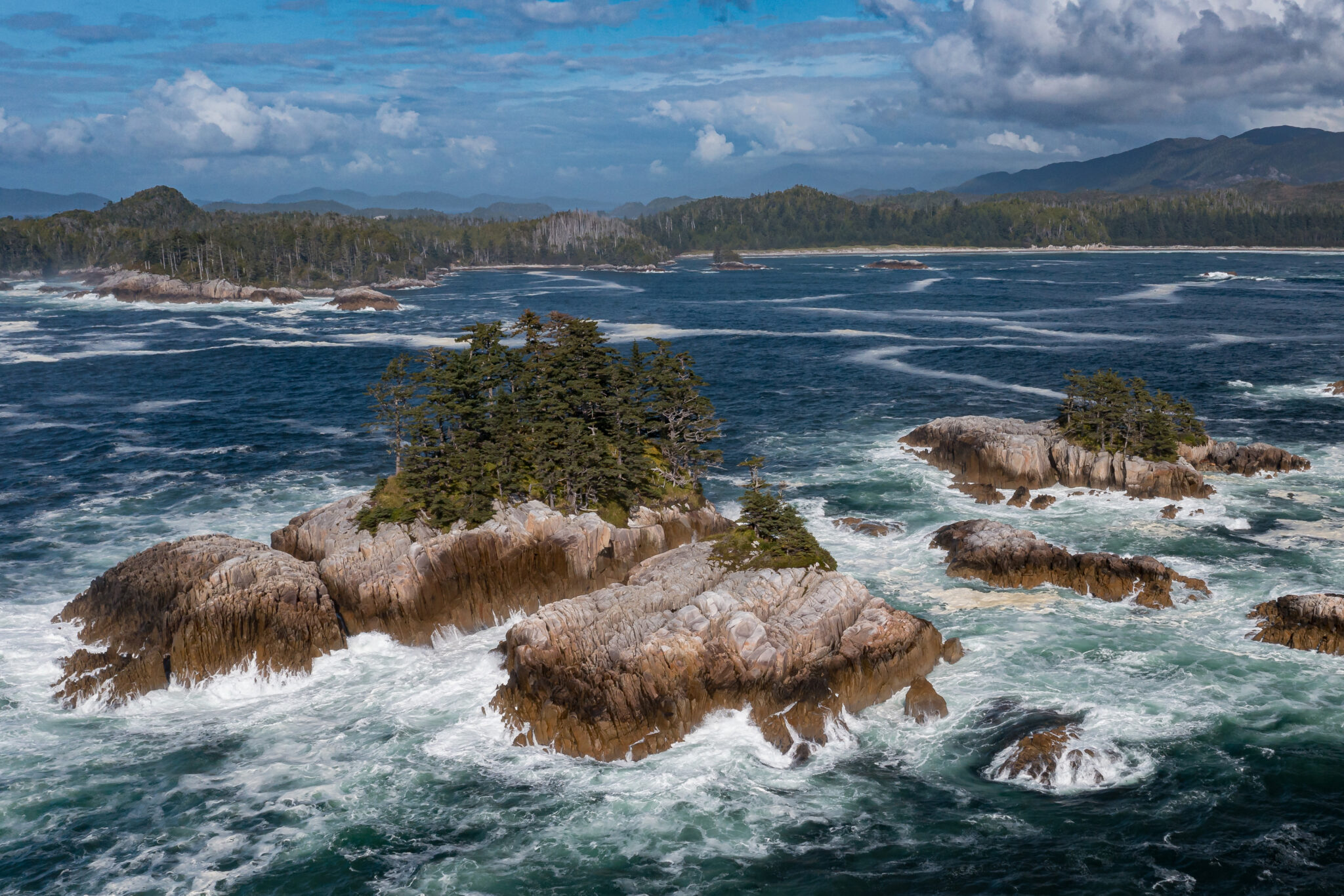
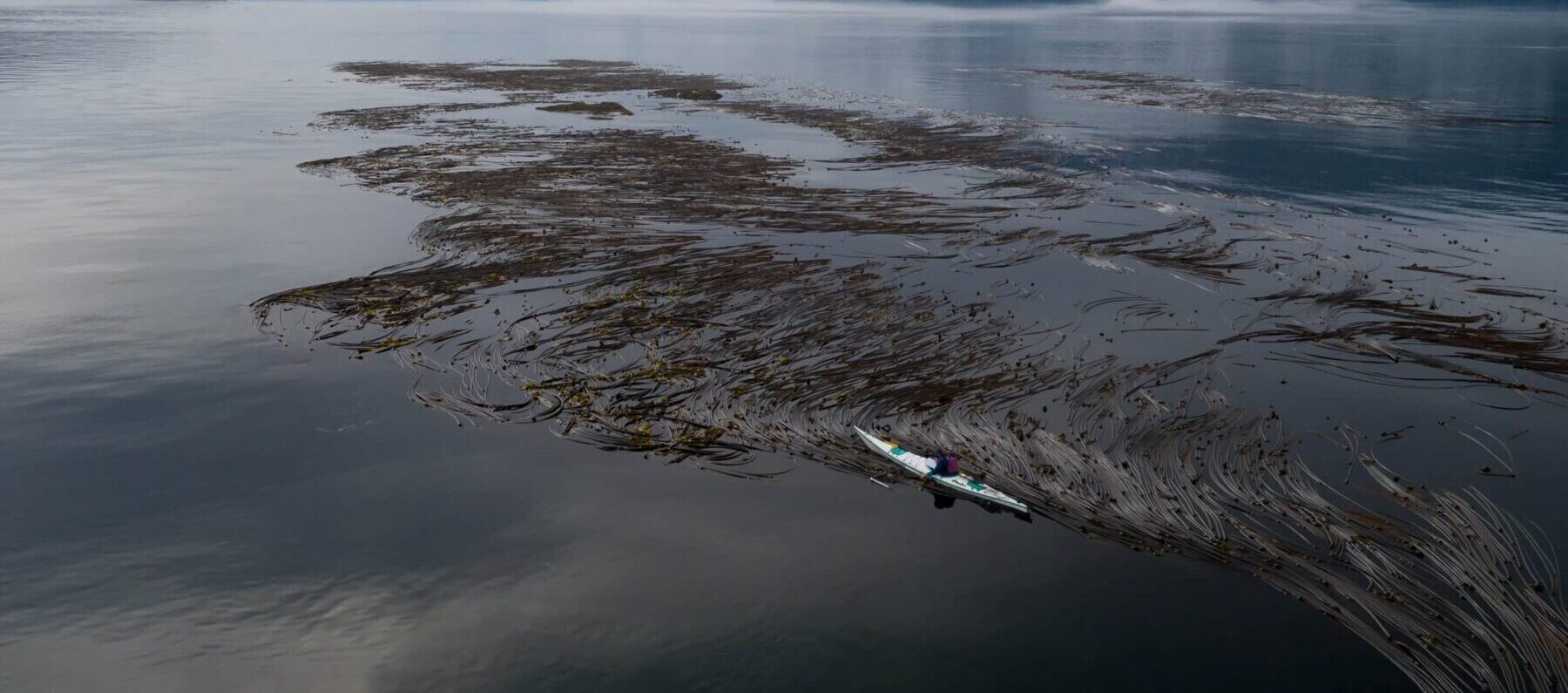
Located near Klemtu on the central coast of BC, the Gitdisdzu Lugyeks MPA is a haven for marine life. Strong tides bring nutrient rich water into the bay, providing a rich source of food for fish, seabirds and marine mammals. Seagrass meadows and kelp forests provide herring with spawning grounds and other young fish with protective nursery habitat.
Designated in 2022, the MPA doesn’t just support nature, it sustains people as well. Gitdisdzu Lugyeks is an integral part of the culture, livelihoods and traditions of the local community. It is known as a spiritual place whose waters and marine life are vital to the Nation’s economy, health and culture. If marine life can thrive here, it is hoped that richness can expand into nearby areas and benefit both the people and wildlife that depend on the coast.
“We know these waters better than anyone, Kitasu Bay has been part of our home for thousands of years through to the present day,” said Hereditary Chief Nies’los (Kelly Robinson) in 2022.
Living around and stewarding these waters for thousands of years, the Kitasoo Xai’xais Stewardship Authority are weaving traditional knowledge and modern science together to responsibly care for the biodiversity and resources of the MPA. With the Kitasoo Xai’xais Guardian Watchmen monitoring these waters, management will follow the guiding principles of the Nation: loomsk (respect), sagayt k’uulm goot (interconnectedness), sityaaw (reciprocity), and gugwilx’ya’ansk (intergenerational knowledge).
Recognizing this, Marine Conservation International awarded Gitdisdzu Lugyeks with a Blue Park award earlier this month. These awards are given in recognition of exceptional marine biodiversity conservation; having met the highest science-based standards for conservation effectiveness. The judging panel considers the productivity and importance of the MPA’s location as well as its regulations and management.
“Receiving this Blue Park Award not only recognizes what we’ve been doing as a Stewardship Authority, but it also sets the stage for other Indigenous Nations to use this as a blueprint for their own protected areas in their territories,” said Kitasoo Xai’xais elected Chief, Doug Neasloss. “The management plan for Gitdisdzu Lugyeks combines our traditional knowledge and responsibilities with western science in a way that protects ecosystems and human livelihoods, and we’re grateful that this award recognizes the strength in that combination.”
This award is further proof of the effectiveness of Indigenous-led conservation. In 2019, a UBC-led studyfound that the total numbers of birds, mammals, amphibians, and reptiles were all greatest on lands managed or co-managed by Indigenous communities, higher than parks and wildlife reserves.
Gitdisdzu Lugyeks will be part of the Great Bear Sea Marine Protected Area Network, an initiative led by 15 First Nations along the north and central coast. The network aims to connect new protected areas to already existing ones to help restore the region’s ocean to abundance for the benefit of children, grandchildren, and future generations.
This award is further proof that Indigenous-led conservation is the way forward. Learning from their vision and knowledge, a healthy coast can be achieved for the well-being of everyone in British Columbia.
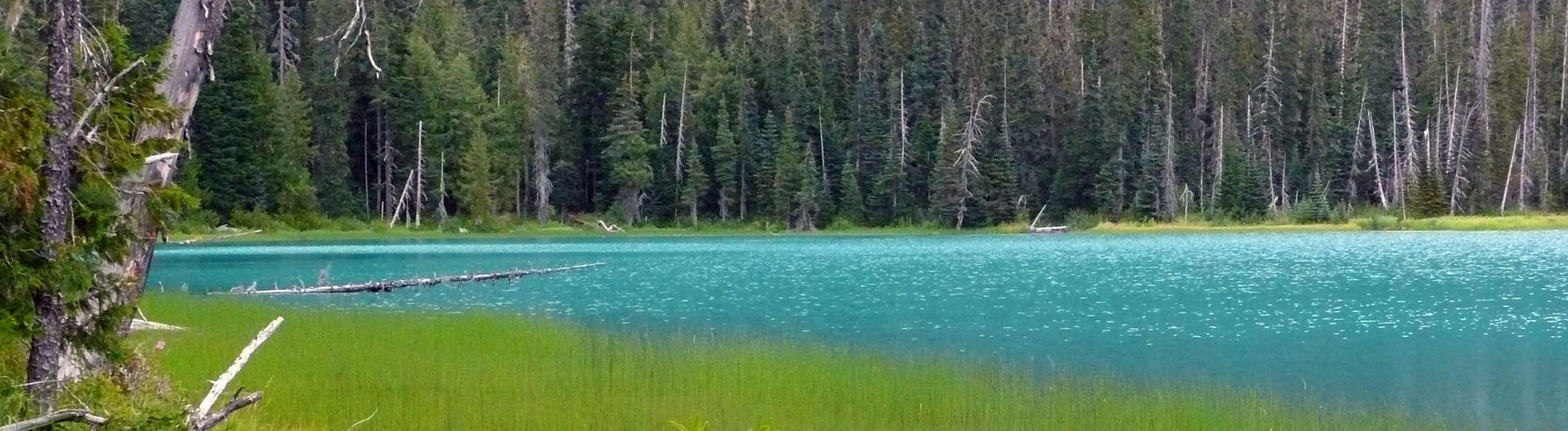
Today, BC Parks, Líl̓wat and N’Quatqua announced a partnership to balance access to the Pipi7íyekw / Joffre Lakes Park for visitors and First Nations this summer. This agreement will support visitor experience, healthy ecosystems and preserve the cultural connections of Líl̓wat and N’Quatqua to this spiritual place.
“We know that supporting First Nations cultures is critical to maintaining and rebuilding ecological integrity. We are excited to see this agreement centre reconciliation and the values of Lil’wat Nation and N’Quatqua, aa well as outline a positive visitor management strategy to support people and the area’s ecosystems,” says Tori Ball, Conservation Director – Land and Fresh Water, Canadian Parks And Wilderness Society, British Columbia.
The agreement announced today comes after years of work by the province, Líl̓wat Nation and N’Quatqua, to improve visitor management in the region, which has seen a surge in outdoor recreation demand and visitor numbers. The abrupt closure of the area last fall resulted in public confusion and tensions for park visitors.
“We are happy to see this proactive planning between BC Parks, Líl̓wat Nation and N’Quatqua for Pipi7íyekw that supports First Nation connections to land and cultural practices and clear public communication to support appropriate public access to the area,” Ball continued. “This collaborative planning and decision-making is critical to reconciliation and the future of conservation and protected areas management.”
The joint park operational plan for 2024 includes three Pipi7íyekw Reconnection Celebration time periods:
April 30 to May 15, to support Indigenous-led cultural celebrations, including Stl’atl’imx Days – a celebration of the Declaration of the Lillooet Tribe on May 10, 1911.
June 14 to 23, to support summer solstice and Indigenous Peoples’ Day celebrations.
September 3 to October 6, to support Indigenous fall harvesting practices and the National Day for Truth and Reconciliation.
These closures will enable Líl̓wat Nation and N’Quatqua to reconnect with the land and carry out traditional, sustenance, cultural and spiritual practices. In addition to the multi-day closures, there will be a limit on the number of daily visitors through the free day-use pass system to support public safety and the natural values of the park.
Overcrowding can negatively affect both the local ecosystem and visitor experience, for example, through people going off-trail. Managing the daily visits is an important tool to support the area’s plants and wildlife, as well as visitor safety.
“Healthy and thriving ecosystems are critical to a healthy future for all. Respectful relationships and sustainable outdoor recreation is important for building up a culture of nature enthusiasts who continue to enjoy and care for nature for generations to come,” says Ball.
– 30 –
Media Contact: Max Winkelman Communications Manager max@cpawsbc.org 604-685-7445 x3
More details:
500 free day-use passes, as well as camping opportunities at 26 tent pads will be available each day Pipi7íyekw / Joffre Lakes Park is open for recreational use.
The free day-use passes will be available for reservation starting at 7:00 am, two days before a planned visit, and are available online at https://reserve.bcparks.ca/dayuse/.
New funding announced today by BC government adds to the funding announced last December
December 5, 2023
Unceded territories of the Coast Salish Peoples/Vancouver, BC – Today’s announcement of $60 million from the Province of BC to support Indigenous-led initiatives along the Great Bear Sea is celebrated by the Canadian Parks And Wilderness Society British Columbia.
“This announcement shows the provincial government’s ongoing commitment to Indigenous-led stewardship and sustainable development of the coast,” says Executive Director Meaghen McCord. “This adds to the other recent investments BC has made, and we are encouraged by BC’s ongoing efforts to support First Nation leadership across the province, on land and coast.”
The contribution from the BC government will be added to the previously announced Project Funding for Permanence (PFP) for the Great Bear Sea Initiative along with three other Indigenous-led initiatives announced almost exactly a year ago in Montreal.
The funding will support ongoing work, including the Great Bear Sea Marine Protected Area (MPA) Network– a process started over a decade ago between Indigenous Nations, BC, and Canada. Collaborative and well-managed marine conservation efforts in this region can lead to benefits, including improving the health of the coast, protecting culturally important sites, protecting the future of fisheries and food security, and more.
The announcement comes on the heels of recent polling that shows there is strong support for marine protected areas in the Great Bear Sea. Seventy-nine percent of British Columbians support the creation of a network of Marine Protected Areas that will protect 30 percent of the waters of BC’s Northern Shelf Bioregion (Great Bear Sea), while only nine percent were opposed, according to Mario Canseco.
“We know that a Marine Protected Area Network is what is needed to protect these sensitive and threatened marine areas, which First Nations in the area have been calling for for over a decade,” says Ocean Conservation Manager Kate MacMillan. “This funding will help the implementation of the Marine Protected Area Network Action Plan that was endorsed in February. This funding will help marine life and entire ecosystems to recover, rebound, and adapt, and it will also benefit local communities with dependable food and support local economies, now and for our children and grandchildren.
The funding will also support the Marine Plan Partnership (MaPP), Guardian programs, and sustainable economic development to support new businesses, permanent jobs, and more across the region.
For more information or to request interviews, please contact:
Here are 5 things you should know about the Great Bear Sea Marine Protected Area Network:
1) Many years, many voices
The Great Bear Sea Marine Protected Area Network was created collaboratively by Indigenous and coastal communities from North Vancouver Island, along the Central Coast to the North Coast and across to Haida Gwaii.
For over 10 years, there have been many meetings and conversations with people who live and work on the coast, including the fishing, tourism, and environmental sectors.
Together, governance partners—First Nations, federal and provincial governments—and stakeholders have developed a plan that will protect the vibrant network of life in the Great Bear Sea for generations to come.
2) More fish in the ocean
Right now, we see fish populations in Pacific Canada at a fraction of their historical levels [1]. The Great Bear Sea Marine Protected Area Network is a tool to help rebuild fisheries and recover ecosystems, limiting catches of certain species should be coupled with protecting habitats where marine life feed, breed, and grow up.
We can look at long-term studies from other areas to see the real and powerful benefits of marine protected areas for helping fisheries and improving food security. One example is the marine protected area network established in California a decade ago which has already shown encouraging results, including more and larger fish beyond the boundaries of the protected areas, including species targeted by fisheries [2][3]. Over the first 10 years, local fisheries either improved or stayed the same in terms of catch, effort and dollar value [4].
3) Defence from many different threats
Marine protected areas limit activities that threaten marine life. Whether it’s the loss of critical ecosystems like cold water corals and sponges, seagrass and kelp or impacts on marine animals from ship dumping, we can reduce threats to ocean health by managing destructive human activities. Canada has committed to ban the most harmful activities in all marine protected areas, these include oil and gas, mining, bottom-trawling, and dumping. When the damage and destruction from these industrial activities is removed, these areas are refuges that better support marine life and whole ecosystems to adapt to other threats, such as warming waters and ocean acidification [5][6].
4) Benefits far beyond the boundaries
Marine protected areas provide both direct and indirect benefits to local economies and beyond. Marine protected areas help rebuild and sustain fisheries. They’re a proven tool to help enhance community involvement and support marine tourism. Local economies also benefit from creating conservation-related jobs such as monitoring, management, and research [7][8].
Marine protected areas also protect the ecosystem services these areas provide, such as protecting key coastal habitats that reduce the vulnerability of communities to climate change threats such as storm damage, flooding and coastal erosion [9], and protecting and restoring kelp forest and seagrass meadows that help the sequestration of carbon [10]. Moreover, a healthy, safe, and thriving ocean uplifts cultural and spiritual values across generations.
5) Supercharge conservation effectiveness!
Establishing a connected network of marine protected areas in the Great Bear Sea will defend and support a diversity of habitats. By establishing a network of marine protected areas rather than creating individual protected areas without considering the connections across the ocean, will supercharge their effectiveness. This is the opportunity to work together across communities and sectors to amplify the benefits of individual protected areas and ensure the large-scale processes that keep ecosystems and wildlife populations healthy will remain.
What’s next?
A healthy ocean full of fish, kelp, and whales, and is part of the legacy we want to leave for our children and grandchildren.
After years of work to develop the draft action plan for the Great Bear Sea Marine Protected Area Network, the announcement in February 2023 meant that everyone can continue working on the details to make the plan a reality. Equipped with the long-standing process between Indigenous Nations and governments, input advisory tables with stakeholders, and feedback during the public consultations, we can build on these collaborations.
Debra Sinarta, Marine Research Coordinator Kate MacMillan, Ocean Conservation Manager
A year ago we hatched a plan to create a real-world art exhibit and community space where we could mourn biodiversity loss in BC, honour animals and plants trying to survive in an extinction crisis and recognize the possibility for hope at a moment where we can glimpse positive shifts ahead.
At Precipice: Changing the Course of the Extinction Crisis in BC we looked forward to what can be in BC – more Indigenous-led conservation; 30% of the province protected by 2030 and a resilient future. At Precipice we celebrated these opportunities, embraced hope and were filled with inspiration for the next leg of the journey to ensure decision-makers turn those promises into action.
We’ve shared some of the artists’ experiences here and we hope you’ll find hope and inspiration from them and their exquisite artwork as well as in some of the joyful moments of Precipice.
Sarah Ronald
As an artist I was really happy to be invited to participate in Precipice because it aligned perfectly with my interest in connecting with the world beyond the gallery. It was an opportunity to present my work where it had the potential to have a positive impact in the broader community. Precipice was also a great opportunity to connect with fellow wildlife concerned artists and art collectors, as well as a variety of individuals working in the fields of conservation, science and private sectors.
Along with talking about my piece (and our problematic concept of wildlife relocation to address habitat loss and poor human behaviour around coexistence with wildlife), I spoke about the importance of art and storytelling in this current time on the planet. Artists are really important to include in the climate and habitat loss discussions because they can present data in inspiring and unique ways, and those pieces can further engage and create massive ripple effects in generating solutions.
Through this exhibition I was also able to listen and learn. For instance after hearing CPAWS staff in media interviews, I was inspired to take a closer look at the UN report about biodiversity loss and excellerating extinction rates – which will no doubt become influence for future artwork, which will bring further awareness and acknowledgment to the broader community.
For my particular piece in this exhibition, The Transference of Landsharks, the message is for each of us to personally and continually check how our behaviours impact the natural world in daily life. Even where our current culture sets us up for complacency, we need to choose not to be complacent – we need to choose to stay engaged and to make positive changes for the rest of our lives.
If one loses sight of things, just consider that we are all living on clear cuts that were once massive healthy ecosystems: for this reason alone we have a responsibility to provide meaningful compassionate action towards all that is more-than-human.
Being part of this group exhibit at Precipice was such a meaningful experience as it showed the passion and dedication to environmental preservation that many of us are fiercely protective of.
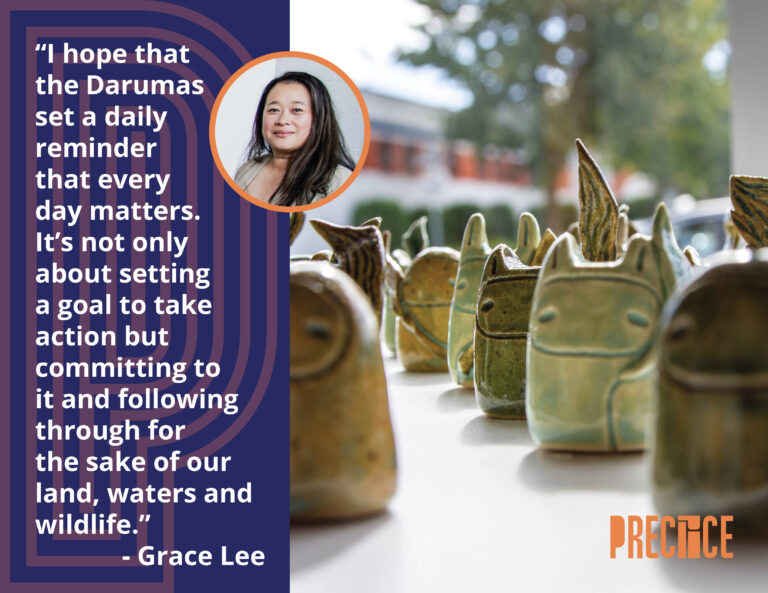
Many conversations revolved around setting an intention with the Daruma dolls to make change and taking that first step and promise to further the work needed to protect our environment & wildlife.
I hope that the Darumas set a daily reminder that every day matters.
It’s not only about setting a goal to take action but committing to it and following through for the sake of our land, waters and wildlife.
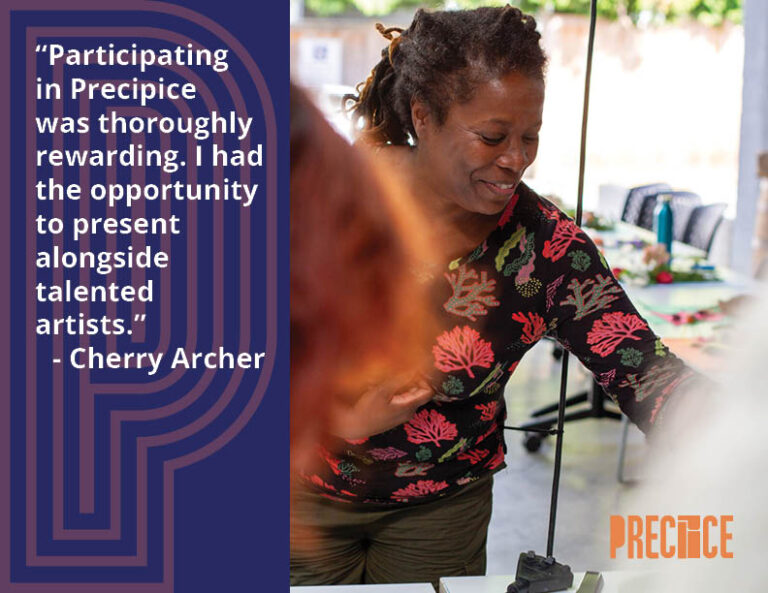
Participating in Precipice was thoroughly rewarding. The curator had a clear vision. She assembled an engaging and informative group of speakers and workshops. I had the opportunity to present alongside talented artists. Each body of work complimented the next. I felt supported and had an excellent time presenting my workshop.-
The best way to keep informed on her work is to follow ger Instagram @cherry.archer
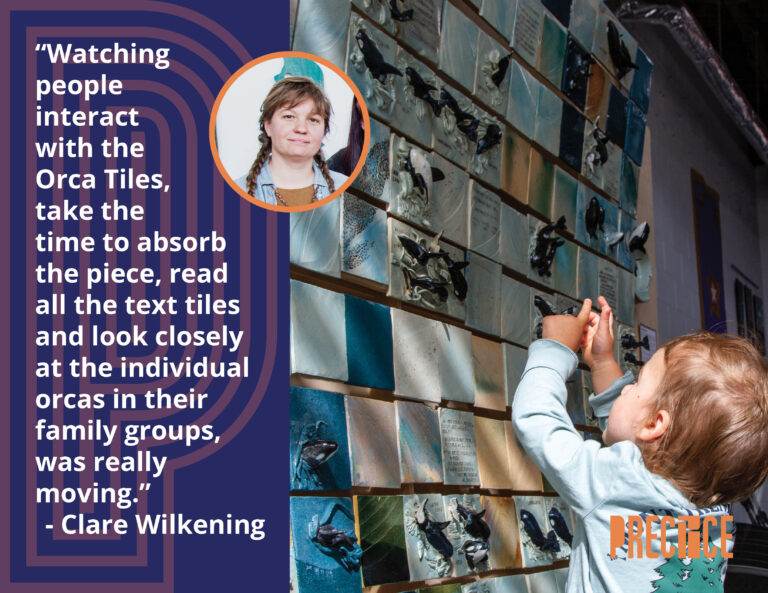
It was great to meet and make a connection with the other artists and the team that put together the show. During the opening, watching people interact with the Orca Tiles, take the time to absorb the piece, read all the text tiles and look closely at the individual orcas in their family groups, was really moving. I could tell from watching and speaking to people that they came away from the work with an emotional resonance and deeper knowledge of the way the Southern Residents live and what can be done to help prevent their extinction. With the Fraser River Sturgeon, people had a big reaction to how striking the work is, and that draws them in to learn more about this mysterious species who is our neighbour. Sturgeon in the Fraser have fairly robust population numbers, but most of the population is old; there are not enough juveniles to sustain the future numbers of this long-lived species. It’s unknown why there are so few juveniles, but part of the reason may be the stress of the catch-and-release fishery- stress can disrupt spawning biological processes and behaviours. Fishers have already voluntarily stopped fishing in certain areas during spawning season, but maybe more needs to be done. I had a sturgeon facts card next to the sculpture, and I equally enjoyed watching people read that as I did watching people absorb the Orca Tiles.
Some great conversations I had included talking with MP Jenny Kwan about ceramics and about these species, as well as being interviewed by Sheryl McKay for CBC: North by Northwest.
A major issue that the Southern Resident Orca currently face is the proposed expansion of the Deltaport/Roberts Bank terminal. This construction would greatly increase freighter traffic through the Salish Sea, which brings with it noise pollution (making it harder for the orca to locate prey), risk of ship strikes, and additional pollution from the vessels themselves and risk of oil spills. Construction would also destroy large areas of eelgrass in the underwater shore along the bank and the estuary- this is crucial habitat for migrating juvenile salmon, the orca’s primary food source. You can write to your MP, to Ministers Guilbeault (Environment), Alghabra (Transport), Lebouthillier (Fisheries & Oceans), Freeland (Deputy Prime Minister), and Trudeau (PM), and let them you do not support this port expansion and why. You can also visit https://georgiastrait.org/work/species-at-risk/proposed-terminal-2-deltaport-expansion-2/ and https://www.againstportexpansion.org to learn more.
You can find Clare’s work at her open studio Oct. 19-21 in Roberts Creek for the Sunshine Coast Art Crawl. She will be vending her ocean-themed pottery at Make It Vancouver at the PNE December 7-10th, and on clarewilkening.com or on Instagram @clarewilkening.ceramics.
Adea Chung
It was an honour to be part of Precipice and among such inspiring and passionate artists. I generally make small jewellery and home wares, having the opportunity to do something on a larger scale for the show was such a treat.
Adea’s work can be found at: The Billy Would store 2168 E. Hastings St. Vancouver, BC or visit billywould.com.
September 17, 2023
Unceded Coast Salish Territory/Vancouver, BC— Chief Rebecca David of Pauquachin Nation will join a special panel on marine pollution alongside leading coastal environmental groups on Tuesday, September 19 in Vancouver. Turning the Tide on BC’s Marine Pollution Crisis is presented as part of an art exhibition showing in Vancouver this fall, Precipice: Changing the Course of the Extinction Crisis in BC.
Lucas Harris, Executive Director, Surfrider Canada
Turning the Tide on BC’s Marine Pollution Crisis is hosted by Alicia Elgert, Ocean Conservation Campaigner, Canadian Parks and Wilderness Society – British Coulmbia (CPAWS-BC).
The coast faces many threats–from pollution to loss of salmon habitat to overharvesting. That’s why it’s so hard to believe BC is one of the only coastal regions in North America without a cohesive plan and laws to protect it.
British Columbians are drawing a new blueprint for the coast. A blueprint, co-designed with Indigenous nations, that ensures marine life and coastal communities get the future they deserve. Learn more: Blueprintforthecoast.ca
Event information:
Kate MacMillan Ocean Conservation Manager kate@cpawsbc.org
About Precipice: Changing the Course of the Extinction Crisis in BC
Precipice is a new art exhibition that tells stories of biodiversity loss and hope in British Columbia. Working in mixed mediums, seven BC-based artists will compel you to mourn, understand and ultimately protect the lands and waters of Canada’s most biodiverse province.
From September 15-23, 2023 Precipice is an exhibit and gathering place where artists, biologists and activists will teach, play and host conversations about biodiversity with the community.
Precipice features work by Cherry Archer, Nell Burns, Adea Chung, Grace Lee, Jessie Recalma, Sarah Ronald, and Clare Wilkening and is curated by Rachael Ashe.
Precipice is presented by Canadian Parks and Wilderness Society – British Columbia. Find more information about the Precipice art exhibition: ontheprecipice.ca
September 14, 2023
Unceded Coast Salish Territory/Vancouver, BC — Precipice: Changing the Course of the Extinction Crisis in BC welcomes the public for Opening Night on Friday, September 15 from 6-9 PM. Celebrate opening night with a very first look at this special show. Enjoy wine, beer or kombucha and music from Hussein DJ A-SLAM all night.
*The official opening is open to media. Media wishing to attend are encouraged to RSVP online or email media@cpawsbc.org
About Precipice: Changing the course of the Extinction Crisis in BC
Precipice is a new art exhibition that tells stories of biodiversity loss and hope in British Columbia. Working in mixed mediums, seven BC-based artists will compel you to mourn, understand and ultimately protect the lands and waters of Canada’s most biodiverse province.
From September 15-23, 2023 Precipice is an exhibit and gathering place where artists, biologists and activists will teach, play and host conversations about biodiversity with the community.
Precipice features work by Cherry Archer, Nell Burns, Adea Chung, Grace Lee, Jessie Recalma, Sarah Ronald, and Clare Wilkening and is curated by Rachael Ashe.
We open on Friday, September 15, 2023 from 6-9 PM and would love to have you as our guest.
Regular Gallery hours are free and open to the public Tuesday-Thursday from 3-6PM, in addition to special evening and weekend programs.
Mediating on Nature art workshop with Cherry Archer: Sunday September 17, 2023
Beginner-friendly ceramics workshop with Clare Wilkening: September 23, 2023
Precipice is presented by Canadian Parks and Wilderness Society – British Columbia. Find more information about the Precipice art exhibition: ontheprecipice.ca
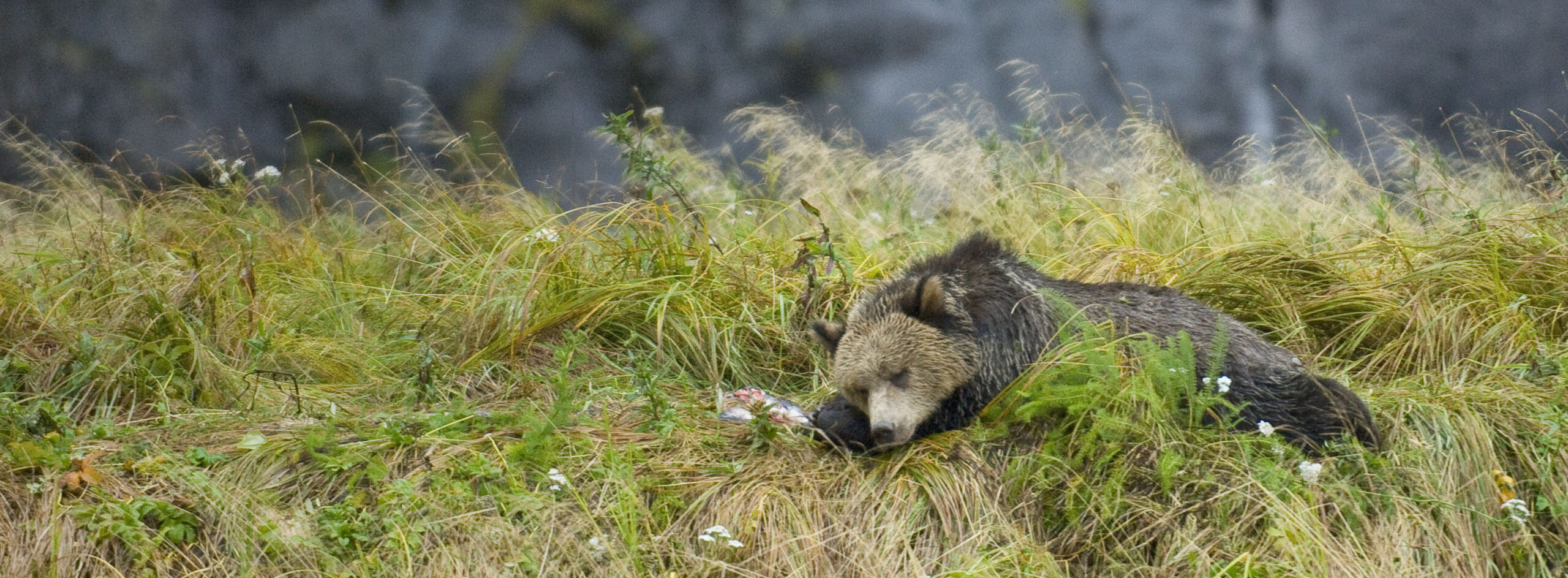
You have probably heard about hibernation, but what is hyperphagia? This term means intense eating, and is a phase that bears go through in the fall to increase their body weight and prepare for winter denning. Bears need to increase their body weight by approximately 30% in order to have enough energy stores to survive winter denning.
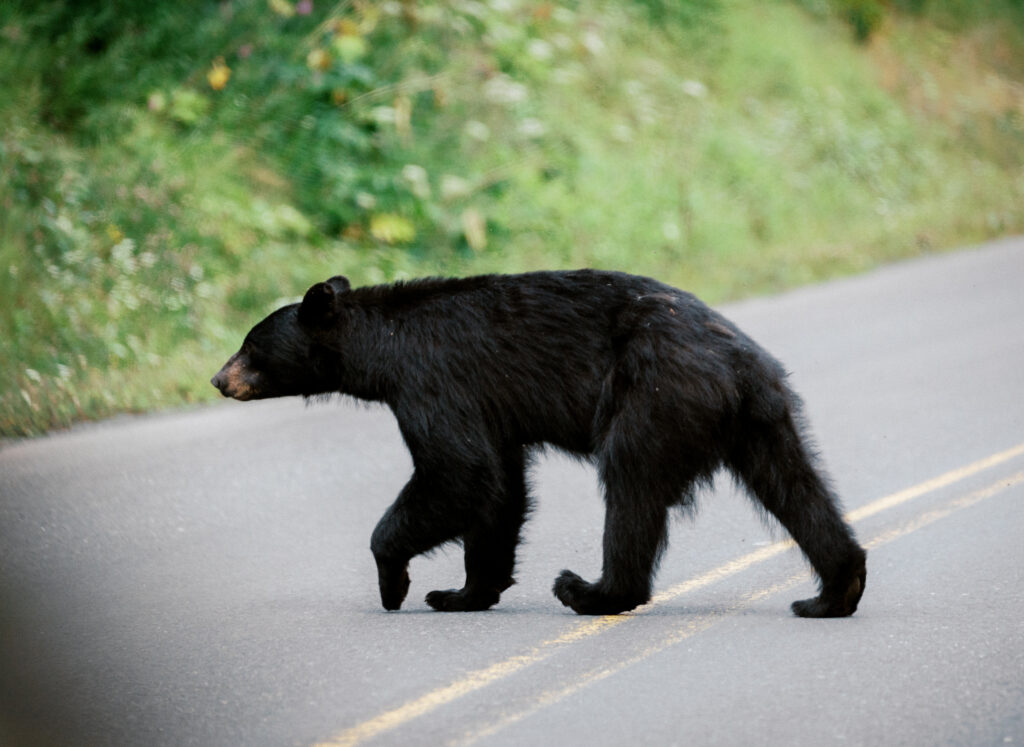
As the fall progresses bears may move to lower elevations where there is still lush greenery to snack on. These lower elevations are where many of our communities in BC lay, which means an increased chance of conflicts with bears this time of year.
Bears have an excellent sense of smell which they use to guide them to food sources. This can also lead them straight into towns if attractants are present. Access to unnatural food sources like garbage, domestic fruit trees and even bird seed can lead to bears becoming food conditioned and/or habituated to humans. This can result in unsafe situations for both bears and people.
People have an important role to play as wildlife stewards. You can help keep bears safe and your neighbourhood free from bear conflicts by practising attractant management. Our friends from WildSafeBC have a Top 10 List you can use to keep bears wild and your community safe!
Keep your garbage secure – store it indoors, in a secure shed, or in a bear-resistant enclosure.
Only put your garbage/yard waste/recyclables out on collection day – never the night before.
Manage your fruit trees so that fruit is picked as it ripens, and no windfall accumulates.
Bring bird feeders in from April through November – and when they are out, ensure that the ground underneath is kept free of seeds.
Feed pets indoors.
Maintain your compost so that it doesn’t smell. Add fruit slowly. Never add meat or dairy.
Protect fruit trees, beehives and small livestock with properly installed & maintained electric fence.
Respect wild animals by not feeding them. Food-conditioned wildlife are more likely to come into conflict.
Keep barbecues clean and odour free.
Report any wildlife in conflict or bear, cougar, coyote or wolf sightings in the community to the Conservation Officer Service 24/7 at 1-877-952-7277.
Most encounters can be prevented by:
making noise
travelling in groups
keeping pets on a leash, and;
avoiding areas where there are signs of recent wildlife activity such as scat.
If you do encounter a bear, stop, try to stay calm and do not run!
Back away slowly from the bear and talk to it in a calm, firm voice to signal that you are not a threat, nor a typical animal they would prey on.
Be sure to have bear spray accessible, like carried on a hip holster, and know how to use it. Bear spray is a low-cost and lightweight option to stop a bear attack.
In the unlikely event a bear charges or is exhibiting stalking behaviour, stand your ground and use your bear spray.
Wildlife in BC’s Parks
Wildlife stewardship starts with managing attractants around your home, and extends into responsible recreation when you visit parks and natural areas. Always be prepared for wildlife encounters, carry bear spray, and be sure to give wildlife plenty of space.
One of the best ways we can support bear conservation is by protecting their habitat. Bears require large and connected habitats to thrive.
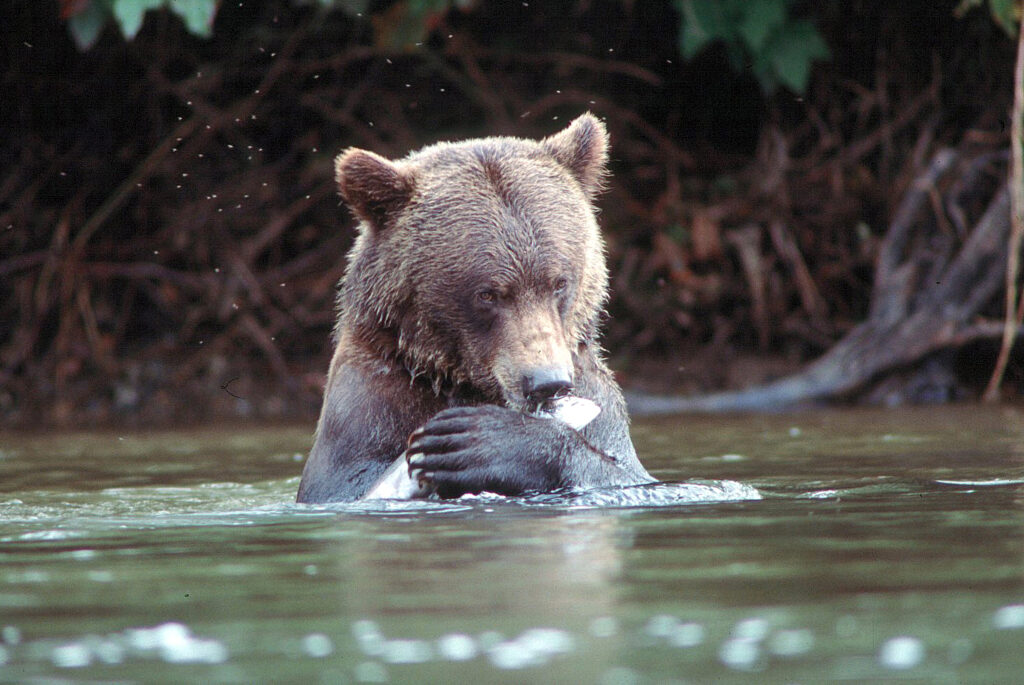
Large natural areas allow bears to meet all their seasonal food requirements. In the spring they need protein rich green shoots that first appear at lower elevations, to help build back muscle after winter denning. In the summer, they need berry rich slopes and meadows. And in the fall, salmon bearing streams offer a critical food source so bears can build up their winter fat stores.
Bears bring the salmon into the forest to eat, where the remains decompose and provide essential soil nutrients that help the trees grow. This helps make bears a keystone species, as they have a major role in healthy BC ecosystems.
Protecting habitat for bears is important to ensure they have enough sources of nutritious food, and reduces their risk of conflict in urban spaces. The goal to protect 30% of land in BC by 2030, will be important for bear conservation and ensuring healthy, functioning ecosystems in BC.
The Day-Use Pass Program is returning to some of BC’s provincial parks including Golden Ears, Joffre Lakes, and Garibaldi Provincial Parks this season to reduce vehicle lineups, parking pressures, and overcrowded trails.
BC’s provincial parks are a haven for wildlife and millions of outdoor enthusiasts across the province. They provide opportunities for us to explore, spend time with family outdoors, and connect with Nature.The growing use and enjoyment of BC’s Parks is incredible. An increase in demand for park services comes with increased pressures on wildlife, natural areas, park staff, and recreation infrastructure.
The Day-Use Pass Program is one tool in a suite of solutions that can help manage and plan for high levels of visitation as parks struggle to keep up with visitor demand.
This article aims to shed light on the growing pressures BC’s provincial parks are facing and the need to manage visitation and support sustainable levels of recreation so parks can continue to support Nature and people for generations to come.
Why is a Day-Use Pass Required?
Their close proximity to Metro Vancouver and stunning vistas have made Golden Ears, Joffre Lakes, and Garibaldi Provincial Parks three of the most popular provincial parks in BC. These parks are seeing visitation skyrocket as more and more people get outside for adventure and to connect with the lands and waters that make BC unique. Between 2012 and 2018, park visitation to these three parks grew by 75%.
From overcrowded trails to packed parking lots and cars lined up along the highway, the evidence of the rising interest and limited management capacity in provincial parks is difficult to miss.
Limited parking availability at Joffre Lakes Provincial Park leads to illegal parking along Highway 99, putting pedestrians, drivers and BC Parks staff at risk. Photo: Steve Jones via CBC
The surge in visitation is challenging BC Parks’ mission to balance safe outdoor recreation with the protection of natural environments. Rising visitation is overwhelming park infrastructure and natural areas in many popular parks, leading to diminished visitor experiences, visitor safety concerns, and impacts on Nature that parks were created to protect. BC Parks staff are seeing impacts such as improper disposal of human waste and garbage, and damage to sensitive areas like alpine environments.
Overcrowding can lead to people wandering off trails, which can cause trail braiding (when multiple paths split off and rejoin the main trail), erosion, and trampled vegetation. This impacts the long-term health of the forests and wildlife in parks.
Trail braiding. Photo: BC Parks
Underlying Issues
BC Parks has been starved of funds for decades. Years of chronic underfunding have:
Created a backlog in the upkeep of recreation infrastructure like boardwalks and trails;
Stalled the development of management plans, limiting the development of recreation opportunities in parks; and
Restricted the establishment of new parks, trails, and infrastructure such as toilets and campsites to meet the rising demand of park visitors who love to get outside.
Recent injections of funds into the BC Parks system are welcomed, and BC Parks is now in a state of playing catch-up while facing sustained demand.
Park agencies worldwide are looking to visitor-use management as park visitation soars. The US National Park Service implemented a day-use management tool in 2020 to reduce overcrowding and protect Nature in several popular parks, including Arches and Glacier National Parks.
The planning, expansion, and construction of new facilities and trails take time, consultation, and careful consideration. As BC Parks continues to play catch-up and work to improve trails, upgrade infrastructure, and build more campsites, the Day-Use Pass Program helps reduce the impacts of recreation on Nature while also improving visitor safety and the park experience by reducing overcrowded trails, roads and parking lots.
The Day-Use Pass Program should be complemented with other tools to support the growing demand for parks and recreation. This includes increasing transit access to parks to alleviate parking pressure and investing in recreation planning and park expansion near city centres.
Expand parks, both in size and recreation infrastructure, to keep up with visitor demand, relieve pressure off of existing trails and infrastructure, and protect habitat for endangered wildlife;
Increase park ranger staff to maintain infrastructure and enforce rules that keep visitors and wildlife safe;
Modify trail infrastructure and design to protect vegetation (e.g. installing boardwalks);
Improve visitor education to mitigate impacts on wildlife and sensitive natural areas; and
Support BC Parks’ dual mandate to provide high-quality outdoor recreation opportunities and protect diverse natural environments for world-class conservation.
Increased funding for trail maintenance and upgrades would help protect sensitive plant and animal habitats like this sub-alpine meadow in Manning Provincial Park.
Heather Trail in Manning Provincial Park. Photo: Andy Gibb via Federation of Mountain Clubs of BC
Parks and protected areas are a fundamental part of our health care system, they provide many opportunities to get outside and connect with Nature, from canoeing to horseback riding to multi-day hiking adventures. They are also a critical ally in our fight against climate change and biodiversity loss. Increased, sustained funding will not only support people getting outside to connect with Nature, it will also support BC’s commitment to safeguard biodiversity by protecting 30% of lands by 2030.
Take action to increase funding for BC’s provincial parks
Let your elected leaders know that you want to see increased funding for BC Parks by clicking the button below.
Traditional unceded Coast Salish Territory / Vancouver, BC – The Canadian Parks and Wilderness Society – British Columbia (CPAWS-BC) is welcoming new measures announced to protect old growth forests and expedite conservation across BC. New forest policy changes announced by Premier David Eby and Minister of Forests Bruce Ralston signal hope that forest management in BC will prioritize ecosystem health, biodiversity and Indigenous values.
“BC has made ambitious commitments to protect biodiversity and shift the way that resources are managed in the province, and today’s announcement gives the conservation community a welcomed signal that Premier Eby’s government will follow through,” said Tori Ball, Terrestrial Conservation Manager for CPAWS-BC.
The announcement includes several key measures and reaffirms commitments that will advance forest conservation, including:
Removing problematic wording in the Forest and Range Practices Act which hampered wildlife and habitat protections by requiring them to go forward “without unduly reducing the supply of timber from British Columbia’s forests”;
$25M for new Forest Landscape Planning (FLP) to support eight regional tables that will include local knowledge and community priorities, including approximately 50 First Nations, to guide forest management on the ground;
Creating a new conservation financing mechanism to leverage philanthropic funding to support the protection of lands, waters and biodiversity;
Implementing the Old Growth Strategic Review and the creation of a parallel action plan, in collaboration with First Nations.
“Forest ecosystems in BC have long been prioritized solely for their timber value over the cultural, ecological and carbon values that they hold,” continued Ball. “Our ancient forests host irreplaceable ecosystems and spiritual significance, and immediate action is needed to expedite their protection before they are lost forever.”
In December 2022, Premier Eby announced BC’s commitment to protect 30% of lands by 2030, including Indigenous Protected and Conserved Areas (IPCAs). These announcements show a commitment to protecting nature across BC while bolstering Indigenous rights to land and culture, and accelerating action on climate change.
“Biodiversity is the backbone that our communities, economies and climate rely upon,” said Ball. “While we welcome these signals, there is still work to be done to make sure these policies create meaningful action to prioritize ecosystem health on lands and waters across BC.”
— 30 —
For interviews, contact:
Tori Ball, Terrestrial Conservation Manager, CPAWS-BC tori@cpawsbc.org | 604-685-7445 x24
About CPAWS-BC
The Canadian Parks and Wilderness Society – British Columbia (CPAWS-BC) is part of one of Canada’s oldest non-profit conservation groups. We protect wilderness in every corner of BC and deep into the ocean. We have been defending BC since 1978, and are dedicated to keeping BC’s natural environment thriving forever. Our work to safeguard large parks, protected areas and wildlife corridors has been instrumental in protecting precious places across the province.
We use cookies and other similar technologies such as pixels and web beacons (“Cookies”) for various purposes, such as to ensure our website functions properly, enhance your browsing experience by remembering your preferences and provide personalized content and advertisements.
Functional
Always active
The technical storage or access is strictly necessary for the legitimate purpose of enabling the use of a specific service explicitly requested by the subscriber or user, or for the sole purpose of carrying out the transmission of a communication over an electronic communications network.
Preferences
The technical storage or access is necessary for the legitimate purpose of storing preferences that are not requested by the subscriber or user.
Statistics
The technical storage or access that is used exclusively for statistical purposes.The technical storage or access that is used exclusively for anonymous statistical purposes. Without a subpoena, voluntary compliance on the part of your Internet Service Provider, or additional records from a third party, information stored or retrieved for this purpose alone cannot usually be used to identify you.
Marketing
The technical storage or access is required to create user profiles to send advertising, or to track the user on a website or across several websites for similar marketing purposes.