Conservation groups welcome federal assessment process for Castle coal mine
For interviews, contact: Bruce Passmore, Executive Director bruce@cpawsbc.org (604) 685-7445 x23
Conservation groups welcome federal assessment process for Castle coal mine
For Immediate Release
August 21, 2020
Unceded Coast Salish Territory/Vancouver, BC — This week, Canada’s Federal Environment Minister announced that Teck Resources’ proposed Castle coal mine will undergo a federal environmental assessment. This assessment is a necessary step to ensure the safety of local wildlife, communities and downstream watersheds, including in the USA.
“The Castle coal mine’s potential negative impacts on important grizzly bear and other wildlife populations are particularly concerning,” said Bruce Passmore, Executive Director of the Canadian Parks and Wilderness Society – British Columbia. “This is an important connectivity zone between BC, Alberta and the US. We applaud the federal government for making the correct decision and ordering an environmental assessment.”
Teck Resources coal mines have been under fire for high levels of heavy metals, in particular selenium, being released into waterways in the Elk Valley. Earlier this year, the US Environmental Protection Agency demanded that the BC government hand over selenium data and explain why the company has been allowed to exceed guidelines for toxic heavy metals. Multiple Indigenous nations in Canada and the USA have also expressed concern.
“Given the complexity of values and the history of pollution in the area, combined with the fact that BC still doesn’t have its own endangered species legislation, it’s critical that this project is looked at carefully,” said Passmore. “A federal assessment will consider the mine’s effects on Indigenous rights, local communities, and threatened species like westslope cutthroat trout and white sturgeon.”
–30–
For interviews, contact: Bruce Passmore, Executive Director bruce@cpawsbc.org (604) 685-7445 x23
Decision to Safeguard Silverdaisy Valley Welcomed by CPAWS-BC
December 4, 2019
Traditional territories of the Coast Salish peoples–Sḵwx̱wú7mesh (Squamish), and Səl̓ílwətaʔ/Selilwitulh (Tsleil-Waututh) and xʷməθkʷəy̓əm (Musqueam) Nations, Vancouver BC – The Canadian Parks and Wilderness Society – British Columbia (CPAWS-BC) welcomes today’s announcement from Minister George Heyman and Minister Doug Donaldson that the Silverdaisy Valley in southwest BC is now off-limits to commercial forestry. Alongside First Nations and tribes on both sides of the border, CPAWS-BC has been working in partnership with other conservation and recreation organizations to secure long-term protections for this high-value landscape that has long been of great conservation interest.
“Today’s announcement demonstrates tremendous leadership from the BC government to work towards nature protection in critical parts of the province,”says Tori Ball, Terrestrial Campaigner for CPAWS-BC. “We congratulate everyone involved for their persistent and collaborative efforts to find a resolution to the threat of logging in the rich and intact Silverdaisy Valley.”
Located in the upper reaches of the Skagit River Valley in BC, the Silverdaisy Valley is surrounded on all sides by two of BC’s most well known protected areas, E.C. Manning and Skagit Valley Provincial Parks. This area supports year-round recreational opportunities, as well as important habitat for rare and endangered Spotted Owls, and the most imperiled grizzly bear population in the province.
Since commercial forestry operations began in this area in 2015, there has been significant concern from environmental organizations, outdoor businesses and Indigenous rights holders who have used this area as a traditional gathering place for millenia. Today’s announcement shows the government’s shared commitment to protecting the Skagit River Valley.
“Keeping this broader landscape intact is absolutely critical to maintaining the overall health of this world-class ecosystem in the long term,” says Ball. “These new protections from forestry are what’s most needed in this landscape right now, and we commend the government for working collaboratively with First Nations and stakeholders to get to this result.”
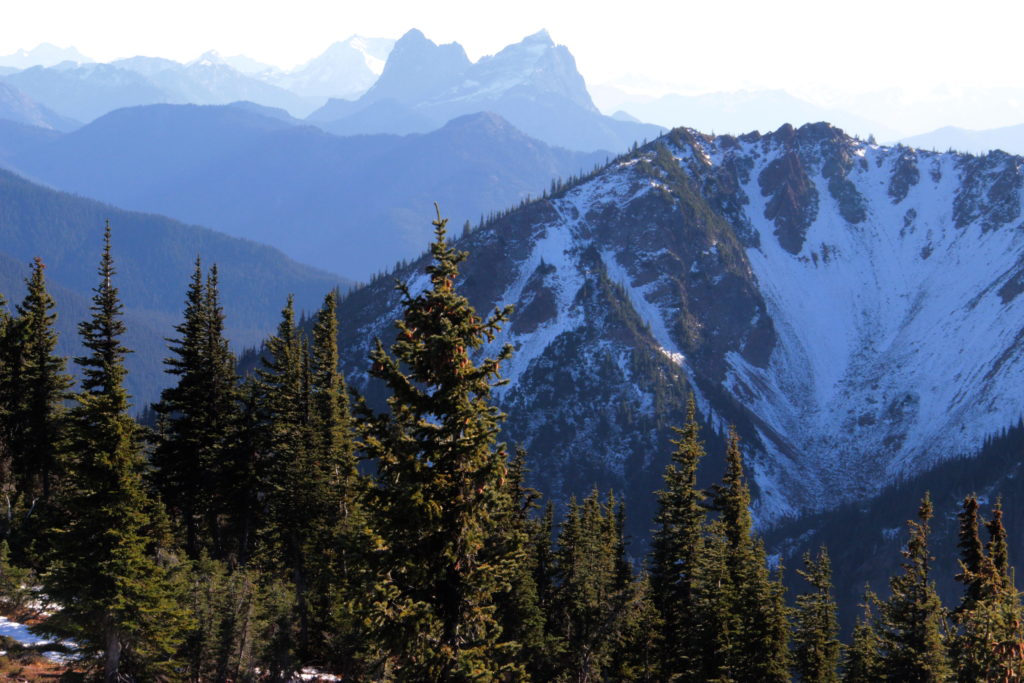
Silversdaisy Peak in Skagit River Valley. Photo by: Wilderness Committee
Canadian Parks and Wilderness Society – British Columbia (CPAWS-BC) is dedicated to the protection of public land and water, and ensuring our parks are managed to protect the nature within them. Our vision is to establish large, intact areas of wilderness on land and in the ocean that can nurture nature through climate change and support all life.
We use cookies and other similar technologies such as pixels and web beacons (“Cookies”) for various purposes, such as to ensure our website functions properly, enhance your browsing experience by remembering your preferences and provide personalized content and advertisements.
Functional
Always active
The technical storage or access is strictly necessary for the legitimate purpose of enabling the use of a specific service explicitly requested by the subscriber or user, or for the sole purpose of carrying out the transmission of a communication over an electronic communications network.
Preferences
The technical storage or access is necessary for the legitimate purpose of storing preferences that are not requested by the subscriber or user.
Statistics
The technical storage or access that is used exclusively for statistical purposes.The technical storage or access that is used exclusively for anonymous statistical purposes. Without a subpoena, voluntary compliance on the part of your Internet Service Provider, or additional records from a third party, information stored or retrieved for this purpose alone cannot usually be used to identify you.
Marketing
The technical storage or access is required to create user profiles to send advertising, or to track the user on a website or across several websites for similar marketing purposes.