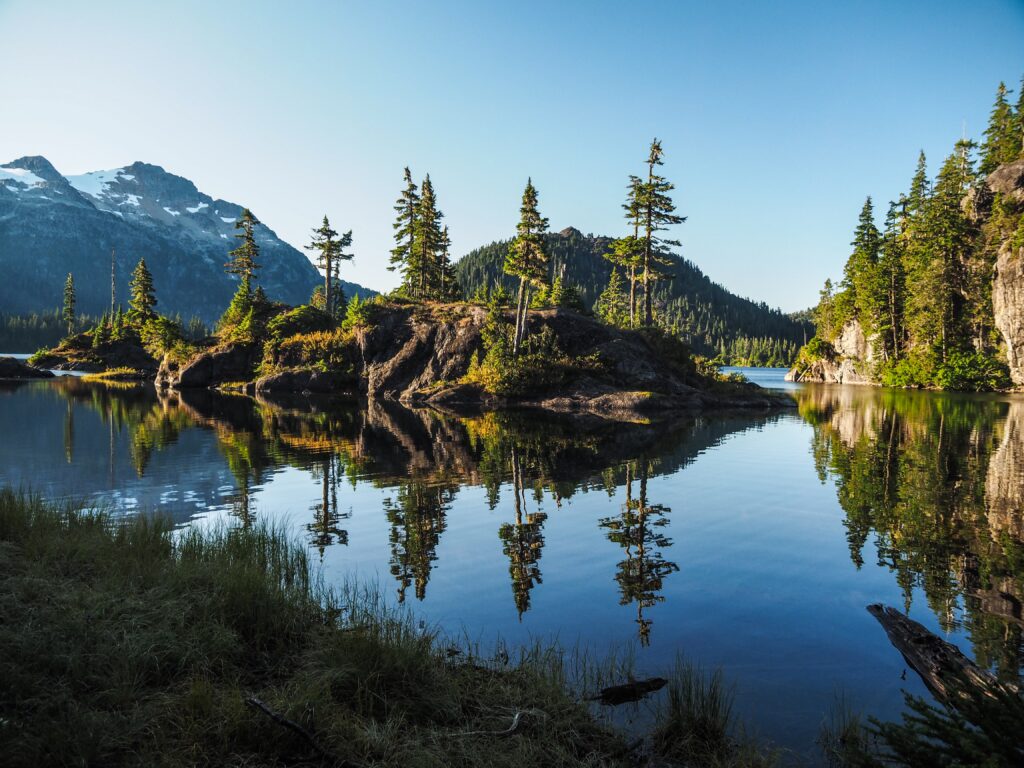
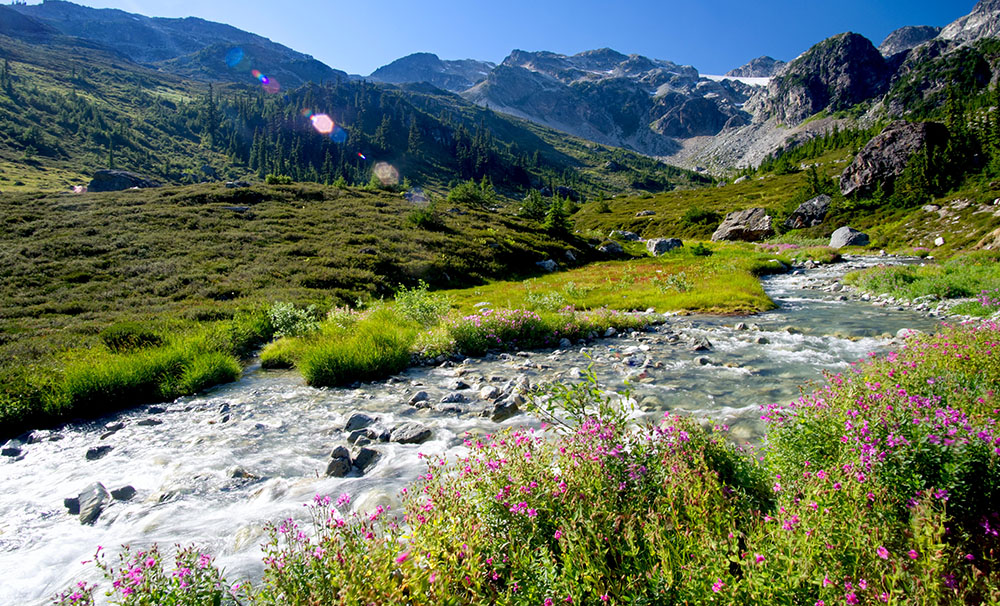
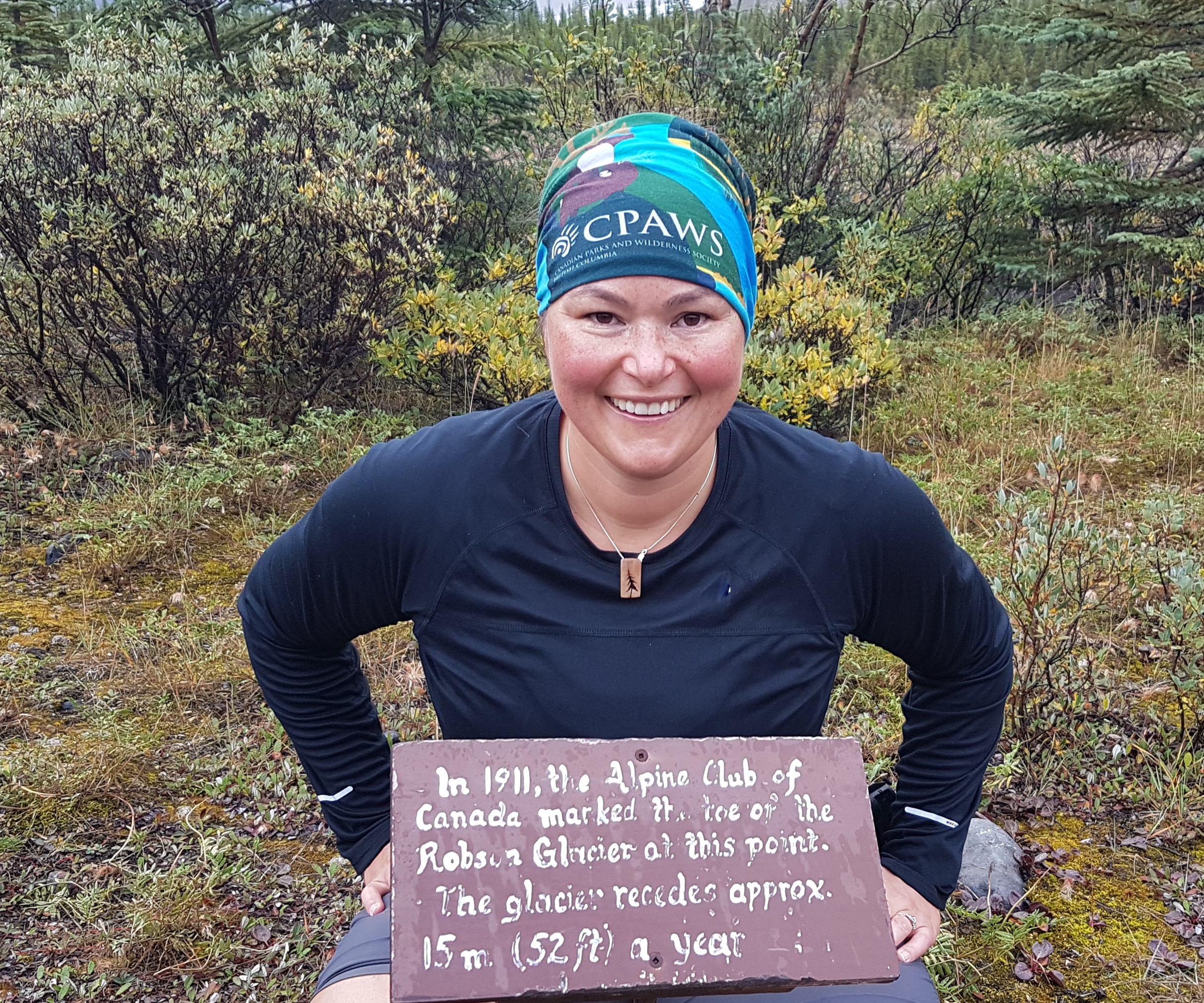
It’s been quite a year and a half! Despite many restrictions and challenges, nature has been there for us when we needed it most. Nature was ready to welcome us, enveloping us in its safe bubble where we found recreation, rest, and rejuvenation. Whether you enjoyed the greenery from your balcony or ventured into local parks and the untamed wilderness, join us in celebrating the great outdoors by sharing a photo of how you found solace in nature’s bubble!
Prizes
– One $500 MEC gift card (based on judging criteria)
– One of two $250 MEC gift cards (randomly selected at end of contest)
– One of two survival kits from BMG Industries, awarded randomly and biweekly
How to Enter
-
Post your photo in nature’s bubble from the last 12 months on Facebook, Twitter, or Instagram. Photos must be public so we can see them!
-
In your caption, tell us why nature matters to you, and what’s special about your memory.
-
Tag and follow CPAWS-BC and the Guide Outfitters Association of BC. Multiple entries are encouraged—up to one entry a day!
CPAWS-BC: Facebook, Twitter, Instagram
Guide Outfitters Association of BC: Facebook, Twitter, Instagram
Make sure that your profile is public so that we can see it. Posts must be put in a feed, unfortunately Instagram stories will not be eligible to win.
Don’t have a social media account? No problem! You can also email parks@cpawsbc.org with subject line “Nature’s Bubble Photo Contest”.
UPDATE: Contest closes on Friday, November 5, 2021. Find the full contest rules here.
September 30, 2021, Xʷməθkʷəy̓əm (Musqueam), Sḵwx̱wú7mesh (Squamish) and səlilwətaɬ (Tsleil-Waututh) Territories / Vancouver, BC – CPAWS-BC stands in solidarity with Indigenous Peoples as we observe the National Day for Truth and Reconciliation. We acknowledge the role of colonization on Indigenous Peoples, and we in the conservation movement remain committed to working actively towards healing and reconciliation.
We honour thousands of Indigenous children lost to residential schools by also recognizing September 30 as Orange Shirt Day. We stand with the communities and Nations grieving the confirmation of their long-held knowledge: 215 children at Tk’emlúps te Secwépemc, 104 in Sioux Valley Dakota territory near Brandon, 751 on Cowessess First Nation, 160 in Hul’qumi’num Territory on Vancouver Island and 182 in Ktunaxa Territory. The National Centre For Truth and Reconciliation confirms the identities of 4,117 children. And we sadly acknowledge there will be more gravesites found.
The legacy of residential schools and colonialism continues to negatively impact Indigenous Peoples today. CPAWS-BC has a responsibility as a leader in the conservation movement to take steps that can begin to heal relationships between Indigenous and non-Indigenous peoples and the lands and waters where we work.
We recognize that reconciliation and decolonization is an ongoing process that requires all of us to be actively involved and responsible as our collective learning evolves. CPAWS-BC makes a firm commitment to uphold decolonization as a cornerstone in our conservation work.
As we work toward the protection of diverse ecosystems, CPAWS-BC will do so in the spirit of decolonization , recognizing the essential leadership of the Indigenous stewards who have cared for these lands and waters since time immemorial. We are committed to deepening our relationships with Indigenous partners and we recognize that it is our responsibility to support Indigenous Peoples to safeguard their land and water.
As a team, we are advancing awareness, knowledge, and capacity on our staff and board by providing cultural competency learning opportunities and workshops with Indigenous speakers, Elders, storytellers, and facilitators.
We encourage all Canadians to read the Truth and Reconciliation Commission of Canada (TRC) Calls to Action. You can further support Indigenous communities today by participating in virtual events such as the Tk’emlups te Secwepemc’s Drum for the Children event or the Orange Shirt Day event in Vancouver. If you can, please consider donating to the Indian Residential School Survivors Society, the Orange Shirt Society, or One Day’s Pay.
Sincerely,
Kevin Barlow (Mi’kmaw)
Interim Executive Director, CPAWS-BC
For more information please contact:
Rippon Madtha
Communications Manager
604-685-7445 (x 23)
rippon@cpawsbc.org
Every fall, the BC government asks British Columbians like you about what they want to see funded in next year’s budget. This budget consultation—which happens every year—is a big opportunity for British Columbians to have their say and tell the BC government that investing in nature should be a top priority!
BC’s parks and protected areas are home to culturally important places for First Nations, thrilling sites for outdoor adventures, and protect precious habitat for animal and plant species. As we enter the last days of the budget consultation—which closes on September 30, 2021 at 5pm PST—it’s key that we take action to speak up for BC’s wild places and spaces that don’t have a voice.
Will you join us in standing up for nature? Here are three more reasons why you should.
1. Investing in nature conservation will help BC meet international biodiversity targets
Time is ticking closer to the 2025 international biodiversity targets, in which Canada has committed to protecting 25% of its land and inland waters by 2025, and 30% by 2030. To slow the rapid loss of biodiversity in BC, we need to make sure that more land is protected to shelter at-risk species and preserve our forests, rivers, lakes, grasslands, and more through a changing climate.
2. Protected areas return on their investment through opportunities for tourism, job creation, and increased GDP
From Hope to Revelstoke, we don’t need to look far to see the economic benefit that visitors bring to a community. When visitors spend time and money in parks, they bring in a 44% return in government investment through taxes. Tourism—which heavily relies on BC’s wildlife and wild places—can also increase our GDP, or the value of our economy. In 2016, tourism contributed $7.9 billion to BC’s GDP—a bigger contribution than the mining, forestry, and agriculture/fishing industries.
3. Protected, safe, and accessible provincial parks will result in happier and healthier British Columbians.
In a CPAWS-BC survey last year, 94% of British Columbians said that access to nature was somewhat or very important to their mental health. Parks double as places for people to connect with nature, and with each other in our urban and screen-based lives. Accessible nature with safe infrastructure means that more people can get outside. It’s a big bonus of increased investment in parks and protected areas.
Ready to stand up for nature in BC? Take action and tell the BC government that they need to invest in nature.
For more information, please contact:
Rippon Madtha
Communications Manager
rippon@cpawsbc.org
604-685-7445 (x23)
FOR IMMEDIATE RELEASE
August 13, 2021
CPAWS-BC Welcomes Important Step for a New National Marine Conservation Area Reserve
Protected area aims to boost biodiversity and mitigate climate change impacts on coastal communities
Unceded Coast Salish Territory / Vancouver, BC – The Canadian Parks and Wilderness Society – British Columbia (CPAWS-BC) congratulates the Kitasoo/Xai’xais, Nuxalk, Heiltsuk, and Wuikinuxv First Nations, Parks Canada and Government of BC for formally beginning the process to establish a new National Marine Conservation Area together.
The announcement marks the start of a feasibility assessment for a new marine protected area. The area being assessed covers 14,200 square kilometres of some of BC’s most productive and intact marine ecosystems that border the Great Bear Rainforest, including some of the largest kelp forests in BC.
“The creation of a new National Marine Conservation Area Reserve (NMCAR) off the central coast of BC would protect iconic, important, and vulnerable species, such as herring, salmon, and orcas,” says Ross Jameson, Ocean Conservation Manager for CPAWS-BC.
Today’s important announcement acts on the longstanding and aligned vision between Canada and the partnered First Nations partners to protect nature and safeguard the health of the ocean for generations to come. First Nations on the Central Coast have been stewards of these lands and waters for millennia. Most recently this includes developing world-leading marine-use plans, acting as First Responders to catastrophic oil spills, partnering with the federal and provincial government to develop what will be the world’s largest MPA network, and earlier this week announcing a new Fisheries Resources Reconciliation Agreement with Fisheries and Oceans Canada.
Recent declines in herring and crab have led to the First Nations taking important steps to protect these species and reduce commercial fishing pressure, to ensure long term sustainability. Marine protected areas, like the proposed NMCAR, have long been recognized as a critical insurance policy for ecosystems and species. MPAs are one of the most effective conservation tools to protect and rebuild populations of marine life. “By removing or reducing all known threats and stressors, MPAs act as refugia for marine life and in doing so improve the long-term health and sustainability of species and habitats that coastal communities and commercial fisheries rely on,” adds Jameson.
The establishment of an NMCAR in the region is yet another investment in the prosperity of the region. Recent studies have shown that by protecting biodiversity and increasing sustainability, marine protected areas can produce a return of $10 for every $1 invested and create thousands of jobs directly and indirectly.
“This NMCAR will benefit both coastal communities and the ecosystems that support them, creating jobs for Indigenous Guardians, increasing recreation and tourism opportunities, rebuilding fisheries, and creating a strong and sustainable conservation economy,” said Jameson.
Canada has committed to protecting 25% of its ocean by 2025, toward 30% by 2030 in line with global scientific recommendations to restore ocean health. Co-governed protected areas, like the proposed NMCAR will play a critical role in achieving these targets in an equitable and just manner.
“This announcement shows great wisdom and fortitude in putting the future of our communities first by furthering important nature commitments. We look forward to working towards a resilient future with Indigenous, provincial, and federal governments by furthering conservation here in BC,” said Jameson.
-30-
For more information, please contact:
Rippon Madtha
Communications Manager
rippon@cpawsbc.org
604-685-7445 (x23)
About CPAWS-BC:
The Canadian Parks and Wilderness Society (CPAWS) is Canada’s only charity dedicated to the protection of public land, freshwater and ocean with a strong national and regional presence across the country. Working in a way that respects the sovereignty and leadership of Indigenous nations, we are focused on conserving nature to respond to the dual crises of accelerated biodiversity loss and climate change. With almost 60 years of success, we are Canada’s leader in conservation and have played a lead role in protecting over half a million square kilometers. Our vision is that at least half of land, freshwater and ocean in Canada is permanently protected to sustain nature and people for current and future generations.
The CPAWS British Columbia chapter (CPAWS-BC) works to protect wilderness in every corner of BC and deep into the ocean. We have been defending BC since 1978, and are dedicated to keeping BC’s natural environment thriving forever. Nature is BC’s best hope.
Visit: cpawsbc.org. | Follow: @CPAWSbc
CPAWS-BC’s response to the discovery of the remains of Indigenous children in residential school mass graves across Canada
Acknowledgement of the impact of residential schools is required for reconciliation and healing
July 05, 2021, Xʷməθkʷəy̓əm (Musqueam), Sḵwx̱wú7mesh (Squamish) and səlilwətaɬ (Tsleil-Waututh) Territories / Vancouver, BC – CPAWS-BC is heartbroken over the recent confirmation of the existence of unmarked burial sites at four former Indian Residential School locations across Canada.
We grieve the loss of 215 souls at Tk’emlúps te Secwépemc near Kamloops, 104 souls in Sioux Valley Dakota territory near Brandon, 751 souls on Cowessess First Nation near Marieval, and 182 souls in Ktunaxa Territory near Cranbrook.
First Nations communities have always known about unmarked burial grounds on the sites of Indian Residential Schools, but their requests to uncover the truth were not heeded until now.
Indigenous staff and board members at CPAWS-BC and other CPAWS offices across the country have been impacted directly by the actions of Canada’s colonial system. CPAWS-BC’s Indigenous partners and collaborators are Survivors and intergenerational Survivors of the Indian Residential School system. We have spent recent weeks making space to mourn, rest, listen, and reflect during this time of trauma and healing for our colleagues, partners, and their communities.
The conservation movement has played and continues to play a role in the violent displacement of Indigenous peoples from their home lands and waters, which are integral to their spirituality, their health, and their healing. The whiteness of conservation still remains in both leadership and values, which continues to perpetuate systemic oppression and erasure of Indigenous Peoples.
CPAWS-BC has a responsibility as a leader in the conservation movement to take steps that can begin to heal relationships between Indigenous and non-Indigenous people and the lands and waters where we work. We must decolonize our work to ensure that we are supporting Indigenous stewardship, resilience, and resurgence. We recognize that reconciliation and decolonization is an ongoing process that requires all of us to be actively involved and responsible as our collective learning evolves. We also acknowledge that it’s not up to non-Indigenous people in Canada to determine if our actions are effective.
As we work toward achieving the protection of diverse ecosystems, CPAWS-BC is committed to doing so in the spirit of truth and reconciliation, recognizing the essential leadership of the Indigenous stewards who have cared for these lands and waters since time immemorial. We are committed to deepening our relationships with Indigenous partners and we recognize that it is our responsibility to support Indigenous Peoples to safeguard land and water for future generations and advance shared conservation priorities based on relationships, respect, and reciprocity.
These recent confirmations of burial sites on the grounds of so-called schools must serve as a crucial reminder to non-Indigenous people of the reality of the genocide that was committed against Indigenous Peoples in Canada. But Indigenous Peoples have resisted and endured. We remain hopeful that these findings and the powerful collective response helps further our learning and remind all those who reside here of the important work that must be done to create change for the future. We know Indigenous-led conservation can help advance reconciliation in BC. We encourage the federal, provincial, territorial, and municipal governments to fully adopt and implement the United Nations Declaration on the Rights of Indigenous Peoples (UNDRIP) to ensure survival, dignity and well-being of Indigenous Peoples .
You can support Indigenous communities working through trauma, grief,and healing during this time by donating to the Indian Residential School Survivors Society, the Orange Shirt Society, and by reading the Truth and Reconciliation Commission of Canada (TRC) Calls to Action.
Sincerely,
Annita Mcphee
Executive Director CPAWS-BC
For more information please contact:
Rippon Madtha
Communications Manager
604-685-7445 (x 23)
rippon@cpawsbc.org
For interviews, please contact:
Jessie Corey, Terrestrial Conservation Manager
Canadian Parks and Wilderness Society – British Columbia
Jessie@cpawsbc.org
(604) 685-7445 x25
FOR IMMEDIATE RELEASE
June 22, 2021
British Columbia can restore its status as a global leader in conservation: here’s how
Committing to international protected area targets and championing Indigenous-led conservation are key to saving nature, a new CPAWS report card reveals
Unceded Coast Salish Territory / Vancouver, BC – An inaugural report card from the Canadian Parks and Wilderness Society (CPAWS) highlights limited progress on conservation in British Columbia over the last decade, but paves a way forward for the province to mitigate species extinction and its biodiversity crisis.
“With wildlife populations plummeting and biodiversity loss at its worst, the BC government has a huge opportunity to lead true change for nature,” says Jessie Corey, Terrestrial Conservation Manager at CPAWS-BC. “This has to begin with a promise to take action now and support First Nations and others working to permanently protect BC’s wildlife and ecosystems. The clock is ticking.”
The report card highlights that only one percent of BC has been added to its protected area system in the last 10 years, earning the province a C grade for its slow progress in safeguarding land and inland waters. In contrast, role model provinces like Québec received grades as high as an A- for making real progress towards the 2020 protection targets, capitalizing on federal conservation funding, and supporting conservation initiatives led by First Nations.
“It’s been proven, time and time again, that Indigenous leadership drives successful land protection,” says Annita Mcphee, Executive Director of CPAWS-BC. “Provincial commitments to reconciliation and to protecting land, air and water are instrumental in the fight against climate change. This is a golden opportunity for Indigenous communities to finally get the support and resources they need to advance important conservation initiatives across the province.”
In addition to grading each province and territory, the report card also applauds the federal government for its leadership and commitment to bringing First Nations, provinces, and territories together to tackle the global biodiversity crisis. Significant budget commitments made by the federal government in 2018 and again in 2021 have created the space to make real progress in protecting more of our lands and waters. This overarching federal support sets BC up well to re-establish itself within the global conservation space.
How BC can improve its grade
- Prioritize nature by committing to protect 25 percent of BC by 2025. With multiple in-progress conservation initiatives such as Dene K’éh Kusān—which totals 40,000 km2 or 4 percent of BC’s land base that could be protected—this global land protection goal is fully achievable if the BC government promises to put nature first.
- Support Indigenous-led conservation initiatives. In the last decade, 70 percent of BC’s new protected lands came from The Great Bear Rainforest Agreement, a collaboration between First Nations and the BC Government. Supporting Indigenous-led initiatives in the future will promote reconciliation with Indigenous communities and aid the recovery of species at risk.
- Don’t cut corners by counting OECMs towards protected area targets. Currently, BC reports 4 percent of its landbase under Other Effective Area-based Conservation Measure (OECM) designations. While some of these areas meet agreed-upon IUCN and Canadian standards, many do not. In the future, protected areas—designations that conserve nature when well-managed and designed—should be BC’s core conservation tool when working towards protection targets.
— 30 —
For more information, or to arrange an interview, please contact:
Jessie Corey
Terrestrial Conservation Manager, CPAWS-BC
jessie@cpawsbc.org
(604) 685-7445 x 25

The Grades Are In: A Report Card On Canada’s Progress in Protecting its Land and Ocean (PDF)
CPAWS-BC Media Release (PDF)
In 1992, Canada first proposed the idea of a World Oceans Day at the Earth Summit in Rio de Janeiro, as a day to encourage protection of the ocean and the sustainable management of its resources. Twenty-nine years later, on World Oceans Day 2021, the message of World Oceans Day is needed now more than ever in British Columbia.
The iconic southern resident killer whales have been listed as endangered since 2001, fishers worry about their livelihoods, and coastal communities in BC are concerned about climate change-induced sea level rise and flooding. Without a strategy to protect and sustainably manage coastal and marine spaces, we are putting the future of the coast at risk.
However, this year on World Oceans Day, we have hope for the coast. After years of calls from conservation groups, fishers, local governments, and others, the provincial government has recognized that it needs to act to address the challenges facing coastal and marine areas.
Following the October 2020 election, the British Columbia government committed in ministerial mandate letters to “developing a coastal marine strategy – in partnership with First Nations and federal and local governments – to better protect coastal habitat while growing coastal economies.” Minister of State for Lands and Natural Resource Operations Nathan Cullen is tasked with leading this important initiative.
The development of a BC coastal marine strategy and law represents a once-in-a-generation opportunity to revamp provincial coastal management to ensure marine life and coastal communities get the future they deserve.
What is a Coastal Marine Strategy and Law?
In the face of accelerating coastal development, greater stressors on ocean resources, and declines in marine ecosystem health, many states around the world have adopted coastal marine strategies to better manage coastal and marine areas. We refer to a coastal marine strategy as a “blueprint for the coast” because it provides long-term directions to guide governments in the planning and management of these areas.
A strong coastal marine strategy will identify high level goals for coastal and ocean management and include laws and policies to achieve these goals.
The strategy should ensure that the management of marine and coastal areas is:
- Integrated – so that provincial government decision-makers, including local governments, coordinate effectively between themselves and with Indigenous and federal governments;
- Adaptive – meaning that the provincial government monitors and adapts its decision-making to ensure that the goals of the strategy are being met; and
- Sustainable – so that the needs of future generations are not compromised by today’s decisions.
Since the 1970s, the West Coast US states have had in place coastal marine strategies and laws to help manage ocean areas in concert with the federal government, Indigenous tribes, and local governments. They have created commissions or other government bodies in charge of administering their coastal marine strategies, have developed marine spatial plans that detail where activities can occur, implemented networks of marine protected areas to restore fisheries and revive marine ecosystems, and adopted sophisticated monitoring programs. Aside from BC, almost every coastal state and province in the US and Canada has adopted a strategy or law to manage its ocean areas, with Nova Scotia being the most recent, having adopted its Coastal Protection Act in 2019.
Here in BC
While British Columbia exercises significant jurisdiction in coastal and marine spaces, it does not currently have a comprehensive coastal marine strategy backed by a law to direct its ocean management.
Right now, BC manages coastal and marine areas through a patchwork of regulations and laws overseen by different ministries and departments without an overarching vision for those decisions or a centralized body responsible for those decisions. This approach makes it difficult to coordinate with Indigenous nations and federal and local governments and to ensure that the long-term health of coastal and marine ecosystems is safeguarded.
The provincial government has nonetheless created some promising initiatives in recent years to improve management and protection of marine and coastal areas. For example, BC partnered with Indigenous nations through the Marine Plan Partnership (MaPP), a unique partnership to develop plans to manage marine areas from the Alaskan border down to Northern Vancouver Island in an ecosystem-based and adaptive manner. BC is also involved in the creation of a network of marine protected areas in the Great Bear Sea with the federal government and Indigenous nations.
However, without the backing of a coastal marine strategy and law, the success of these initiatives could be in jeopardy.
What’s needed for a strong BC Coastal Marine Strategy
A BC Coastal Marine Strategy can accomplish a number of important objectives for the coastal and marine areas off British Columbia – and the communities that rely on them.
Next Steps
Coastal strategies and laws have been successfully implemented around the world in order to ensure better integrated ocean governance and to safeguard ocean ecosystems. It is exciting to finally be embarking on this journey in British Columbia.
We know that the development a coastal marine strategy can take a considerable amount of time, so it will be important that the Province, in partnership with Indigenous nations, begin development of the coastal marine strategy as soon as possible.
Join us this week as we celebrate World Oceans Day 2021, by showing the provincial government that you support the development of a BC coastal marine strategy. Take action by either sending a tweet or email to the provincial government today.
Let’s fulfill the promise of this day and make sure marine life and coastal communities get the future they deserve. Join us!
CPAWS-BC and West Coast Environmental Law (WCEL) will be following every step of this process, and we invite you to stay up to date and get involved by visiting blueprintforthecoast.ca, signing up for our newsletters or follow us @Blueprint4Coast on Twitter.
By Michael Bissonnette, WCEL Marine Program Staff Lawyer
3 Ways BC is Part of the Solution #ForNature
Biodiversity Day 2021
Biodiversity is the rich variety of life on Earth, from genes to wild ecosystems, and it can encompass all nature and culture that sustains life.
The world is facing a biodiversity crisis. Decades of climate change and unchecked industrial development pushes nature’s limits. British Columbia is on the frontlines of the fight to protect our remaining wild land and seascapes, and the plants and animals that depend on them.
We have a choice: take bold action to defend against the decline of species, or watch as iconic animals like caribou and orca vanish forever. With your help, CPAWS-BC is helping governments make the best decision.
Biodiversity Day 2021 celebrates being part of the solution #ForNature. From nature-based solutions to climate, health issues, food and water security, and sustainable livelihoods, biodiversity is the foundation upon which we can build back better.
CPAWS-BC has a plan to stem the nature emergency and ensure healthy ecosystems now and forever. When nature thrives, so do we.
Here’s three ways BC is part of the solution #ForNature.
Indigenous-led Conservation
Indigenous-managed lands and water play a critical role in helping species survive. Research shows the total numbers of birds, plants, fish and wildlife were the highest on lands managed or co-managed by Indigenous communities. Our Indigenous partners help incorporate Indigenous Knowledge into every aspect of our work. On the path to Canada’s goal of protecting 25% of lands, freshwater and ocean by 2025, provincial and federal governments commit to helping establish Indigenous Protected and Conserved Areas (IPCAs).
We all truly need to work together. We are in a deep biodiversity crisis, we’re in a water crisis, we’re in a climate crisis. We really need to rely on Indigenous teachings in order to help protect these beautiful lands and waters.
– Annita Mcphee, Executive Director (Read the full interview in The Narwhal)
Watch: A look at the promise of Indigenous Protected and Conserved Areas in Canada to meet climate, biodiversity and reconciliation promises.
https://www.facebook.com/watch/?v=291099785971856
Large and Interconnected Protected Areas
Recent studies have found that over half of the world’s wildlife populations have been lost in less than half a century. Protected areas offer a nature-based solution to combat the biodiversity crisis.
Today, about 15.5% of BC’s lands and inland waters are fully protected under legislated protected areas, with 4% falling into the category of Other Effective Area-Based Conservation Measures (OECMs).
BC has a leading role to play to help reach commitments to protecting 25% of Canada’s land and ocean by 2025 and 30% by 2030.
“Expanding protected areas is essential for the future of British Columbia. Healthy ecosystems and intact forests don’t just exist for wildlife. Our communities need protected areas for sustainable livelihoods, human health, cultural values, and to ensure a livable future.” – Jessie Corey, Terrestrial Conservation Manager.
Thanks to our supporters and partners, we’ve made great strides to protect large parks, protected areas and wildlife corridors like Tatshenshini, Muskwa Kechika, Gwaii Haanas (the southern tip of Haida Gwaii), and the Scott Islands.
Let’s keep this momentum going. In April, Canada announced an historic investment for nature that will protect and restore forest, grassland, and wetlands.
Bold investments like these can propel conservation in BC on the path to 25 percent land and water protection by 2025, and 30% by 2030:
- The Deepsea Oasis off the west coast of Vancouver Island will protect unique deep sea ecosystems and cover almost 2.5% of Canada’s ocean.
- Led by Indigenous communities, Canada’s first MPA network along BC’s north and central coasts will protect whales and other migrating ocean animals while also ensuring healthy coastal communities for generations.
- The proposed Dene Kʼéh Kusān protected area in Kaska territory promises to protect an intact wilderness area larger than Vancouver Island.
Safeguarding Species at Risk
BC is home to 1,807 species of animals and plants at risk of extinction. That’s more than any other province or territory in Canada.
Collaboration between First Nations, environmental groups and governments offers a hopeful path forward for better conservation.
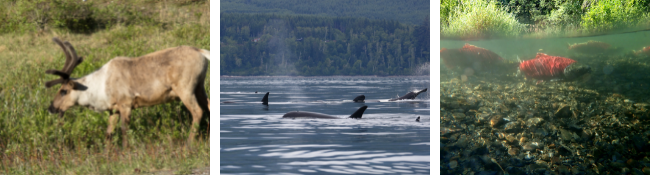
“We have no time to waste with the rampant global biodiversity crisis and declining wildlife populations across the province. CPAWS-BC is looking forward to working collaboratively with the coalition partners and all levels of government to improve the state of the lands, waters and wildlife across BC.” – Tori Ball, Senior Campaigner.
This Biodiversity Day, join the thousands of BCers defending biodiversity. Sign-up to receive the latest updates, nature news and actions from CPAWS right to your inbox.
Subscribe
Donate
For interviews, contact:
Tori Ball, Senior Campaigner
Canadian Parks and Wilderness Society, BC Chapter
tori@cpawsbc.org
(604) 685-7445 x24
FOR IMMEDIATE RELEASE
Dire Situation for Fish, Wildlife, and Habitat in British Columbia Leads to the Formation of a New Coalition Calling for Change
New Coalition Calls on Government to Re-establish B.C. as a World Leader in Fish, Wildlife and Habitat Management
May 13, 2021
Traditional territories of the Coast Salish peoples/Vancouver, BC — A new province-wide coalition is calling on the government to re-establish the province as a world leader in fish, wildlife, and habitat management. The Fish, Wildlife, and Habitat Coalition represent a diverse array of interests that all share common concerns about the decline of fish, wildlife, and habitat including environmental and conservation organizations, hunting and angling guides, wildlife viewing, ecotourism, naturalists, hunters, anglers, and trappers.
Together, the group is seeking a commitment from the province to invest in healthy landscapes, waters, and fish and wildlife stewardship, in partnership with First Nations and communities. The Fish, Wildlife, and Habitat Coalition recognizes and respects the constitutionally protected rights of Indigenous peoples and the collective commitment to advancing reconciliation.
The Fish, Wildlife, and Habitat Coalition will work to promote solutions guided by science and Traditional Ecological Knowledge for improved management of species and habitat in B.C. These will include:
- Creating legislation that protects fish, wildlife, and habitat;
- Integrating the needs of fish, wildlife, and habitat into new and existing legislation;
- Increasing funding and creating a new governance model for fish, wildlife, and habitat management.
By championing solutions for conservation including management, restoration, and protection, the Coalition aims to help B.C. strengthen its communities and economy. These outcomes will be based on healthy and resilient ecosystems and abundant fish and wildlife with self-sustaining populations.
Quotes from coalition members and representatives:
“We’ve seen collaborative efforts like this coalition moving forward on important issues in BC, and we have no time to waste with the rampant global biodiversity crisis and declining wildlife populations across the province. CPAWS-BC is looking forward to working collaboratively with the coalition partners and all levels of government to improve the state of the lands, waters and wildlife in the Sea to Sky and across BC.”
Tori Ball, Senior Campaigner, Canadian Parks and Wilderness Society – British Columbia
“The diverse make-up and size of the Fish, Wildlife and Habitat Coalition strongly demonstrates just how important fish and wildlife are to the overwhelming majority of British Columbians.. Locally, the Sea to Sky region faces numerous fish and wildlife challenges. Our mountain goat populations are struggling and Chinook salmon are nearly extinct in the Birkenhead River. However, there are also some glimmers of hope like the reintroduction of elk at the heads of coastal inlets, and reports that grizzly bear numbers are finally increasing west of Highway 99 – evidence that with a bit of help, wildlife can recover.”
Johnny Mikes, Field Director, Coast to Cascades Grizzly Bear Initiative
“This coalition was formed in response to the growing concern over the province’s failure–over successive governments–to adequately deal with a mounting crisis of biodiversity loss and cumulative impacts on ecosystem health. I’m excited about the work we can do together to restore, over the long-term, the sustainability of fish and wildlife populations and habitat in British Columbia.”
Tim Burkhart, Yellowstone to Yukon Conservation Initiative
“I am pleased to see so many groups come together for the benefit of fish, wildlife and habitat. They have been taken for granted for too many years. Abundant fish and wildlife should be the indicator of a healthy forest.”
Scott Ellis, Guide Outfitters Association of British Columbia
“In a generation of people, B.C. has gone from being a global leader in fish, wildlife and habitat conservation, to a landscape which can be characterized as at risk, endangered and extirpated. Whether it’s salmon, steelhead, old-growth, moose, or caribou, B.C. has never been in such poor shape. The coalition represents a broad realization that we need to set aside what divides us and work together on what’s important: the conservation, restoration, and protection of fish, wildlife and habitat.”
Jesse Zeman, B.C. Wildlife Federation
“When such a diverse group of organizations can come together and work collaboratively, you know the issue is important. For British Columbia to remain Super, Natural™, fish and wildlife must take priority and be recognized for what they are; essential for healthy, lasting ecosystems.”
Katherine MacRae, Commercial Bear Viewing Association
– 30 –
Media Contacts:
Tim Burkhart, Yellowstone to Yukon Conservation Initiative (250) 719-9614 tim@y2y.net
Scott Ellis, Guide Outfitters Association of BC (604) 328-4686 ellis@goabc.org
Jesse Zeman, B.C. Wildlife Federation (250) 878-3799 jessezeman@gmail.com
Kathy MacRae, Commercial Bear Viewing Association, (604) 762-7751 kathy@bearviewing.ca
Context: British Columbia is known all over the world for its diverse landscapes and unparalleled biodiversity that once included plentiful populations of fish and wildlife.
However, a lack of investment in fish, wildlife, and habitat management, combined with the impacts of resource extraction and a growing human population has severely reduced the number of species and is jeopardizing the future of B.C.’s natural legacy.
Our mountains, rivers, lakes and forests are suffering from decades of mismanagement and unsustainable use.
Habitat degradation and loss have reduced our landscapes’ ability to produce and sustain abundant fish and wildlife as they once did. The abundance of fish and wildlife – creatures large and small; iconic and obscure; common and rare – that the province once had has dwindled to scarcity in less than a single person’s lifetime.
This is concerning for a wide range of people, including First Nations, butterfly enthusiasts, bird watchers, big game hunters, and wildlife viewers. We now have several red-listed species, record low salmon and moose populations, and declining mountain sheep and mule deer populations in parts of the province. This scarcity of fish and wildlife has increased social conflict and threatens food security and tourism-related jobs.
About the Fish, Wildlife and Habitat Coalition: Partners from 25 organizations, representing a total of more than 273,000 British Columbians and more than 900 businesses across B.C.
Fish, Wildlife and Habitat Coalition members include:
- Backcountry Hunters and Anglers British Columbia
- BC Federation of Fly Fishers
- BC Fishing Tourism Association
- BC Trappers Association
- B.C. Wildlife Federation
- Canadian Parks and Wilderness Society – BC Chapter
- Fraser Valley Angling Guides Association
- Fraser Valley Salmon Society
- Georgia Strait Alliance
- Commercial Bear Viewing Association of BC
- Coast to Cascades Grizzly Bear Initiative
- British Columbia Federation of Drift Fishers
- Ducks Unlimited Canada
- Guide Outfitters Association of British Columbia
- Outdoor Recreation Council of BC
- Hunters for BC – SCI
- The Steelhead Society of BC
- Traditional Bowhunters British Columbia
- United Bowhunters
- Watershed Watch Salmon Society
- Wild Sheep Society of British Columbia
- Wilderness Tourism Association of BC
- Wildsight
- Wildlife Stewardship Council
- Yellowstone to Yukon Conservation Initiative
Join us to make nature a priority
Dear Friend,
You’ve donated to safeguard BC’s lands and waters before. I’m so grateful that you’ve been fighting alongside us to protect wilderness. Now, I’m hoping that you’re ready to take the next step by becoming a monthly donor. Can you help us hold governments accountable to their new promises?
This spring, we need about 100 new donors to pledge $10 per month for nature. I would be so grateful if you can get us started by signing up right now.

With staff now working from their homes across the province, we’ve been able to lower our costs and keep people close to the communities where we work. We’re building on recent success securing new conservation jobs and increased funding for BC Parks, and we’ve got big plans for the summer.
There’s so much to be excited about in 2021 — if we can keep governments on track and focused on nature-based solutions to economic recovery, the climate crisis, and biodiversity loss.
Will you help us keep this incredible momentum going by becoming a monthly donor? It only takes a few clicks, and you’ll be a part of a movement to ensure that lands and waters are protected now, and well into the future.
Please join us now.
Yours in conservation, Sarah McNeil
Development Manager