
The Discovery
Deep in the waters of B.C.’s North Coast lies something once thought lost to time.
The year is 1987, and a group of scientists are mapping the seafloor of Hecate Strait when they encounter something remarkable: towering structures rising from the ocean floor. They have just observed living glass sponge reefs.¹
Until then, glass sponge reefs were thought to have gone extinct approximately 40 million years ago.
In the decades since, smaller reef complexes have been found throughout the Strait of Georgia, Átl’ḵa7tsem / Howe Sound, and Southern Alaska. 2
What makes the reefs of Hecate Strait and Queen Charlotte Sound stand out is their sheer size and age.
These reefs are an estimated 9,000 years old,3 having begun to form shortly after the last ice age. Together, these reefs cover a total area of 1000km. The largest reaching 35km long, 15km wide, and 25m tall. 1
What Is A Glass Sponge, Anyway?
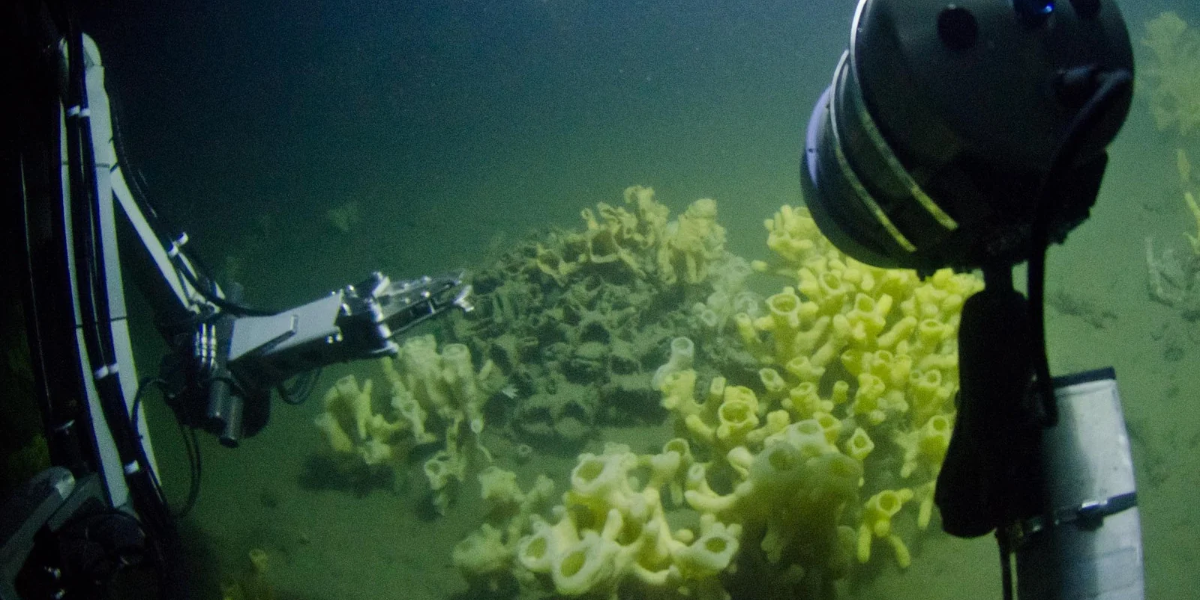
Glass sponges are marine animals that are typically found in the cold, dark waters of the deep ocean.
As their name suggests, they have intricate skeletons made of silica, a primary component of glass. They are slow-growing, with an average growth rate of only 1-2 centimeters a year, 4 and live up to 200 years.1
How Can a Reef Be 9,000 Years Old?
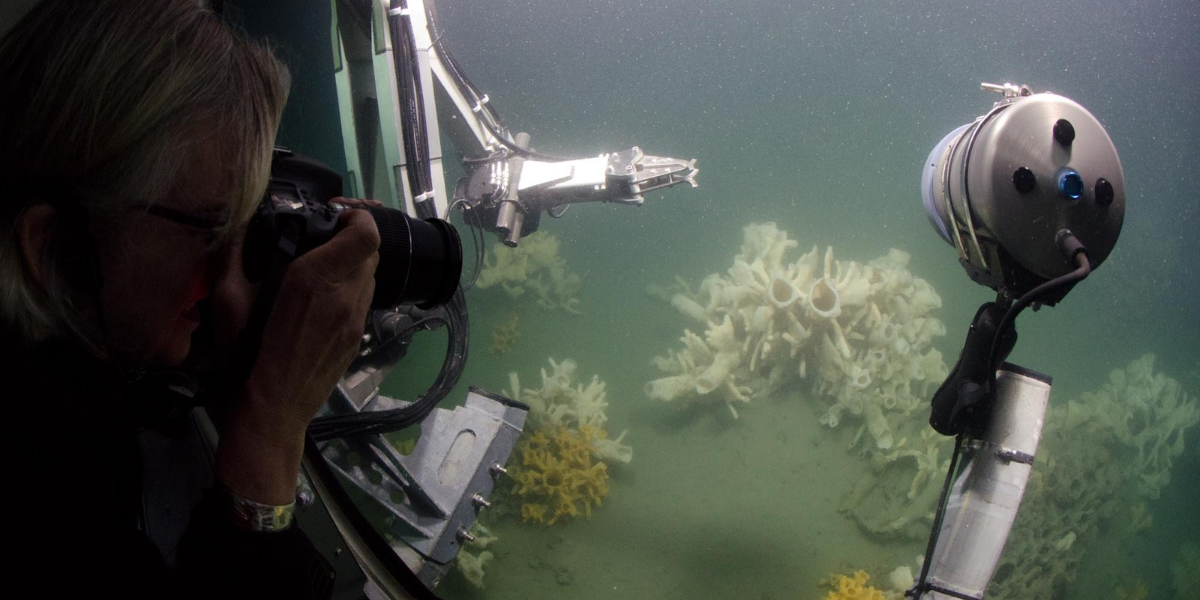
Reef-building glass sponges have rigid skeletons that remain intact long after the sponge dies.
Generation after generation, new sponges grow upon the skeletons of those that came before them, gradually forming towering reefs over thousands of years.5
While glass sponges are found throughout the world’s oceans, only three species are known to build reefs. 6
 Why Are They Important?
These ancient ecosystems help maintain a healthy and productive ocean in several ways:
- Homes for marine life: Glass sponge reefs provide critical habitat for over 120 marine species, including rockfish, prawns, and crabs.1
- Housekeepers of the ocean: Glass sponge reefs are nature’s underwater filtration systems, continuously filtering seawater and removing bacteria.3
- Nutrient recyclers: As glass sponges filter seawater, they capture carbon and help move nutrients through their marine ecosystem, supporting life in our ocean. 3
Ancient, But Fragile.
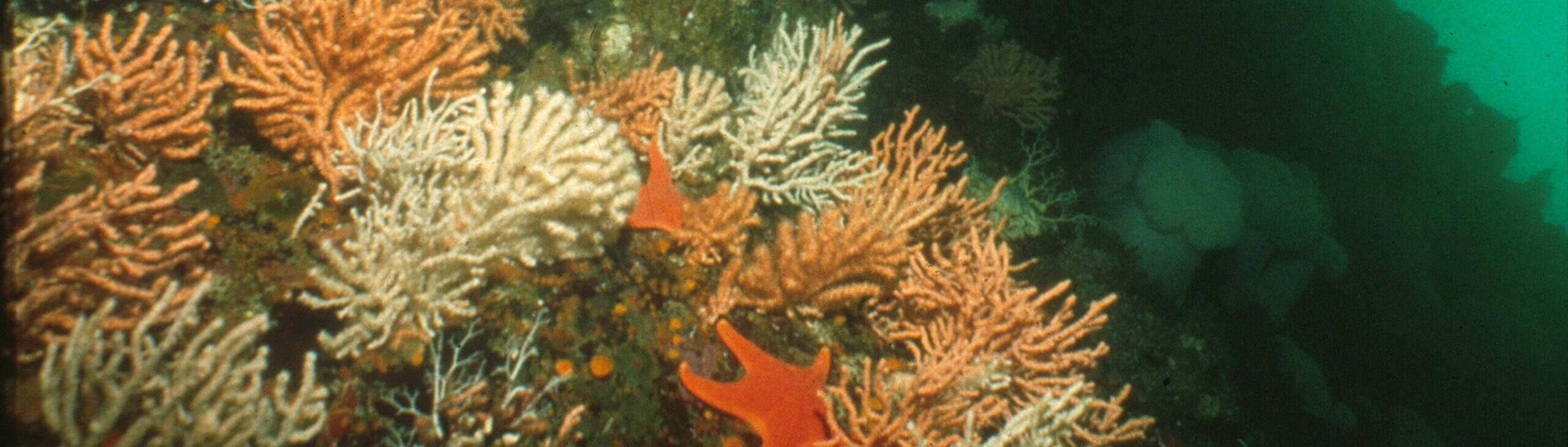
Despite having persisted for thousands of years, these ancient reefs are incredibly fragile. Their delicate glass skeletons can be easily damaged, and their slow growth rate makes recovery difficult.
What has taken thousands of years to build can be damaged in moments.
So, how well protected are glass sponge reefs in BC? Find out in our next blog!
Want to take a deeper dive? Explore our interactive Sea of Glass story map to discover more about these living relics of an ancient ocean.
Works Cited
1 Hecate Strait/Queen Charlotte Sound Glass Sponge Reefs Marine Protected Area (HS/QCS MPA)
4 Pacific glass sponges and reefs | Pacific Region | Fisheries and Oceans Canada


