If you’re anything like me, you have probably daydreamed about throwing your phone off a building. In 2026, the algorithms we’re constantly fed on our phones favour conflict and life online can leave you with the impression that people everywhere have their pitchforks out. For me, the 2-Eyed Seeing Land Ceremony was a perfect reminder of why it’s so important to connect offline with real people in nature.
A Scattered Morning
On May 16th, my thoughts were scattered. I’d spent the morning scrolling through news, stressing about traffic and trying to predict the day. I braced myself for boring small talk at the meeting location but was pleasantly surprised. I first met the cheerful volunteer for the event, Darcy, followed by the lovely co-hosts, Henri Michelle and Don Gayton and soon the room was filled. During our carpool ride, an elderly couple on their 14th Meadowlark excursion filled the jeep with quips and laughter, especially amused by our driver Kasey’s use of the word “boot” in place of “trunk”.
Into the Landscape
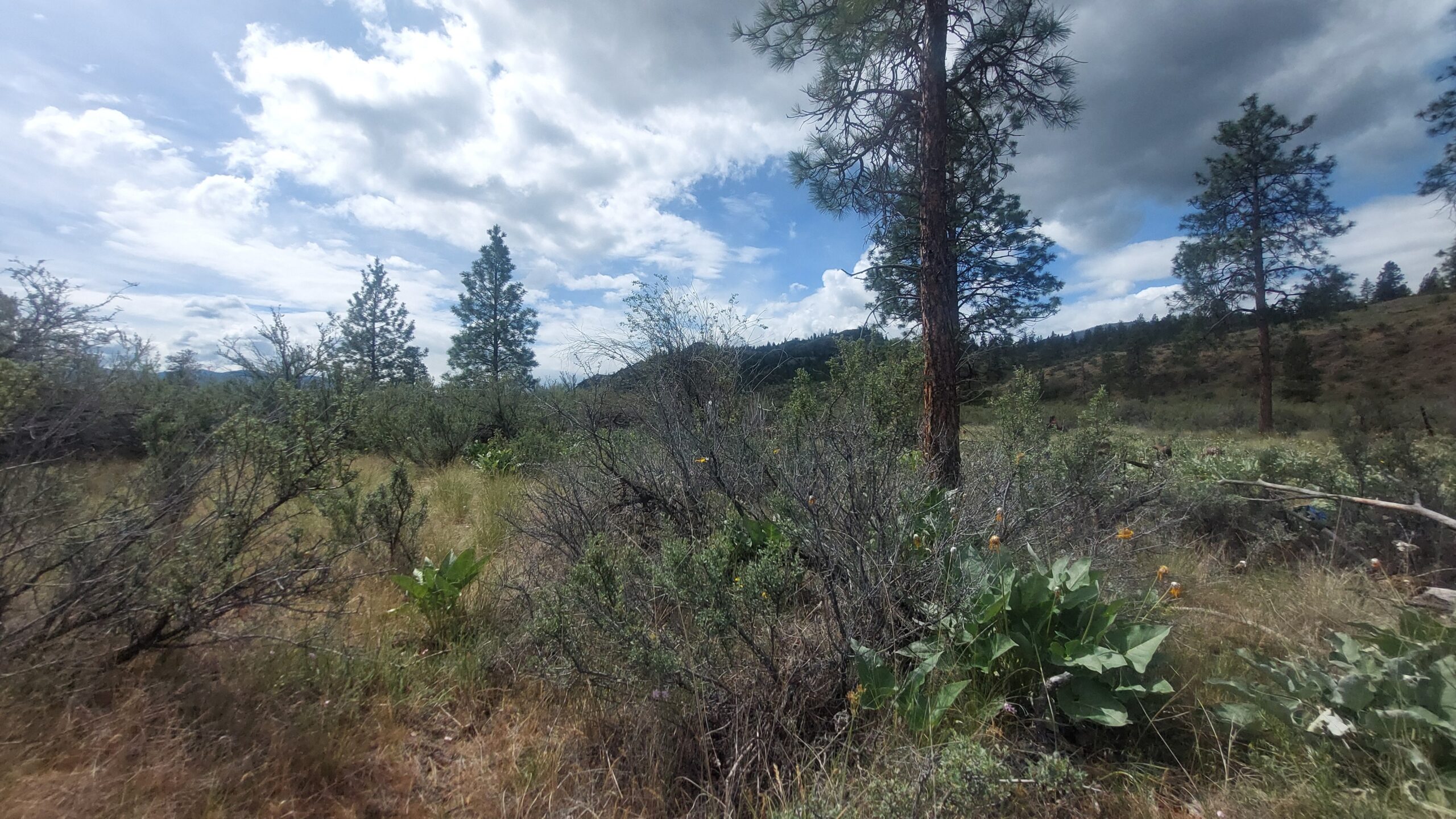
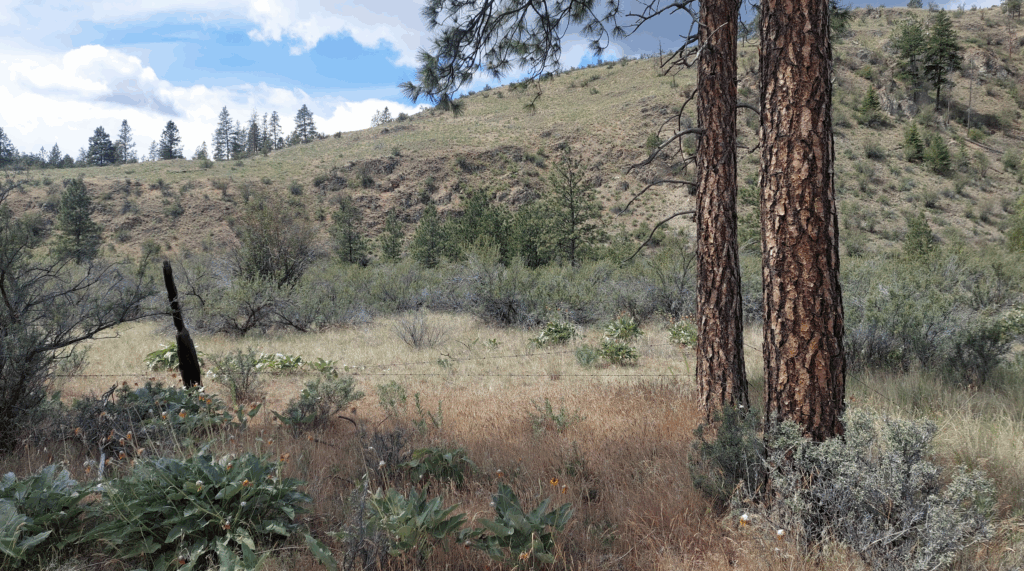
We arrived at the Meadowlark and began making our way into nature. The weather was teetering from sunny to rain, and ponderosa pine and antelope brush scattered the landscape. The excited chatter gradually gave way to peaceful silence and birdsong. The shift was a welcome change that carried us to an opening where we formed a circle. Henri went around the circle, smudging every person in the group. I closely copied the movements the people before me made, as this was my first time and I was unsure of what to do with my hands. He then sang and drummed a beautiful song and I was in awe of the inflection in his voice. Henri and Don both spoke about their backgrounds, their love for nature and Indigenous-settler relations. People were encouraged to share their perspectives and comments ranged from hopeful to heavy.
Time to create
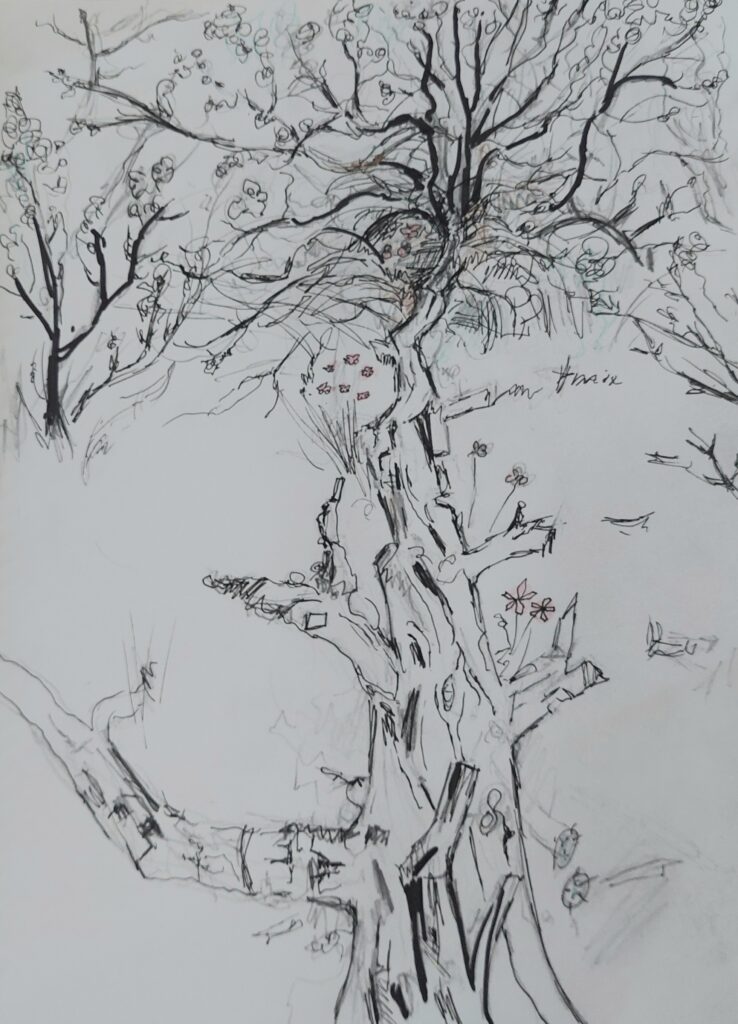
When it came time to leave the circle for a creation period, I felt inspired and free of the internal chatter I had in the morning. I found a fallen tree to sit on facing an antelope brush accented with tiny pink flowers. I scribbled branches and petals until it was time to return to the circle. People shared their musings, writings, paintings and sketches. A birder had identified 20 different types of birds since our arrival, a comment that caused me to reflect on what other things I may miss routinely. Hesitantly, I shared my sketch but was glad that I did. After a bit more discussion, it was time to return.
Heading home
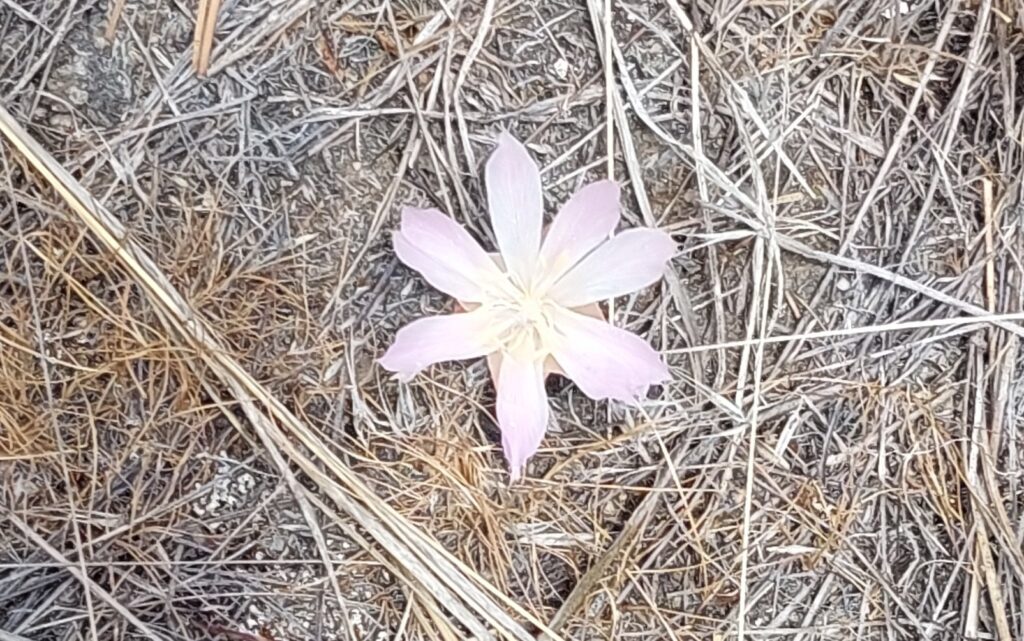
The group was in no rush to leave, and the walk back was much slower than the walk to. Another group member and I spotted a perfect bitterroot flower, and Don regaled us with information on the species. Once back, it was apparent that still many people did not want the event to end. Some reluctantly left, while others met at the nearby coffee shop to continue conversations.
My trip home was so different than my trip out. The worries I had going in were replaced by reflections and ponderings. I felt curious about the benefits of working with our local ecosystems instead of against them. In a world often characterized by disconnect, “touching grass” has become a prescription. I am very thankful to Henri and Don for putting this event together, their volunteers, and the group members who made the 2-Eyed Seeing Land Ceremony such a moving experience.
Last fall, I read The Creative Act by music producer Rick Rubin about how creative expression is the key to a meaningful life. As a conservation campaigner, I am constantly thinking about how to get people who love nature to advocate for it. But in my day-to-day that looks like conversations and emails, not painting or drawing.
I started wondering if there was something I was missing. How could we connect advocacy for nature with the creativity that brings us joy? So I started dreaming up something new and different: Artvocacy.
What is Artvocacy?
Artvocacy is a program that brings together emerging and amateur artists across the Okanagan to use their creative practice to advocate for nature. Through education, experiences, artistic masterclasses and mentorship, participants develop original projects that connect their artistic voice to real conservation issues. They also learn how to use that work to engage their communities and decision-makers. The program is free for all participants and culminates in a public exhibition in the fall.
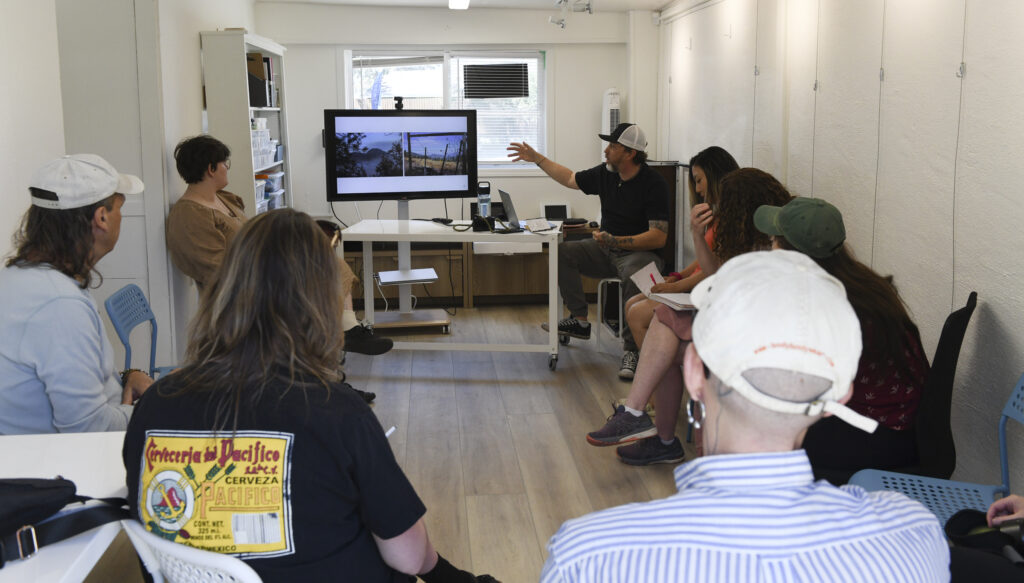
Starting with education, participants are welcomed through a month-long series of webinars that build on one another about protected areas, Indigenous-led conservation, species-at-risk, how government works, public advocacy, nervous system support for working in the environmental world, media relations and storytelling.
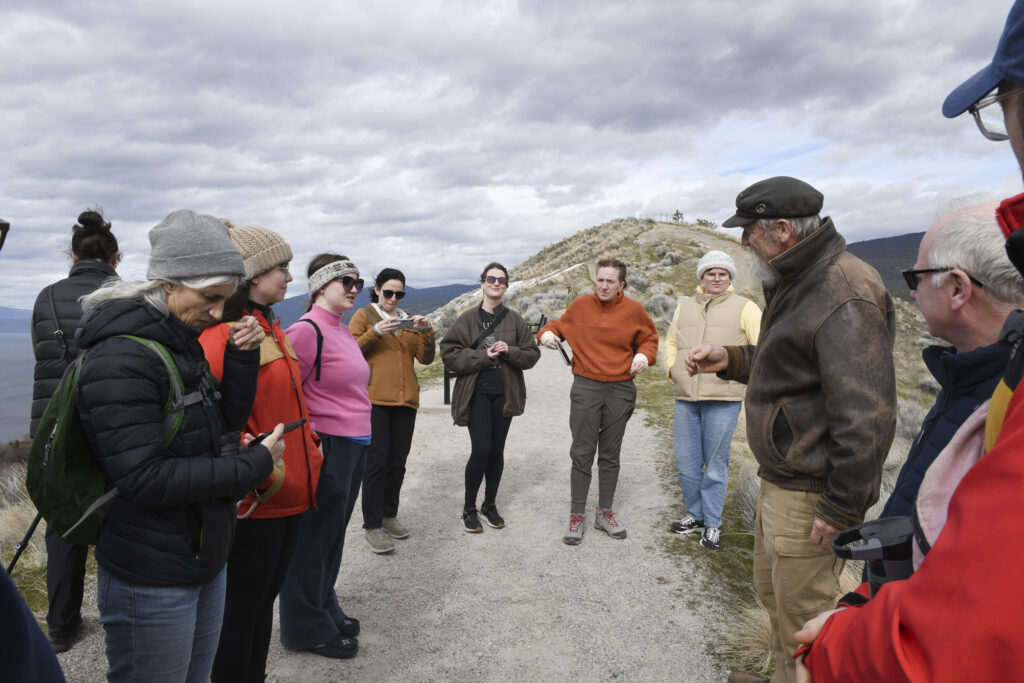
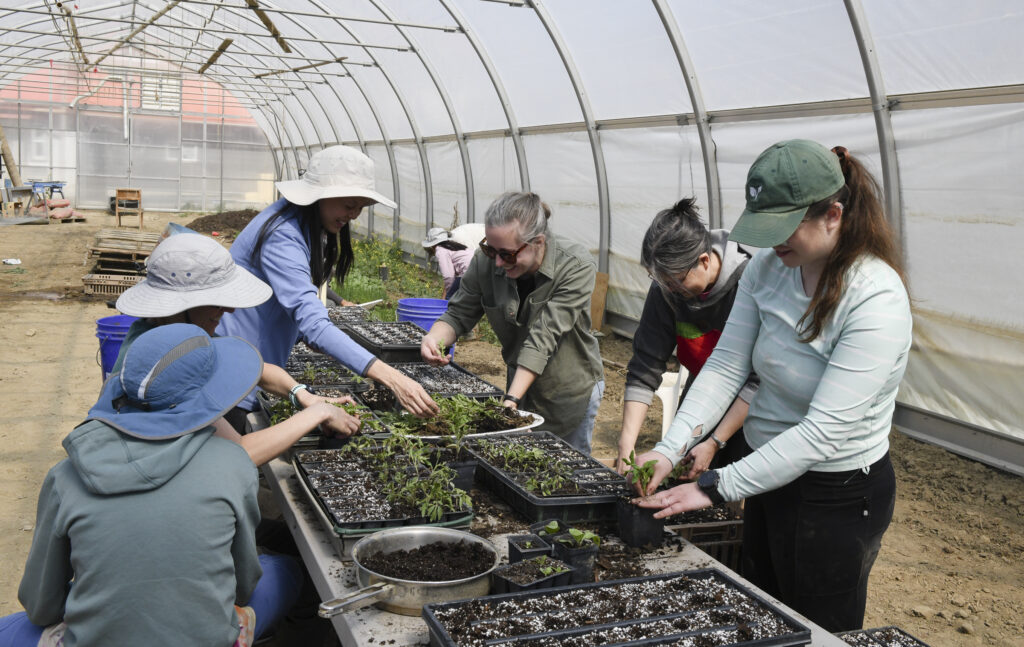
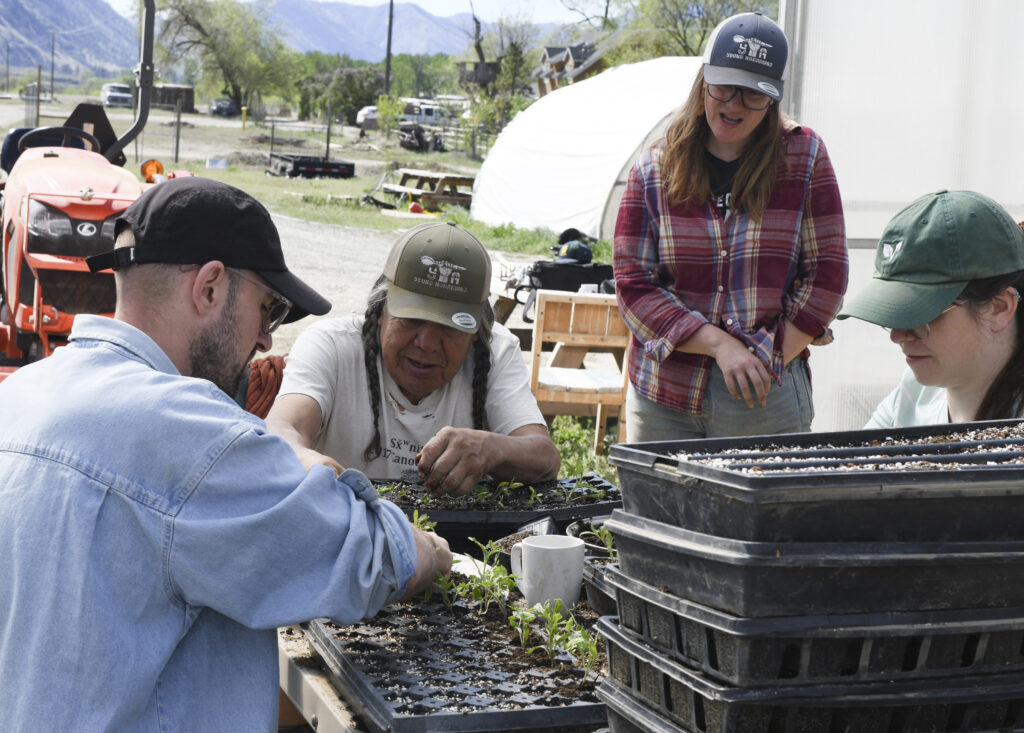
Woven throughout are in-person field trips that get participants out of their screens and into their bodies. A BC Nature guided walk with the South Okanagan Naturalist Club took participants to Munson Mountain Park. Participants also visited NTAMTQEN Community Garden in Lower Similkameen Indian Band territory and learned about Indigenous food sovereignty. Coming up next is a walk with the Central Okanagan Naturalist Club to explore water management issues in the Bellevue Creek watershed.
Then come the artistic masterclasses—and this is where I’ve seen some of the most unexpected magic happen. Professional artists host workshops in writing, visual art and photography, giving participants space to hone their technical skills, experiment with new mediums and get feedback on their work.
It all comes together when the program culminates in a final exhibition where participants present their keystone projects after three months of creation over the summer. Decision-makers and community members like you will be invited to come together and see what our artists created.
Munson Mountain Park nature walk with BC Nature and South Okanagan Naturalist Club
NTAMTQEN Community Garden field trip
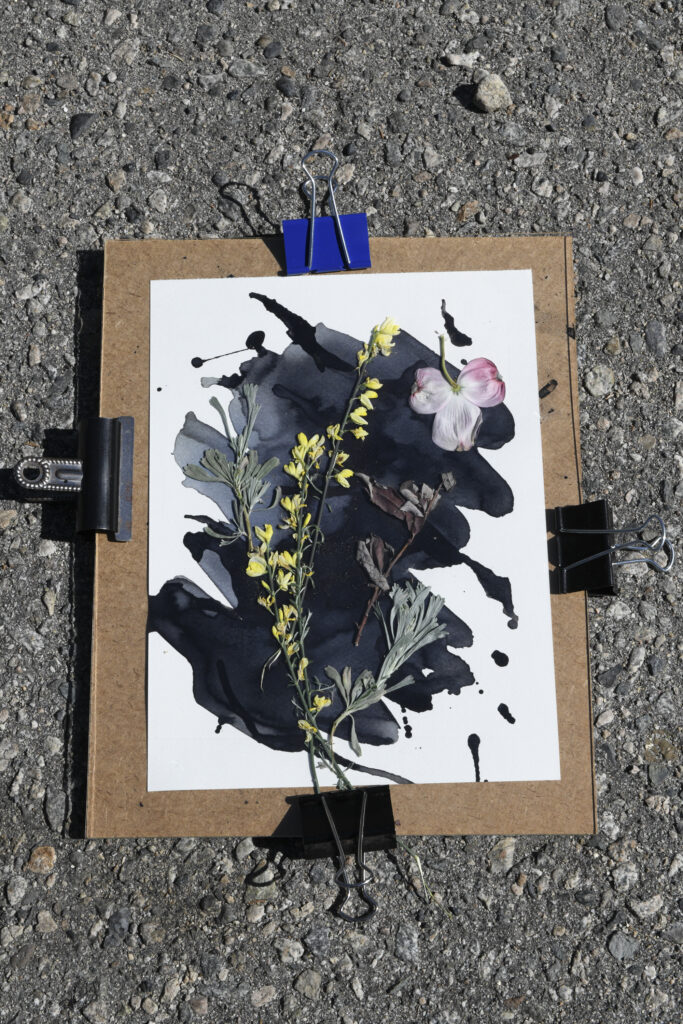
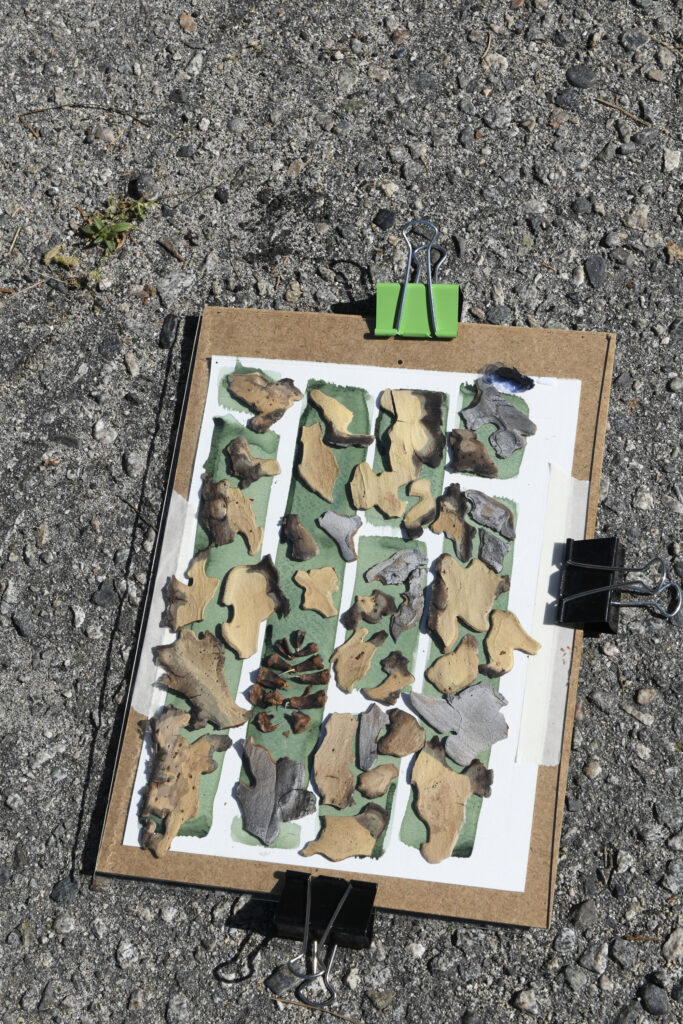
Photography masterclass – Cyanotype workshop
How it came together
Artvocacy came to life through the enormous support of Aleesha Switzer, who gave me the trust and the space to try something new. Its shape and structure drew inspiration from CPAWS-BC’s Young Leaders in Conservation Program, where participants attend webinars on conservation and advocacy, learn about lobbying and ultimately travel to Victoria to meet with MLAs in person.
Why the Okanagan?
The Okanagan felt like the obvious home for the pilot year of the program. CPAWS-BC and many partners have been working to make the South Okanagan-Similkameen National Park Reserve a reality for over twenty years. A memorandum of understanding was signed between the Government of Canada, the Province of BC and the Syilx/Okanagan Nation in 2019. This special place is so close to being protected and we can’t stop now.
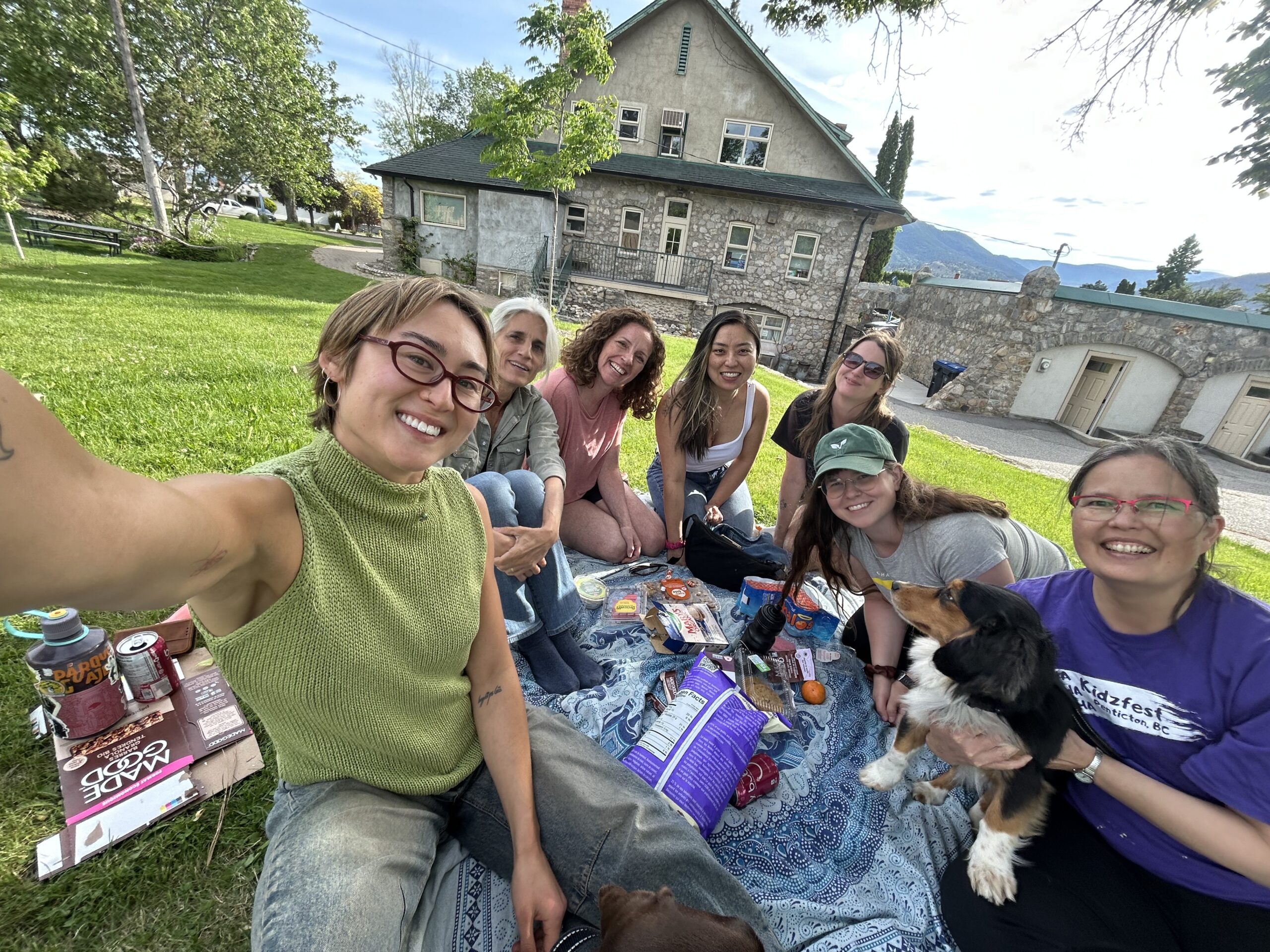
We also found a great partner for this program in the Penticton and District Community Arts Council (PDCAC). Tristan, the Executive Director, has helped bring Artvocacy to life! There is a bustling, vibrant arts community in Penticton and across the Okanagan and Tristan knew exactly how to plug us into it. We even rented a space at the PDCAC House that acts as the program hub, where artists gather to create, watch webinars and attend masterclasses. We are also so fortunate to have the support of the Central Okanagan Arts Council throughout.
What I’m learning
The most moving thing so far is seeing that the program is having a real impact. Participants are taking risks I didn’t expect. One participant said they weren’t a writer — “at least not an English writer” — and then published an op-ed in Castanet on World Migratory Bird Day.
“Artvocacy really helped me understand how activism and advocacy work. It’s like a road map guiding you through the maze of public advocacy. How to use art to illustrate your concerns about the natural world and conservation.”
-Lyse Deselliers
Art and advocacy don’t have to look the same. You don’t have to paint a picture that literally explains why protecting 30% of BC by 2030 matters. You just have to find the subtle through-line that connects them. Take Lyse’s op-ed: you wouldn’t think cats killing birds connects to 30×30 or the South Okanagan-Similkameen National Park Reserve. But it does. We need safe, protected, connected habitat for migratory birds to rest, eat and live.
What’s next
I would love to see Artvocacy reach more rural places across BC. I continuously hear from people I meet that this program is so needed by artists! There aren’t enough support and opportunities to deepen their creative practice whilst learning about the government, how to advocate for nature and how to become more politically engaged. Merging art with the environmental community has never been more important.
“I’m so grateful for my experience with Artvocacy. I have felt a renewed passion and drive towards creating art that promotes the enjoyment and protection of our beautiful surroundings.”
-Kait Dean
A closing thought
The first law of thermodynamics states that energy can neither be created nor destroyed, only transformed. Which means every input must become an output. People are constantly absorbing emotion, stress, noise and expectations. When there is nowhere for that energy to go, entropy increases. It’s no wonder many of us are experiencing mental fatigue, anxiety and burnout.
This is why creativity feels therapeutic. Writing, painting, running, singing, dancing — these are outputs. Ways for your nervous system to transform what you carry rather than drown in it.
Artvocacy has been a wild ride. But I am so proud that it is happening. And that it is slowly starting to reveal itself for the impact it can truly bring about.
Photography masterclass – Cyanotype workshop
Planting seeds at NTAMTQEN Community Garden with Dixon
Photography masterclass led by Heiko Ryll and Tara Nicholson
We use cookies and other similar technologies such as pixels and web beacons (“Cookies”) for various purposes, such as to ensure our website functions properly, enhance your browsing experience by remembering your preferences and provide personalized content and advertisements.
Functional
Always active
The technical storage or access is strictly necessary for the legitimate purpose of enabling the use of a specific service explicitly requested by the subscriber or user, or for the sole purpose of carrying out the transmission of a communication over an electronic communications network.
Preferences
The technical storage or access is necessary for the legitimate purpose of storing preferences that are not requested by the subscriber or user.
Statistics
The technical storage or access that is used exclusively for statistical purposes.The technical storage or access that is used exclusively for anonymous statistical purposes. Without a subpoena, voluntary compliance on the part of your Internet Service Provider, or additional records from a third party, information stored or retrieved for this purpose alone cannot usually be used to identify you.
Marketing
The technical storage or access is required to create user profiles to send advertising, or to track the user on a website or across several websites for similar marketing purposes.