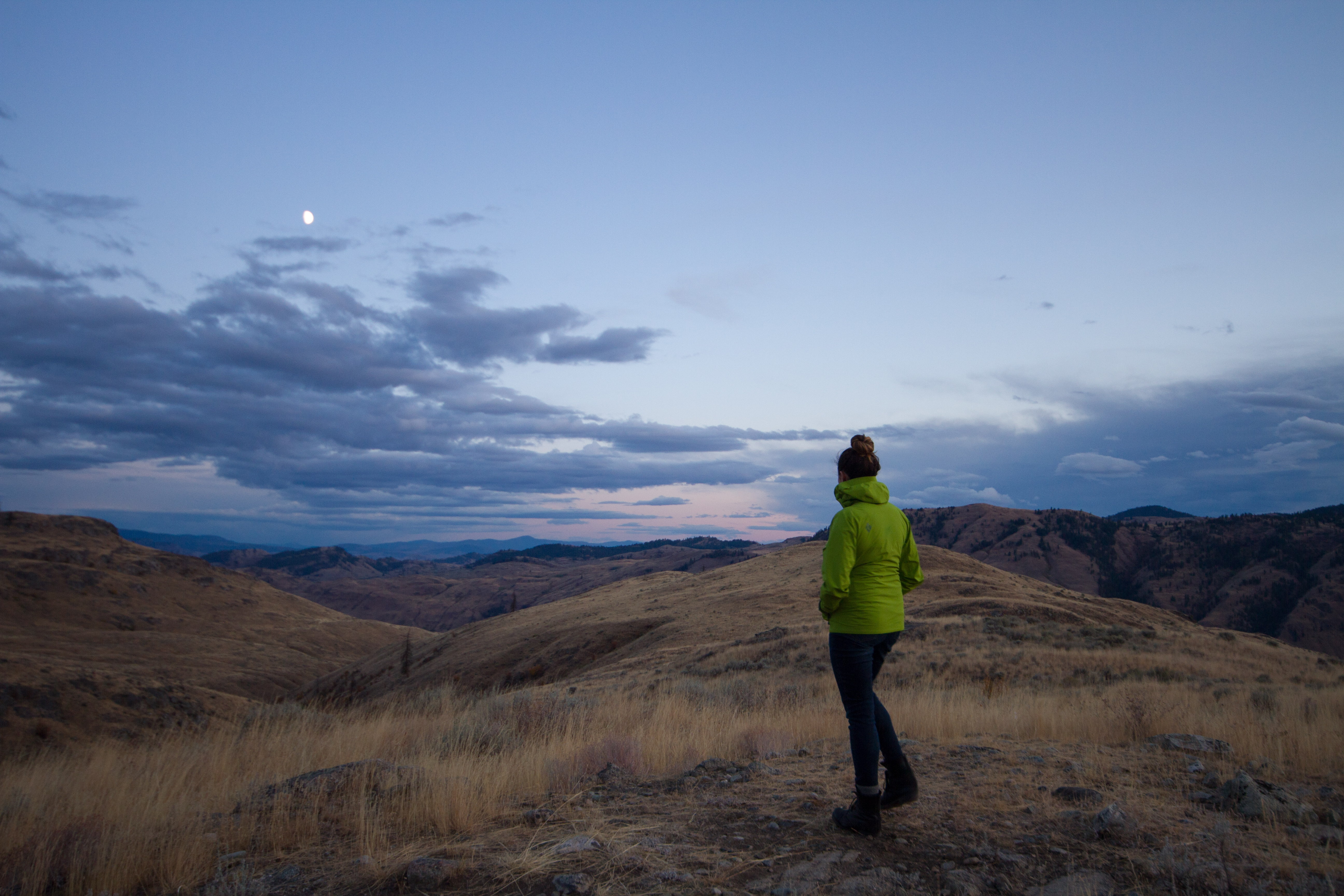
It’s been quite a year and a half! Despite many restrictions and challenges, nature has been there for us when we needed it most. Nature was ready to welcome us, enveloping us in its safe bubble where we found recreation, rest, and rejuvenation. Whether you enjoyed the greenery from your balcony or ventured into local parks and the untamed wilderness, join us in celebrating the great outdoors by sharing a photo of how you found solace in nature’s bubble!
Prizes
– One $500 MEC gift card (based on judging criteria)
– One of two $250 MEC gift cards (randomly selected at end of contest)
– One of two survival kits from BMG Industries, awarded randomly and biweekly
How to Enter
Post your photo in nature’s bubble from the last 12 months on Facebook, Twitter, or Instagram. Photos must be public so we can see them!
In your caption, tell us why nature matters to you, and what’s special about your memory.
Tag and follow CPAWS-BC and the Guide Outfitters Association of BC. Multiple entries are encouraged—up to one entry a day! CPAWS-BC: Facebook, Twitter, Instagram Guide Outfitters Association of BC: Facebook, Twitter, Instagram
Make sure that your profile is public so that we can see it. Posts must be put in a feed, unfortunately Instagram stories will not be eligible to win.
Don’t have a social media account? No problem! You can also email parks@cpawsbc.org with subject line “Nature’s Bubble Photo Contest”.
UPDATE: Contest closes on Friday, November 5, 2021. Find the full contest rules here.
For interview please contact: Skye Vallance Communications and Development Coordinator skye@cpawsbc.org 604-685-7445 ext. 22
BC’s parks get a boost to support economic recovery
Economic recovery package announced Sept. 17 includes support for BC Parks trails, campgrounds and facility upgrades
Sept. 17, 2020
Unceded Coast Salish Territory/Vancouver, BC – The Canadian Parks and Wilderness Society – British Columbia (CPAWS-BC), is welcoming the new injection of money for BC’s provincial parks. Today, the Premier announced a $5 million increase to BC’s provincial parks as part of a $1.5 billion investment to help build BC back better.
“BC Parks are the backbone of outdoor recreation in the province, which has seen a spike in interest over the past few years. This five million dollar bump for BC Parks will go a long way to improve trails, campgrounds and backcountry infrastructure,” said Tori Ball, Terrestrial Campaigner for CPAWS-BC. “Funding for parks has far-reaching benefits for nature and wildlife that are in crisis globally, as well as providing opportunities to relax and adventure close to home.”
Data shows that park usage has been steadily rising throughout the spring and summer of 2020. This is on top of annual increases in visitation to BC Parks, which has risen from 21 million in 2014/15 to over 26 million in 2018/19. A recent survey conducted by CPAWS-BC found that 89% of respondents were more or as likely to travel to provincial parks in the next 12 months, compared to last year.
That same study found that 94% of respondents agree or strongly agree that local businesses near BC’s provincial parks benefit from park visitors. “Our research demonstrates that BC Parks provide economic benefits to communities through visitor spending, in addition to providing jobs in conservation and tourism,” said Ball.
“This injection of extra resources will help the provincial park system to adapt to the continued rise in visitors, and mounting environmental challenges,” continued Ball. “Continued increases to the BC Parks budget are integral to a well managed, resilient parks system. Proper funding will ensure that these areas can support people and wildlife, and adequately protect and prepare for the years to come.”
CPAWS-BC is also encouraged to see funding and resources for watershed restoration to support wildlife recovery and jobs for communities hardest hit by the pandemic.
-30-
For interview please contact: Skye Vallance Communications and Development Coordinator skye@cpawsbc.org 604-685-7445 ext. 22
Key facts:
✔ A boost for BC Parks: $5-million to maintain and expand trails, campgrounds and other necessary park infrastructure.
✔ Money for restoration: Nearly $50-million will fund wetland conservation and species conservation, employing 1,000 people, focused on those hit hardest by the pandemic.
✔ Cleaning our coast: Nearly $15-million towards the removal of marine debris and derelict vessels.
✔ Conservation jobs for youth: The $1.8 million Youth Employment program is creating 25 new youth park positions and 18 positions in the conservation officer service.
For interviews, contact: Bruce Passmore, Executive Director bruce@cpawsbc.org (604) 685-7445 x23
Conservation groups welcome federal assessment process for Castle coal mine
For Immediate Release
August 21, 2020
Unceded Coast Salish Territory/Vancouver, BC — This week, Canada’s Federal Environment Minister announced that Teck Resources’ proposed Castle coal mine will undergo a federal environmental assessment. This assessment is a necessary step to ensure the safety of local wildlife, communities and downstream watersheds, including in the USA.
“The Castle coal mine’s potential negative impacts on important grizzly bear and other wildlife populations are particularly concerning,” said Bruce Passmore, Executive Director of the Canadian Parks and Wilderness Society – British Columbia. “This is an important connectivity zone between BC, Alberta and the US. We applaud the federal government for making the correct decision and ordering an environmental assessment.”
Teck Resources coal mines have been under fire for high levels of heavy metals, in particular selenium, being released into waterways in the Elk Valley. Earlier this year, the US Environmental Protection Agency demanded that the BC government hand over selenium data and explain why the company has been allowed to exceed guidelines for toxic heavy metals. Multiple Indigenous nations in Canada and the USA have also expressed concern.
“Given the complexity of values and the history of pollution in the area, combined with the fact that BC still doesn’t have its own endangered species legislation, it’s critical that this project is looked at carefully,” said Passmore. “A federal assessment will consider the mine’s effects on Indigenous rights, local communities, and threatened species like westslope cutthroat trout and white sturgeon.”
–30–
For interviews, contact: Bruce Passmore, Executive Director bruce@cpawsbc.org (604) 685-7445 x23
For interviews, contact: Tori Ball, Terrestrial Campaigner Canadian Parks and Wilderness Society, BC Chapter tori@cpawsbc.org (604) 685-7445 x24
FOR IMMEDIATE RELEASE
August 5, 2020
Traditional territories of the Coast Salish peoples/Vancouver, BC — The Canadian Parks and Wilderness Society, British Columbia (CPAWS-BC) is applauding a new initiative to hire young people into conservation jobs in BC. These new jobs, announced today by Environment Minister George Heyman, will help to safeguard nature across the province.
“We’re happy to see more conservation jobs being created for young people at a time when our park system needs more support,” says Tori Ball, Terrestrial Campaigner with CPAWS-BC.
“In the short term, these new jobs will help manage the impacts of increasing visitation on the outdoor places we love so much, by addressing long standing capacity issues within BC Parks,” she adds.
BC’s provincial parks were forced to shut down this spring due to concerns with understaffing and overcrowding, following a recent budget cut to operations earlier this year. Decades of underfunding to BC Parks has created a concerning shortage of staff as well as a significant backlog of maintenance issues and major delays in management planning for parks.
“These new temporary positions will help provide much-needed capacity to support overworked park rangers, which will better safeguard nature and improve people’s experiences in the outdoors,” says Ball.
“We hope to see continued investment in nature-based jobs and a commitment to a longer-term capacity increase for BC Parks, as part of the overall strategy to recover the province’s economy,” she adds.
–30–
For interviews, contact:
Tori Ball, Terrestrial Campaigner Canadian Parks and Wilderness Society, BC Chapter tori@cpawsbc.org (604) 685-7445 x24
Canadian Parks and Wilderness Society – British Columbia Chapter (CPAWS-BC) protects wilderness in every corner of BC and deep into the ocean. CPAWS-BC supports the creation of large, well-managed, connected protected areas where native plants and animals thrive, now and forever; and where people and communities can live off the land and ocean without impacting the ability of future generations to do the same.
In the past 50+ years, CPAWS has played a lead role in protecting over half a million square kilometres – an area bigger than New Brunswick, Newfoundland and Labrador put together.
For interviews, contact: Tori Ball, Terrestrial Campaigner tori@cpawsbc.org (604) 685-7445 x24
New report highlights opportunity to put nature protection at the heart of economic recovery in Canada
For Immediate Release
July 15, 2020
Unceded Coast Salish Territory/Vancouver, BC — A new report from the Canadian Parks and Wilderness Society (CPAWS) recommends that nature protection is put at the heart of Canada’s COVID-19 recovery strategies. The report highlights the enormous potential of BC’s provincial parks to provide accessible and affordable outdoor activities, and outlines urgent challenges posed by decades of underfunding.
“It’s become very clear that BC’s parks are essential to our health and well-being. Safe, accessible outdoor recreation in parks is a proven way to boost mental health and reduce stress,” says Tori Ball, Terrestrial Campaigner with CPAWS-BC.
“Unfortunately, decades of funding for BC’s parks has left communities with inequitable access to nature, and continues to put wildlife at risk,” she says.
The BC Parks budget was cut by 4% this year, exacerbating issues such as understaffing across the province. This has restricted or cut core functions such as monitoring and enforcement, research, and education.
The provincial and federal governments are making decisions on spending to restart the economy and recover from the economic downturn caused by COVID-19. CPAWS-BC is advocating for an investment of economic recovery funding into BC’s parks to better support the needs of communities across the province.
“This is our chance to get it right. We know that nature conservation is a driver of economic growth and provides essential community benefits that help build a resilient global economy,” says Ball.
”Now more than ever, we need to invest in these places so that our communities will be more resilient and better supported in the long run,” adds Ball.
CPAWS-BC’s recommendations to the Government of British Columbia:
Invest immediately in BC Parks, increasing staff capacity for visitor management, ecological monitoring, and management planning to better recognize the critical role that parks play in supporting our health, our communities, and our environment.
Support Indigenous-led conservation initiatives that enable reconciliation with Indigenous nations, protection and recovery of species at risk, and build sustainable long-term jobs in rural and remote communities
–30–
For interviews, contact: Tori Ball, Terrestrial Campaigner tori@cpawsbc.org (604) 685-7445 x24
Unceded Coast Salish Territory/Vancouver, BC – Today, the Minister of Fisheries, Oceans and the Canadian Coast Guard, the Honourable Bernadette Jordan, announced that Canada has joined the United Kingdom and other countries in the Global Ocean Alliance. Canadian Parks and Wilderness Society – British Columbia (CPAWS-BC) applauds Canada’s active role in the protection of at least 30 percent of the global ocean through the establishment of marine protected areas (MPAs) and other effective area-based marine conservation measures by 2030.
In partnership with Indigenous Peoples, provinces and territories, and environmental and industry organizations, the Canadian government has made huge strides to protect almost 14 percent of our ocean. The bigger task remains to reach their goal of 25 percent ocean protection by 2025 and 30 percent by 2030.
“This is a pivotal moment for Canada as a global leader for ocean action” says Ross Jameson, Ocean Conservation Manager for CPAWS-BC. “We look forward to working with the Minister to help Canada reach 30 percent ocean protection by 2030 with effective marine protected areas in BC and beyond.”
Decades of harmful human practices including overfishing, oil and gas activities, pollution (including noise, chemicals, and plastics), and physical disturbance such as ship strikes and bottom trawling threaten ocean life and human well-being. MPA’s offer a natural solution to prevent further destruction and support a healthy ocean that will provide for us for generations to come.
By protecting entire ecosystems, MPAs can protect the full diversity of marine life and their habitats. MPAs can help depleted ocean life recover, and support sustainable fisheries. Kelp forests, eelgrass and other shoreline ecosystems can protect coastal communities and shorelines from erosion and sea-level rise.
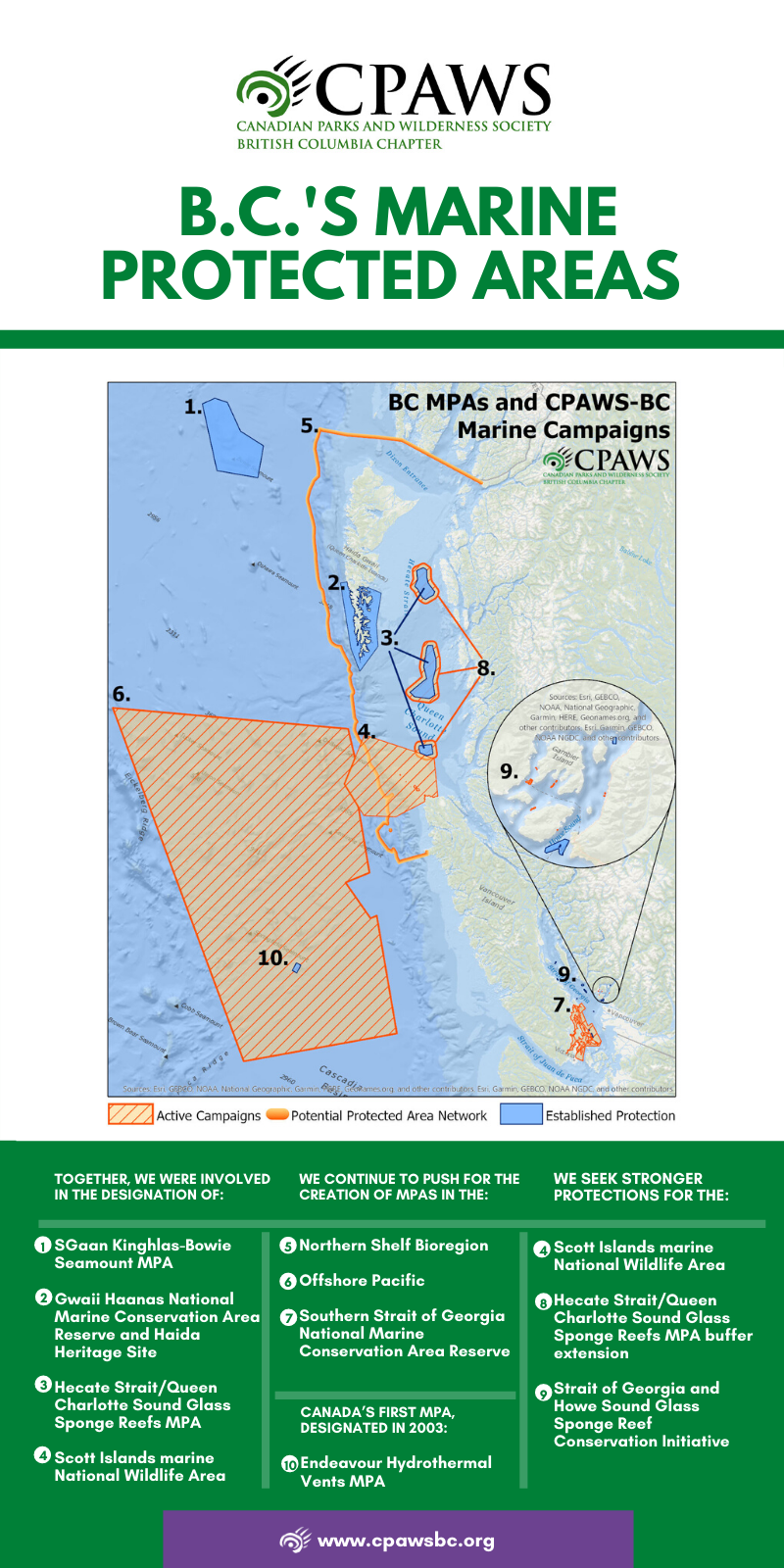
BC has been at the forefront of establishing Canada’s MPAs. The Endeavour Hydrothermal Vents MPA west of Vancouver Island was the first MPA created under the Oceans Act in 2003. The Gwaii Haanas National Marine Conservation Area Reserve and Haida Heritage Site is a prominent example of Indigenous-led, cooperatively managed MPAs in Canada.
We also have a large part to play in getting Canada to our 30 percent ocean protection by 2030 target with several MPAs in the planning process. The Offshore Pacific Area of Interest or Deepsea Oasis off the west coast of Vancouver Island will protect unique deep sea ecosystems and cover almost 2.5% of Canada’s ocean. The proposed Southern Strait of Georgia National Marine Conservation Area Reserve will safeguard important feeding waters for the critically endangered Southern Resident killer whales. Led by Indigenous communities, Canada’s first MPA network along BC’s north and central coasts will protect whales and other migrating ocean animals while also ensuring healthy coastal communities for generations.
-30-
For interview contact Ross Jameson, Ocean Conservation Manager Canadian Parks and Wilderness Society – British Columbia 778-953-2372 ross@cpawsbc.org
Duarte, C.M., Agusti, S., Barbier, E. et al. Rebuilding marine life. Nature 580, 39–51 (2020). https://doi.org/10.1038/s41586-020-2146-7
For Immediate Release
June 26, 2020
Unceded Coast Salish Territory/Vancouver, BC – A new study led by Angela Stevenson at the University of British Columbia indicates that ongoing climate change is a serious and immediate threat to BC’s ancient glass sponge reefs. The Canadian Parks and Wilderness Society – British Columbia (CPAWS-BC) calls for the urgent establishment of marine protected areas (MPAs) for glass sponge reefs in BC.
Glass sponge reef ecosystems shelter rockfish and prawns and are efficient filter feeders. Healthy glass sponge reef marine protected areas can filter out up to 90% of bacteria from ocean water and work to keep carbon locked in the seafloor.
Fisheries and Oceans Canada (DFO), along with the Marine Life Sanctuaries Society (MLSS), recently verified five new living glass sponge reefs and one dead reef during scientific surveys in Howe Sound. These reefs need urgent protection if they are to adapt and survive against threats from climate change and human activity.
“Marine protected areas will not only protect glass sponge reefs from physical damage caused by bottom-contact fishing, they will also act as natural climate solutions,” says Ross Jameson, Ocean Conservation Manager for CPAWS-BC. MPAs offer long term protection, prevent further damage and absorb carbon to help beat back climate change.
For two decades, CPAWS-BC has worked to establish stronger protection for BC’s known glass sponge reefs. In 2017, Hecate Strait/Queen Charlotte Sound Glass Sponge Reefs Marine Protected Area protected over 2000 km2 of glass sponge reefs off BC’s north and central coast. 17 fisheries closures protect reefs in Howe Sound and the Strait of Georgia. Unprotected glass sponge reefs in Howe Sound and Chatham Sound need urgent attention.
This new study underscores the pressure glass sponges face to adapt quickly to survive in a changing ocean. Protecting these unique biological treasures will not only safeguard economically important marine life, but also ensure the reefs can remain a source of awe and wonder for generations to come.
-30-
For interview, please contact:
Ross Jameson, Ocean Conservation Manager
Canadian Parks and Wilderness Society-British Columbia
778-953-2372
ross@cpawsbc.org
Resources
We would like to recognize the many other organizations who have worked tirelessly to conserve this unique habitat: Marine Life Sanctuaries Society, David Suzuki Foundation, Coastal Ocean Research Institute, Subsea Society of Howe Sound, Canadian Marine Environment Protection Society, and Sunshine Coast Conservation Society.
Stevenson, A., Archer, S.K., Schultz, J.A. et al. Warming and acidification threaten glass sponge Aphrocallistes vastus pumping and reef formation. Sci Rep 10, 8176 (2020). https://doi.org/10.1038/s41598-020-65220-9
Time indoors with children and teens does not have to limit the many powerful lessons we can learn from nature. When we observe patterns and behaviours in nature, we can find solutions to build a healthier planet.
The following resources and activities compliment BC curriculum core competencies including intellectual, personal, and social and emotional learning. The lessons vary in the level of guidance or independent learning required to fit your unique needs.
Subscribe to receive e-mails with current good news, and activities. Follow us @cpawsbc on Facebook, Twitter and Instagram. Check back here for more blog posts including Staff Picks of Books, Films and Podcasts and upcoming Webinars to support our connections to nature and to each other.
*Additional Support: Open School BC provides resources for parents and caregivers to keep your children learning at home during the COVID-19 pandemic.
If these resources helped connect the young people in your life with nature or if they assisted in at-home schooling in your household, please consider making a donation. Your gift will help our team continue to defend nature for all Canadians, and keep us working during these uncertain times.
Please excuse the dramatic (read: clickbait) title…
Here at CPAWS-BC, we spend a lot of time and energy trying to help people get outside safely. The science behind the benefits of spending time outdoors is solid. Being outside can boost energy and creativity, improve your mood, and provide free aromatherapy. One study from the American Academy of Ophthalmology found that children with outdoor recesses had a reduced risk of nearsightedness.
Many people in Greater Vancouver base their weekend plans around time outside. A province that boasts the most diverse parks system in the country also has a great enthusiasm for outdoor recreation. Hopeful park visitors have recently been given a different message from multiple park agencies with the closing of parks of all types including provincial and federal parks. In alignment with our health authorities, we the “parks people” are also asking that you and your families don’t go to the parks.
Travelling to towns with terrific tourism options is a great way to spend your weekends and support our neighbours, yet right now it puts them at risk. An influx of visitors threatens not only to spread the novel virus COVID-19, but to overwhelm the capacity of smaller, rural hospitals.
Squamish and Whistler have both issued statements asking visitors to stay away, for now. These sentiments have been echoed from Tofino all the way down to Bishop, California. When these communities are open for business, we encourage you to head out and experience their trails, and stay for a while to enjoy other food and fun they have to offer. But right now, please stay put.
Just because you aren’t travelling to hike up Black Tusk or camp in Golden Ears this weekend doesn’t mean you need to seperate yourself from nature. There are cherry blossoms popping out across many streets in Vancouver and Victoria. My personal favourite springtime tree, the forsythia, is bursting with yellow flowers.
Photo: Forsythia in bloom.
If you’ve got a window, you’ve got the opportunity to become a birder. Spring is one of the best times as migratory birds are coming back to their northern ranges. Check out 18 common birds in BC. Download one of these apps recommended by Bird Watching HQ that can help you identify birds.
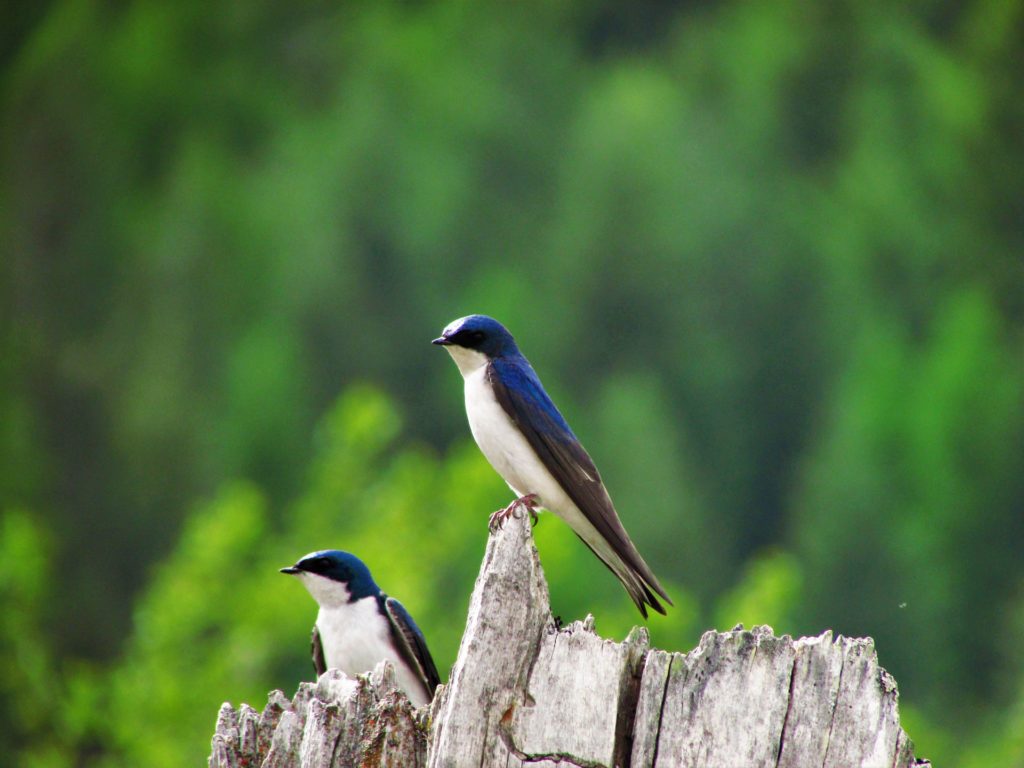
Photo: Tree swallows
Your afternoon walk doesn’t need to be in a wooded area to still reep the benefits of getting outside. Natural sunlight (in moderate levels) helps to mitigate pain and provides you with Vitamin D, helping you to absorb calcium, prevents osteoporosis and reduces inflammation.
Our public health officials are saying this physical distancing is “for now.” This isn’t easy, shifting our plans and normal ways of being. It pains me to ask the CPAWS community of nature lovers to stay away from the majestic, awe-inspiring parks system.
Like many of you, I have summer camping reservations that are sitting in limbo. The best chance for all of us to be able to get outside and connect with each other in nature is to forgo this in the short-term.
Note: CPAWS-BC is not a public health organization. This information was developed based on current information from the BC Centre for Disease Control. Please consult your local health authority for advice and updates in your area.
Cover Image by Tori Ball
You can find a list of federal and provincial closures from:
Unceded Coast Salish Territory/Vancouver, BC – Today, a historic collaboration reached a critical point with the signing of a partnership agreement regarding the recovery of southern mountain caribou.
Saulteau and West Moberly First Nations announced they have negotiated a partnership agreement with B.C. and Canada to protect and recover caribou in the Peace Region. Part of the Partnership Agreement between the four governments includes the creation of an important new protected area in critical caribou habitat on West Moberly and Saulteau territories, near Chetwynd, BC.
“We are encouraged by this significant agreement to recover one of Canada’s most iconic species,” said Bruce Passmore, Executive Director of CPAWS-BC, “we applaud West Moberly and Saulteau First Nations, who have demonstrated incredible leadership, working with the provincial and federal governments towards protection of wildlife and species at risk in their traditional territories.”
This agreement includes new protected areas, that will expand the Klinse-za Provincial Park as well as restoration measures, access management, habitat recovery and restoration, and an Indigenous Guardian Program. A full, collaborative suite of measures sets the best chance at success for recovery while furthering Indigenous-led conservation models. Such models are critical to upholding the culture, stewardship and traditional knowledge of the original caretakers of the land.
“Support for Indigenous-led land and wildlife conservation efforts is crucial if we are to stem the global biodiversity and climate crisis,” said Passmore. “This historic collaboration between four governments demonstrates a new way forward for conservation in BC to preserve important species before it is too late.”
-30-
For interview, please contact:
Skye Vallance, Communications and Development Coordinator
We use cookies and other similar technologies such as pixels and web beacons (“Cookies”) for various purposes, such as to ensure our website functions properly, enhance your browsing experience by remembering your preferences and provide personalized content and advertisements.
Functional
Always active
The technical storage or access is strictly necessary for the legitimate purpose of enabling the use of a specific service explicitly requested by the subscriber or user, or for the sole purpose of carrying out the transmission of a communication over an electronic communications network.
Preferences
The technical storage or access is necessary for the legitimate purpose of storing preferences that are not requested by the subscriber or user.
Statistics
The technical storage or access that is used exclusively for statistical purposes.The technical storage or access that is used exclusively for anonymous statistical purposes. Without a subpoena, voluntary compliance on the part of your Internet Service Provider, or additional records from a third party, information stored or retrieved for this purpose alone cannot usually be used to identify you.
Marketing
The technical storage or access is required to create user profiles to send advertising, or to track the user on a website or across several websites for similar marketing purposes.