Conservation group applauds new youth conservation jobs
For interviews, contact: Tori Ball, Terrestrial Campaigner Canadian Parks and Wilderness Society, BC Chapter tori@cpawsbc.org (604) 685-7445 x24
FOR IMMEDIATE RELEASE
August 5, 2020
Traditional territories of the Coast Salish peoples/Vancouver, BC — The Canadian Parks and Wilderness Society, British Columbia (CPAWS-BC) is applauding a new initiative to hire young people into conservation jobs in BC. These new jobs, announced today by Environment Minister George Heyman, will help to safeguard nature across the province.
“We’re happy to see more conservation jobs being created for young people at a time when our park system needs more support,” says Tori Ball, Terrestrial Campaigner with CPAWS-BC.
“In the short term, these new jobs will help manage the impacts of increasing visitation on the outdoor places we love so much, by addressing long standing capacity issues within BC Parks,” she adds.
BC’s provincial parks were forced to shut down this spring due to concerns with understaffing and overcrowding, following a recent budget cut to operations earlier this year. Decades of underfunding to BC Parks has created a concerning shortage of staff as well as a significant backlog of maintenance issues and major delays in management planning for parks.
“These new temporary positions will help provide much-needed capacity to support overworked park rangers, which will better safeguard nature and improve people’s experiences in the outdoors,” says Ball.
“We hope to see continued investment in nature-based jobs and a commitment to a longer-term capacity increase for BC Parks, as part of the overall strategy to recover the province’s economy,” she adds.
–30–
For interviews, contact:
Tori Ball, Terrestrial Campaigner Canadian Parks and Wilderness Society, BC Chapter tori@cpawsbc.org (604) 685-7445 x24
Canadian Parks and Wilderness Society – British Columbia Chapter (CPAWS-BC) protects wilderness in every corner of BC and deep into the ocean. CPAWS-BC supports the creation of large, well-managed, connected protected areas where native plants and animals thrive, now and forever; and where people and communities can live off the land and ocean without impacting the ability of future generations to do the same.
In the past 50+ years, CPAWS has played a lead role in protecting over half a million square kilometres – an area bigger than New Brunswick, Newfoundland and Labrador put together.
For interviews, contact: Tori Ball, Terrestrial Campaigner tori@cpawsbc.org (604) 685-7445 x24
New report highlights opportunity to put nature protection at the heart of economic recovery in Canada
For Immediate Release
July 15, 2020
Unceded Coast Salish Territory/Vancouver, BC — A new report from the Canadian Parks and Wilderness Society (CPAWS) recommends that nature protection is put at the heart of Canada’s COVID-19 recovery strategies. The report highlights the enormous potential of BC’s provincial parks to provide accessible and affordable outdoor activities, and outlines urgent challenges posed by decades of underfunding.
“It’s become very clear that BC’s parks are essential to our health and well-being. Safe, accessible outdoor recreation in parks is a proven way to boost mental health and reduce stress,” says Tori Ball, Terrestrial Campaigner with CPAWS-BC.
“Unfortunately, decades of funding for BC’s parks has left communities with inequitable access to nature, and continues to put wildlife at risk,” she says.
The BC Parks budget was cut by 4% this year, exacerbating issues such as understaffing across the province. This has restricted or cut core functions such as monitoring and enforcement, research, and education.
The provincial and federal governments are making decisions on spending to restart the economy and recover from the economic downturn caused by COVID-19. CPAWS-BC is advocating for an investment of economic recovery funding into BC’s parks to better support the needs of communities across the province.
“This is our chance to get it right. We know that nature conservation is a driver of economic growth and provides essential community benefits that help build a resilient global economy,” says Ball.
”Now more than ever, we need to invest in these places so that our communities will be more resilient and better supported in the long run,” adds Ball.
CPAWS-BC’s recommendations to the Government of British Columbia:
Invest immediately in BC Parks, increasing staff capacity for visitor management, ecological monitoring, and management planning to better recognize the critical role that parks play in supporting our health, our communities, and our environment.
Support Indigenous-led conservation initiatives that enable reconciliation with Indigenous nations, protection and recovery of species at risk, and build sustainable long-term jobs in rural and remote communities
–30–
For interviews, contact: Tori Ball, Terrestrial Campaigner tori@cpawsbc.org (604) 685-7445 x24
Unceded Coast Salish Territory/Vancouver, BC – A new study led by Angela Stevenson at the University of British Columbia indicates that ongoing climate change is a serious and immediate threat to BC’s ancient glass sponge reefs. The Canadian Parks and Wilderness Society – British Columbia (CPAWS-BC) calls for the urgent establishment of marine protected areas (MPAs) for glass sponge reefs in BC.
Glass sponge reef ecosystems shelter rockfish and prawns and are efficient filter feeders. Healthy glass sponge reef marine protected areas can filter out up to 90% of bacteria from ocean water and work to keep carbon locked in the seafloor.
Fisheries and Oceans Canada (DFO), along with the Marine Life Sanctuaries Society (MLSS), recently verified five new living glass sponge reefs and one dead reef during scientific surveys in Howe Sound. These reefs need urgent protection if they are to adapt and survive against threats from climate change and human activity.
“Marine protected areas will not only protect glass sponge reefs from physical damage caused by bottom-contact fishing, they will also act as natural climate solutions,” says Ross Jameson, Ocean Conservation Manager for CPAWS-BC. MPAs offer long term protection, prevent further damage and absorb carbon to help beat back climate change.
For two decades, CPAWS-BC has worked to establish stronger protection for BC’s known glass sponge reefs. In 2017, Hecate Strait/Queen Charlotte Sound Glass Sponge Reefs Marine Protected Area protected over 2000 km2 of glass sponge reefs off BC’s north and central coast. 17 fisheries closures protect reefs in Howe Sound and the Strait of Georgia. Unprotected glass sponge reefs in Howe Sound and Chatham Sound need urgent attention.
This new study underscores the pressure glass sponges face to adapt quickly to survive in a changing ocean. Protecting these unique biological treasures will not only safeguard economically important marine life, but also ensure the reefs can remain a source of awe and wonder for generations to come.
-30-
For interview, please contact:
Ross Jameson, Ocean Conservation Manager
Canadian Parks and Wilderness Society-British Columbia
778-953-2372
ross@cpawsbc.org
Resources
We would like to recognize the many other organizations who have worked tirelessly to conserve this unique habitat: Marine Life Sanctuaries Society, David Suzuki Foundation, Coastal Ocean Research Institute, Subsea Society of Howe Sound, Canadian Marine Environment Protection Society, and Sunshine Coast Conservation Society.
Stevenson, A., Archer, S.K., Schultz, J.A. et al. Warming and acidification threaten glass sponge Aphrocallistes vastus pumping and reef formation. Sci Rep 10, 8176 (2020). https://doi.org/10.1038/s41598-020-65220-9
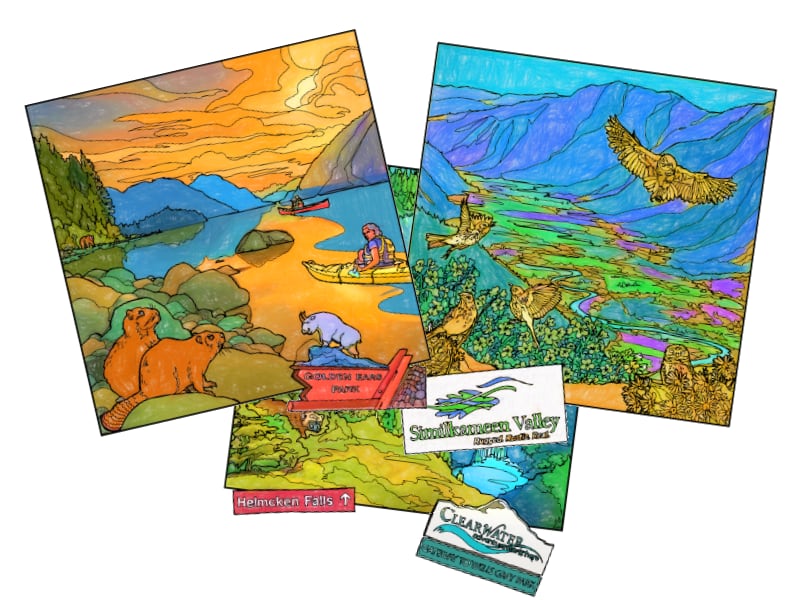
As the weather warms, we’re dreaming of getting back into BC’s parks. It may be a while before our boots hit the trails so we’ve created four stunning colouring pages to remind you of the beauty that awaits.
The pages, with scenes from stunning BC parks, are designed with beginner and expert artists in mind. Enjoy bringing these lively scenes and creatures to life:
Golden Ears Provincial Park – The traditional territories of the Katzie, S’ólh Téméxw (Stó:lō) and Kwantlen peoples, this park is home to black bears, beavers and mountain goats.
Wells Gray Provincial Park – The traditional territory of the Secwepemcúl’ecw (Secwépemc) peoples, this park is home to the elusive wolverines and mighty grizzly bears.
Grasslands of Similkameen Valley – The traditional territory of the Syilx peoples, the grasslands of the Similkameen Valley are home to rare species like burrowing owls and sage thrashers.
Strathcona Provincial Park – The traditional territories of the nuučaan̓uuɫɁatḥ nism̓a (Nuu-chah-nulth), K’ómoks, Kwakwaka’wakw nations, Strathcona Provincial Park is home to Roosevelt elk and endangered Vancouver Island marmots.
Enter your contact details to download and print your colouring pages. Share your creations on Facebook and Instagram with the hashtag #colouringBCParks.
Time indoors with children and teens does not have to limit the many powerful lessons we can learn from nature. When we observe patterns and behaviours in nature, we can find solutions to build a healthier planet.
The following resources and activities compliment BC curriculum core competencies including intellectual, personal, and social and emotional learning. The lessons vary in the level of guidance or independent learning required to fit your unique needs.
Subscribe to receive e-mails with current good news, and activities. Follow us @cpawsbc on Facebook, Twitter and Instagram. Check back here for more blog posts including Staff Picks of Books, Films and Podcasts and upcoming Webinars to support our connections to nature and to each other.
*Additional Support: Open School BC provides resources for parents and caregivers to keep your children learning at home during the COVID-19 pandemic.
If these resources helped connect the young people in your life with nature or if they assisted in at-home schooling in your household, please consider making a donation. Your gift will help our team continue to defend nature for all Canadians, and keep us working during these uncertain times.
When it’s time to recharge, comfort and inspiration can be found in nature. From films, to books and activities, the CPAWS-BC team has compiled their top picks to keep your mind and spirit active. Scroll down and click the arrows for full list of staff picks.
What we’re reading
What we’re watching
What we’re listening to
What skills and hobbies we’re trying
What we’re Reading
Whale In The Door: A Community Unites to Protect BC’s Howe Sound By Pauline Le Bel
Today, Howe Sound, a spectacular fjord in southwestern BC, is a popular recreation and tourism destination. It is home to rockfish, spot prawn and rare glass sponge reefs. Howe Sound is being inundated with proposals for industrial projects that threaten these fragile land and seascapes. Pauline Le Bel, a resident of Howe Sound, embarks on a journey of discovery to find out what is special about the Sound, its wild nature and its people, to witness the cultural and spiritual revivals taking place. Her research, her interviews, her travels on the land, the water, the skies of Howe Sound, compel her to abandon antiquated ideas about wilderness and community, and to arrive at a new appreciation for the genius of her home.
Beckoned by the Sea: Women at Work on the Cascadia Coast By Sylvia Taylor
Beckoned by the Sea celebrates coastal women from northern BC to northern California who work on or with the sea. The twenty-four women featured in this inspiring and fascinating book represent a variety of industries—from conservation, commercial fishing, and marine biology to safety and rescue, tourism, and the arts.
Last child in the woods: Saving Our Children from Nature-Deficit Disorder By Richard Louv
Last Child in the Woods is the first book to bring together a new and growing body of research indicating that direct exposure to nature is essential for healthy childhood development and for the physical and emotional health of children and adults. More than just raising an alarm, Louv offers practical solutions and simple ways to heal the broken bond—and many are right in our own backyard.
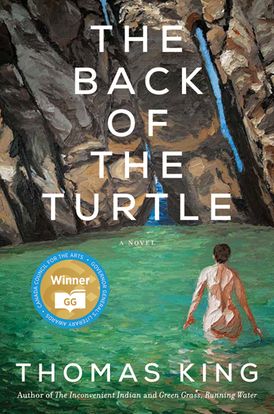
The Back of the Turtle by Thomas King
Gabriel returns to Smoke River, the reserve where his mother grew up and to which she returned with Gabriel’s sister. The reserve is deserted after an environmental disaster killed the population, including Gabriel’s family, and the wildlife. Gabriel, a brilliant scientist working for DowSanto, created GreenSweep, and indirectly led to the crisis. Now he has come to see the damage and to kill himself in the sea. But as he prepares to let the water take him, he sees a young girl in the waves. Plunging in, he saves her, and soon is saving others. Who are these people with their long black hair and almond eyes who have fallen from the sky?
The Reconciliation Manifesto- Recovering the Land Rebuilding the Economy By Arthur Manuel and Grand Chief Ronald Derrickson
Decolonizing conservation means challenging practices within every aspect of our work to protect lands, inland waters, and ocean that contribute to the colonization and oppression of Indigenous people. Manuel and Derrickson show how governments are attempting to reconcile with Indigenous Peoples without touching the basic colonial structures that dominate and distort the relationship. They review the current state of land claims. They tackle the persistence of racism among non-Indigenous people and institutions. They celebrate Indigenous Rights Movements and document the federal government’s role in implementing the United Nations Declaration on the Rights of Indigenous Peoples.
Whale In The Door: A Community Unites to Protect BC’s Howe Sound By Pauline Le Bel
Today, Howe Sound, a spectacular fjord in southwestern BC, is a popular recreation and tourism destination. It is home to rockfish, spot prawn and rare glass sponge reefs. Howe Sound is being inundated with proposals for industrial projects that threaten these fragile land and seascapes. Pauline Le Bel, a resident of Howe Sound, embarks on a journey of discovery to find out what is special about the Sound, its wild nature and its people, to witness the cultural and spiritual revivals taking place. Her research, her interviews, her travels on the land, the water, the skies of Howe Sound, compel her to abandon antiquated ideas about wilderness and community, and to arrive at a new appreciation for the genius of her home.
Beckoned by the Sea: Women at Work on the Cascadia Coast By Sylvia Taylor
Beckoned by the Sea celebrates coastal women from northern BC to northern California who work on or with the sea. The twenty-four women featured in this inspiring and fascinating book represent a variety of industries—from conservation, commercial fishing, and marine biology to safety and rescue, tourism, and the arts.
Staff Pick: Last Child in the Woods by Richard Louv
“New studies have found that people who spend 120 minutes a week in nature, local parks or green spaces are substantially more likely to report good health and psychological well-being than those who don’t. I love when people share stories about their favorite childhood tree or reminisce about their riverbed mud concoctions. Nature supports our learning, growth and community like no-other.
-Skye, Communications and Development Coordinator
What we’re Watching
Our Planet By Silverback Films and WWF
Voiced by Sir David Attenborough, the series showcases the world’s incredible species and most at-risk habitats in ways they have never been seen before—from ice caps and deep ocean to deserts and remote forests. More than just a showcase of the planet’s wonders, Our Planet aims to inspire people around the world to understand the natural world as never before. Supported by ground-breaking science, nature solutions are our best hope to defend against pressing challenges of climate change.
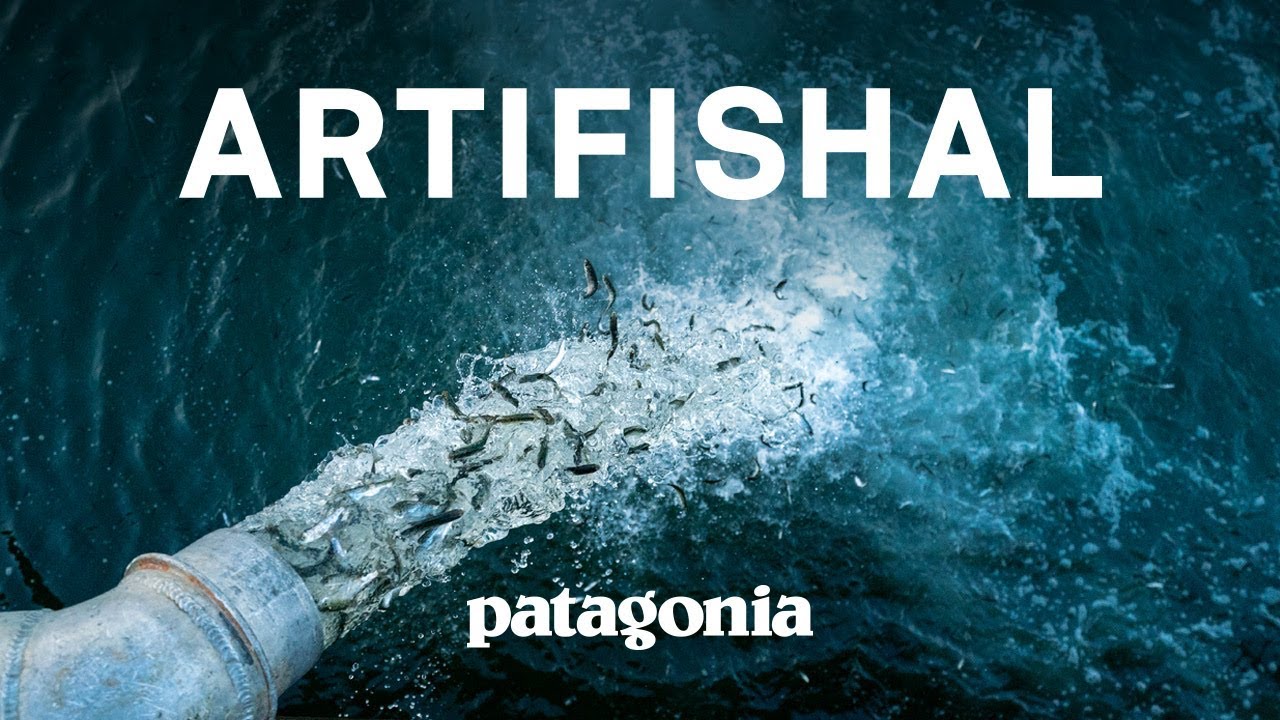
Artifishal is a film about wild rivers and wild fish. It explores the high cost – ecological, financial and cultural – of our mistaken belief that engineered solutions can make up for habitat destruction. The film traces the impact of fish hatcheries and farms, and the extraordinary amount of taxpayer dollars wasted on an industry that hinders wild fish recovery, pollutes our rivers, and contributes to the problem it claims to solve. Artifishal also dives beneath the surface of the open-water fish farm controversy, as citizens work to stop the damage done to public waters and our remaining wild salmon. Artificial showcases the risks industrial pressures like dams, pollution, and overfishing pose not only for salmon, but species like the southern resident killer whale. When we protect habitats and allow nature to thrive, so do our cultures and communities. Streaming on YouTube.
BBC’s Blue Planet II : Episode 6 “Coasts” Directed by Sophie Morgan
On the coast, two worlds collide. Coasts are the most dynamic and challenging habitats in the ocean – that brings great rewards but also great danger. The extraordinary animals that live here must find ingenious ways to cope with two very different worlds. Bamfield Marine Sciences Centre field guide Chad Tamis helps introduces characters from the beautiful to the bizarre. We meet fish that live on dry land and puffins that must travel 60 miles or more for a single meal, and witness a life-and-death struggle in a technicolour rock pool.
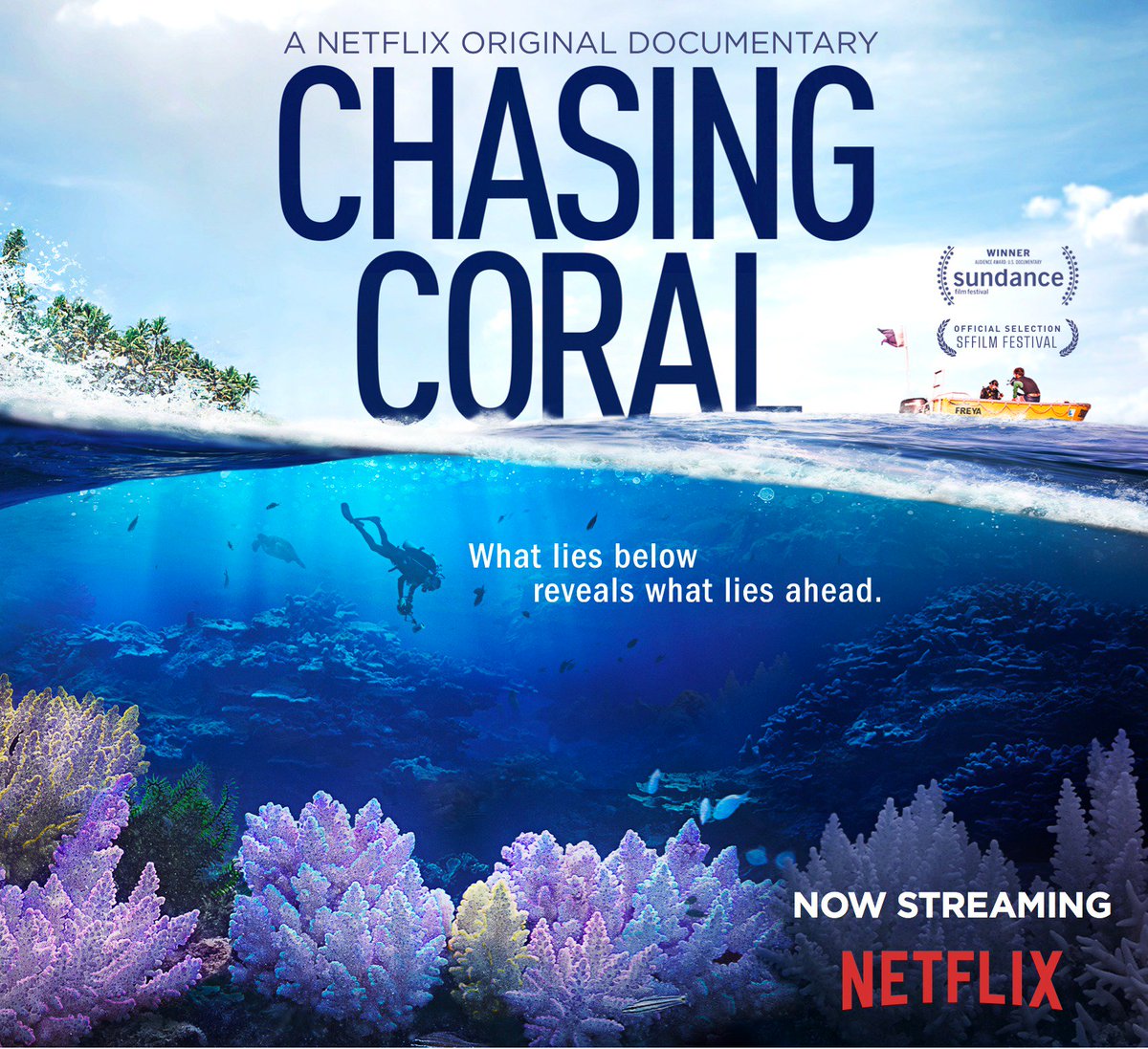
Chasing Coral
Coral reefs around the world are vanishing at an unprecedented rate. Divers, photographers and scientists set out on an ocean adventure to discover why the reefs are disappearing and to reveal the underwater mystery to the world.
Jumbo Wild By Sweetgrass Productions, Director: Nick Waggoner
A gripping, hour-long documentary film by Sweetgrass Productions that tells a true story of the decades-long battle over the future of British Columbia’s iconic Jumbo Valley—highlighting the tension between protection of the backcountry experience and ever-increasing development interests in the wilderness. A large-scale proposed ski resort threatens the rich wilderness of British Columbia’s Purcell Range—a revered backcountry ski and snowboarding destination with world-class terrain, sacred ground for local First Nations people, and part of one of North America’s most important grizzly bear corridors. Set against a backdrop of incredible backcountry ski and snowboard footage, Jumbo Wild documents all sides of a divisive issue bringing the passionate local fight to protect the Jumbo Valley to life for the first time. Streaming on Netflix and Vimeo
Our Planet By Silverback Films and WWF
Voiced by Sir David Attenborough, the series showcases the world’s incredible species and most at-risk habitats in ways they have never been seen before—from ice caps and deep ocean to deserts and remote forests. More than just a showcase of the planet’s wonders, Our Planet aims to inspire people around the world to understand the natural world as never before. Supported by ground-breaking science, nature solutions are our best hope to defend against pressing challenges of climate change.
Artifishal is a film about wild rivers and wild fish. It explores the high cost – ecological, financial and cultural – of our mistaken belief that engineered solutions can make up for habitat destruction. The film traces the impact of fish hatcheries and farms, and the extraordinary amount of taxpayer dollars wasted on an industry that hinders wild fish recovery, pollutes our rivers, and contributes to the problem it claims to solve. Artifishal also dives beneath the surface of the open-water fish farm controversy, as citizens work to stop the damage done to public waters and our remaining wild salmon. Artificial showcases the risks industrial pressures like dams, pollution, and overfishing pose not only for salmon, but species like the southern resident killer whale. When we protect habitats and allow nature to thrive, so do our cultures and communities. Streaming on YouTube.
Staff Pick: Jumbo Wild
I first re-watched this film while I was preparing for my interviews with CPAWS-BC, three years ago nearly to the day! Since then, I’ve been privileged to watch the progress and celebrate the success of the Ktunaxa Nation Council in their 30 year-long effort to protect the Jumbo Valley and surrounding wilderness in the Qat’muk Indigenous Protected and Conserved Area (IPCA). The grassroots efforts which have ensured the protection of this special place continue to inspire me to fight for more resilient and healthy BC every day.
– Tori Ball, Terrestrial Campaigner
What we’re Listening to
Science for the People: Episode #548 – Land and Ocean Conservation 101 Special Guests: Alison Ronson and Candace Newman (CPAWS)
Science for the People is a long-format interview podcast that explores the connections between science, popular culture, history, and public policy, to help listeners understand the evidence and arguments behind what’s in the news and on the shelves. This episode talks about land and ocean conservation: what it means to protect our land and oceans, the complexities of competing interests and international boundaries, and how well Canada is doing at conserving its most important wild areas. Learn more.
OrcaSound.net
Orcasound connects your headphones to live hydrophones (underwater microphones), your ears to an ocean of sound. Learn ways you can help explore and conserve marine life around the globe, starting with studying and saving the southern resident killer whales of the Pacific Northwest. As an Orcasound citizen scientist, you can listen for whales or learn more about marine bioacoustics.
Killers: J pod on the brink CBC Radio, hosted by Gloria Macarenko
In the new CBC British Columbia original podcast, Killers: J pod on the brink, CBC Radio One’s award-winning host Gloria Macarenko dives deep into the elements putting B.C.’s orca population at risk, exploring climate change, pollution, and politics.
Science for the People: Episode #548 – Land and Ocean Conservation 101 Special Guests: Alison Ronson and Candace Newman (CPAWS)
Science for the People is a long-format interview podcast that explores the connections between science, popular culture, history, and public policy, to help listeners understand the evidence and arguments behind what’s in the news and on the shelves. This episode talks about land and ocean conservation: what it means to protect our land and oceans, the complexities of competing interests and international boundaries, and how well Canada is doing at conserving its most important wild areas. Learn more.
OrcaSound.net
Orcasound connects your headphones to live hydrophones (underwater microphones), your ears to an ocean of sound. Learn ways you can help explore and conserve marine life around the globe, starting with studying and saving the southern resident killer whales of the Pacific Northwest. As an Orcasound citizen scientist, you can listen for whales or learn more about marine bioacoustics.
Staff Pick: Killers: J Pod on the brink
The Southern Strait of Georgia’s natural beauty and abundance of wildlife led scientists to call for its protection back in 1970. Here we are, 50 years later and the southern resident killer whale population hangs at just 72. We need to rally together for all 3000 marine species in this ecosystem needing urgent protection before it’s too late.
Carlo Acuna, Ocean Campaigner
What we’re Doing
FirstVoices is a suite of web-based tools and services designed to support Indigenous people engaged in language archiving, language teaching and culture revitalization.
Experience Nature
Science is now proving what many of us have known all along: that time spent in nature is curative, that being outdoors is critical to human health and happiness. And if it’s not possible to be outside, you can still benefit from something as simple as looking at pictures of a forest or a grassland. Getting outdoors for fresh air can bring a moment of calm. Nature exposure of just 20 to 30 minutes can help reduce anxiety and boost the immune system. But please keep safe when you go outside — our first responders, search and rescue teams and healthcare workers have limited resources, and using extra caution right now will help them too!
FirstVoices is a suite of web-based tools and services designed to support Indigenous people engaged in language archiving, language teaching and culture revitalization.
Experience Nature
Science is now proving what many of us have known all along: that time spent in nature is curative, that being outdoors is critical to human health and happiness. And if it’s not possible to be outside, you can still benefit from something as simple as looking at pictures of a forest or a grassland. Getting outdoors for fresh air can bring a moment of calm. Nature exposure of just 20 to 30 minutes can help reduce anxiety and boost the immune system. But please keep safe when you go outside — our first responders, search and rescue teams and healthcare workers have limited resources, and using extra caution right now will help them too!
Watch Live Camera Feeds in Nature
Lose yourself in the thrill of witnessing animals in their natural habitat through wildlife cam feeds. These live feeds can get much closer than you would want to be in real life, where up-close encounters could be dangerous for both you and the animals.
If these resources helped connect you with nature, please consider making a donation. Your gift will help our team continue to defend nature for all Canadians, and keep us working during these uncertain times.
MEC Vancouver Flagship store opening highlights partnership opportunities for community to connect to nature and improve BC’s cherished parks
March 10, 2020
Unceded Coast Salish Territory/Vancouver, BC – The Canadian Parks and Wilderness Society – British Columbia Chapter (CPAWS-BC), is celebrating the launch of Mountain Equipment Co-op’s new store and new opportunities for connecting more people with nature.
“MEC has demonstrated their commitment to protecting nature through a long-standing partnership with CPAWS, helping members to connect outdoor recreation and conservation across the country,” said Tori Ball, CPAWS-BC Terrestrial Campaigner. “Continued support from MEC allows us to reach new communities, empowering them to advocate for a healthy and accessible parks system.”
BC’s parks and protected areas provide affordable and accessible nature experiences for residents and visitors to the province, while also safeguarding wildlife and helping us adapt to climate change. Connecting people to our parks and sharing our love of these natural spaces is more important than ever. MEC has played an important role fostering these community connections.
With the support from MEC, CPAWS-BC has been connecting communities across the province with nature, from the Lower Mainland to the Rocky Mountains, and continues to work on creating new protected areas to forever protect the wild places we know and love. These programs include:
Connecting new audiences with parks in the Lower Mainland through a hiking program to increase awareness of backcountry safety, Leave No Trace principles and the parks system’s need for community support.
Protecting/supporting the protection of BC’s endangered grasslands in the South Okanagan-Similkameen in Canada’s newest National Park Reserve.
CPAWS-BC Terrestrial Program staff will greet media onsite at the MEC Vancouver flagship store on March 10th from 10:00 – 11:00 AM to answer questions about the partnership forged to safeguard an accessible and healthy parks system.
Canadian Parks and Wilderness Society – British Columbia (CPAWS-BC) supports the creation of large, well-managed, connected protected areas where native plants and animals thrive, now and forever; and where people and communities can live off the land and ocean without impacting the ability of future generations to do the same.
For interview, please contact:
Tori Ball Tori@cpawsbc.org 604-685-7445 ext. 24
For immediate release
February 21, 2020
Unceded Coast Salish Territory/Vancouver, BC – Today, a historic collaboration reached a critical point with the signing of a partnership agreement regarding the recovery of southern mountain caribou.
Saulteau and West Moberly First Nations announced they have negotiated a partnership agreement with B.C. and Canada to protect and recover caribou in the Peace Region. Part of the Partnership Agreement between the four governments includes the creation of an important new protected area in critical caribou habitat on West Moberly and Saulteau territories, near Chetwynd, BC.
“We are encouraged by this significant agreement to recover one of Canada’s most iconic species,” said Bruce Passmore, Executive Director of CPAWS-BC, “we applaud West Moberly and Saulteau First Nations, who have demonstrated incredible leadership, working with the provincial and federal governments towards protection of wildlife and species at risk in their traditional territories.”
This agreement includes new protected areas, that will expand the Klinse-za Provincial Park as well as restoration measures, access management, habitat recovery and restoration, and an Indigenous Guardian Program. A full, collaborative suite of measures sets the best chance at success for recovery while furthering Indigenous-led conservation models. Such models are critical to upholding the culture, stewardship and traditional knowledge of the original caretakers of the land.
“Support for Indigenous-led land and wildlife conservation efforts is crucial if we are to stem the global biodiversity and climate crisis,” said Passmore. “This historic collaboration between four governments demonstrates a new way forward for conservation in BC to preserve important species before it is too late.”
-30-
For interview, please contact:
Skye Vallance, Communications and Development Coordinator
Unceded Coast Salish Territory/Vancouver, B.C. – The Canadian Parks and Wilderness Society – British Columbia (CPAWS-BC) welcomes the conviction of illegal fishing in the Hecate Strait and Queen Charlotte Sound Glass Sponge Reefs Marine Protected Area (Hecate MPA).
Illegal commercial groundfish harvesting was found to have occurred in the marine protected areas. A fine of $20,000 for illegal activity prohibited under the Hecate MPA Regulations, the first conviction under the Oceans Act nationwide. An additional fine, under the Fisheries Act, of $25,000 for possessing illegally caught fish was ordered to be paid.
“We would like to thank Fisheries and Oceans Canada for enforcing MPA regulations under the Oceans Act and protecting B.C.’s glass sponge reefs,” says Ross Jameson, Ocean Conservation Manager for CPAWS-BC.
Located in the Hecate Strait and Queen Charlotte Sound off B.C.’s north and central coasts, the Hecate MPA glass sponge reefs are a world treasure. Once thought extinct for millions of years, glass sponge reefs are now known only to live in the northeast Pacific Ocean, mainly off B.C.’s coast.
CPAWS-BC has been working since the early 2000s to protect B.C.’s glass sponge reefs. After years of pushing for protection, we celebrated when the Hecate MPA was created by Fisheries and Oceans Canada in 2017. CPAWS-BC continues to work with First Nations and the Government of Canada to protect other vulnerable glass sponge reefs in B.C. Enforcement of these Oceans Act MPA regulations will help ensure these rare ecosystems are not destroyed due to human activities.
Glass sponges are filter feeders. They do this so efficiently that 95% of bacteria are filtered out, cleaning the water. In fact, a single small reef can filter enough water to fill an Olympic-sized swimming pool in less than 60 seconds! Glass sponge reefs provide shelter for bottom-dwelling creatures such as rockfish and prawns.
Fishing activity can cause severe harm to these fragile habitats. Prawn and crab traps drop down and crush glass sponge reefs. Bottom trawling of heavy nets dragged along the seafloor destroy everything in their path while kicking up clouds of disturbed sediment, that prevent the sponges from feeding.
While this conviction means that the Hecate MPA is being enforced, more work needs to be done. Jameson says, “Now we need a management plan for this MPA with effective education, outreach, and additional protections to prevent these offences from occurring in the future.”
We use cookies and other similar technologies such as pixels and web beacons (“Cookies”) for various purposes, such as to ensure our website functions properly, enhance your browsing experience by remembering your preferences and provide personalized content and advertisements.
Functional
Always active
The technical storage or access is strictly necessary for the legitimate purpose of enabling the use of a specific service explicitly requested by the subscriber or user, or for the sole purpose of carrying out the transmission of a communication over an electronic communications network.
Preferences
The technical storage or access is necessary for the legitimate purpose of storing preferences that are not requested by the subscriber or user.
Statistics
The technical storage or access that is used exclusively for statistical purposes.The technical storage or access that is used exclusively for anonymous statistical purposes. Without a subpoena, voluntary compliance on the part of your Internet Service Provider, or additional records from a third party, information stored or retrieved for this purpose alone cannot usually be used to identify you.
Marketing
The technical storage or access is required to create user profiles to send advertising, or to track the user on a website or across several websites for similar marketing purposes.