Deep under the ocean waters off of BC’s Hecate Strait and Queen Charlotte Sound live rare and delicate glass sponge reefs. While glass sponges are found all over the world, it is mainly on our coasts that they form intricate reefs. CPAWS-BC has been advocating for the protection of glass sponge reefs since 2001. In 2017, the Government of Canada established the Hecate Strait and Queen Charlotte Sound Glass Sponge Reefs Marine Protected Area Marine Protected Areas (MPAs) to safeguard these fragile features from harmful human activities. But new research published in the journal Marine Ecology Progress Series suggests that these current protections may not be enough to prevent glass sponge reefs from harm.
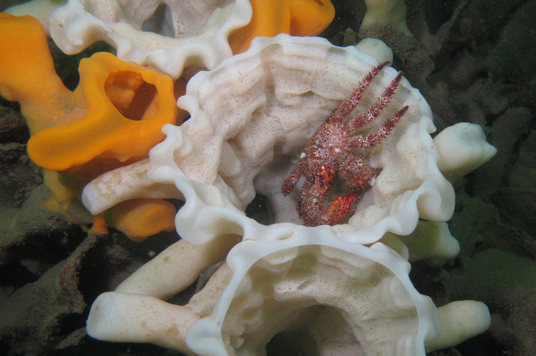
Most marine sponges are soft and squishy, feeling much like the sponges we use to clean our kitchens and bathrooms. However, glass sponges absorb silica from the water to form their glass skeletons, giving them hard bodies but making them extremely fragile.
The earliest fossils of glass sponge reefs are 220 millions years old, spread out over a 7000 kilometre stretch of Central Europe. However, 40 millions years ago they disappeared from the fossil record and were thought to be extinct.
But in 1987, a team of Canadian scientists mapping the seafloor discovered living glass sponge reefs 200 metres below the ocean surface of Hecate Strait. For them, this discovery was like finding a herd of living dinosaurs.
ESSENTIAL TO THE ECOSYSTEM
Far from just being beautiful and rare, glass sponges are also integral parts of the ocean ecosystem.
Glass sponge reefs provide shelter for bottom-dwelling creatures such as rockfish and prawns.
Fishing activity can cause severe harm to these fragile habitats. Prawn and crab traps drop down and crush glass sponge reefs. Bottom trawling of heavy nets dragged along the seafloor destroy everything in their path while kicking up clouds of disturbed sediment. The Marine Protected Area regulations protect the reefs themselves from bottom-contact activities such these. However, nearby fishing activity kilometres away can still be deadly.
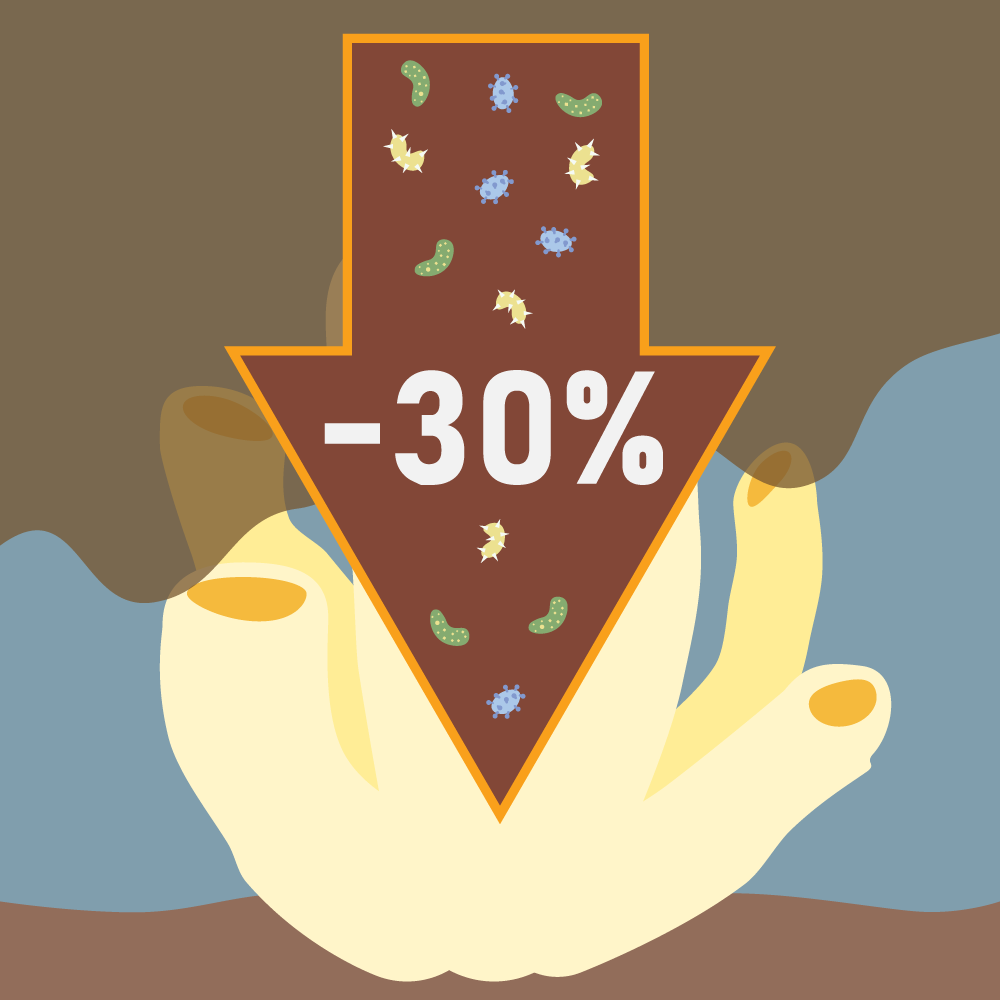
Glass sponges are filter feeders. They do this so efficiently that 95% of bacteria are filtered out, cleaning the water. In fact, a single small reef can filter enough water to fill an Olympic-sized swimming pool in less than 60 seconds! Furthermore, the nitrogen waste they excrete acts as a fertilizer for plankton.
Storms of sediment trigger sponges to stop filter feeding.
When these storms of sediment kicked up be bottom trawling roll over glass sponge reefs, they are triggered to stop filter feeding and absorbing oxygen. The glass sponges choke and can even starve to death.
NEW DISCOVERIES
But animals behave differently depending on where they live and no experiments had been conducted on the Hecate Strait sponge reefs. Research released last year shed light on this mystery.
Living 200 metres below the sea surface, the Hecate Strait sponges are too deep for humans to dive to. To reach these depths, a remotely operated vehicle or ROV was used to carry out the experiments. Remotely controlled from a ship on the surface, the robot operated like an underwater drone, but with the bonus feature of mechanical arms.
The ROV placed thermistors, special devices used to measure water flow, inside the opening on top of the sponges to measure how much water the sponges were filtering for feeding.
To measure the sponges’ reaction to sediment, the ROV’s arm used a modified ice scoop to spread sediment over the sponge.
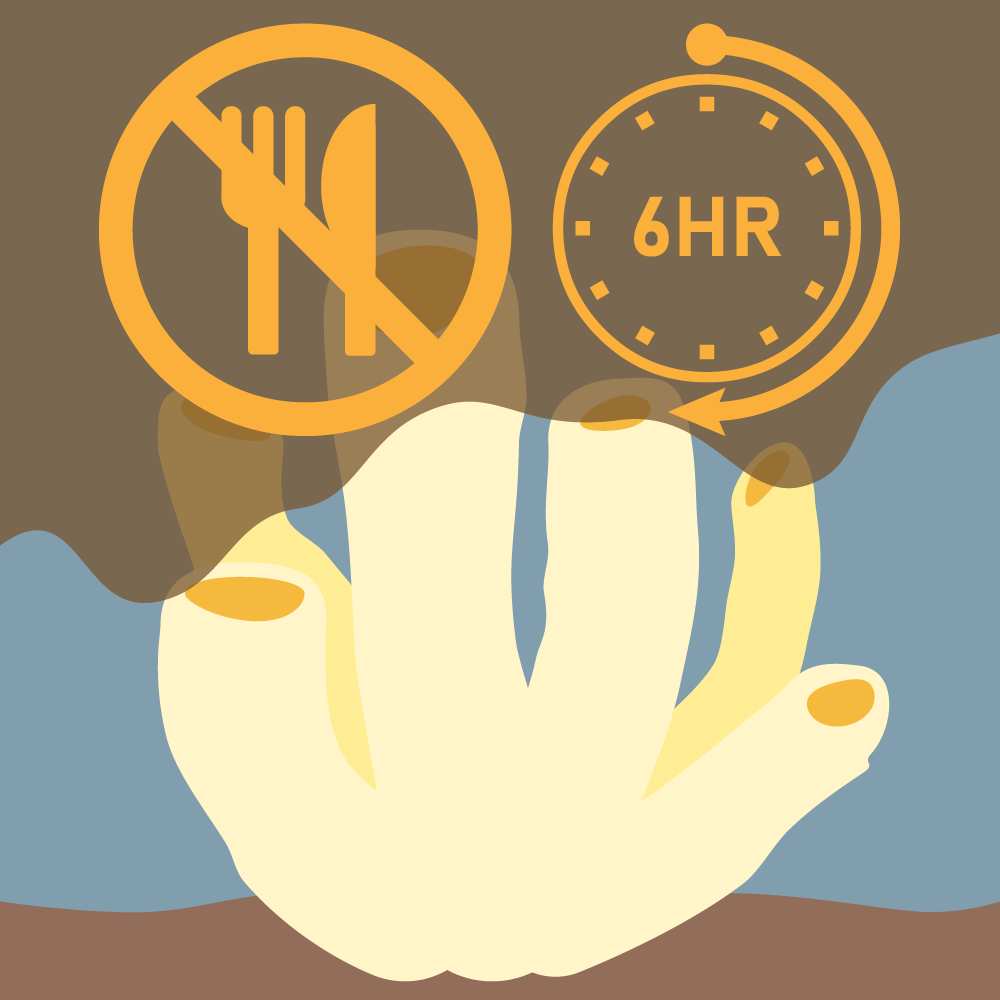
“Just a little bit of sediment actually stops the sponges from feeding for six to 12 hours. If that continues for long enough, that could lead to health problems and even death,” said Carlo Acuna, Ocean Campaigner, CPAWS-BC
The scientists found that the glass sponges stopped filtering water after even small increases in suspended sediment. Bottom trawling activities kick up much more sediment than the Hecate Strait glass sponges can tolerate.
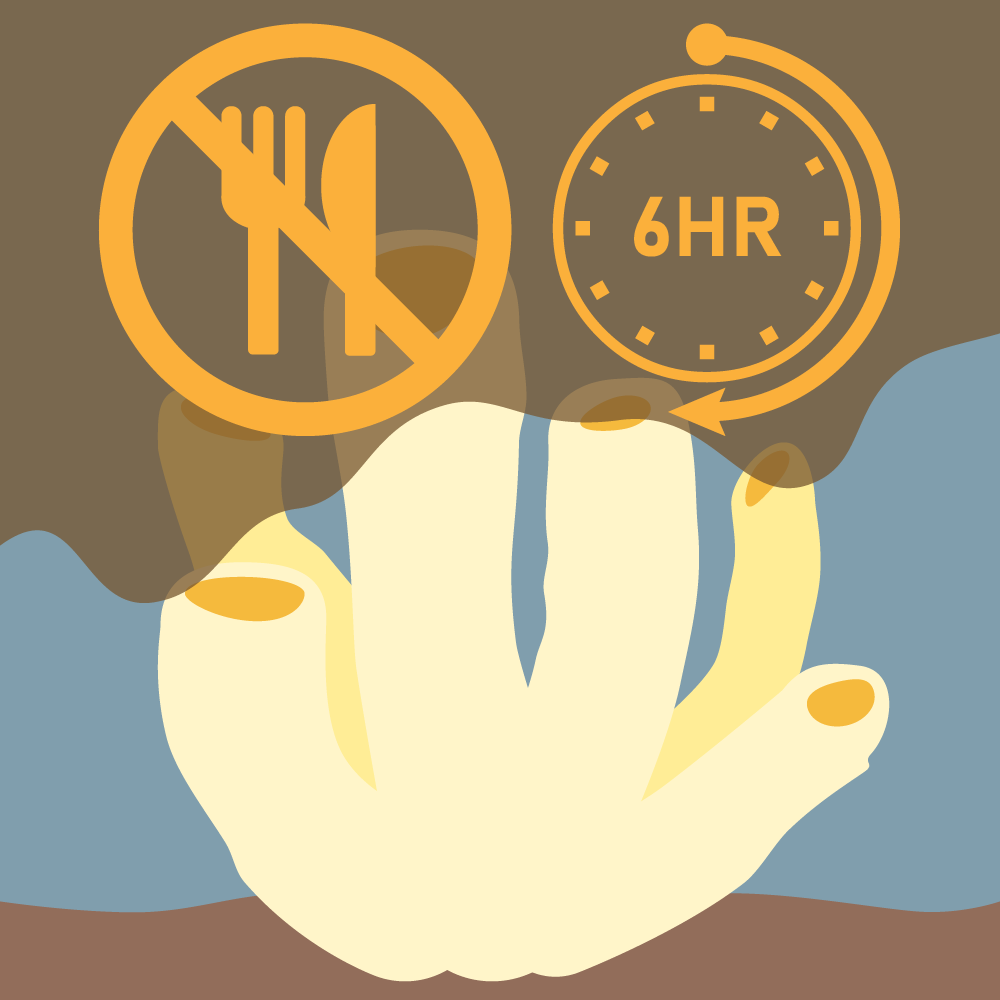
Sediment clouds can stop glass sponges from feeding for up to 12 hours.
The suspended sediment created from a three hour bottom trawl could stop glass sponges from feeding for six to 12 hours. Fishing activities around the marine protected areas could deprive Hecate Strait sponge reefs of nearly one thirds of their food supply, stumping their growth and hindering reproduction. Extended exposure to sediment could lead to death.
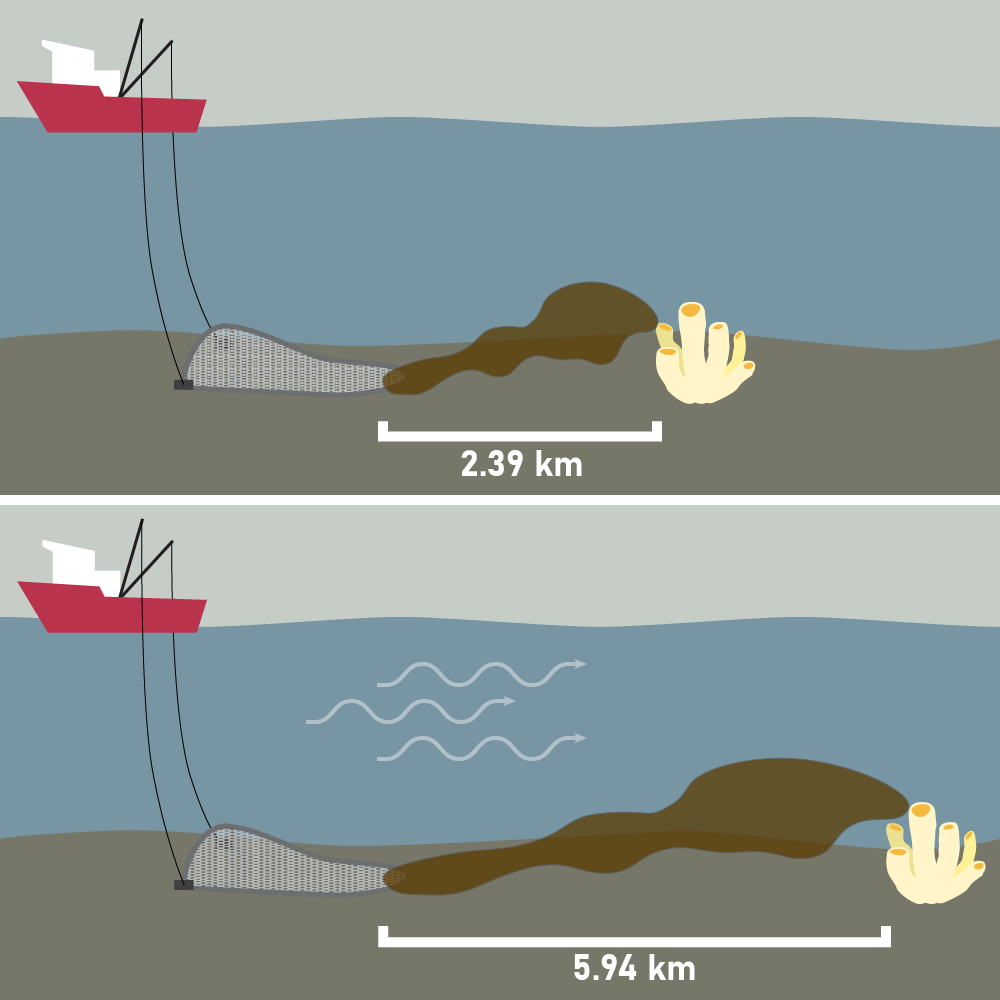
Furthermore, models indicate that suspended sediment from trawl fishing as far away as 2.39 kilometres can cause glass sponges to stop feeding. With the right tides and current, this harmful distance can be as far as 5.94 kilometres.
MORE PROTECTION NEEDED
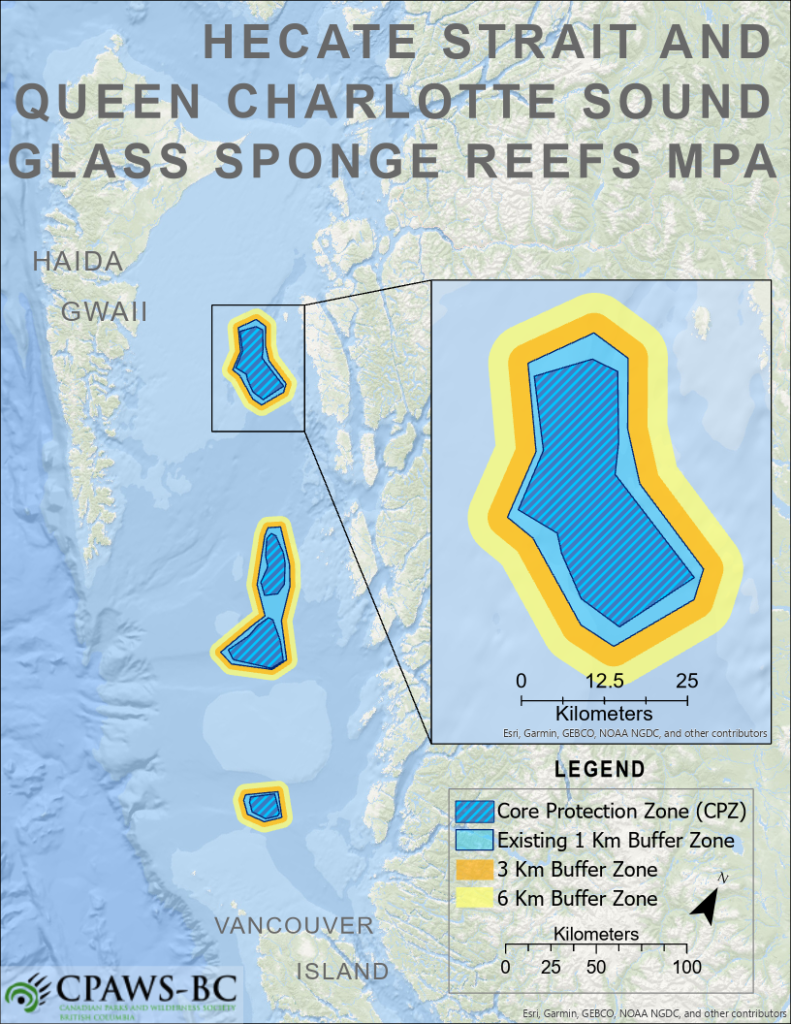
The Hecate Strait and Queen Charlotte Sound Glass Sponge Reefs Marine Protected Area currently provides a one kilometre buffer zone around each reef where no bottom contact activity is allowed. This new research proves that these restrictions are not enough to protect these global treasures.
“Trawling is the biggest bottom contact fishing activity,” Carlo Acuna, CPAWS-BC Ocean Campaigner
Although the glass sponge reefs found in Howe Sound and the Georgia Strait have been found to have a stronger tolerance to sediment, their buffer zones are only a paltry 150 metres wide and drastically insufficient.
Glass sponge reefs need bigger buffer zone around Marine Protected Areas.
New regulations are needed to increase the Hecate Strait and Queen Charlotte Sound Marine Glass Sponge Reefs Protected Area buffer zones to at least three kilometres and as much as six kilometres. This will only increase restricted bottom fishing areas in B.C.’s ocean by 0.6% while ensuring the health of the valuable marine species supported by these reefs for generations to come.
The glass sponges in Howe Sound and Georgia Strait look to be more resistant to sediment. Using the precautionary principle, we are proposing an increase of the buffer zones here beyond the current 150 metres until proper ground truthing research has been carried out and the local threats have been assessed.
CPAWS-BC has been working since the early 2000s to protect B.C’s glass sponge reefs. We celebrated when the Hecate Strait and Queen Charlotte Sound Marine Protected Area was created in 2017. In 2017, we supported the nomination of glass sponge reefs for UNESCO World Heritage Site status. With your help we can add further protections, ensuring these wonders found nowhere else in the world are sufficiently preserved for generations to come.
Proposed expanded protection around glass sponge reefs
CPAWS welcomes protection of Howe Sound glass sponge reefs
March 6th, 2019
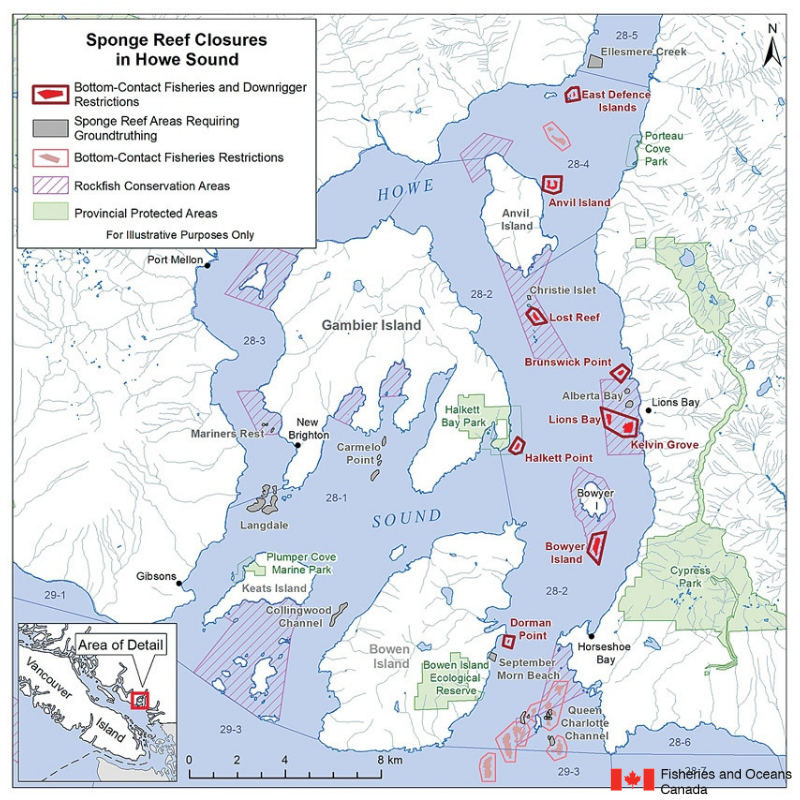
Vancouver, BC – The Canadian Parks and Wilderness Society is very pleased to see the eight new marine refuges announced today, protecting nine of Howe Sounds newly discovered Glass Sponge Reefs from all bottom-contact fishing, by the Minister of Fisheries and Oceans, and the Canadian Coast Guard.
“The Howe Sound glass sponge reefs are an ecological treasure on the door step of one of Canada’s largest cities. They are a very important ecological feature in Howe Sound, that provide both habitat for many species and ecological services including filtering of ocean water,” said Sabine Jessen, National Director of the Ocean Program for CPAWS.
Nine Howe Sound glass sponge reefs are now protected from bottom-contact fishing with eight marine refuges. The reefs are located near Vancouver, BC. Photo credit: Fisheries and Oceans Canada (DFO).
“CPAWS has been involved in the protection of glass sponge reefs on the BC coast for almost two decades, since the first reefs were discovered in Hecate Strait in the late 1980s,” said Jessen. “Living glass sponge reefs date back to the Jurassic era, and are living dinosaurs on our Pacific Coast. We have a global responsibility to ensure their long-term survival.”
“In order to ensure their survival, we are pleased to see that the Minister has announced a number of protection measures, including a 150 metre buffer zone to prevent bottom trawling from both destroying the reefs and from smothering them with sediment, as well as prohibitions on all bottom contact fishing, which can have a severe impact on fragile glass sponges,” noted Ross Jameson, Ocean Conservation Manager, CPAWS-BC.
“We remain concerned that anchoring has still not been addressed in the protection measures for these reefs, and the previous nine glass sponge reefs in the Strait of Georgia that were previously protected,” noted Jessen. “CPAWS will continue to work with DFO and other agencies to ensure that all threats to the reefs are addressed.”
“CPAWS would also like to take this opportunity to recognize the efforts of local groups in Howe Sound who have worked tirelessly to document the Howe Sound glass sponge reefs and to advocate for their long-term protection,” noted Jessen. “We would especially like to recognize Glen Dennison for his many years of work, and to commit to him to assisting with the protection of the additional glass sponge reefs that he has identified in Howe Sound.”
“While we are pleased to see the glass sponge reefs in Howe Sound, like those before them in the Strait of Georgia, being designated as marine refuges, we hope that in future they will form the backbone for a network of MPAs in this region,” added Jameson.
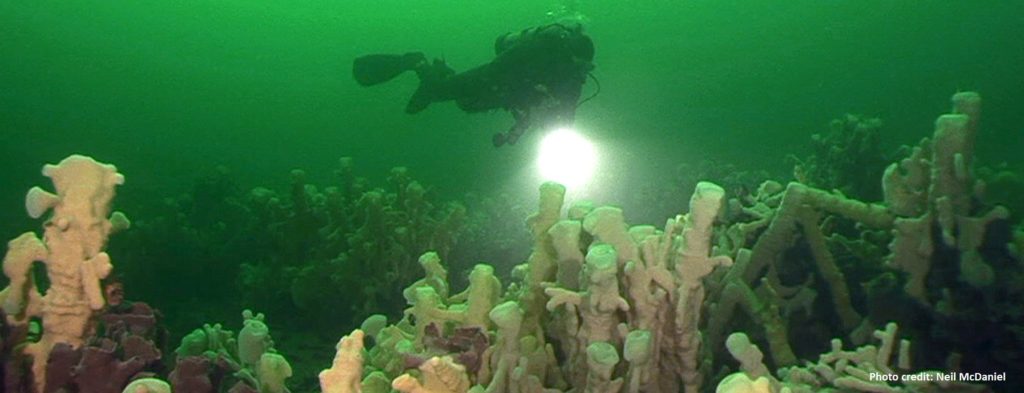
A diver floats above a glass sponge reef in Howe Sound. Photo credit: Neil McDaniel
-30-
How sound are the protections for Howe Sound’s glass sponge reefs?
By Sonia Singh Jind, 25 January 2019
A diver floats above a glass sponge reef in Howe Sound. Photo credit: Neil McDaniel
When scientists stumbled upon an assembly of strange, blanched formations growing overtop of one another and stretching out for hundreds of kilometers across the seafloor, they had no idea they were looking at living glass sponge reefs.
Until then, these reefs were thought to have been extinct since the Jurassic, which ended over 200 million years ago. Scientists are not quite sure why glass sponge reefs seem to have only survived off the west coast of BC, but the answers may give us insight into why these ghostly reef-builders are so rare.
Individual glass sponges – simple animals that use silica (or glass) to build their skeleton – are found in several locations throughout the world, such as the west coast of the United States and Antarctica. However, glass sponge reefs are extremely rare, and seem to only occur in certain environmental conditions. These complex structures form when individual glass sponges grow on top of one another, eventually forming towering structures that can reach up to 20m high.
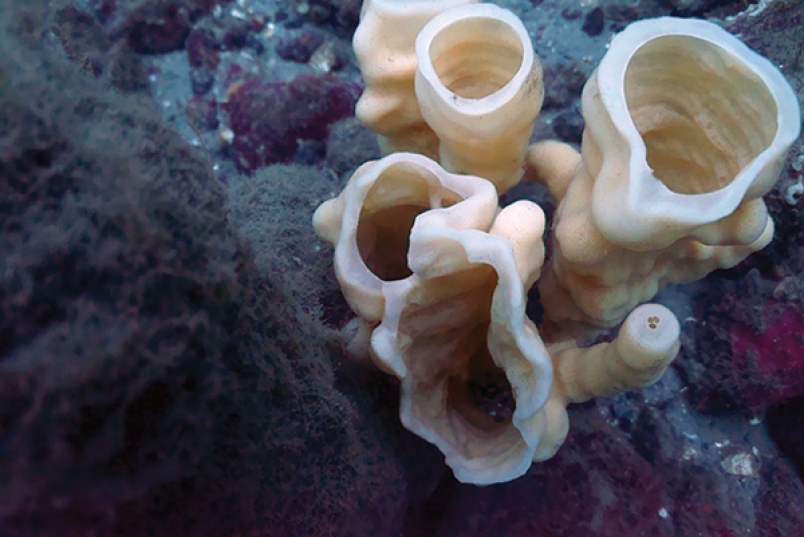
Glass sponges in Howe Sound. Photo credit: Vancouver Aquarium via squamishchief.com
The most extensive glass sponge reefs have been found in Hecate Strait, where they cover hundreds of kilometers of sea floor. Smaller reefs have since been discovered in the Strait of Georgia, Chatham Sound, and the Broughton Archipelago, with 14 of those in Howe Sound. It appears that the unusually high silica and oxygen in the water, an optimal level of water flow, food supply, and temperature, make the coast of BC and Alaska the only known coastline to support glass sponge reefs in the entire world.
The foundation of ocean ecosystems
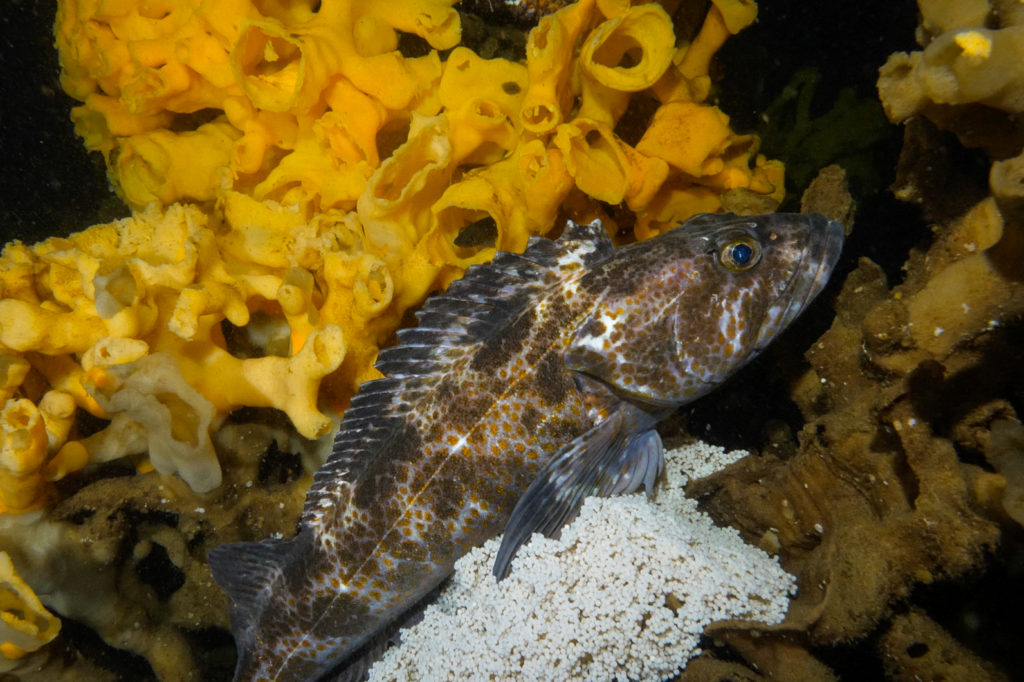
Glass sponge reefs aren’t just pretty to look at, they are also ecologically important in a variety of ways. The 3D structures these reefs provide on an otherwise almost barren seafloor create habitat and areas of refuge for seastars, prawns, lobster, and a variety of fish, including halibut, cod, herring, and the threatened rockfish.
Sponges have the amazing ability to filter 95% of bacteria in the water. You can think of a field of glass sponges as the ocean’s natural filtration system, filtering huge amounts of ocean water every second and producing ammonia that other organisms need for life processes, thereby supporting ecosystem health.
Just as their name suggests, these sponges are fragile. Their texture is similar to meringue, so they break easily. Despite their fragility, they can live thousands of years: some reefs on BC’s coast have been aged at 9,000 years old. They likely survived, in part, because they live so far from the surface of the ocean and away from human contact. But recently humans have begun to exploit the ocean at depths which were previously unreachable, and the threats to this fragile species have intensified.
Human activities such as bottom-trawl fishing and down-rigging can easily destroy these ancient 9,000 year old reefs in seconds. Prawn and crab traps hitting the bottom, the laying of submarine cables and damage from anchors can all cause physical damage and stir up sediment in the water, smothering the sponges. Sponges stop feeding when covered in sediment, eventually leading to starvation and death. Glass sponges take over 200 years to grow just 1 metre in height, so when they are damaged, they could take hundreds of years to recover, if ever.
Protecting glass sponge reefs
A rockfish on a glass sponge reef in the Broughton Archipelago. Photo credit: Tavish Campbell, Wild First
CPAWS-BC has been working on glass sponge reef protection for over 25 years, drawing global attention, educating the public, and urging the government to protect these sites of international importance. In 2002 Oceans and Fisheries Canada (DFO) created fishing closures prohibiting bottom-trawling over the glass sponge reefs. But this was not enough. The reefs needed permanent protection. It took another 8 years before DFO announced Hecate Strait (the site where the reefs were first discovered in 1987) as an Area of Interest under consideration to become a Marine Protected Area (MPA).
Finally, in 2017, after a strong push for higher protection standards, CPAWS-BC rejoiced as the Hecate Strait & Queen Charlotte Sound Glass Sponge Reefs MPA was established. The reefs in Hecate Strait are currently protected within 150m around them.
While this MPA and the preceding fishing closures over the Strait of Georgia reefs were major wins towards protecting our glass sponge reefs, there are over 20 glass sponge reefs in Howe Sound, Chatham Sound and the Broughton Archipelago that still need protection.
CPAWS-BC is currently leading the charge to ensure the ancient reef-building animals in Howe Sound are protected from bottom-contact fishing and undersea pipelines, both of which pose an immediate threat to their survival.
We use cookies and other similar technologies such as pixels and web beacons (“Cookies”) for various purposes, such as to ensure our website functions properly, enhance your browsing experience by remembering your preferences and provide personalized content and advertisements.
Functional
Always active
The technical storage or access is strictly necessary for the legitimate purpose of enabling the use of a specific service explicitly requested by the subscriber or user, or for the sole purpose of carrying out the transmission of a communication over an electronic communications network.
Preferences
The technical storage or access is necessary for the legitimate purpose of storing preferences that are not requested by the subscriber or user.
Statistics
The technical storage or access that is used exclusively for statistical purposes.The technical storage or access that is used exclusively for anonymous statistical purposes. Without a subpoena, voluntary compliance on the part of your Internet Service Provider, or additional records from a third party, information stored or retrieved for this purpose alone cannot usually be used to identify you.
Marketing
The technical storage or access is required to create user profiles to send advertising, or to track the user on a website or across several websites for similar marketing purposes.