CPAWS-BC celebrates $49M federal investment to advance nature-based climate solutions in BC
July 18, 2024
Unceded territories of the Coast Salish Peoples/Vancouver, BC – The Canadian Parks and Wilderness Society, British Columbia is celebrating a $49 million federal investment to address climate change through nature conservation in BC. This funding is focused on thousands of hectares of carbon-rich ecosystems such as grasslands, wetlands, mature forests and overlapping with habitat for species at risk such as grizzly bears and Marbled Murrelets.
“We are thrilled to see this massive investment into the protection of nature in BC,” says Tori Ball, Conservation Director for the Land & Freshwater Program with CPAWS-BC. “This funding has the potential to make a massive impact by protecting ecologically and culturally important ecosystems that hold and sequester carbon while benefitting clean water, air and wildlife.”
The funds were announced on July 18 by Steven Guilbeault, Minister of Environment and Climate Change Canada and are part of the federal Nature Smart Climate Solutions Fund. The three successful BC recipients are:
$37 million will go to the BC Parks Foundation to protect 4,000 hectares of private land
$8 million will go to the Nature Trust of British Columbia to create 11 new protected areas
$4 million will go to Nuxálk Nation to protect private land in the Great Bear Rainforest
The announcement follows a heat wave which saw 37 heat records broken in BC, with multiple places clocking highs over 40C. Natural climate solutions such as protecting areas from land use changes, namely development or resource extraction, are a proven and lower-cost way to capture or reduce greenhouse gas emissions. These actions must also be paired with the reduction of fossil fuel emissions to avoid the worst effects of climate change.
“We know that protecting carbon-rich and intact ecosystems such as grasslands and mature forests is a proven way to protect species at risk while increasing the resiliency to wildfires, floods and drought which is increasingly important in a warming world,” continued Ball. “We also know that these solutions are most effective when put in place with the leadership of First Nations knowledge and direction on land use within their territories.”
This comes just a few weeks after the release of a new survey which found overwhelming support for nature protection amongst British Columbians with 85% supporting the provincial commitment to protect 30% by 2030.
“It is clear that people across BC want to see the government use available resources and tools to protect and connect landscapes that nurture people, wildlife and the essential services that ecosystems provide. This must be done in partnership with First Nations who are already putting forward bold plans to protect their traditional territories,” said Ball.
For interviews contact: Max Winkelman Communications Manager max@cpawsbc.org 604-685-7445 x3
Klinse-za/Twin Sisters Park expansion adds over 170,000 hectares, a welcome step for caribou and collaborative conservation
June 14, 2024
Unceded territories of the Coast Salish Peoples/Vancouver, BC – A significant park expansion added in critical Peace Region caribou habitat is welcomed by the Canadian Parks and Wilderness Society – British Columbia. The 170,000 hectare Klinse-za Park expansion will result in the largest provincial park established in B.C. in a decade.
The expansion of the Klinse-za/Twin Sisters Provincial Park is for about five times the Park’s current size, and over twice the size of Manning Park. The expansion stems from a 2020 Partnership Agreement between the federal and provincial governments and West Moberly and Saulteau First Nations which established conservation commitments for endangered Southern Mountain Caribou.
“Protecting the habitat and foods that caribou depend on is key to long-term both caribou and community health, this park expansion is much awaited and welcomed for this iconic species,” says Tori Ball, Conservation Director – Lands & Freshwater Program at CPAWS-BC. “West Moberly and Saulteau First Nations are leaders in caribou conservation efforts and the formal protection of this important caribou habitat is a testament to their perseverance and leadership to secure a future for these important species.”
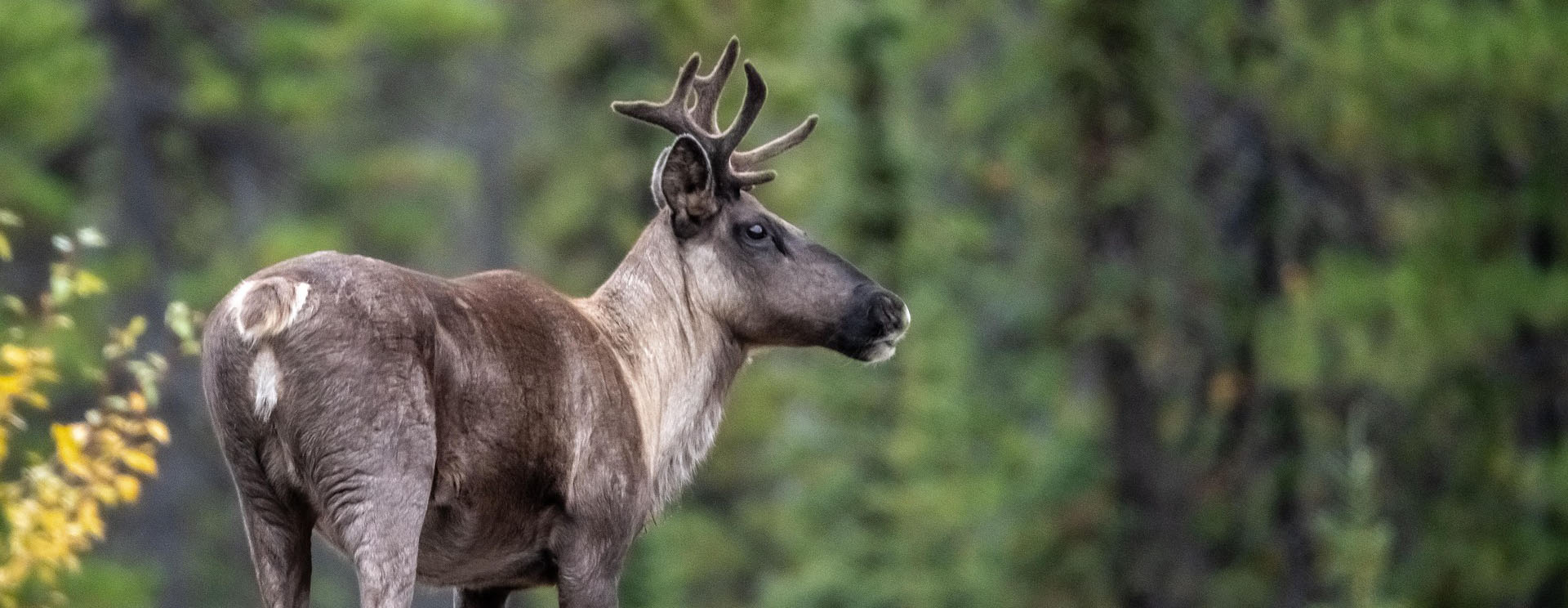
The area is home to the central group of Southern Mountain Caribou, consisting of five remaining herds. Recovery efforts, led by the West Moberly and Saulteau First Nations, have seen the Klinse-za herd rebound from just 16 animals in 2013 to over 100.
Caribou are in trouble, with many herds in BC at risk of disappearing due to an onslaught of resource development. Securing long-term protection of their habitat is key to their survival. Protecting caribou habitat will also benefit other wildlife species, and help ensure healthy ecosystems for all residents of BC.
Caribou require large intact and connected areas to thrive and function as an indicator species, letting us know the health of the forests and ecosystems they inhabit. Protecting caribou habitat in turn benefits many other species as well as the ecosystems that we all depend on.
“This park expansion will have positive impacts for the health of the surrounding ecosystems and iconic caribou herds. Working towards the global goal of protecting 30% of lands and waters by 2030 needs to benefit and include everybody, and it is important that we protect another over 14% of BC by moving forward together,” added Ball.
Media Contact: Max Winkelman Communications Manager max@cpawsbc.org 604-685-7445 x3
Background Info:
Southern Mountain Caribou are divided into 3 population groups:
Northern with 9 herds – BC blue list, imperilled-special concern
Central with 5 herds – BC red list, imperilled-critically imperilled
Southern with 18 herds – BC red list, critically imperilled
The central group are the caribou in the Klinse-za park region, though the northern edge of the protected area is the border to the northern group of Southern Mountain Caribou
Woodland caribou are old-growth dependent and the main threats to their survival are from direct and indirect habitat loss and disturbance
West Moberly and Saulteau First Nations initiated a maternity penning project as part of their caribou conservation efforts as an urgent action to stop the rapid decline of the Klinse-Za herd.
Today, BC Parks, Líl̓wat and N’Quatqua announced a partnership to balance access to the Pipi7íyekw / Joffre Lakes Park for visitors and First Nations this summer. This agreement will support visitor experience, healthy ecosystems and preserve the cultural connections of Líl̓wat and N’Quatqua to this spiritual place.
“We know that supporting First Nations cultures is critical to maintaining and rebuilding ecological integrity. We are excited to see this agreement centre reconciliation and the values of Lil’wat Nation and N’Quatqua, aa well as outline a positive visitor management strategy to support people and the area’s ecosystems,” says Tori Ball, Conservation Director – Land and Fresh Water, Canadian Parks And Wilderness Society, British Columbia.
The agreement announced today comes after years of work by the province, Líl̓wat Nation and N’Quatqua, to improve visitor management in the region, which has seen a surge in outdoor recreation demand and visitor numbers. The abrupt closure of the area last fall resulted in public confusion and tensions for park visitors.
“We are happy to see this proactive planning between BC Parks, Líl̓wat Nation and N’Quatqua for Pipi7íyekw that supports First Nation connections to land and cultural practices and clear public communication to support appropriate public access to the area,” Ball continued. “This collaborative planning and decision-making is critical to reconciliation and the future of conservation and protected areas management.”
The joint park operational plan for 2024 includes three Pipi7íyekw Reconnection Celebration time periods:
April 30 to May 15, to support Indigenous-led cultural celebrations, including Stl’atl’imx Days – a celebration of the Declaration of the Lillooet Tribe on May 10, 1911.
June 14 to 23, to support summer solstice and Indigenous Peoples’ Day celebrations.
September 3 to October 6, to support Indigenous fall harvesting practices and the National Day for Truth and Reconciliation.
These closures will enable Líl̓wat Nation and N’Quatqua to reconnect with the land and carry out traditional, sustenance, cultural and spiritual practices. In addition to the multi-day closures, there will be a limit on the number of daily visitors through the free day-use pass system to support public safety and the natural values of the park.
Overcrowding can negatively affect both the local ecosystem and visitor experience, for example, through people going off-trail. Managing the daily visits is an important tool to support the area’s plants and wildlife, as well as visitor safety.
“Healthy and thriving ecosystems are critical to a healthy future for all. Respectful relationships and sustainable outdoor recreation is important for building up a culture of nature enthusiasts who continue to enjoy and care for nature for generations to come,” says Ball.
– 30 –
Media Contact: Max Winkelman Communications Manager max@cpawsbc.org 604-685-7445 x3
More details:
500 free day-use passes, as well as camping opportunities at 26 tent pads will be available each day Pipi7íyekw / Joffre Lakes Park is open for recreational use.
The free day-use passes will be available for reservation starting at 7:00 am, two days before a planned visit, and are available online at https://reserve.bcparks.ca/dayuse/.
For interviews, contact: Tori Ball 604-685-7445 x24 tori@cpawsbc.org
BC voters prioritize nature and environment in upcoming election
FOR IMMEDIATE RELEASE
October 15, 2020
Traditional territories of the Coast Salish peoples/Vancouver, BC — In the midst of a global health crisis and the rush of a snap election, safeguarding nature remains a high priority for British Columbians. A new online survey from the Canadian Parks and Wilderness Society’s BC Chapter (CPAWS-BC) found that 67% of British Columbians say conservation and environment issues are very important or extremely important to them as voters, and want the government to protect more of our lands and ocean.
“The message is clear – British Columbians want the province to focus on safeguarding nature, and to prioritize wildlife and habitat protection. Any party wishing to form the next government will need to have a strong, credible plan for conservation and be ready to back it up with real action,” says Bruce Passmore, Executive Director with CPAWS-BC.
Additional key findings of the survey include:
Widespread support for increasing protection of BC’s lands and ocean: 87% think the province should commit to protecting 25% of BC’s lands and ocean by 2025
Strong demand for increasing investment in provincial parks: 86% think the province should invest more funding into BC Parks
Healthy oceans matter: 94% say it is very important or extremely important that ocean and coastal ecosystems are healthy
Current approach to coastal management needs a renovation: 81% think the province should create a new plan and law for BC’s coast
“British Columbians recognize the urgent need to find solutions to climate change and to stem biodiversity loss. The question now isn’t whether or not we need to take action, it’s what will the next government actually do to drive conservation forward in BC,” says Passmore.
CPAWS-BC is calling on all parties to prioritize wildlife conservation and habitat protection, commit to fixing our neglected provincial parks, and work on building a cohesive plan for a healthy coast. All of this work must be undertaken with a clear and meaningful commitment to reconciliation, working with original and ongoing stewards of BC’s lands and waters.
“The voters of BC are demanding real action to protect the lands, waters and wildlife that we all depend on. BC has a reputation for being bold, and we hope to see politicians stepping up to the plate with bold commitments during the election period and beyond,” says Passmore.
This survey was conducted online between October 3 and 8. Responses were collected from 1041 British Columbians, with a 95% confidence level and a margin of error of plus or minus (±) 3%.
-30-
For interviews, contact: Tori Ball 604-685-7445 x24 tori@cpawsbc.org
For interviews, contact: Tori Ball, Terrestrial Campaigner Canadian Parks and Wilderness Society, BC Chapter tori@cpawsbc.org (604) 685-7445 x24
FOR IMMEDIATE RELEASE
August 5, 2020
Traditional territories of the Coast Salish peoples/Vancouver, BC — The Canadian Parks and Wilderness Society, British Columbia (CPAWS-BC) is applauding a new initiative to hire young people into conservation jobs in BC. These new jobs, announced today by Environment Minister George Heyman, will help to safeguard nature across the province.
“We’re happy to see more conservation jobs being created for young people at a time when our park system needs more support,” says Tori Ball, Terrestrial Campaigner with CPAWS-BC.
“In the short term, these new jobs will help manage the impacts of increasing visitation on the outdoor places we love so much, by addressing long standing capacity issues within BC Parks,” she adds.
BC’s provincial parks were forced to shut down this spring due to concerns with understaffing and overcrowding, following a recent budget cut to operations earlier this year. Decades of underfunding to BC Parks has created a concerning shortage of staff as well as a significant backlog of maintenance issues and major delays in management planning for parks.
“These new temporary positions will help provide much-needed capacity to support overworked park rangers, which will better safeguard nature and improve people’s experiences in the outdoors,” says Ball.
“We hope to see continued investment in nature-based jobs and a commitment to a longer-term capacity increase for BC Parks, as part of the overall strategy to recover the province’s economy,” she adds.
–30–
For interviews, contact:
Tori Ball, Terrestrial Campaigner Canadian Parks and Wilderness Society, BC Chapter tori@cpawsbc.org (604) 685-7445 x24
Canadian Parks and Wilderness Society – British Columbia Chapter (CPAWS-BC) protects wilderness in every corner of BC and deep into the ocean. CPAWS-BC supports the creation of large, well-managed, connected protected areas where native plants and animals thrive, now and forever; and where people and communities can live off the land and ocean without impacting the ability of future generations to do the same.
In the past 50+ years, CPAWS has played a lead role in protecting over half a million square kilometres – an area bigger than New Brunswick, Newfoundland and Labrador put together.
For interviews, contact: Tori Ball, Terrestrial Campaigner tori@cpawsbc.org (604) 685-7445 x24
New report highlights opportunity to put nature protection at the heart of economic recovery in Canada
For Immediate Release
July 15, 2020
Unceded Coast Salish Territory/Vancouver, BC — A new report from the Canadian Parks and Wilderness Society (CPAWS) recommends that nature protection is put at the heart of Canada’s COVID-19 recovery strategies. The report highlights the enormous potential of BC’s provincial parks to provide accessible and affordable outdoor activities, and outlines urgent challenges posed by decades of underfunding.
“It’s become very clear that BC’s parks are essential to our health and well-being. Safe, accessible outdoor recreation in parks is a proven way to boost mental health and reduce stress,” says Tori Ball, Terrestrial Campaigner with CPAWS-BC.
“Unfortunately, decades of funding for BC’s parks has left communities with inequitable access to nature, and continues to put wildlife at risk,” she says.
The BC Parks budget was cut by 4% this year, exacerbating issues such as understaffing across the province. This has restricted or cut core functions such as monitoring and enforcement, research, and education.
The provincial and federal governments are making decisions on spending to restart the economy and recover from the economic downturn caused by COVID-19. CPAWS-BC is advocating for an investment of economic recovery funding into BC’s parks to better support the needs of communities across the province.
“This is our chance to get it right. We know that nature conservation is a driver of economic growth and provides essential community benefits that help build a resilient global economy,” says Ball.
”Now more than ever, we need to invest in these places so that our communities will be more resilient and better supported in the long run,” adds Ball.
CPAWS-BC’s recommendations to the Government of British Columbia:
Invest immediately in BC Parks, increasing staff capacity for visitor management, ecological monitoring, and management planning to better recognize the critical role that parks play in supporting our health, our communities, and our environment.
Support Indigenous-led conservation initiatives that enable reconciliation with Indigenous nations, protection and recovery of species at risk, and build sustainable long-term jobs in rural and remote communities
–30–
For interviews, contact: Tori Ball, Terrestrial Campaigner tori@cpawsbc.org (604) 685-7445 x24
Traditional territories of the Coast Salish peoples, Vancouver BC — A new online survey from the Canadian Parks and Wilderness Society – BC Chapter (CPAWS-BC) confirms that parks are a key priority for British Columbians, and that 73% want the BC government to increase funding. Parks present affordable and accessible opportunities to spend time outdoors, which has consistently been a top recommendation from BC’s Provincial Health Officer Dr. Bonnie Henry.
“As more people turn to parks through this pandemic, concerns for the health of our parks are becoming increasingly connected with concerns for the health of British Columbians,” says Tori Ball, Terrestrial Campaigner with CPAWS-BC.
“This week saw a record-breaking number of camping reservations with BC Parks and widespread challenges in accessing the online reservation system because of the surge in interest,” says Ball. “This, along with the new survey results, underscores the important role parks are playing in supporting communities through the current public health crisis.”
It also highlights an urgent need to address long standing issues with chronic underfunding of the parks system. For decades, the province has struggled with increasing visitation, while trying to protect wildlife and nature in these special places. BC Parks once again had its budget cut by 4% this year, leading to understaffing across the province that has restricted or cut core functions such as monitoring and enforcement, research, and education.
“Decisions are being made right now about how BC will spend $1.5 billion in economic stimulus funding. This is a huge opportunity for the province to recognize the value of parks for the province’s health, and economy,” says Ball.
“Investing some of this funding into the park system to better support what British Columbians are asking for is a no-brainer, and something that will pay off in the long run,” she adds.
Key findings of the survey include:
Access to nature provides mental health benefits. 94% of respondents said access to nature is important to their mental health.
Supporting parks supports communities.75% of respondents ranked the reopening of parks as a priority in BC’s pandemic response plan.
Investing in parks should be part of BC’s Restart Plan. 71% of respondents support an immediate investment of economic stimulus funding into BC Parks for jobs and park infrastructure projects that will improve visitor experience and better support health and safety of park users.
British Columbians support a long-term investment in parks. 73% of respondents support more funding for BC Parks in the long term to protect wildlife and nature, and to support visitor health and safety.
B.C.’s parks critical for recovery, desperate for resources
For Immediate Release
May 6, 2020
Traditional territories of the Coast Salish peoples/Vancouver BC – On Wednesday, the B.C. government announced that they will begin to reopen BC Parks on May 14th as part of a multi-staged plan to reopen B.C. The Canadian Parks and Wilderness Society’s BC Chapter (CPAWS-BC) is encouraged by this news, and recommends immediate action and investment by the province to support our struggling provincial parks system to be able to keep people safe.
“Consistent underfunding of BC Parks over decades has created long-standing issues with failing and unsafe infrastructure,” says Bruce Passmore, Executive Director of CPAWS-BC. “Under-resourced and overworked staff has left parks ill-equipped to handle a surge in visitors at the best of times.”
Provincial parks have been off-limits to the public since April 8th. BC Parks has had limited resources and an overall lack of capacity to support physical distancing measures, and to maintain visitor facilities to a standard that would meet public health guidelines. Numerous surveys over the past month have concluded that most people across the province want to see the reopening of parks prioritized.
“The current public health crisis has put a spotlight on these long-standing issues. It has highlighted the urgent need for the province to invest in BC Parks to carefully plan for improving visitor safety and the conservation of nature in these places we love,” adds Passmore.
“Investment in parks and outdoor recreation should be a priority for the B.C. government to support our health and wellbeing,” says Passmore. “Unfortunately, the BC Parks budget was cut by 4% this year, which has put extra pressure on our parks while demand for outdoor recreation continues to surge.”
CPAWS-BC is urging the government to direct some of the economic recovery funding to BC Parks to hire more people into front-line park jobs, and to improve park infrastructure like trails, campgrounds and other visitor facilities. This will help build a robust park system that will support the health and safety of British Columbians using these spaces during the current pandemic and well into the future.
-30-
For interview, contact:
Tori Ball, Terrestrial Campaigner
604-685-7445 x 24
About CPAWS-BC:
Canadian Parks and Wilderness Society – British Columbia Chapter (CPAWS-BC) protects wilderness in every corner of BC and deep into the ocean. CPAWS-BC supports the creation of large, well-managed, connected protected areas where native plants and animals thrive, now and forever; and where people and communities can live off the land and ocean without impacting the ability of future generations to do the same.
In the past 50+ years, CPAWS has played a lead role in protecting over half a million square kilometres – an area bigger than New Brunswick, Newfoundland and Labrador put together.
Please excuse the dramatic (read: clickbait) title…
Here at CPAWS-BC, we spend a lot of time and energy trying to help people get outside safely. The science behind the benefits of spending time outdoors is solid. Being outside can boost energy and creativity, improve your mood, and provide free aromatherapy. One study from the American Academy of Ophthalmology found that children with outdoor recesses had a reduced risk of nearsightedness.
Many people in Greater Vancouver base their weekend plans around time outside. A province that boasts the most diverse parks system in the country also has a great enthusiasm for outdoor recreation. Hopeful park visitors have recently been given a different message from multiple park agencies with the closing of parks of all types including provincial and federal parks. In alignment with our health authorities, we the “parks people” are also asking that you and your families don’t go to the parks.
Travelling to towns with terrific tourism options is a great way to spend your weekends and support our neighbours, yet right now it puts them at risk. An influx of visitors threatens not only to spread the novel virus COVID-19, but to overwhelm the capacity of smaller, rural hospitals.
Squamish and Whistler have both issued statements asking visitors to stay away, for now. These sentiments have been echoed from Tofino all the way down to Bishop, California. When these communities are open for business, we encourage you to head out and experience their trails, and stay for a while to enjoy other food and fun they have to offer. But right now, please stay put.
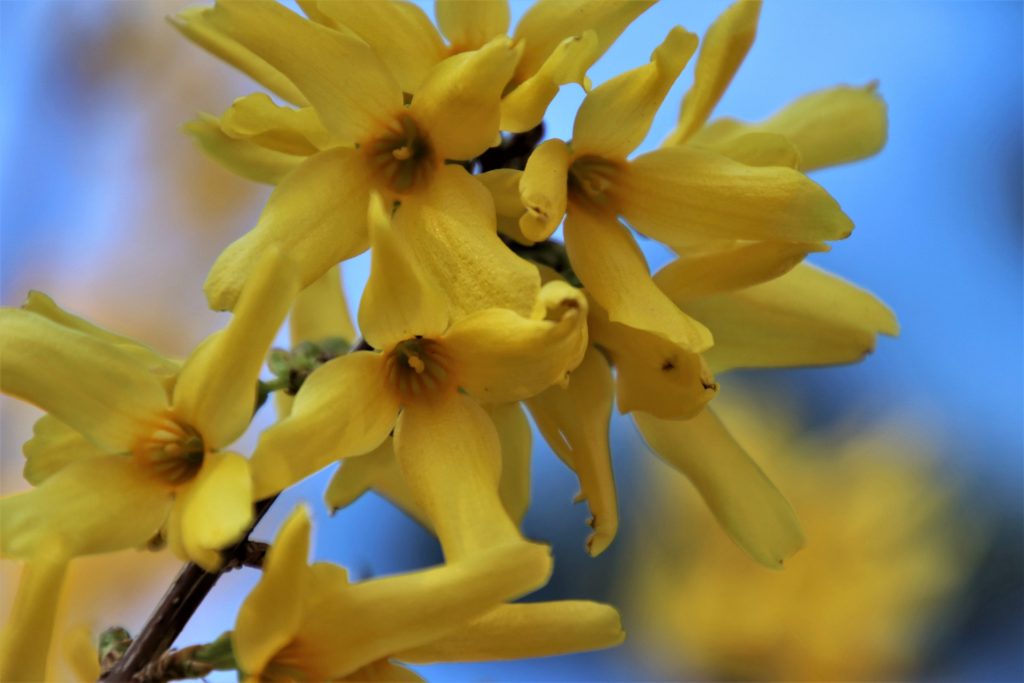
Just because you aren’t travelling to hike up Black Tusk or camp in Golden Ears this weekend doesn’t mean you need to seperate yourself from nature. There are cherry blossoms popping out across many streets in Vancouver and Victoria. My personal favourite springtime tree, the forsythia, is bursting with yellow flowers.
Photo: Forsythia in bloom.
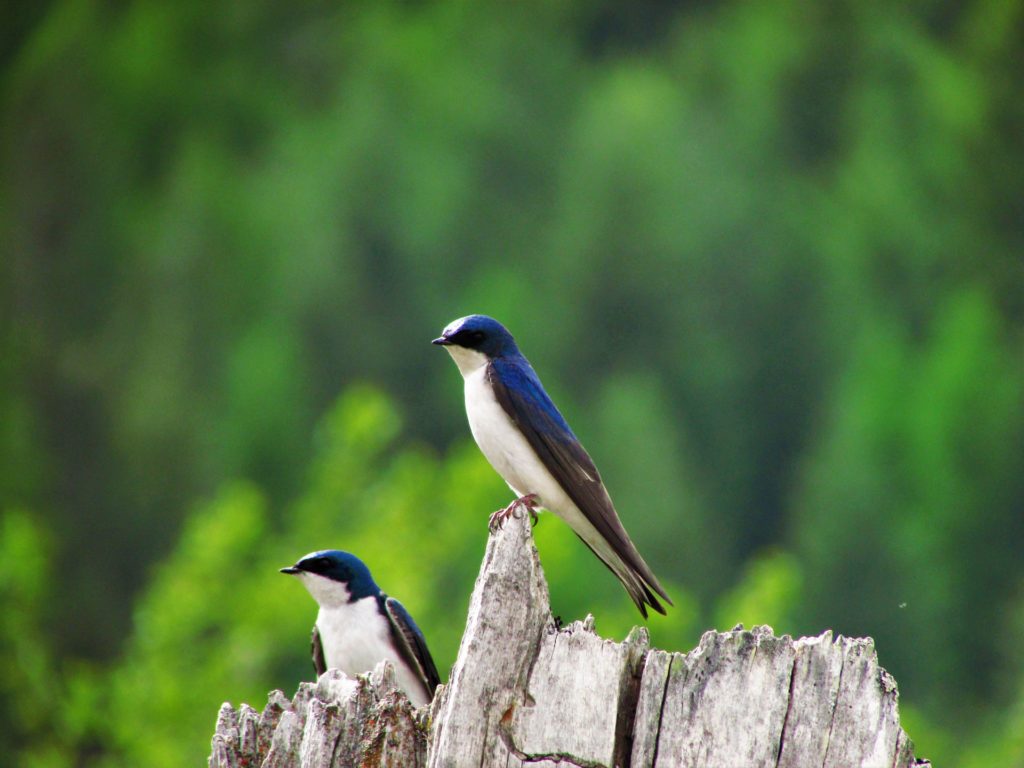
If you’ve got a window, you’ve got the opportunity to become a birder. Spring is one of the best times as migratory birds are coming back to their northern ranges. Check out 18 common birds in BC. Download one of these apps recommended by Bird Watching HQ that can help you identify birds.
Photo: Tree swallows
Your afternoon walk doesn’t need to be in a wooded area to still reep the benefits of getting outside. Natural sunlight (in moderate levels) helps to mitigate pain and provides you with Vitamin D, helping you to absorb calcium, prevents osteoporosis and reduces inflammation.
Our public health officials are saying this physical distancing is “for now.” This isn’t easy, shifting our plans and normal ways of being. It pains me to ask the CPAWS community of nature lovers to stay away from the majestic, awe-inspiring parks system.
Like many of you, I have summer camping reservations that are sitting in limbo. The best chance for all of us to be able to get outside and connect with each other in nature is to forgo this in the short-term.
Note: CPAWS-BC is not a public health organization. This information was developed based on current information from the BC Centre for Disease Control. Please consult your local health authority for advice and updates in your area.
Cover Image by Tori Ball
You can find a list of federal and provincial closures from:
Unceded Coast Salish Territory/Vancouver, BC – Today, a historic collaboration reached a critical point with the signing of a partnership agreement regarding the recovery of southern mountain caribou.
Saulteau and West Moberly First Nations announced they have negotiated a partnership agreement with B.C. and Canada to protect and recover caribou in the Peace Region. Part of the Partnership Agreement between the four governments includes the creation of an important new protected area in critical caribou habitat on West Moberly and Saulteau territories, near Chetwynd, BC.
“We are encouraged by this significant agreement to recover one of Canada’s most iconic species,” said Bruce Passmore, Executive Director of CPAWS-BC, “we applaud West Moberly and Saulteau First Nations, who have demonstrated incredible leadership, working with the provincial and federal governments towards protection of wildlife and species at risk in their traditional territories.”
This agreement includes new protected areas, that will expand the Klinse-za Provincial Park as well as restoration measures, access management, habitat recovery and restoration, and an Indigenous Guardian Program. A full, collaborative suite of measures sets the best chance at success for recovery while furthering Indigenous-led conservation models. Such models are critical to upholding the culture, stewardship and traditional knowledge of the original caretakers of the land.
“Support for Indigenous-led land and wildlife conservation efforts is crucial if we are to stem the global biodiversity and climate crisis,” said Passmore. “This historic collaboration between four governments demonstrates a new way forward for conservation in BC to preserve important species before it is too late.”
-30-
For interview, please contact:
Skye Vallance, Communications and Development Coordinator
We use cookies and other similar technologies such as pixels and web beacons (“Cookies”) for various purposes, such as to ensure our website functions properly, enhance your browsing experience by remembering your preferences and provide personalized content and advertisements.
Functional
Always active
The technical storage or access is strictly necessary for the legitimate purpose of enabling the use of a specific service explicitly requested by the subscriber or user, or for the sole purpose of carrying out the transmission of a communication over an electronic communications network.
Preferences
The technical storage or access is necessary for the legitimate purpose of storing preferences that are not requested by the subscriber or user.
Statistics
The technical storage or access that is used exclusively for statistical purposes.The technical storage or access that is used exclusively for anonymous statistical purposes. Without a subpoena, voluntary compliance on the part of your Internet Service Provider, or additional records from a third party, information stored or retrieved for this purpose alone cannot usually be used to identify you.
Marketing
The technical storage or access is required to create user profiles to send advertising, or to track the user on a website or across several websites for similar marketing purposes.